Ten Days Off the Beaten Path in Bali
Most Bali itineraries revolve around the same handful of places: Kuta or Canggu, Ubud, Uluwatu, maybe a Nusa Penida day trip. This one deliberately avoids nearly all of them, instead spending ten days across four quieter regions — Munduk’s cool highlands, Sidemen’s rice terraces, the traditional Bali Aga village of Tenganan, and Amed’s black-sand coast — that see a fraction of the visitor numbers of the standard route.
It’s a trip better suited to travellers who’ve already done Bali’s greatest hits, either on a previous visit or through enough reading to know they’d rather skip them, than to genuine first-timers. There’s real value in seeing Kuta, Ubud and Uluwatu at least once, and this itinerary isn’t the place for that. What it does offer is a much closer look at rural Bali: working rice terraces, small hill towns, and villages where tourism remains a secondary rather than dominant part of the local economy.
The honest trade-off is convenience. These regions have far less transport infrastructure, fewer restaurant options, and patchier phone signal than the south, and this itinerary assumes a private driver or a confident self-drive setup capable of handling winding, sometimes rough roads throughout.
The ten days at a glance
| Regions | Munduk, Jatiluwih, Sidemen, Tenganan, Amed |
| Pace | Two to three nights per region, minimal backtracking |
| Access | Private driver or rental car for the whole trip; minimal public transport in these regions |
| Best time | Dry season, April to October, for clearer views and easier travel on rural roads |
| What’s skipped | South Bali’s beach towns, Ubud’s central tourist strip, Uluwatu |
Days one to three: Munduk and the highlands
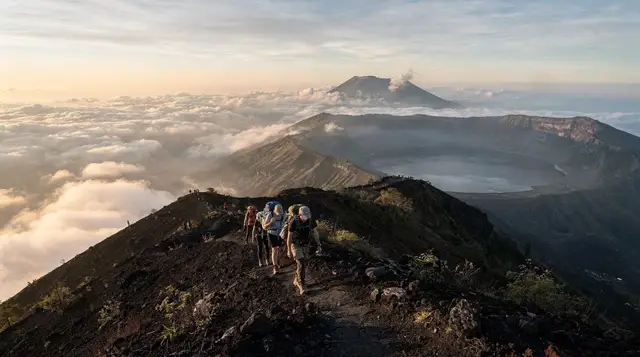
Head straight up into the highlands on arrival rather than spending time in South Bali first. Munduk’s waterfalls and cool climate are the anchor for these first few days — a guided rice terrace, waterfall and coffee tour covers several of the area’s highlights in a single well-organised day, or a jungle trek combined with canoeing and bamboo weaving gives a more active, hands-on alternative. Add a stop at Jatiluwih’s rice terraces while you’re in the region, since it sits a reasonable drive from Munduk and offers a genuinely different, more expansive kind of terraced landscape.
If you’d rather cover ground by vehicle than on foot, a buggy or ATV tour through the plantations and waterfalls is a reasonable alternative that reaches a wider spread of stops in a single outing, particularly useful if your legs need a rest after a full trekking day elsewhere on the trip. Whichever option you choose, keep at least one morning genuinely unstructured — a slow walk through Munduk’s own streets and surrounding farmland, without a booked activity attached, is a good way to feel the actual pace of the place rather than experiencing it entirely through organised stops.
Days four to six: Sidemen’s slower pace
Move across to Sidemen, trading Munduk’s cool jungle air for East Bali’s rice-terrace scenery under Mount Agung. Sidemen has a fraction of the visitor numbers of Ubud’s more famous terraces, and it rewards simply walking the paths between paddies rather than treating it as a single photo stop. Use one of these days for a visit to Tenganan, a Bali Aga village that maintains customs and social structures distinct from mainstream Balinese Hindu culture, and one of the more genuinely traditional villages still accessible to visitors on the island.
Days seven to nine: Amed’s coast
Continue on to Amed for a change of pace again, this time toward the coast. Amed’s black-sand beaches and calm water suit diving and snorkelling more than sunbathing, and the wreck of the Liberty at nearby Tulamben, reachable directly from the beach, is one of the more accessible wreck dives anywhere in the world. Use these days to slow down further after the more active stretches in Munduk and Sidemen — Amed’s whole character rewards a quieter pace.
Day ten: return and departure
Head back toward the airport, allowing a full day for the drive given the distances covered across this itinerary. If your flight is in the evening, a final relaxed morning in Amed or a stop at one more East Bali site on the way back is a reasonable way to close out the trip without rushing the final hours.
What makes each region worth a dedicated stop
Munduk’s appeal is temperature and terrain as much as any single sight — a genuinely cooler climate, clove and coffee plantations that still function as working farms, and a cluster of waterfalls reachable by trail rather than roadside viewpoint. Sidemen trades that cool jungle air for open rice-terrace views under Mount Agung, with a slower, more agricultural rhythm to daily life than almost anywhere else on this itinerary.
Tenganan adds a cultural dimension distinct from both: a Bali Aga village whose social structure and customs predate the wider Hindu-Balinese culture found across most of the island, worth visiting with genuine curiosity rather than as a quick photo stop. Amed closes the loop with a shift to the coast, trading rice terraces and highland air for black-sand beaches and some of the most accessible diving in Bali.
Together, the four regions cover a wider range of Bali’s actual geography — highland, hill country, village life, and coast — than most standard itineraries manage in the same number of days, precisely because none of the standard south-coast stops are competing for time.
A realistic view of comfort and infrastructure
It’s worth being honest that this itinerary trades some comfort for the quieter pace. Accommodation options in all four regions are more limited than South Bali or Ubud, restaurant choices are narrower, and things like reliable hot water or consistent wifi can vary more than travellers used to South Bali’s resort strip expect. None of this makes the trip difficult, but it does mean packing expectations accordingly — this isn’t the itinerary for travellers who want a wide choice of restaurants within walking distance every evening.
Medical facilities are also more limited outside the main towns, so it’s worth knowing the nearest larger town with a clinic or pharmacy in each region before you need one, and travelling with a basic first-aid kit and any regular medication rather than assuming easy access along the way.
Practical notes for a ten-day rural loop
Fuel up whenever you pass a station in a larger town rather than waiting until the tank is low, since stations thin out considerably in the more remote stretches between Munduk, Sidemen and Amed. Carry more cash than you would in South Bali — card acceptance drops noticeably outside the main towns in each region, and smaller guesthouses and warungs, which make up much of where you’ll actually eat and stay on this trip, are frequently cash-only.
What isn’t worth the detour
Skip trying to add a South Bali beach day onto the very end of this itinerary just to tick it off — if South Bali interests you, it deserves its own dedicated time rather than a rushed half-day squeezed in before a flight. Also skip assuming “off the beaten path” means empty of other travellers entirely; Munduk, Sidemen and Amed have all grown as destinations in their own right, just at a noticeably lower intensity than the south.
Budget for ten days
Accommodation across all four regions runs cheaper than equivalent South Bali or Ubud options, reflecting lower demand and less developed tourist infrastructure, though options are also more limited in number, particularly in Tenganan’s immediate area. Transport is the main recurring cost, since this itinerary assumes a private driver or rental car for essentially the whole trip given the lack of practical public transport between these regions. Diving or snorkelling around Amed and Tulamben is worth budgeting as a separate activity cost if it’s a priority for your final stretch.
When to go
The dry season, April to October, is the more comfortable window throughout, particularly for Munduk’s waterfall trails, which get considerably muddier in the wet months given the region’s already higher rainfall at elevation. Amed’s diving conditions are also more reliable in the dry season, with calmer water and better visibility around Tulamben’s wreck site.
Getting there and around
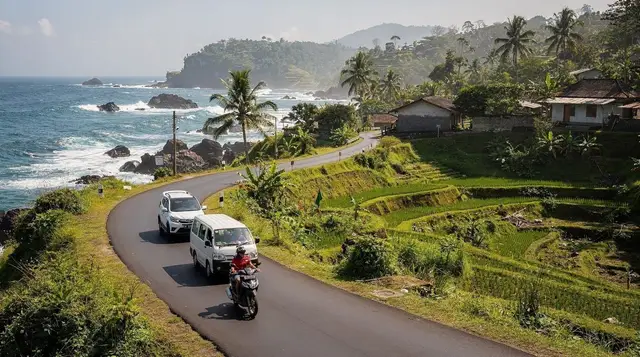
There is minimal public transport across any of these four regions, making a private driver or rental car essential for this itinerary rather than optional. Roads vary considerably: Munduk’s are winding mountain roads, Sidemen and East Bali’s climb through hills toward Agung, and the route out to Amed follows the coast with its own stretches of narrower road. Distances that look short on a map consistently take longer than expected given this terrain.
How this fits into a longer trip
This itinerary works well as either a standalone rural-Bali trip or as the quieter half of a longer stay that also includes South Bali or Ubud. For context on why East Bali specifically gets skipped by most visitors, read East Bali is the Bali people miss, and for the highlands portion, Munduk waterfall loop and Jatiluwih rice terraces UNESCO are worth reading before day one.
If you’d rather combine this with the standard highlights, the Bali 14 days itinerary has room for both, and East Bali, 4 days covers a shorter version of the Sidemen and temple portion of this trip.
Frequently asked questions about Ten Days Off the Beaten Path in Bali
Is this itinerary suitable for a first Bali trip?
It can work, but most first-time visitors get more value from including at least some time in Ubud or South Bali, given how much of Bali’s reputation is built around sights this itinerary deliberately skips.
Do I need a 4x4 or is a standard rental car enough?
A standard car is generally sufficient on the main routes between regions, though some smaller access roads, particularly around Sidemen and parts of Munduk, are narrow enough that a smaller vehicle is easier to manage.
Is phone signal reliable throughout this trip?
It’s patchier than South Bali, particularly around Munduk’s more remote waterfall trails and parts of the Sidemen back roads. Download offline maps before setting out each day.
How much English is spoken in these quieter regions?
Enough to get by comfortably in accommodation and at organised activities, though less so in smaller local warungs than in South Bali’s tourist strips. A few basic Indonesian phrases go a long way.
Can I shorten this to a week instead of ten days?
Yes, by dropping one region rather than compressing all four — Munduk, Sidemen and Amed together make a reasonable seven-day version if Tenganan is treated as a half-day add-on rather than its own stop.
Is this a good honeymoon itinerary?
It suits couples who specifically want quiet and privacy over resort amenities and nightlife. It’s a different kind of honeymoon trip from the villa-and-beach-club version more commonly associated with Bali.
What’s the biggest adjustment compared with a standard Bali trip?
The pace of daily life and the lack of dense restaurant and shopping options. This itinerary suits travellers happy with a quieter evening routine most nights, rather than those wanting South Bali’s density of options after dark.
Do I need travel insurance that specifically covers rural driving?
Standard travel insurance that covers scooter or car use, along with the appropriate international driving permit, is worth checking regardless of itinerary, but it matters more here given the amount of driving on less-maintained rural roads across all four regions.
Is this itinerary better with a private driver or self-driving?
Both work, but a private driver removes real stress from the winding, sometimes rough roads in Munduk and Sidemen specifically. Confident, experienced self-drivers can manage it, but should expect a more demanding route than South Bali.
Can I add a beach club day without derailing the itinerary?
Not without cutting time from one of the four core regions, since beach clubs are concentrated in South Bali, well away from this itinerary’s route. If that’s a priority, consider it for before or after this trip rather than during it.
tours.10 days
Verified deep-linked GetYourGuide tours. Book through these links and we earn a small commission at no cost to you.
These are our own photographs of Bali, not the operator's pictures of this tour — open the tour page to see those.