Munduk Waterfall Loop: Trekking Bali's Cool Highlands
Is Munduk worth a dedicated stay, or just a day trip?
A dedicated stay of at least one night is worth it if trekking is a priority — Munduk's waterfalls are spread across a wider area than a single day trip comfortably allows, and the cooler highland climate makes for genuinely pleasant walking conditions that many visitors prefer to a rushed day trip from the coast. A single well-planned day trip can still cover two or three of the main falls if that's all your schedule allows.
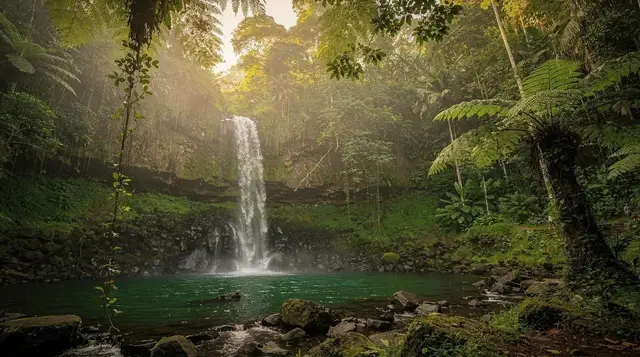
Munduk sits high in Bali’s north-western highlands, cool enough that mornings genuinely call for a light jacket, a contrast that surprises a lot of visitors used to the tropical heat of the south coast. That elevation is also what makes this area one of the best trekking bases on the island: a scattering of waterfalls connected by trails through clove and coffee plantations, twin crater lakes visible from ridge viewpoints, and a slower, quieter pace than almost anywhere else in Bali’s tourist circuit.
Unlike a single named waterfall you drive to and walk from a car park, Munduk’s appeal is genuinely about the loop — trails connect several falls across the hillside, meaning a proper visit involves real walking between them rather than a series of short, separate stops. This rewards visitors willing to commit a full day or, better, an overnight stay, and it’s part of why Munduk sees a different, generally more independent-minded crowd than the bus-tour circuit further south.
The trade-off for this is distance and time. Munduk sits a genuine drive from both Ubud and South Bali, further even than Bedugul or Jatiluwih, which puts it out of range for a casual half-day add-on. Most visitors treat it either as a dedicated overnight stop on a longer North Bali itinerary or as a full-day trip planned around nothing else.
Munduk at a glance
| Where | North-western Bali highlands, near the Bedugul and twin lakes area |
| Cost | Trail and waterfall entrance fees are modest; guide fees add to the cost of a full loop |
| Time needed | A full day for two or three falls; an overnight stay for a fuller loop |
| Access | Private driver or organised tour; a genuine multi-hour drive from South Bali |
| Best time | Dry season for trail conditions; year-round for the cooler climate itself |
The main waterfalls in the loop
Several named waterfalls sit within trekking distance of Munduk village, each with its own character and access difficulty. Some are reachable by a short walk from a road, while others require a proper hike through plantation trails and river crossings. A guided trekking tour covering five waterfalls in the Munduk area is a practical way to see a genuine cross-section of the loop in a single organised day, with a guide who knows the current trail conditions and the most efficient route between falls.
For a shorter, more focused visit pairing one or two falls with the area’s plantations, a trek combining Munduk’s rice terraces, a waterfall, and a coffee plantation visit covers the highland scenery more broadly rather than focusing purely on waterfalls, which suits visitors who want variety over a longer trekking day.
Combining waterfalls with the twin lakes
Munduk sits close to Bali’s twin crater lakes, Buyan and Tamblingan, and several tours combine a waterfall walk with a viewpoint or activity at the lakes themselves. A Munduk waterfall and twin lake ATV tour adds a different pace to the day, mixing the trekking element with ATV riding through the surrounding countryside, useful if a full day of walking isn’t what you’re after.
Hot springs and a slower pace
For a version of the day that trades some of the trekking for relaxation, several operators pair a Munduk waterfall visit with a stop at natural hot springs and a temple, often with a French- or other foreign-language guide reflecting the area’s popularity with a mixed international crowd. A Munduk waterfalls, temple, and hot springs tour with a French-speaking guide is worth knowing about specifically if language preference matters for your group, and more broadly as an example of how varied the Munduk day-trip options are beyond a pure waterfall trek.
Comparing Munduk to other Bali trekking bases
| Munduk | Sekumpul area | Ubud waterfalls | |
|---|---|---|---|
| Climate | Cool highland | Warm, humid jungle | Warm, humid |
| Trail style | Multi-waterfall loop trails | Single steep descent/ascent | Short individual paths |
| Distance from South Bali | Far | Far | Moderate |
| Best suited to | Overnight or full-day trekkers | Fit day-trippers | Casual, shorter visits |
Coffee and clove plantations along the trails
The trails connecting Munduk’s waterfalls run through working coffee and clove plantations rather than untouched forest, and this agricultural backdrop is as much a part of the area’s character as the falls themselves. Many walking routes pass close enough to see clove trees drying in the sun outside farmhouses, or coffee cherries at various stages of processing depending on the season, and a knowledgeable guide will often point out these details as part of a longer trekking day. This is also where Munduk’s connection to Bali’s wider coffee culture, including the more controversial civet coffee industry, becomes visible in a working context rather than the more staged plantation-tour setups found closer to Ubud.
For visitors specifically interested in this side of Munduk, it’s worth choosing a tour that explicitly includes a plantation stop rather than assuming any waterfall trek automatically covers it — some routes stay closer to the forest and river sections without passing through the agricultural areas in any detail.
Why Munduk sees fewer visitors than it probably should
Despite genuinely comparing well to more famous highland stops like Bedugul or Jatiluwih, Munduk remains a relatively under-visited part of Bali’s tourist circuit, largely a function of distance rather than any lack of things to see. This works in most visitors’ favour — trails here stay noticeably quieter than the well-trodden paths near Ubud, and the village itself retains a slower, more residential character than areas that have built their entire economy around tourism. The trade-off, as with anywhere less developed for visitors, is that facilities are simpler and options for food, accommodation, and organised activities are more limited than in Ubud or South Bali, which is worth factoring into expectations before you arrive.
What isn’t worth the detour
Skip trying to see every named waterfall in the Munduk area on a single rushed day trip from South Bali — the drive alone consumes a large share of the day, and attempting all of them leaves little time to actually enjoy any single fall or the surrounding scenery. It’s also not worth visiting Munduk purely for a quick photo stop the way you might at a more accessible waterfall closer to Ubud; the whole point of this area is the trekking and the highland atmosphere, and treating it as a drive-by undersells what it actually offers.
Waterfall-by-waterfall difficulty within the loop
Not every waterfall in the Munduk area demands the same level of fitness, and it’s worth checking difficulty before committing to a specific route rather than assuming the whole loop is uniformly easy or hard. Some falls sit close enough to a road for a short, relatively flat walk, while others require descending into a river valley on narrower, less maintained paths through plantation land. A guide arranging your specific route can tailor the day to your group’s fitness level, mixing an easier fall with one or two more demanding ones rather than committing to the most strenuous option by default.
This variability is also part of why booking a guided tour, rather than trying to piece together a self-directed loop from limited online information, tends to produce a better day out — someone with current local knowledge can match the specific combination of falls to how much walking your group actually wants to do.
What it costs
Entrance fees at individual Munduk waterfalls are modest and broadly comparable to other waterfalls around the island. Guided trekking tours covering multiple falls cost more, reflecting both the guide’s time and the logistics of a longer walking day, but are worth it given how much easier a knowledgeable guide makes navigating the connecting trails. Accommodation in Munduk itself, if you opt for an overnight stay, tends to be simpler and often better value than equivalent options in more developed parts of the island, reflecting the area’s slower pace of tourism development.
When to go
The dry season, roughly April to October, keeps the plantation and forest trails in better condition for walking, since the wetter months bring more slippery footing on the connecting paths between falls. Munduk’s cool climate makes it a comfortable destination throughout the year regardless of the coast’s weather, which is part of its appeal as a highland escape from South Bali’s heat. Early starts are worth planning for regardless of season, both to make the most of a full trekking day and to catch the cooler morning air before the sun climbs.
Getting there and getting around
Munduk sits a genuine multi-hour drive from South Bali and a shorter but still substantial drive from Ubud, along winding roads through the island’s central highlands. A private driver or organised tour is the most practical way to reach the area, given both the distance and the fact that navigating between individual waterfalls once there benefits considerably from local knowledge. Once in Munduk, trekking on foot is the way to move between the falls themselves, with a guide recommended for the longer multi-waterfall loops.
How this fits into a longer trip
Munduk pairs naturally with a wider highland stay covering Munduk village itself, Bedugul, and the twin lakes area, and fits well into the Bali off the beaten path, 10 days itinerary or the north and west Bali, 4 days itinerary. The best waterfalls in Bali guide covers how Munduk’s falls compare to other options across the island if you’re deciding where to focus limited time.
For those also drawn to Sekumpul’s more demanding single-site trek, the Sekumpul waterfall guide covers that alternative in the same general region of North Bali. Anyone interested in the area’s coffee production, often paired with a Munduk visit, should also check the Bali coffee and luwak truth guide before committing to a plantation stop.
Frequently asked questions about Munduk Waterfall Loop
How many waterfalls can I realistically see in one day at Munduk?
Two or three is realistic for a single day trip once you account for the drive from South Bali or Ubud and walking time between falls. A dedicated overnight stay allows for a fuller loop across more of the area’s named waterfalls.
Is Munduk worth an overnight stay, or is a day trip enough?
An overnight stay is worth it if trekking is a priority, given both the distance from the coast and the wider area the falls are spread across. A well-planned single day trip can still work if your schedule doesn’t allow for more.
Do I need a guide for the Munduk waterfall trails?
It’s strongly recommended for the longer multi-waterfall loops, since the connecting trails aren’t always clearly signed and conditions can vary with recent rainfall. Shorter, single-waterfall visits are more manageable independently.
How does Munduk’s climate differ from the rest of Bali?
It’s noticeably cooler given the elevation, particularly in the early morning and evening, to the point that a light jacket is genuinely useful. This is a welcome contrast for visitors who find the coast’s heat and humidity tiring.
Can I combine a Munduk waterfall trek with the twin lakes viewpoint?
Yes, this is a common pairing, and several tours combine a waterfall walk with a stop at a viewpoint overlooking Lake Buyan and Lake Tamblingan, which sit close to Munduk village.
Is Munduk suitable for a family trip?
It depends on the specific waterfalls chosen — some have short, manageable paths suitable for most fitness levels, while others involve longer, more strenuous trekking better suited to older children and adults comfortable with a real hike.
What should I pack for a Munduk trekking day?
Proper trekking shoes, a light layer for the cooler highland air, sun protection, water, and a change of clothes if you plan to get close to or swim at any of the falls. Cash is worth carrying too, since card acceptance is limited away from the coast.
Waterfall & hiking tours on GetYourGuide
Verified deep-linked GetYourGuide tours. Book through these links and we earn a small commission at no cost to you.
These are our own photographs of Bali, not the operator's pictures of this tour — open the tour page to see those.