Bali Diving: An Honest Guide to Where and When
Where should I actually dive in Bali, and does it live up to the reputation?
Yes, but the good diving is concentrated in a handful of specific places rather than spread evenly around the island. The Liberty wreck at Tulamben, the muck and coral slopes around Amed, and the manta and mola-mola sites off Nusa Penida cover most of what draws divers to Bali specifically. Pick a base near the sites you want rather than trying to dive everywhere from one hotel.
Bali gets lumped together as a diving destination in a way that hides how spread out and different the sites actually are. A wreck dive off the black-sand coast at Tulamben has almost nothing in common with a drift dive past manta rays off Nusa Penida, and neither has much to do with the muck diving divers seek out around Amed. Picking “Bali” as your diving destination is really picking which of these three or four distinct areas you want to build a trip around, because trying to cover all of them from a single South Bali hotel means long drives that eat into diving time.
The island’s underwater reputation rests on a small number of genuinely well-known draws: a scuttled World War Two cargo ship lying in shallow water off Tulamben, reliable year-round manta ray cleaning stations off Nusa Penida’s cliffs, and a seasonal shot at mola-mola, the ocean sunfish, in the same channel. None of these require live-aboard logistics — they are shore or day-boat dives, which is part of why Bali works well for divers who also want a normal holiday around the diving rather than a dedicated dive trip.
This guide covers where those sites actually are, how they differ, and what a realistic day looks like at each, plus where to look if you are still working toward certification rather than diving already.
Bali diving at a glance
| Main areas | Tulamben and Amed (east coast, wreck and muck diving), Nusa Penida (manta and mola-mola drift diving), Menjangan (west coast, coral wall) |
| Cost | Varies by area and whether you’re a certified diver or learning; day trips from South Bali run longer and cost more than diving based in the east |
| Time needed | A single day trip covers one area; a dedicated diving-focused stay of several days lets you cover two or three properly |
| Best time | Year-round for Tulamben and Amed; July–October for the best mola-mola odds at Nusa Penida |
| Access | Self-drive, private driver, or an organised day trip with dive gear and guide included |
Why Tulamben is the site most divers actually mean
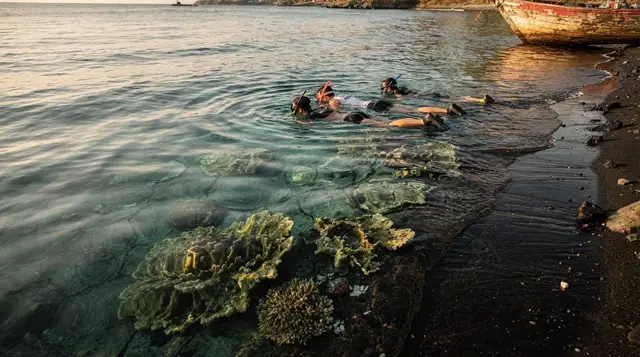
When people talk about diving in Bali without specifying where, they are usually thinking of Tulamben, on the island’s north-east coast. The main draw is the USAT Liberty, a US Army cargo ship torpedoed during the Second World War and later pushed into the sea by lava flow from Mount Agung’s 1963 eruption, where it has sat ever since, now heavily encrusted with coral and home to a resident population of fish that has made the wreck one of the most photographed dive sites in South-East Asia. What makes it unusual is the access: the wreck lies close enough to shore that many operators run it as a shore dive, entering over black volcanic pebbles rather than from a boat.
That accessibility is also why Tulamben draws both first-time divers on a discover-scuba experience and technical divers doing multiple penetration dives on the same wreck. A trip like the discover scuba diving experience at the Liberty wreck is built specifically for people who have never dived before and want a supervised introduction on one of the most forgiving sites to do it. For certified divers who just want a straightforward day of diving the wreck without the beginner instruction, the Tulamben scuba diving day trip covers the logistics without the training component.
Amed: the quieter alternative next door
A short drive up the coast from Tulamben, Amed gets less attention but offers a genuinely different kind of diving: black-sand muck slopes, smaller reef structures, and a string of Japanese shipwrecks from the same era as the Liberty, without anything like the crowds at the more famous wreck. Amed works well as a base if you want to dive multiple days without the site feeling repetitive, since operators here run both muck-diving trips looking for small, unusual marine life and combined trips that head down the coast to dive Tulamben itself.
Nitrox and specialty courses are common out of Amed too, since the area has a cluster of smaller dive operators competing for a steadier stream of repeat divers rather than one-off day-trippers. A course such as the Amed enriched air nitrox diving course is a reasonable way to extend bottom time on subsequent dives if you are already comfortable in the water and planning several days of diving rather than a single outing.
Nusa Penida: manta rays and mola-mola, not a wreck
Nusa Penida sits in an entirely different category from the east-coast sites. There is no wreck here; the appeal is drift diving along dramatic limestone walls with a real chance of encountering manta rays, which cruise cleaning stations off the island’s south-west coast throughout the year, and, in season, the ocean sunfish known locally as mola-mola. Manta sightings at the main cleaning stations are common enough that operators build entire day trips around them, but currents around Nusa Penida can be strong and unpredictable, which is worth knowing before you sign up if you are a newer diver.
Because Nusa Penida diving is boat-based and the crossing from Sanur or Padang Bai takes real time, a Nusa Penida dive day is effectively a full-day commitment even though the diving itself might only run a few hours. Trips typically bundle two or three dive sites into one outing to make the crossing worthwhile.
Menjangan and the west: coral over drama
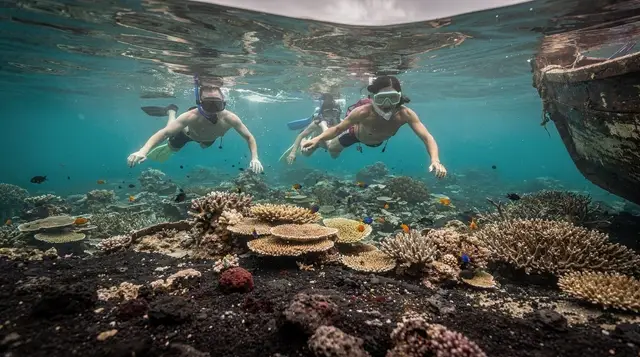
On the opposite side of the island, off the coast near the West Bali National Park, Menjangan offers a different style of diving again: a steep coral wall in generally calmer, clearer water than the strait around Nusa Penida, with less current and fewer big pelagic encounters. It is the site most likely to appeal to divers who want a relaxed wall dive with strong visibility over the drama of mantas or a wreck, and it doubles well as a snorkelling destination for people travelling with non-divers.
Learning to dive vs diving as a certified diver
| Already certified | Learning to dive | |
|---|---|---|
| Best area | Tulamben or Amed for wreck and muck variety; Nusa Penida if currents don’t concern you | Tulamben, for the shallow, sheltered conditions around the Liberty wreck |
| Typical trip length | Single or multi-day fun dives | Multi-day course, usually three to four days for an open-water qualification |
| What to book | A fun-dive day trip or package | A structured beginner course with a certified instructor |
If you are not yet certified and want to start from scratch rather than a one-off discover-dive, courses run out of both Tulamben and Amed. Divers who already know they want to commit several days to it sometimes look further afield to the best diving in Bali overview for a fuller comparison of course options and providers before choosing.
What isn’t worth the detour
Skip any operator that cannot clearly explain their group size and equipment maintenance before you book — this matters more for diving than almost any other activity in Bali, and a vague answer is a real warning sign, not just an inconvenience. It is also not worth chasing every site in one trip. Divers who try to fit Tulamben, Amed, and Nusa Penida into two or three days usually end up spending more time in transit than underwater, and the fatigue shows in how much they actually get out of each dive. Pick two areas at most for a short trip.
What it costs
Diving costs in Bali scale with three things: whether you are a beginner needing instruction or a certified diver just needing a guide and equipment, how far the site is from your base, and whether you book a single dive, a day of multiple dives, or a multi-day course. A discover-scuba introduction near Tulamben will generally run less than a full certification course, and a single day trip from South Bali costs more overall than the same dives booked once you are already based in the east, since the transport time is built into the price either way. Equipment rental, park or site fees, and lunch are usually included in day-trip pricing, but always check what is and isn’t covered before comparing quotes.
When to go
Tulamben and Amed are diveable year-round, since both sit in relatively sheltered water on the north-east coast, though visibility and conditions shift somewhat with the season. Nusa Penida’s manta sightings happen throughout the year at the main cleaning stations, but the odds of encountering mola-mola specifically rise sharply between July and October, which is also when water temperatures around the strait drop enough that many divers add a hood or thicker wetsuit layer. Outside of that window, expect warmer water and better odds with mantas over mola-mola.
Getting there and getting around
Tulamben and Amed sit on the north-east coast, a long drive from the southern resort areas — budget the better part of a morning if you’re doing a day trip from Kuta, Seminyak, or Canggu, and a shorter but still real drive from Ubud. Staying in the east for a few nights removes that daily transit cost if you’re diving multiple days. Nusa Penida trips depart by boat from Sanur or Padang Bai, and the crossing itself takes a meaningful chunk of the day, so factor that into how many sites you can realistically dive. Menjangan is reached from the north-west, near Pemuteran, which is its own long drive from the south and usually makes more sense as an overnight stop than a single-day round trip.
How this fits into a longer trip
If diving is the main reason for your trip rather than one activity among several, it’s worth building the itinerary around it from the start rather than squeezing dives into a beach-holiday schedule. The 10-day Bali diving trip itinerary sequences a stay in the east with the crossing to Nusa Penida in a way that avoids the worst of the backtracking. For a deeper look at each area, the Tulamben Liberty wreck guide, the Amed diving guide, and the Nusa Penida manta point guide go further into site specifics than this overview does.
Divers heading further afield afterwards should also look at the Menjangan Island diving guide and the Komodo liveaboard guide, since a fair number of people combine a Bali diving stay with a trip east toward Komodo. If you’re not yet certified, start with learning to dive in Bali before booking a fun-dive-only itinerary. Non-divers travelling with you might prefer the gentler introduction covered in the Gili Islands snorkelling guide or a look at diving with mola-mola in Bali to understand what the fuss is about before deciding whether to join in.
Frequently asked questions about Bali Diving
Do I need to be certified to dive the Liberty wreck at Tulamben?
No. The wreck sits in shallow enough water that many operators run a supervised discover-scuba introduction there specifically because conditions are forgiving for first-timers. Certified divers get more freedom to explore, but it is not a certified-only site.
Is Nusa Penida diving suitable for a first-time diver?
It can be, but currents are less predictable there than at Tulamben or Amed, and manta and mola-mola sites in particular can have strong drift. If you’re newly certified, ask your operator directly about conditions on the day rather than assuming it will be as sheltered as a wreck dive.
What’s the difference between diving Tulamben and diving Amed?
Tulamben is built around one famous site, the Liberty wreck, reached mostly by shore entry. Amed spreads across several smaller muck and reef sites with fewer crowds, and often gets combined with a day trip down to dive the wreck itself.
When is the best chance of seeing mola-mola?
Roughly July to October, when the seasonal upwelling that draws the ocean sunfish into Nusa Penida’s channel is most reliable. Outside that window you’re more likely to see manta rays than mola-mola, though mantas are a good chance year-round regardless.
Can non-divers do anything at these sites?
Yes. Menjangan and parts of Nusa Penida work well for snorkelling alongside a diving group, and several Amed and Tulamben operators offer a snorkel-only option on the same boat as certified divers.
How far in advance should I book a diving day trip?
There’s no fixed rule, but during July, August, and the Christmas–New Year period, dive boats and instructors get booked up faster than in quieter months, so booking a few days ahead in high season avoids disappointment.
Is the water cold enough that I need a thick wetsuit?
Not by most standards, but repeated dives across a full day in the same wetsuit thickness can feel cold by the third or fourth dive, and Nusa Penida’s water runs noticeably cooler than Tulamben’s, especially from July to October.
Should I book diving through a South Bali hotel or wait until I’m based in the east?
If you’re only doing one day of diving, either works, but if you’re diving several days, basing yourself in Tulamben or Amed for part of the trip saves meaningful transit time compared with day-tripping from the south each time.
Diving & snorkelling tours on GetYourGuide
Verified deep-linked GetYourGuide tours. Book through these links and we earn a small commission at no cost to you.
These are our own photographs of Bali, not the operator's pictures of this tour — open the tour page to see those.