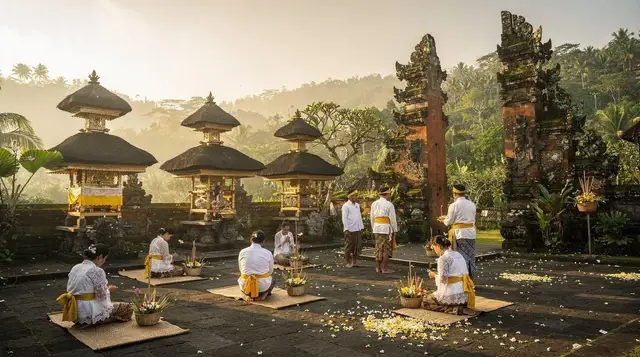
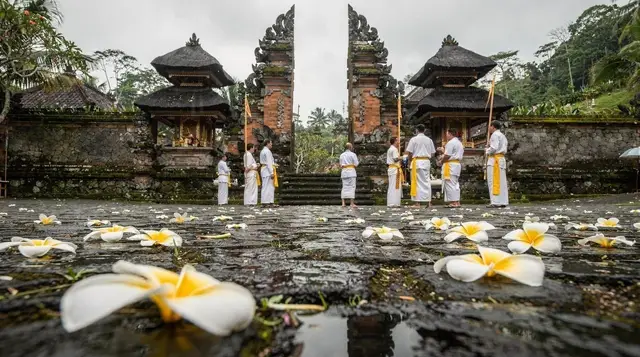
Ulun Danu Beratan Temple
Is Ulun Danu Beratan worth visiting if I have already seen Bali's coastal temples?
Yes, and it offers something genuinely different — a lakeside setting at cooler highland elevation, with the temple's tiered meru towers appearing to float on the water when lake levels are high. It is one of the more photographed inland temples on the island and rarely disappoints, though it is worth bringing a layer for the noticeably cooler air at this elevation.
Ulun Danu Beratan sits on the shore of Lake Beratan in the Bedugul highlands, and it is one of the few genuinely inland, high-elevation temples on most Bali itineraries, which changes both the atmosphere and the practical planning compared with the coastal sea temples most visitors see first. The temple is dedicated to Dewi Danu, the Balinese goddess of lakes and water, reflecting the site’s deep connection to the region’s irrigation and water supply — a link that matters more than it might first appear, given how central water management is to Balinese agriculture generally.
The image most people associate with Ulun Danu Beratan is its cluster of tiered meru towers appearing to rise directly out of the lake, an effect that depends genuinely on water level — when the lake is high, the illusion of a floating temple is striking; in drier periods, more of the shoreline and foundation becomes visible, changing the composition considerably. It remains a recognisable, widely reproduced image of Bali either way, and it is one of the temples most likely to already be familiar to visitors before they arrive, having appeared on everything from postcards to Indonesia’s own currency.
Bedugul’s elevation brings a genuinely different climate from the rest of a typical Bali itinerary, cool and often misty, particularly in the early morning — a detail that catches out visitors who have packed exclusively for tropical coastal heat and arrive underdressed for a noticeably chillier stop.
Ulun Danu Beratan at a glance
| Where | Shore of Lake Beratan, Bedugul highlands, Tabanan regency |
| Cost | Modest entrance fee; optional boat rides on the lake cost extra |
| Time needed | An hour or two for the temple grounds and lakeside walk |
| Access | Private driver or organised tour from Ubud or South Bali; a genuine highland drive |
| Best time | Morning for the clearest views before afternoon mist sometimes rolls in; check current lake level for the best “floating temple” effect |
The temple’s water-goddess significance
Dewi Danu, honoured at Ulun Danu Beratan, holds a role in Balinese Hindu belief connected specifically to fresh water and its distribution across the island’s agricultural land, an association that ties the temple directly into the subak irrigation system that shapes so much of Bali’s rice-growing landscape.
Understanding this link gives the temple a significance beyond its photogenic setting — this is not simply a scenic lake temple, but one connected conceptually to the water that feeds the rice terraces seen across much of the island, including the UNESCO-listed system at Jatiluwih not far away. The subak irrigation explained guide covers this wider system in more detail if the connection interests you.
The cooler Bedugul climate
Bedugul sits at a considerably higher elevation than most of a standard Bali itinerary, and the temperature drop is genuinely noticeable, particularly in the early morning when mist often sits over the lake before burning off later in the day. Travellers arriving straight from South Bali’s coastal heat are sometimes caught off guard by how much cooler it feels here, and a proper layer — more than the light clothing that suffices at sea level — makes a real difference to how comfortable the visit feels.
Boat rides on the lake
Beyond the temple grounds themselves, Lake Beratan offers boat rides, giving a different vantage point on the temple’s meru towers from the water rather than the shore. It is an optional add-on rather than a core part of most standard temple visits, but it is worth considering if you want a genuinely different photo angle than the standard shoreline shot everyone else is also taking, or simply want more time on the lake itself rather than a brief temple stop.
Combining Ulun Danu Beratan with waterfalls
Given Bedugul’s position within Bali’s northern highlands, Ulun Danu Beratan is frequently combined with nearby waterfall stops on the same day. A full-day Ulun Danu Beratan Temple and Gitgit waterfall tour pairs the lake temple with one of the region’s better-known cascades, while travellers wanting a longer highland day might consider a route through Munduk’s jungle trails as well. See the Jatiluwih rice terraces UNESCO guide for another highland stop commonly combined with this route.
Pairing with Jatiluwih and Wanagiri
For a broader highland day covering more of the Bedugul-Jatiluwih corridor, the Ulun Danu Beratan Temple, Wanagiri and Jatiluwih tour strings together the lake temple, a popular viewpoint stop, and the UNESCO-listed rice terraces in a single coordinated route, which makes efficient use of the drive time required to reach this part of the island in the first place.
The Handara Gate and botanical garden nearby
Close to Ulun Danu Beratan, the striking split-gate entrance known as Handara Gate has become a popular photo stop in its own right, alongside the Bali Botanical Garden, which occupies a large stretch of highland terrain near the lake. The Botanical Garden, Handara Gate and Ulun Danu Temple tour bundles all three into a single day, suited to travellers who want a fuller highland itinerary rather than a single-temple stop.
Extending toward Tanah Lot on the same day
Some visitors combine a morning at Ulun Danu Beratan with an afternoon and evening finishing at Tanah Lot for sunset, using the drive south as a natural way to close out a highland day with a coastal finale. The Bedugul, Ulun Danu and Tanah Lot Temple day tour is built around exactly this route, and it is a sensible way to see two of Bali’s most photographed temples — one lake, one sea — in a single well-paced day. See the Tanah Lot sunset guide for the coastal half of that pairing.
The wider Bedugul area beyond the temple
Bedugul as a region extends well beyond the temple itself, encompassing a stretch of highland terrain that includes a traditional market, the botanical garden, and several viewpoints over the surrounding lakes — Bali actually has three highland lakes in this general area, of which Beratan is the most visited thanks to the temple. Travellers with extra time sometimes explore this wider region rather than treating Ulun Danu Beratan as an isolated stop, since the cooler climate and rural highland scenery offer a genuine contrast to the rest of a typical Bali itinerary that rarely strays from the coast or Ubud’s immediate surroundings.
A quieter early morning visit
Because Ulun Danu Beratan sits on most tour operators’ standard highland routes, it can see a real convergence of visitors by mid-morning, particularly during peak season. An early arrival, ideally before the bulk of organised tours reach the site, gives a noticeably calmer, mistier atmosphere that many visitors find more atmospheric than the busier midday version of the same view. This is also when the temple’s connection to its water-goddess mythology feels most tangible, with mist often still sitting over the lake surface in a way that adds genuine atmosphere beyond what any photograph fully captures.
Combining a highland waterfall detour
For travellers extending their Bedugul day further north, the wider region around Munduk holds several of Bali’s more dramatic waterfalls, reachable via jungle trekking routes that differ considerably from the easier, more manicured falls closer to Ubud. A Munduk jungle trekking and Ulun Danu Beratan Temple tour combines the lake temple with this more adventurous northern stretch, suited to travellers who want a genuine hike alongside the temple visit rather than a purely drive-and-photograph itinerary.
A separate Sekumpul waterfalls and Ulun Danu Beratan Temple tour pairs the lake temple with one of the island’s more celebrated multi-tiered waterfalls instead, for travellers prioritising a single standout cascade over a longer trekking day.
What isn’t worth the detour
Do not build an entire day around Ulun Danu Beratan alone if your time in Bali is genuinely limited — the temple itself, while photogenic, is a relatively contained stop, and the real value of the drive up to Bedugul comes from combining it with nearby waterfalls, viewpoints, or Jatiluwih’s rice terraces rather than treating it as a standalone destination worth a dedicated round trip.
Budget
The entrance fee is modest, and the optional lake boat ride is a reasonable additional cost if you want the water-level vantage point. Transport is the larger cost variable, given the genuine highland drive required from South Bali or Ubud, which is why most visitors combine the stop with other Bedugul-area sights rather than visiting in isolation.
When to go
Morning is generally the more reliable time for clear views before any afternoon mist rolls in, though Bedugul’s highland climate means weather here can shift more unpredictably than at Bali’s coastal temples. Checking recent rainfall or asking a local guide about current lake levels is worth doing if the classic “floating temple” photo composition matters specifically to your visit, since a particularly dry stretch can leave more of the shoreline visible than the iconic image suggests.
Getting there and getting around
Ulun Danu Beratan sits in the Bedugul highlands, a genuine drive from both South Bali and Ubud, making a private driver or organised tour the standard way most visitors arrive, particularly given how often the temple is combined with other highland stops on the same route. See Bedugul for more on the wider area, and Munduk if you plan to extend further into the northern highlands on the same trip.
How this fits into your wider Bali trip
Ulun Danu Beratan works well as part of a dedicated highlands day, paired with Jatiluwih’s rice terraces or a waterfall stop near Munduk, and it fits naturally within the North and West Bali, 4 days itinerary. For nearby viewpoints on the same general route, see the Kintamani viewpoints guide, and read the Bali temple etiquette guide before your visit for the general dress code that applies here as at any active temple.
Is Ulun Danu Beratan crowded like Tanah Lot or Uluwatu?
It can get busy, particularly midmorning once tour groups converge, but the lakeside setting generally has more room to spread out than the more confined coastal viewpoints at Bali’s famous sunset temples, making the crowd feel somewhat less concentrated even at similar visitor volumes.
Frequently asked questions about Ulun Danu Beratan Temple
Is Ulun Danu Beratan the temple shown on Indonesian currency?
Its distinctive lakeside meru towers are a widely recognised image associated with Indonesian banknote design, part of why the temple already feels familiar to many visitors before they arrive in person.
How cold does it get at Bedugul?
Noticeably cooler than coastal Bali, particularly in the early morning — not genuinely cold by most standards, but enough of a contrast that a light jacket or long sleeves make the visit more comfortable.
Can I swim in Lake Beratan?
Swimming is not the standard activity here; boat rides are the typical way to experience the lake itself, rather than open swimming.
Is the temple interior open to visitors?
As with most active Balinese temples, the innermost areas are reserved for worship, while the grounds and lakeside walkways are open to general visitors.
Does the temple always look like it is floating on the lake?
The floating effect depends on the lake’s water level, which varies with rainfall and season. Higher water levels give the more dramatic, widely photographed composition; drier periods reveal more of the shoreline and foundation.
How long should I plan for a visit here?
An hour or two covers the temple grounds and a lakeside walk comfortably; add more time if you want to include a boat ride or are combining the stop with nearby waterfalls or viewpoints on the same day.
Temple & culture tours on GetYourGuide
Verified deep-linked GetYourGuide tours. Book through these links and we earn a small commission at no cost to you.
These are our own photographs of Bali, not the operator's pictures of this tour — open the tour page to see those.