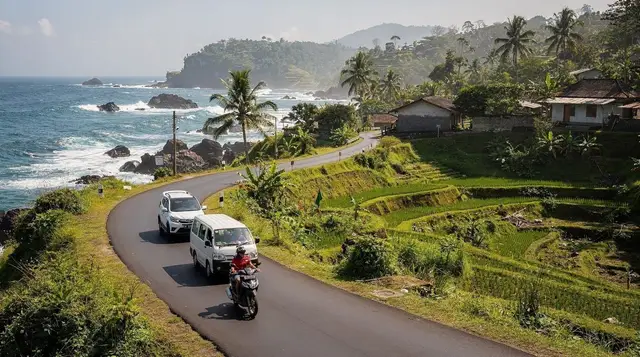
East Bali Is the Bali That Most Visitors Miss Entirely
Most first-time Bali itineraries follow a predictable shape: a few days in South Bali’s beach towns, a few days in Ubud, maybe a day trip to Nusa Penida. East Bali rarely makes the cut, not because it lacks substance but because it demands more driving and offers less of the polished, easily bookable infrastructure that makes South Bali and Ubud so straightforward to plan around. That’s exactly what makes it worth deliberately building into a longer trip rather than treating it as an afterthought.
The region covers genuine range: the terraced hillsides around Sidemen, often described by people who’ve spent real time in both places as a quieter, less commercialised version of Ubud’s rice terraces from a decade or two ago; Besakih, Bali’s largest and most significant temple complex, spread up the slopes of Mount Agung; the black-sand coastline and diving around Amed and Tulamben; and the slower coastal town of Candidasa, which never developed the density of Kuta or Seminyak. None of these sit close enough together for a single rushed day to do them all justice, which is precisely why East Bali doesn’t fit neatly into a typical short itinerary and gets skipped as a result.
What you trade for that inconvenience is a genuinely different pace and feel from the rest of the island. Roads are quieter, villages feel less oriented entirely around tourism, and the landscape itself — drier, more dramatic, shaped by Mount Agung’s presence — looks and feels distinct from Ubud’s lush central jungle or South Bali’s beach-town density. For travellers who’ve already had their fill of South Bali’s crowds, East Bali is the part of the island that most closely matches the “undiscovered” version of Bali a lot of first-time visitors expect but rarely find in the busier regions.
At a glance
| Where | East Bali, covering Sidemen, Besakih, Candidasa, Amed, Tulamben, and the Mount Agung region |
| Best for | Travellers who’ve covered South Bali and Ubud, or specifically want a slower, quieter pace |
| Time needed | At least a full day; two to four days to properly cover the region’s range |
| Access | Private driver or organised tour recommended; roads are quieter but wind through hilly terrain |
| Best time | Dry season for clearer Mount Agung views and easier road conditions |
Sidemen: the rice terraces without the crowds
Sidemen sits in a valley with sweeping views toward Mount Agung, and its terraced rice fields are frequently compared favourably against Tegalalang’s now heavily commercialised, swing-and-selfie-spot version near Ubud. What Sidemen offers instead is a genuinely working agricultural landscape with far fewer tourists, walking trails through the terraces rather than a single viewing platform, and a slower pace generally, including several well-regarded guesthouses that make it a worthwhile overnight stop rather than just a drive-through viewpoint.
Besakih: East Bali’s spiritual centre
Besakih, the Mother Temple, is East Bali’s most significant single site and one of the most important in Balinese Hinduism as a whole, spread across more than twenty separate temples climbing the slope of Mount Agung. It has a well-earned reputation for guide-related pressure tactics near the entrance, which is worth knowing about and preparing for rather than being caught off guard by.
Understanding the routine in advance — an official ticket booth exists, and any additional guide fee beyond it is negotiable rather than compulsory — takes most of the sting out of an interaction that otherwise catches a lot of first-time visitors off balance. A structured tour, such as the East Bali cultural tour with hotel pickup, typically handles this friction for you as part of a guided visit rather than leaving you to navigate it solo.
Amed and Tulamben: the coast most visitors skip
Amed and Tulamben, further along East Bali’s coastline, offer a genuinely different beach and diving experience from South Bali — black volcanic sand, quieter fishing-village atmosphere, and, at Tulamben specifically, one of the region’s most accessible wreck dives, the USS Liberty, reachable directly from the beach. Neither town has South Bali’s density of beach clubs or nightlife, which is precisely the appeal for travellers seeking a quieter coastal stay rather than a lively one. For travellers who’ve spent several nights in South Bali’s louder beach towns already, the contrast alone can feel like a genuine change of pace rather than simply more of the same coastline further along the map.
Building a realistic one-day East Bali route
Given the distances involved, a single day in East Bali works best focused on two or three stops rather than an ambitious full-region sweep. A common and sensible pairing combines Besakih with either Sidemen’s rice terraces or a coastal stop like Candidasa, rather than trying to cover the temple, the terraces, and the coast all in the same day. An option like the East Bali day trip including Temesi waterfall builds a realistic, achievable route around a handful of complementary stops rather than an overly ambitious itinerary.
Private touring for a more flexible pace
Given how spread out East Bali’s highlights are, a private tour gives more control over pacing than a fixed-group itinerary, which matters more here than in more compact regions of the island. An option such as the East Bali exotic private tour or the more comprehensive East Bali highlights all-inclusive private tour allows the day to adjust around how much time you actually want to spend at each stop, rather than a fixed group schedule dictating the pace.
Candidasa and Tenganan: the coast and the walled village
Candidasa itself is a modest, low-key coastal town that never developed the density of South Bali’s beach resorts, and it works well as an overnight base for exploring the wider East Bali region rather than as a headline destination in its own right. A short drive inland from Candidasa, the traditional Bali Aga village of Tenganan preserves customs and a village layout distinct from the rest of the island, having remained relatively isolated from some of the broader waves of outside influence that shaped much of Bali elsewhere. It’s a worthwhile stop for anyone interested in the cultural variation that exists within Bali itself, beyond the more commonly visited version of Balinese Hindu culture found around Ubud and the south.
Tirta Gangga: the water palace worth pairing with Besakih
Tirta Gangga, a former royal water palace with ornamental pools, fountains, and stepping stones across koi ponds, sits within a reasonable driving loop of Besakih and makes a natural pairing for travellers building a temple-and-garden day rather than a temple-only itinerary.
It’s a gentler, slower stop than Besakih, well suited to a relaxed wander rather than a guided walk, and its more manicured, garden-like setting offers a genuine contrast to the working-temple atmosphere of Besakih itself, which is part of why the two are so frequently combined into the same day’s route. Photographers in particular tend to appreciate the change in pace between the two, since Tirta Gangga’s calmer, more contained setting is easier to work with than Besakih’s larger, more crowded terraces on a busy day.
Why East Bali rewards travellers who slow down
The single biggest adjustment that makes an East Bali visit work well is abandoning the checklist mentality that serves South Bali and Ubud itineraries reasonably well. Trying to tick off Besakih, Sidemen, Tirta Gangga, and the coast in a single rushed day produces a day of driving punctuated by brief, unsatisfying stops, while choosing two complementary sites and genuinely lingering at each produces a far more memorable visit. This is worth internalising before you plan the day, since the natural instinct on a first Bali trip, especially after an efficient, well-organised South Bali stretch, is to apply the same pace to a region that simply doesn’t reward it the same way.
A quieter alternative to Ubud for a longer stay
For travellers who enjoyed Ubud’s rice-terrace and jungle atmosphere but found it busier than expected, particularly around its most photographed spots, East Bali — and Sidemen specifically — offers a genuine alternative for a longer, slower stay later in a trip.
Several guesthouses and small villas in the Sidemen area cater specifically to travellers seeking exactly this kind of quiet, extended stay, with rice-terrace views and walking trails that don’t require competing with tour buses for a viewing spot, which is an increasingly common complaint about some of Ubud’s own most popular viewpoints during peak season. It’s a genuine trade-off worth weighing deliberately — less convenience and fewer amenities in exchange for considerably more solitude, which suits some travellers far better than others depending on what they actually want from a longer stay.
What isn’t worth the detour
Skip attempting to combine East Bali with Nusa Penida or a full Ubud day in the same single-day itinerary — the driving distances involved make this genuinely unrealistic without sacrificing meaningful time at every stop. Also skip visiting Besakih without preparing for the guide-pressure situation at the entrance; going in informed, or via an organised tour that manages this for you, turns a potentially frustrating first impression into a manageable, expected part of the visit.
Budget
East Bali day tours and private drivers are generally priced comparably to similar full-day tours elsewhere on the island, with the main cost variable being private versus group format and how many stops the itinerary covers. Accommodation in Sidemen and Candidasa tends to be more affordable than equivalent South Bali or Ubud options, reflecting the region’s lower overall tourism density, which is worth factoring in if an overnight stay is part of your plan.
When to go
Dry season, roughly April to October, gives the clearest views of Mount Agung from Sidemen and Besakih, and easier driving conditions on East Bali’s hillier, sometimes narrower roads compared with the wet season. Independent of season, an early departure from South Bali or Ubud makes the most of the long driving distances involved, leaving more usable daylight at the actual destinations rather than losing the morning to transit.
Access and getting there
East Bali is reachable by private driver, organised tour, or self-drive for confident, experienced scooter or car drivers, though the region’s winding roads and real distances make a private driver the more comfortable option for most visitors, particularly those planning to cover more than one area in a day. There’s no meaningful public transport option connecting East Bali’s scattered sites, so arranging transport in advance, whether through a tour or a hired driver, is effectively required rather than optional.
How this fits into a longer trip
The East Bali day trip guide goes into more logistical depth on routing than fits into this overview page. For specific East Bali destinations, see the Sidemen destination guide, Besakih destination guide, Candidasa destination guide, Tirta Gangga destination guide, Tenganan destination guide, and Amed destination guide.
For a deeper look at Besakih specifically, the Besakih Mother Temple guide covers the guide-fee situation and temple layout in more detail. If you have several days to dedicate to the region rather than a single day trip, the East Bali, 4 days itinerary structures a longer, unhurried route through the region’s full range of highlights.
Frequently asked questions about East Bali Is the Bali That Most Visitors Miss Entirely
Is East Bali worth visiting if I only have a week in Bali?
If your week already covers South Bali and Ubud comfortably, even a single well-planned East Bali day is worth adding. If your week is already tightly packed, East Bali is more realistically a reason to plan a return trip.
How far is East Bali from Ubud?
Distances vary by specific destination, but expect a longer drive than most Ubud-area day trips, given East Bali’s winding roads and the real distances between its scattered highlights.
Is Besakih worth visiting despite its guide-pressure reputation?
Yes, most visitors who go in prepared, either through an organised tour or by researching the situation in advance, still rate it as a significant and worthwhile site despite the entrance friction.
Should I stay overnight in East Bali or visit as a day trip?
If your schedule allows it, an overnight stay in Sidemen or Candidasa lets you experience the region’s quieter pace more fully than a single rushed day trip.
Is Sidemen better than Tegalalang for rice terrace views?
Both are worthwhile, but Sidemen offers a notably quieter, less commercialised version of a similar landscape, which appeals more to travellers who’ve already visited Tegalalang and want a less crowded alternative.
Can I combine East Bali with a Mount Agung trek?
Some travellers do, though it makes for a genuinely long and demanding combination given Mount Agung’s own early-start trekking schedule; most are better served treating the two as separate outings.
Is diving in Amed or Tulamben worth adding to an East Bali day?
If diving interests you, yes, particularly Tulamben’s beach-accessible wreck dive, though it’s worth allocating proper time rather than squeezing it into an already packed sightseeing day.
What’s the best way to get around East Bali?
A private driver or organised tour is the most practical option given the region’s real distances and lack of public transport connecting its scattered highlights.
Best day trips from Bali on GetYourGuide
Verified deep-linked GetYourGuide tours. Book through these links and we earn a small commission at no cost to you.
These are our own photographs of Bali, not the operator's pictures of this tour — open the tour page to see those.