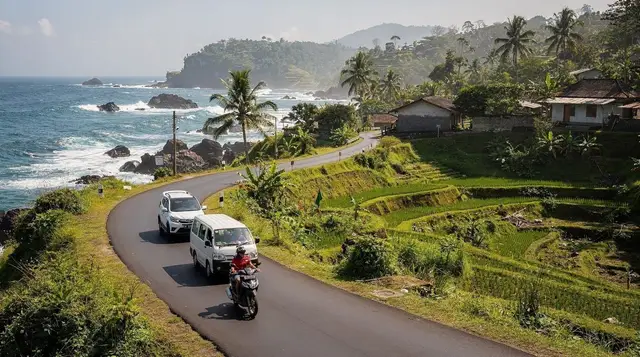
Sekumpul is not one waterfall but a cluster of several, dropping from a high jungle ridge into a shared basin below, which is the main reason it is so often named the most impressive waterfall on an island with no shortage of competition for that title. Photographs tend to flatten the scale — standing at the base with multiple cascades falling around you, some from a genuinely serious height, gives a sense of drama that a single-drop waterfall elsewhere in Bali usually cannot match.
Getting there is the honest catch. Access involves a walk down a long, steep series of steps cut into the hillside, through working clove and coffee plantations, followed by a river crossing on stepping stones or a short wade depending on water levels, before the falls come into view. None of this is exotic or dangerous when taken at a sensible pace, but it is a genuine trek rather than a short stroll, and the climb back up afterwards, in Bali’s heat and humidity, is where most people who arrived unprepared for exercise start to regret their footwear choices.
Local villagers manage access to the falls, and an entry arrangement — effectively a local guide fee bundled with the path access — is standard practice here rather than an optional extra, worth knowing before you set out so it does not feel like an unexpected add-on cost at the trailhead.
Sekumpul at a glance
| Where | Inland from Lovina, North Bali, in the hills near Sekumpul village |
| Cost | Combined entry and local guide fee at the trailhead; modest but non-negotiable, since access runs through village-managed land |
| Time needed | Two to three hours round trip at a comfortable pace, including time at the falls |
| Access | Self-drive scooter to the trailhead, private driver, or as part of a North Bali tour |
| Best time | Dry season for safer footing; a day or two after rain for fuller water flow without the trail being at its most slippery |
The trek down, honestly
The descent runs through several hundred steps and a network of narrow paths cut through active plantation land, which means you will pass villagers working alongside the trail rather than walking through an untouched wilderness — a detail some visitors find adds character and others find breaks the illusion of remoteness. Either way, it is worth knowing in advance rather than being surprised by it. Handrails exist on some but not all of the steeper sections, and the final approach to the falls typically requires crossing a stream, which can range from an easy stepping-stone hop to a proper wade depending on recent rainfall.
Combining Sekumpul with dolphin watching or Wanagiri
Because Sekumpul sits inland from Lovina, many North Bali day tours combine the waterfall trek with the area’s other headline activity, the early-morning dolphin boat trip. A pairing like the dolphin watching boat tour combined with Sekumpul waterfall makes efficient use of a single day, front-loading the early wake-up with the boat trip and saving the more physical waterfall trek for later in the morning once you have had breakfast.
Alternatively, some operators route toward Wanagiri’s hillside viewpoints instead of the coast, such as the tour combining dolphin watching, Sekumpul, and Wanagiri, which adds a scenic lookout stop to the day rather than a second water-based activity.
Arriving via Mount Batur or a jeep route
Some visitors reach Sekumpul as an extension of a Mount Batur sunrise trek, given the broader central-north highlands both sit within, via an option like the Mount Batur sunrise jeep tour with a visit to Sekumpul waterfall. This makes for a genuinely long day — a pre-dawn volcano climb followed by a steep waterfall trek is a lot to ask of your legs in a single outing — but it suits travellers with limited days in Bali who want to maximise a single highlands-and-north-coast day rather than splitting it across two separate trips.
Fiji Waterfall and other nearby cascades
Several tours pair Sekumpul with a second, smaller cascade often marketed alongside it under a separate name — a reasonable add-on if your legs have anything left after the main trek, though it is a genuinely lesser sight by comparison and shouldn’t be the deciding factor in booking a tour. The wider hills around Sekumpul village hold a number of other, far less visited waterfalls that locals know about but that rarely appear on standard tour itineraries; asking your driver directly, particularly if you’re staying in the area for more than a day, can turn up options with a fraction of the visitor traffic, at the cost of less certainty about trail conditions and no organised access arrangement.
The clove and coffee plantations along the trail
Part of what makes the walk down to Sekumpul more interesting than a purely functional access route is that it cuts directly through working agricultural land — clove trees, coffee plants, and other crops grown by the surrounding village community, rather than a maintained park trail through untouched forest.
Clove harvesting seasons in particular can mean encountering the distinctive scent of drying cloves laid out near the path, a small but memorable sensory detail that has nothing to do with the waterfall itself but adds to the sense that this is a working landscape rather than a purpose-built attraction. It is worth pausing on the way down, not just powering through toward the falls, since the plantation setting is genuinely part of what the visit offers.
What isn’t worth the detour
Skip attempting Sekumpul immediately after a heavy, prolonged rain event — beyond the risk of slippery steps, water levels at the crossing can rise enough to make the final approach genuinely unsafe, and local guides may turn visitors back on those days regardless of how far you have already come. Also skip trying to rush the visit into thirty minutes to fit more stops into a single day; between the descent, time at the falls, and the climb back up, Sekumpul deserves a proper two-to-three-hour window rather than being squeezed as an afterthought.
What it costs
The combined trailhead and local guide fee is a fixed, modest cost that funds path maintenance and village management of the access route — treat it as non-negotiable rather than something to bargain down. Beyond that, transport to the trailhead is the main cost variable, with a private driver or organised tour costing more than self-drive scooter but removing the navigation challenge of finding the correct (and occasionally unsignposted) turn-off from the main North Bali road.
When to go
Dry season, roughly April through October, gives the safest footing on the steps and the stream crossing. Within that, timing your visit a day or two after rain rather than during a long dry spell gives fuller, more dramatic water flow without the trail being at its most treacherous — a local driver or guide can usually advise on recent conditions better than a generic seasonal rule.
Getting there and getting around
Sekumpul sits inland from Lovina in North Bali’s hill country, reachable by scooter, private driver, or organised tour; the final stretch of road narrows and the trailhead itself is not always obviously signposted from the main coast road, which is one practical argument for a driver who already knows the route over self-navigating on a first visit. There is no public transport option that makes sense here.
How Sekumpul fits into a longer trip
Sekumpul pairs naturally with Lovina as an overnight base, and with Gitgit if you want to compare North Bali’s two best-known waterfalls in a single trip — read the best waterfalls in Bali guide and the Sekumpul waterfall guide for more detail before you go. The North Bali day trip guide and the North and West Bali, 4 days itinerary both help sequence Sekumpul alongside Singaraja and Banjar hot springs without an exhausting single day of overreach.
If you’re weighing Sekumpul against Bali’s other major hiking-adjacent nature stops, the bali jungle trekking guide gives useful context for what to expect physically across the island’s trail-based attractions generally.
Frequently asked questions about Sekumpul Waterfall
How difficult is the trek to Sekumpul, realistically?
Moderate — several hundred steps down and the same back up, plus a stream crossing. It is manageable for most reasonably active travellers but is a genuine physical effort, not a casual stroll, and the return climb in heat is the part people most often underestimate.
Can I swim at the base of the falls?
Yes, and it’s one of the highlights of the visit — the pool at the base is generally swimmable, though check current conditions with your guide, since water levels and current strength vary with recent rainfall.
Is the entry fee at the trailhead legitimate?
Yes — it funds path maintenance and reflects that the access route runs through village-managed land, unlike a public trail on government land. It is standard practice here, not an informal add-on to be negotiated away.
How does Sekumpul compare to Gitgit waterfall?
Sekumpul is considerably more dramatic in scale, with multiple cascades rather than one, but requires a real trek to reach. Gitgit is far more accessible with minimal walking, making it the better choice if time or fitness is limited.
Is Sekumpul suitable for young children?
Generally not recommended for very young children given the steep steps and river crossing; older, more surefooted kids used to hiking can usually manage it with supervision.
Do I need a guide, or can I walk down independently?
The trailhead fee effectively includes local guide access, and going with a village guide is standard practice rather than optional — they also know current stream conditions and the safest current path, which changes somewhat with weather.
What should I bring?
Proper closed-toe shoes with grip, a change of clothes or a dry bag if you plan to swim, water, and cash for the trailhead fee, since card payment is not an option this far off the main road.
Is Sekumpul busy with tourists, or a quiet spot?
It draws a steady stream of visitors given its reputation, but the trek itself naturally limits numbers compared with roadside attractions — you won’t find the dense crowds of a place like Tegalalang’s rice terraces, and the walk down spreads people out rather than concentrating them in one bottleneck.
How does the water flow change through the year?
Flow is generally strongest during and shortly after the wet season, roughly November through March, and can thin out noticeably during an extended dry spell later in the dry season. If seeing the falls at their fullest matters most to you, a visit in the earlier part of the dry season, closer to the tail end of the rains, tends to offer the best balance of good trail conditions and strong water flow.