The Liberty Wreck at Tulamben: A Diver's Guide
Is the Liberty wreck at Tulamben worth building a dive day around, specifically?
Yes, for most divers it's the single most worthwhile dedicated dive site in Bali. It sits close enough to shore for an easy entry, carries decades of coral growth and resident marine life, and works for everyone from a first-time discover-scuba diver to someone doing repeat penetration dives. The trade-off is that it gets busy, especially mid-morning, so timing matters more than at most sites.
The USAT Liberty is a former US Army cargo ship, torpedoed off Bali’s coast during the Second World War, beached, and later pushed fully into the sea by lava flow from Mount Agung’s 1963 eruption. What was left behind is now one of the most consistently recommended wreck dives in South-East Asia: roughly 120 metres of hull lying in shallow-to-moderate depth, close enough to the beach at Tulamben that many divers walk in from shore rather than take a boat.
That accessibility is the whole story of why this site draws such a wide range of divers. A wreck that requires a boat and open-water conditions to reach filters out beginners almost automatically; a wreck you can enter by walking over volcanic pebbles from a beachside dive centre does not. Decades of coral growth over the hull, resident schools of fish moving through the structure, and enough visible wreckage to feel genuinely like a wreck dive rather than just a reef with metal underneath, all combine to make it a site that rewards repeat visits rather than a once-and-done photo opportunity.
This guide focuses specifically on the Liberty wreck itself — what the dive is actually like, who it suits, and the logistics of getting the timing right — rather than trying to cover the wider Tulamben and Amed diving area, which the best diving in Bali guide handles in more depth.
The Liberty wreck at a glance
| Where | Tulamben, north-east Bali coast |
| Cost | Varies with number of dives, whether you need instruction, and equipment rental |
| Time needed | A half day covers two to three dives comfortably; a full day trip from South Bali eats most of a day in transit |
| Access | Shore entry for most dives; a long but manageable drive or organised transfer from anywhere else on the island |
| Best time | Early morning, before both the crowds and the afternoon light change |
What the dive is actually like
The wreck lies roughly parallel to the shoreline, broken into sections after decades underwater, with the bow and stern more clearly recognisable than the heavily collapsed midsection. Divers commonly do multiple passes across a single outing: a shallower swim along the upper structure where light penetration is best for photography, then a deeper pass along the lower hull and surrounding sand where larger pelagic fish sometimes pass through. None of this requires advanced certification for the standard depths most operators dive, which is part of why the site works equally well for a first dive and a twentieth.
A guided day such as the Tulamben Liberty wreck three-dive day trip from South Bali is built around exactly this pattern — multiple dives across the same wreck at different depths and angles, with surface intervals between them, rather than one long single dive. If you would rather add a second activity to the day, some operators run a combined Tulamben area and Liberty wreck dive that pairs the wreck with a visit to a second nearby site.
First-timers vs certified divers doing fun dives
| First-timers | Certified divers | |
|---|---|---|
| What to book | A supervised discover-scuba session | A fun-dive package, often two to three dives |
| Depth range | Shallow, closely supervised | Full range of the wreck, deeper penetration for advanced divers |
| What matters most | Instructor ratio and comfort in the water beforehand | Group size and how much time you actually spend at the wreck versus travelling |
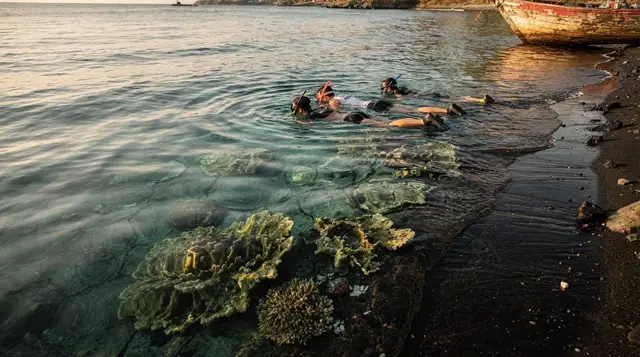
If you have never dived before, the discover scuba diving experience at the Liberty wreck is specifically designed for that, with a shallow, supervised introduction rather than throwing you straight into open-water conditions. For anyone who wants to try the wreck without committing to full scuba gear at all, a snorkel-and-kayak combination such as the beginner-friendly diving experience at the Liberty wreck covers the essentials without assuming prior training.
Why the eruption story actually matters here
It’s worth understanding the wreck’s backstory beyond trivia, because it explains the site’s condition. The ship was torpedoed and beached in 1942, largely stripped of usable material over the following two decades, and then displaced fully into the water by the 1963 eruption of Mount Agung — the same volcano visible from the beach on a clear day.
That means the wreck has had roughly six decades underwater to accumulate the coral growth and marine life that makes it worth diving today, rather than being a recently sunk artificial reef with a thin veneer of growth. Divers who are also interested in the volcano itself sometimes pair a Tulamben stay with the Mount Agung trek guide, though the two activities need entirely separate planning and neither should be treated as an add-on to the other.
Marine life you’re likely to see
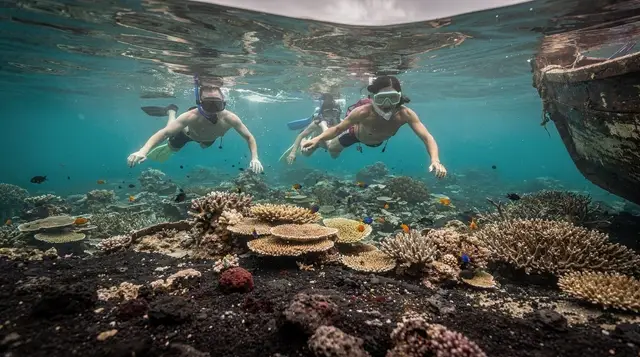
The wreck functions less like a shipwreck dive and more like an artificial reef at this point, given the decades of growth it has accumulated. Soft and hard coral covers large sections of the hull, and the structure attracts both resident reef fish that never leave and larger visitors passing through on a given day. Divers regularly report schooling fish moving in tight formations around the more intact sections, along with smaller subjects favoured by macro photographers hiding in the wreck’s crevices and surrounding sand. What you actually see varies day to day and with visibility, which is exactly why repeat dives on the same wreck rarely feel repetitive to people who dive it more than once on a trip.
Because the wreck sits in a sheltered bay rather than open ocean, currents are generally mild compared with a site like Nusa Penida’s channel, which is part of why it suits less experienced divers as well as veterans. That doesn’t mean conditions are always flat calm — surface chop can pick up in the afternoon, another reason the early-morning slot is worth prioritising if your schedule allows it.
What to bring and what’s provided
Standard scuba equipment — tank, regulator, buoyancy control device, fins and mask — is included in essentially every operator’s day-trip and course pricing at Tulamben, so you don’t need to travel with your own gear unless you specifically prefer it. What’s worth bringing yourself is a rash guard or thin wetsuit layer if you tend to feel the cold across multiple dives, reef-safe sunscreen for the surface intervals, and a way to keep cash dry and accessible, since the entry point is a public beach rather than a resort pool. An underwater camera is optional but genuinely rewarding here given how photogenic the wreck’s coral growth is; if you don’t own one, ask your operator whether a rental or a dive guide who can shoot for you is available.
Combining the wreck with Amed’s muck diving
A meaningful share of divers who come specifically for the Liberty end up extending their stay by a day or two to add Amed’s muck-diving sites, a short drive further up the coast. It’s a genuinely different style of diving — smaller subjects, slower-paced, more about spotting unusual marine life on a sandy slope than swimming through a dramatic structure — and it pairs naturally with a wreck-focused visit rather than competing with it. The Amed diving guide covers what that side of a combined trip looks like in practice.
What isn’t worth the detour
Skip diving the wreck in the middle of the day if you have any flexibility in your schedule — by mid-morning, multiple dive groups are typically working the same structure at once, and visibility drops as sediment gets kicked up by fins. It’s also not worth treating a single dive on the Liberty as a full Tulamben trip if you have more than a day available; the surrounding area has enough additional sites, covered in the best diving in Bali guide, that repeating the same one dive across multiple days undersells what the area offers.
Night diving the wreck
A smaller but dedicated group of divers specifically seeks out the Liberty at night, when nocturnal reef life active around the hull structure changes the character of the dive substantially compared with a daytime pass. A trip like the Bali diving day trip covering Manta Point and the Tulamben shipwreck is one way to combine a Nusa Penida-style dive with wreck diving in the same broader trip, though night diving specifically is usually booked as its own separate outing rather than tacked onto a standard day package.
What it costs
Pricing depends mainly on how many dives you do in a day, whether you need equipment rental, and whether you’re doing a discover-scuba introduction versus fun dives as a certified diver. A day trip that includes transport from South Bali costs more overall than diving the same wreck while already based in Tulamben or nearby Amed, since the transfer time and driver cost gets folded into every booking either way. Multiple-dive packages generally work out more cost-effective per dive than booking single dives one at a time, if you know in advance you want more than one.
When to go
The wreck is diveable year-round given its sheltered position, though visibility varies with the season and recent weather — heavy rain upstream can reduce clarity for a day or two afterwards during the wetter months from roughly November to March. Early morning is the more important timing factor day to day: arriving before the main wave of day-trip groups gives noticeably better visibility and a much less crowded wreck than a mid-morning or early-afternoon dive.
Getting there and getting around
Tulamben sits on Bali’s north-east coast, a long drive from the southern resort areas — plan for a significant chunk of the morning in transit if you’re coming from Kuta, Seminyak, or Canggu as a day trip, and a shorter but still real drive from Ubud. Staying overnight in Tulamben or nearby Amed removes the daily transfer cost if you’re diving the wreck more than once, and lets you dive at the quieter early-morning window without a pre-dawn departure from the south. There is no public transport option that makes sense here; this is private driver, organised tour, or self-drive scooter territory, and the coastal road has enough traffic and blind corners that a cautious pace matters.
How this fits into a longer trip
The Liberty wreck works well as either a single focused day trip from South Bali or as the anchor of a multi-day diving stay in the east. For the wider context of Tulamben and Amed diving together, read the best diving in Bali guide and the Amed diving guide. If you’re planning to combine wreck diving with the manta and mola-mola sites off Nusa Penida, the Nusa Penida manta point guide and the 10-day Bali diving trip itinerary both sequence multiple dive areas without the worst of the backtracking.
If this is your first time diving at all, start with learning to dive in Bali rather than booking a fun-dive package that assumes prior certification. Non-divers travelling with you can still see part of the wreck by snorkel, and the Gili Islands snorkelling guide and the diving with mola-mola in Bali post are worth a read if you want to understand the wider seasonal picture before deciding how much time to give diving overall.
Frequently asked questions about Liberty Wreck at Tulamben
Do I need a boat to dive the Liberty wreck?
No, most operators run it as a shore entry, walking in from the beach over volcanic pebbles. Some night dives or specific packages use a short boat transfer, but the standard daytime dive does not require one.
Is the Liberty wreck suitable for someone who has never dived before?
Yes, with a supervised discover-scuba introduction. The shallow depth and shore access make it one of the more forgiving wreck sites for a first experience, though you should still expect a full safety briefing beforehand.
How crowded does it actually get?
Meaningfully crowded by mid-to-late morning, when multiple day-trip groups are often diving the same sections of the wreck at once. Early morning is noticeably quieter and generally has better visibility too.
Can I snorkel the wreck instead of diving it?
Parts of the shallower structure are visible to snorkellers, and some operators run a combined snorkel-and-kayak option specifically for people who don’t want to dive but still want to see the wreck.
Is night diving at the Liberty worth doing as well as a daytime dive?
If you’re already a comfortable, certified diver, it’s a genuinely different experience worth adding, since the marine life active on the wreck changes substantially after dark. It’s usually a separate booking from a standard daytime package.
How does diving the Liberty compare with diving in Amed?
The Liberty is one specific, famous wreck; Amed spreads diving across several smaller muck and reef sites nearby, with a different, quieter character. Many divers do both across a multi-day stay in the area.
Do I need my own dive computer and gear?
No, equipment rental is standard at Tulamben dive operators, and most day-trip and course bookings include it. If you have your own gear and prefer to use it, confirm with the operator in advance.
Is the volcano visible from the dive site relevant to the dive itself?
Only in the sense that Mount Agung’s 1963 eruption is what pushed the ship fully into the sea, giving divers today the wreck as it now sits. The volcano itself is a separate activity, not something you interact with underwater.
Diving & snorkelling tours on GetYourGuide
Verified deep-linked GetYourGuide tours. Book through these links and we earn a small commission at no cost to you.
These are our own photographs of Bali, not the operator's pictures of this tour — open the tour page to see those.