Bali in 14 Days: The Full Island-and-Beyond Itinerary
Two weeks changes the entire planning exercise. At ten days, a trip is still about sequencing trade-offs carefully; at fourteen, there’s enough time to cover all of Bali’s core highlights at a genuinely relaxed pace and still have room for a proper extension to Lombok or the Gili Islands, rather than treating either as a rushed add-on. This is the itinerary length where a Bali trip stops feeling like a project to manage and starts feeling like an actual holiday, with slack built in rather than squeezed out.
This plan spends the first ten days broadly following the same structure as a well-paced ten-day trip — South Bali, Ubud and the volcano trek, Nusa Penida, and East Bali’s temple loop — before crossing to Lombok or the Gili Islands for a genuine four-day close to the trip. That crossing is what fourteen days makes possible that a shorter trip can’t: not a token day trip to the neighbouring islands, but real time to actually experience them. A day trip to the Gilis or Lombok, squeezed into a shorter itinerary, barely scratches the surface of what either genuinely offers.
As always, treat the specific sequencing below as a strong, tested framework rather than a fixed script. Swapping days, adding an extra rest day, or choosing Lombok’s mainland over the Gilis (or combining both) are all reasonable adjustments depending on your own priorities.
Bali 14 days at a glance
| Regions covered | South Bali, Ubud, Mount Batur, Nusa Penida, East Bali, plus Lombok or the Gili Islands |
| Pace | Genuinely relaxed throughout, with real rest days built in |
| Best for | Travellers with two full weeks wanting a complete, unhurried trip |
| Budget | Mid-range, flexible with accommodation and tour choices across two islands |
| What’s included that shorter trips skip | A proper multi-day Lombok or Gili Islands extension |
Days 1–3: South Bali
Ease into the trip with a half-day arrival followed by two full South Bali days — beach time, exploring your base (Seminyak, Canggu, or Uluwatu), a surf lesson if that appeals, and at least one sunset at Uluwatu or Tanah Lot. With fourteen days ahead, there’s no pressure to rush this opening stretch; let it properly set the pace for the rest of the trip. A slower start here pays off across the following two weeks.
Days 4–6: Ubud and the volcano trek
Move to Ubud on day four with a private driver — a 6-hour car charter for an Ubud day tour combines the transition with an introduction to the area.
Day five covers Ubud’s headline sights: Tegalalang’s rice terraces, temples, and a hands-on activity like a batik-making class or a zipline and garden tour with lunch. Day six is the Mount Batur sunrise trek, followed by a deliberately light rest of the day. That pairing of an intense morning with a genuinely restful afternoon sets the tone for how the rest of the trip should be paced.
Day 7: Nusa Penida day trip
Take an early fast boat from Sanur to Nusa Penida for a full day covering Kelingking, Angel’s Billabong, and Broken Beach. Start as early as the boat schedule allows to beat the mid-morning crowds, and plan for a lighter day eight given how tiring Penida’s roads and distances are, regardless of how well-paced the rest of the trip has been. That single lighter day makes a noticeable difference heading into East Bali.
Days 8–9: East Bali — Besakih, Tirta Gangga, and Sidemen
With two full days, East Bali’s temple loop gets the time it deserves. Day eight covers Besakih, ideally with a driver who understands the local guide-fee dynamics; day nine covers Tirta Gangga’s water palace and the quieter, terraced landscapes around Sidemen, a genuinely different, more contemplative pace than the rest of the trip. Both days form a calm bridge before the island-hopping stretch that follows.
Days 10–13: Lombok or the Gili Islands
Cross to Lombok or the Gili Islands on day ten, either by fast boat directly to the Gilis or via Lombok’s mainland ports, and give yourself four genuine days here rather than a rushed pass-through. This is enough time for a proper Gili Islands stay — splitting a couple of nights between Gili Air’s balanced pace and Gili Trawangan’s livelier scene, for instance — or, if Mount Rinjani’s trek appeals, enough time for a shorter Rinjani route alongside some beach time on Lombok’s south coast.
Both options genuinely reward the extra days this fourteen-day structure sets aside for them, rather than treating the crossing as an afterthought. Either version delivers something genuinely different from anything covered in the first nine days, which is exactly the point of extending a trip to two weeks. Travellers who’ve only ever done a Bali-only trip consistently describe this stretch as the part of a two-week itinerary that surprised them most.
Day 14: Return to Bali and departure
Cross back to Bali on the morning of day fourteen, or fly directly from Lombok’s international airport if your onward flight allows it, and use whatever’s left of the day for a calm, low-key finish rather than squeezing in one more activity. Either route works logistically, and the choice mostly comes down to whichever your onward flight schedule makes simplest. After thirteen days of steady activity across two islands, a relaxed departure matters more than a final sight ticked off a list.
What isn’t worth the detour on a 14-day trip
Don’t try to add both Lombok’s mainland and a separate multi-day Gili Islands stay unless you genuinely have more than fourteen days to spare — pick one focus for the extension rather than splitting four days too thinly across both. It’s also not worth attempting Mount Rinjani’s full multi-day trek on top of everything else in this itinerary unless you’re prepared to extend the trip further or drop something else; Rinjani alone can absorb three or four days on its own, which doesn’t leave much room for anything else in the Lombok/Gili stretch. Attempting it anyway, squeezed into the remaining days, tends to produce an exhausted, rushed trek rather than the rewarding multi-day experience Rinjani is capable of delivering with proper time.
Budget for a 14-day trip
Two weeks spreads fixed costs — airport transfers, inter-island boat crossings, multi-day tour packages — across enough days that they stop dominating the daily average cost the way they can on a shorter trip. Accommodation across five-plus regions and two islands scales predictably with nights booked, and mixing accommodation types (villas in South Bali, guesthouses in Ubud and East Bali, something simple on the Gilis) is a practical way to manage cost across a longer stay.
The Lombok or Gili extension adds its own boat-crossing and accommodation costs on top of the Bali portion, worth budgeting for as a distinct block rather than an extension of the same daily spend. Lombok and the Gilis, being generally less expensive than Bali’s south coast, often help balance out the overall trip budget rather than adding a disproportionate cost on top.
Getting around across two islands
Bali itself follows the same private-driver-plus-Grab/Gojek pattern as shorter itineraries, while the crossing to Lombok or the Gilis adds a fast-boat leg that’s worth booking ahead, particularly during peak season when popular crossings can sell out. Once on Lombok or the Gilis, transport differs sharply from Bali — the Gili Islands ban motorised vehicles entirely, relying on bicycles and cidomo carts, while Lombok’s mainland benefits from a private driver given its rougher roads and less developed ride-hailing coverage outside main towns. Adjusting expectations for this shift before you arrive avoids the mild culture shock of assuming Grab will work everywhere the way it does across most of Bali.
When to do a 14-day trip
Check the best time to visit Bali guide against your full two-week window, since the volcano trek, Nusa Penida crossing, and inter-island boats are all weather-dependent. If Mount Rinjani’s trek is part of your Lombok extension, check its seasonal closure dates directly, since it typically shuts during the wettest months.
That closure window can shift a little year to year, so confirm it close to your actual travel dates rather than relying on a figure from a previous year. If your dates land near Nyepi, read the how Nyepi affects your trip guide carefully — a full closed day and airport closure matters even on a longer trip, since it still removes a fixed block of time from the schedule.
Extending or adjusting this trip
This itinerary already represents a fairly complete Bali-plus-islands trip, but if you want to go further, a Bali and Lombok 2 weeks itinerary or Bali and Komodo 5 days itinerary as an add-on both extend naturally from this base. Both routes assume the same underlying logic as this one: build in real time for each region rather than compressing everything to fit an arbitrary trip length.
For a shorter version without the island extension, the Bali 10 days itinerary covers the same Bali portion without Lombok or the Gilis. The Bali vs Lombok guide and Gili Trawangan vs Air vs Meno guide are worth reading before finalising which island extension suits you best.
Food across two weeks and two islands
Bali’s food scene needs little introduction across South Bali, Ubud, and East Bali — casual warungs, polished restaurants, and everything in between, with enough variety to eat well every night of the first ten days without repeating a restaurant. Lombok and the Gili Islands offer a genuinely different food culture, centred on Sasak specialities like ayam taliwang on Lombok’s mainland, and a more internationally influenced café scene on the Gilis catering to the long-stay traveller crowd. Alcohol is more restricted in parts of Lombok given its Muslim-majority population, though it remains available in tourist areas and on the Gilis, which is worth knowing ahead of time if you’re used to Bali’s more permissive drinking culture.
Packing for a trip spanning two islands and multiple climates
Two weeks across South Bali’s beaches, Ubud’s cultural stops, a cold volcano summit, Nusa Penida’s clifftops, East Bali’s temples, and either Lombok or the Gilis calls for the broadest packing list of any itinerary on this site. Reef-safe sunscreen, breathable clothing, and swimwear cover most of the trip; a warm layer, headtorch, and sturdy shoes are essential for the volcano trek and doubly so if Rinjani’s trek is part of the Lombok extension; and a sarong is worth having on hand throughout for East Bali’s temples.
Pack slightly more redundancy into essentials like sunscreen and any medication than you would for a shorter trip, since restocking becomes less convenient once you’re on the Gilis specifically, given their smaller shops and more limited pharmacy access.
Recovery and pacing across a two-week trip
With two full weeks and two genuinely demanding stretches — the volcano trek and Nusa Penida on the Bali side, and potentially Rinjani’s trek on the Lombok side — pacing matters more here than on any shorter itinerary. Building at least one full rest day into each half of the trip, rather than treating the whole two weeks as a continuous string of activities, makes a real difference to how the trip feels by the final few days. Travellers who’ve done both a rushed ten-day trip and a properly paced fourteen-day one consistently report enjoying the longer version more, precisely because of this built-in slack.
Frequently asked questions about Bali in 14 Days
Should I choose Lombok’s mainland or the Gili Islands for the extension?
It depends on priorities: the Gilis suit beach relaxation and snorkelling with an easy, car-free pace, while Lombok’s mainland suits travellers wanting Mount Rinjani’s trek or a quieter, less-developed coastal stretch.
Is 14 days too long for a first Bali trip?
Not if you have the time and interest — it’s a genuinely well-paced length that avoids the rushed feeling of shorter trips, and the added flexibility makes it more forgiving of weather delays or a change of plan mid-trip.
Can I fit Mount Rinjani’s full trek into this itinerary?
Only by dedicating most of the Lombok/Gili block specifically to it, since Rinjani alone typically takes three to four days. If Rinjani is a priority, consider extending the trip further or dropping the East Bali stretch to make room.
Do I need separate travel insurance considerations for the Lombok/Gili portion?
Standard travel insurance covering Indonesia typically covers both Bali and Lombok, though it’s worth checking specifically if activities like diving or Rinjani’s trek are covered, since some policies exclude higher-risk activities without an add-on.
Is it worth flying directly out of Lombok instead of returning to Bali?
Yes, if your onward flight schedule allows it — Lombok International Airport has good connections, and skipping the return crossing to Bali saves a day that can instead be spent on the islands.
How physically demanding is this 14-day itinerary?
Moderate overall, with two genuinely demanding days (the volcano trek and Nusa Penida) spaced apart, plus an optional harder stretch if Rinjani’s trek is chosen for the Lombok extension.
Is two weeks enough time to properly relax as well as sightsee?
Yes, more than any shorter itinerary on this site — the extra length allows for real rest days on both islands, which is one of the clearest advantages of committing to a full two weeks.
Should I book Gili Islands accommodation before arriving, or figure it out on the ground?
Booking ahead is worth it, particularly for Gili Trawangan and Gili Air during peak season, when popular guesthouses and villas can sell out days or weeks in advance.
tours.14 days
Verified deep-linked GetYourGuide tours. Book through these links and we earn a small commission at no cost to you.
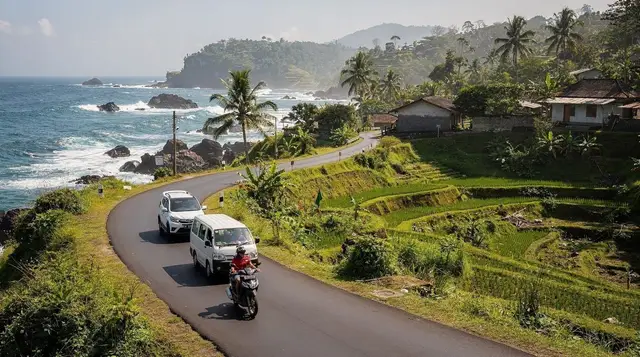
These are our own photographs of Bali, not the operator's pictures of this tour — open the tour page to see those.