Amed Diving Guide: Bali's Quiet Coast for Muck and Wrecks
Is Amed a better diving base than staying in Tulamben?
For a multi-day diving stay, often yes. Amed spreads across a string of quieter fishing villages with a wider range of muck-diving sites, smaller Japanese wrecks, and generally more relaxed dive operators than the single-site focus of nearby Tulamben, while still being close enough for an easy day trip to the Liberty wreck itself.
Amed is a loose string of fishing villages along Bali’s dry, dramatic east coast, strung out beneath the slopes of Mount Agung, and it has become one of the island’s better dive bases almost by accident. It sits close enough to Tulamben’s famous Liberty wreck for an easy day trip, but its own coastline offers something different: black-sand muck-diving slopes, a handful of smaller wrecks from the same era as the Liberty, and a noticeably quieter, less commercialised atmosphere than the more concentrated dive-tourism scene around Tulamben itself.
That quietness is the main reason experienced divers often choose to base themselves here for several days rather than treating the area as a single-site day trip. Smaller dive operators, many family-run, compete on repeat business rather than one-off day-trippers, which tends to translate into more personalised instruction and a slower pace than a large shared boat elsewhere. None of that means Amed is a secret — it is well established on the dive-travel circuit — but it remains a genuinely different experience from Tulamben’s single-wreck focus.
Amed diving at a glance
| Where | A string of coastal villages on Bali’s dry north-east coast, south of Tulamben |
| Cost | Varies by whether you’re doing fun dives, a course, or a specialty like nitrox |
| Time needed | A single day covers two or three dives; a multi-day stay lets you properly explore both muck sites and a Tulamben day trip |
| Access | Long drive from South Bali or Ubud; short hop from Tulamben itself |
| Best time | Year-round, with generally calm, sheltered conditions along this stretch of coast |
Why Amed’s villages matter as much as its dive sites
Amed isn’t a single town but a loose chain of small fishing villages — Jemeluk, Bunutan, Lipah, and several others — strung along a few kilometres of coast road, each with its own cluster of dive shops, guesthouses, and a beach used as much by local outrigger fishing boats as by tourists.
That patchwork matters practically: which specific village you base yourself in affects how close you are to particular dive sites, how much walkable infrastructure is nearby, and how quiet or lively your evenings feel. Unlike Tulamben, which functions as a single dive-focused strip, Amed rewards a bit of research into which village suits your pace before booking accommodation, since the difference between staying in the busier southern end near Jemeluk and a quieter northern village can be substantial.
What muck diving in Amed actually means
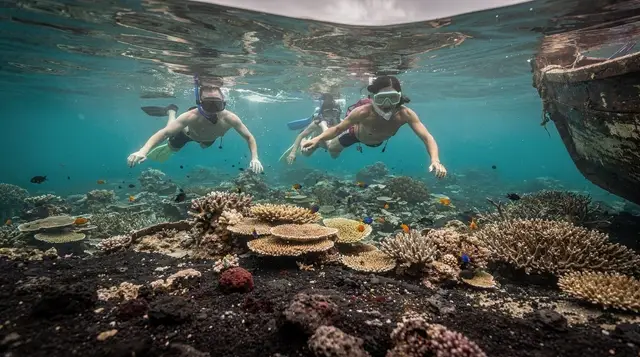
“Muck diving” describes diving over a plain, often black volcanic sand slope rather than a dramatic reef or wreck structure, and it rewards a completely different kind of attention: slow, careful searching for small, unusual, and often well-camouflaged marine life rather than covering ground quickly. It is not a style that suits every diver — if you want big, obvious wildlife encounters, Amed’s muck sites will likely disappoint you compared with Nusa Penida’s mantas. But for divers who enjoy the patience of macro photography or simply want a different pace from wreck and reef diving, it’s a genuinely rewarding style once you adjust your expectations for it.
A standard introduction to the area, such as the Amed and Tulamben discover scuba diving day trip, is built for divers who want a taste of both muck diving locally and the famous wreck a short drive away in the same day, with lunch included.
Amed’s own wrecks
Beyond the more famous Liberty at Tulamben, Amed’s own coastline has smaller Japanese shipwrecks from the same World War Two period, less visited and generally in shallower, calmer water than the Liberty itself. These make for a good complement to a Tulamben day trip rather than a replacement for it — smaller in scale, but with their own character and far fewer other divers in the water at the same time. A trip like the two-day snorkel adventure covering the Liberty wreck and Japanese wrecks is aimed at snorkellers rather than certified divers specifically, and covers both the famous wreck and Amed’s own smaller ones across a two-day visit.
Fun diving vs courses: what Amed is set up for
| Fun diving | Courses | |
|---|---|---|
| What’s on offer | Multi-day muck and wreck packages across Amed’s sites plus Tulamben | Full open-water certification and specialty courses like nitrox or deep diving |
| Who it suits | Certified divers wanting variety and a quieter pace | Beginners or divers looking to add a specialty qualification |
| Typical length | Single days or short multi-day packages | Several days for a full certification |
A trip such as the Tulamben and Amed fun diving adventure day trip is a straightforward way to sample both areas in a single day if you’re only passing through briefly. For divers staying longer and wanting to extend their qualifications, nitrox and other specialty courses are common out of Amed specifically, since the area’s smaller operators tend to build a steady business around repeat, multi-day divers rather than one-off day-trippers.
Salt farming and Amed’s non-diving side
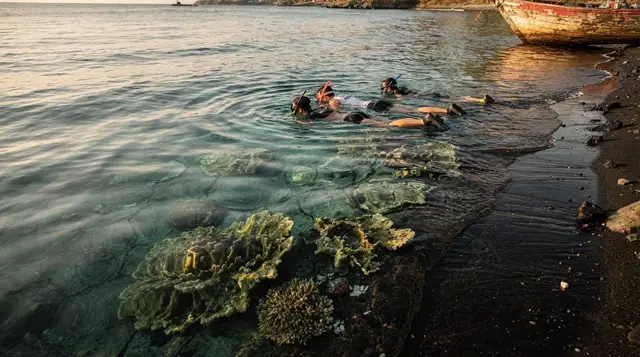
Away from the water, Amed’s coast is also known for traditional salt farming, with small-scale producers still evaporating seawater by hand along stretches of the black-sand beach using methods that predate the area’s dive tourism by generations. It’s a low-key thing to notice on a walk between dive shops rather than an activity in its own right, but it’s part of what gives Amed a different character from the more purpose-built tourism infrastructure around Tulamben — this remains a working coastline first, with diving layered on top of existing village life rather than having replaced it.
What isn’t worth the detour
Skip Amed specifically for muck diving if fast-paced, dramatic wildlife encounters are what you’re after — this style of diving is deliberately slow and subtle, and divers expecting constant action often come away underwhelmed. It’s also not worth basing yourself in Amed for just a single night if all you plan to do is the Liberty wreck day trip; in that case, staying nearer Tulamben itself saves you the extra short drive each way for no real benefit.
Extended diving safaris and multi-day packages
Because Amed and Tulamben sit close enough together to dive both from one base, several operators package multi-day “safari” style trips that move between sites across consecutive days rather than requiring you to rebook each morning. A package like the Amed and Tulamben fun dive safari over two days covers exactly this pattern, bundling accommodation-adjacent logistics with multiple dives across both areas. For divers wanting to extend their qualifications while doing this, the extended fun-dive package for certified divers in the area is one route to more bottom time without needing to rebook day by day.
What it costs
Costs in Amed scale with the type of diving — fun dives generally cost less per dive than a structured course, and specialty certifications like nitrox add to the base course price. Because Amed’s operators are smaller and more spread out than Tulamben’s more concentrated dive-shop cluster, prices can vary more between operators, so it’s worth comparing more than one before booking, particularly for multi-day packages or courses. Staying in Amed for several days and diving repeatedly typically works out more economical per dive than day-tripping in from South Bali each time.
When to go
Amed’s coastline is diveable year-round, sheltered enough that it doesn’t see the same current-driven disruptions Nusa Penida can experience. Visibility shifts somewhat with the season, generally best in the drier months from April to October, though muck diving specifically depends less on long-range visibility than reef or wreck diving does, since the focus is on searching a sand slope up close rather than scanning open water.
Getting there and getting around
Amed sits on Bali’s dry east coast, south of Tulamben, and is a long drive from South Bali or Ubud regardless of route — plan for a significant chunk of the day in transit if you’re doing it as a day trip, and consider staying overnight if you want to dive more than once. The coast road connecting Amed’s villages to Tulamben is straightforward but narrow in places, so a private driver or careful self-drive scooter trip both work, with no meaningful public transport option for tourists.
Within Amed itself, most divers rely on their dive shop’s own transport between the guesthouse and the boat or shore-entry point, since the villages are spread out enough that walking between every site isn’t practical. If you’re self-driving a scooter, the coast road offers dramatic views back toward Mount Agung on a clear day, but take the winding sections slowly, particularly near dusk when local traffic mixes with limited street lighting.
How this fits into a longer trip
Amed works best as part of a dedicated east-coast diving stay rather than a rushed single stop. The best diving in Bali guide covers how Amed compares with Tulamben, Nusa Penida, and Menjangan across a longer trip, while the Tulamben Liberty wreck guide goes deeper into the specific site most Amed-based day trips head to. The 10-day Bali diving trip itinerary is one way to sequence an Amed stay alongside Nusa Penida’s manta sites without excessive backtracking.
If you’re not yet certified, start with learning to dive in Bali before choosing a base, since some areas suit beginner courses better than others. Divers combining diving with the volcano visible from Amed’s coastline might also look at the Mount Agung trek guide, though the two activities need entirely separate planning. For a broader sense of what mola-mola season adds to a Bali diving trip, the diving with mola-mola in Bali post is worth reading before deciding how to split your time between Amed and Nusa Penida.
Frequently asked questions about Amed Diving Guide
What’s the actual difference between diving in Amed and diving in Tulamben?
Tulamben is built around one famous site, the Liberty wreck, usually visited as a single dive or day trip. Amed spreads diving across several smaller muck-diving and wreck sites along a longer stretch of coast, with a quieter, more spread-out operator scene.
Is muck diving worth it if I’ve never tried it before?
It’s worth trying at least once if you’re already a comfortable diver, but go in with the right expectations — it’s slow and subtle, built around spotting small, camouflaged creatures rather than dramatic wildlife encounters.
Can I do a day trip to Tulamben from Amed?
Yes, this is one of the most common bookings out of Amed specifically, and the short drive makes it an easy add-on to a multi-day Amed-based stay.
Is Amed a good place to learn to dive?
Yes, several operators run full open-water certification courses out of Amed, and the generally calm, sheltered conditions along this stretch of coast suit beginners reasonably well.
How many days should I spend diving in Amed?
There’s no fixed answer, but two to three days lets you cover local muck sites, a Tulamben day trip, and possibly a specialty course without feeling rushed. A single day only really allows for one of those.
Is nitrox diving worth doing in Amed specifically?
If you’re already comfortable diving and plan multiple dives across several days, a nitrox course can extend your bottom time meaningfully. It’s a genuine option here given the concentration of smaller, course-focused operators.
Does Amed have anything for non-divers?
Some snorkelling options exist along calmer stretches of the coast, and the villages themselves offer a quiet, low-key alternative to South Bali’s beach towns, but Amed is primarily built around diving rather than broader tourism infrastructure.
Is Amed worth visiting if I’m not diving at all?
It’s a quiet, scenic stretch of coast with dramatic views toward Mount Agung, but its appeal is narrower for non-divers than more all-round destinations elsewhere on the island, so weigh it against your wider itinerary.
Diving & snorkelling tours on GetYourGuide
Verified deep-linked GetYourGuide tours. Book through these links and we earn a small commission at no cost to you.
These are our own photographs of Bali, not the operator's pictures of this tour — open the tour page to see those.