Jatiluwih Rice Terraces: Bali's UNESCO Landscape, Explained
Is Jatiluwih worth the longer drive compared to Tegalalang?
Yes, if you have transport sorted and aren't short on time. Jatiluwih is considerably further from Ubud and South Bali than Tegalalang, but it's also far larger, genuinely UNESCO-listed for its working subak irrigation system, and much quieter — you can walk for an hour through open terraces without the crowd density that defines Tegalalang.
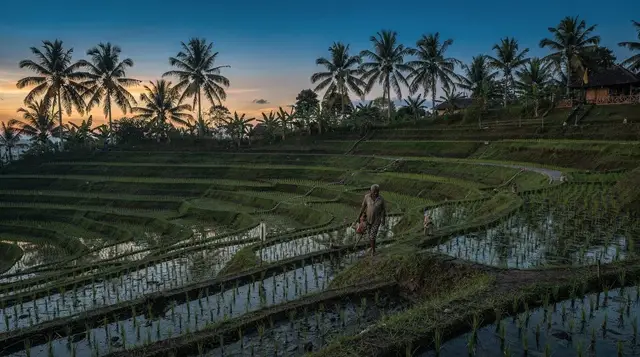
Jatiluwih means “truly marvellous” in Balinese, and it’s one of the rare tourist-site names that isn’t obvious marketing exaggeration. This is the terrace landscape that carries Bali’s UNESCO World Heritage listing, recognised specifically for the subak irrigation system that has shaped this valley for roughly a thousand years, and it covers a genuinely large area — walking trails here run for kilometres through open, working terraces rather than the compact, road-adjacent strip that most visitors picture when they think of Bali’s rice fields.
The trade-off for that scale and quiet is distance. Jatiluwih sits well up in the Tabanan highlands, meaningfully further from both Ubud and South Bali than Tegalalang, and there’s no getting around the drive time. For visitors with only a day or two in central Bali and a packed itinerary, Tegalalang’s convenience often wins by default. For anyone with a bit more time, or anyone who found Tegalalang too crowded to actually enjoy, Jatiluwih is the version of the same landscape without the compromise.
What makes the UNESCO listing meaningful rather than just a marketing label is worth understanding before you go. It isn’t the rice itself that earned the designation — it’s the subak system, a centuries-old, temple-linked cooperative irrigation network that manages how water moves from mountain springs down through hundreds of interconnected paddies, governed by a philosophy called Tri Hita Karana that ties agricultural management to spiritual and social harmony. Jatiluwih is one of the best-preserved, most intact examples of this system still functioning as originally designed, which is the actual substance behind the listing.
Jatiluwih at a glance
| Where | Tabanan highlands, central-west Bali, north of Jatiluwih village |
| Cost | An entrance fee applies at the site, covering trail access and maintenance of the walking paths |
| Time needed | A couple of hours for a shorter loop; half a day for a longer walk through more of the terracing |
| Access | Scooter or private driver; a genuine drive from Ubud or South Bali, longer than to Tegalalang |
| Best time | Morning, before clouds typically roll in over the highlands; dry season for the clearest views |
Why Jatiluwih earned UNESCO recognition
The listing covers Jatiluwih as part of a wider set of sites collectively recognised as the “Cultural Landscape of Bali Province,” which includes several other subak-linked locations and temples across the island. What sets this particular valley apart is scale and preservation — the terracing here stretches across a large, largely uninterrupted landscape, still farmed using the traditional cooperative system rather than adapted primarily for tourism. Walking the main loop trail, you’ll see working irrigation channels, water temples marking key points in the system, and terracing that climbs the hillside in a pattern shaped entirely by gravity and centuries of engineering rather than by road access or photo spots.
Walking the trails
Jatiluwih offers several trail options of varying length, from a shorter loop manageable in under an hour to longer routes that wind deeper into the valley and take considerably more time. Unlike Tegalalang’s short, crowded paths, these trails give you real distance and quiet — it’s entirely possible to walk for stretches without passing another visitor, particularly if you arrive early or visit outside the main tourist season.
A guided sunrise walking tour through the Jatiluwih terraces is worth considering if you want both the quietest possible light and a guide who can point out the water temples and channel systems you’d otherwise walk past without recognising.
Getting around without walking: buggies and classic cars
For visitors who want the view without a long walk, or who are travelling with anyone for whom the trails aren’t practical, a few operators offer alternative ways to see the terraces. A private buggy tour through the Jatiluwih rice terraces covers more ground than walking would allow in the same amount of time, following tracks between sections of the terracing.
For a slower, more scenic option, a classic car tour through the Jatiluwih terraces and surrounding countryside combines the landscape with a bit of old-Bali atmosphere on the drive itself, which is a genuinely different way to experience the area compared to a standard car or scooter transfer.
Pairing Jatiluwih with nearby stops
Because the drive out to Jatiluwih is substantial, most visitors combine it with other stops in the same general direction rather than treating it as a single-purpose trip. A private tour combining Bedugul’s highland scenery with the Jatiluwih terraces is a common way to structure the day, pairing the terraces with Bedugul’s lake temple and cooler climate on the same loop. This kind of combined day makes the long drive feel considerably more worthwhile than a there-and-back trip focused on Jatiluwih alone.
Comparing Jatiluwih to Tegalalang
| Jatiluwih | Tegalalang | |
|---|---|---|
| Distance from Ubud | Significantly further | Short drive |
| Scale | Large, open landscape | Compact, valley-side strip |
| Crowds | Low, even in high season | Heavy, especially late morning |
| UNESCO status | Yes, core listed site | No |
| Facilities | Basic, spread along trail entrances | Dense café strip on the main road |
The rice varieties still grown here
Part of what makes Jatiluwih significant beyond the view is that some farmers in the valley continue growing traditional Balinese rice varieties alongside the faster-yielding modern strains used more widely across the island.
These heritage varieties take longer to mature and produce less per harvest, but they’re tied closely to the ceremonial and cultural role rice plays in Balinese Hindu life, and their continued cultivation here is part of why UNESCO recognition extended to this specific valley rather than terracing elsewhere on the island. You won’t necessarily be able to tell one variety from another just by looking, but it’s worth knowing that the fields you’re walking past aren’t a single uniform crop grown purely for tourist photographs.
The rhythm of planting and harvest also varies more across Jatiluwih’s large area than it does at a smaller site like Tegalalang, since different sections of the valley are managed by different subak groups on their own schedules. That means a visit here is less predictable in terms of what stage the rice will be at, but it also means you’re less likely to arrive to a completely bare, just-harvested landscape across the entire valley at once.
What isn’t worth the detour
Skip visiting Jatiluwih in the early afternoon expecting the same clear mountain views you’d get in the morning — cloud cover in these highlands builds through the day more reliably than at lower elevations, and a hazy, grey Jatiluwih visit is a genuinely disappointing use of the long drive out. It’s also not worth attempting the longest trail option without checking your own fitness and the weather first; there’s little shade over much of the route, and turning back partway is a real possibility if conditions or energy don’t hold up.
The temples along the route
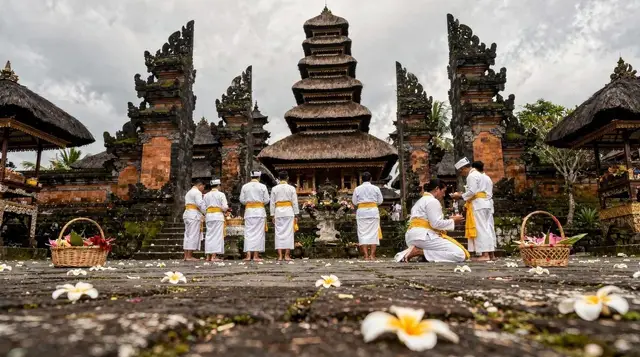
Scattered through the Jatiluwih landscape and along the roads leading to it are water temples that mark key points in the subak system, most significantly Pura Luhur Batukaru further up the slope, one of the island’s most important directional temples. These aren’t typically the main draw for a rice terrace visit, but they’re worth acknowledging as part of what makes the whole system function rather than treating them as an entirely separate stop. Some longer tours through the area do include a stop at one of these temples alongside the terrace walk, which is a reasonable way to understand the fuller picture of how water, temple, and rice field connect in the subak philosophy.
What it costs
An entrance fee applies at the site, covering trail access and the maintenance of walking paths through a working agricultural landscape rather than a purely commercial attraction. Transport is the larger cost consideration given the distance — a private driver or scooter rental for the day, plus fuel, adds up more here than for a shorter trip to Tegalalang. Buggy and classic car tours are priced separately and cover both the vehicle and a guide, which is worth factoring in if walking the full distance isn’t appealing.
When to go
Morning is consistently the best window at Jatiluwih, both for clearer views before cloud builds over the highlands and for cooler, more comfortable walking conditions on the longer trails. The dry season, roughly April to October, gives you meaningfully better odds of a clear day than the wetter months, when low cloud and rain are both more frequent at this elevation than they are on the coast. Because Jatiluwih draws a fraction of Tegalalang’s visitor numbers even in peak season, timing your visit around crowds matters far less here — the drive time and weather are the bigger planning factors.
Getting there and getting around
Jatiluwih sits in the Tabanan highlands, reached by a genuine drive from Ubud or South Bali along winding roads through smaller villages and agricultural land. A private driver is the most comfortable way to make the trip, particularly given the distance and the mountain roads involved, though a scooter is a viable option for confident riders. Once at the site, walking is the main way to explore the trails, with buggy and classic car tours available for those who’d rather not cover the distance on foot.
How this fits into a longer trip
Jatiluwih pairs naturally with a highland-focused day covering Bedugul, Tabanan, or a stop at Tanah Lot on the way back toward the coast, and works well within the north and west Bali, 4 days itinerary or the Bali off the beaten path, 10 days itinerary. For a deeper look at the irrigation system behind the UNESCO listing, the dedicated subak irrigation explained guide is worth reading either before or after your visit.
If you’re comparing the two main rice terrace experiences on the island, the Tegalalang rice terrace guide covers the closer, busier alternative in detail. For the temple stop many visitors combine with a highland day, the Ulun Danu Beratan temple guide covers Bedugul’s lakeside temple, and the Tanah Lot sunset guide is a natural way to end the day on the drive back south.
Frequently asked questions about Jatiluwih Rice Terraces
Is Jatiluwih worth the extra drive compared to Tegalalang?
Yes, if you have the time and transport sorted — the scale, quiet, and genuine UNESCO significance set it apart. If your schedule is tight, Tegalalang’s convenience remains the more realistic choice for most itineraries.
How long does the drive to Jatiluwih actually take?
It’s a genuinely longer trip than to Tegalalang, involving winding highland roads rather than a short hop from Ubud. Check current travel time before committing to it as a half-day add-on to another destination.
What does the entrance fee cover?
It funds maintenance of the walking trails and the broader working landscape, which is farmed as much as it is visited. This isn’t a themed attraction fee — it’s closer to a conservation contribution for a UNESCO-recognised agricultural system.
Do I need a guide to understand the subak system?
Not strictly, but a guide adds real context you’d otherwise miss — the water temples and channel points along the trails aren’t well signed for independent visitors, and understanding how the system works changes what you’re looking at.
Is Jatiluwih crowded like Tegalalang?
No, even in high season the crowd density here is far lower, largely because of the extra distance and the site’s larger scale spreading visitors out. It’s one of the few genuinely quiet, well-known attractions left on the island.
Can I combine Jatiluwih with Tanah Lot in one day?
Yes, this is a common pairing since both sit in a similar direction from Ubud or South Bali, and doing so makes good use of the long drive out to the highlands by combining it with a coastal sunset stop on the way back.
What should I wear for the trails?
Comfortable closed shoes suited to a longer walk, sun protection for the more exposed sections, and a layer for the highland air, which runs noticeably cooler than the coast, especially in the early morning.
Is Jatiluwih suitable for visitors with limited mobility?
The shorter loop near the entrance is manageable for most fitness levels, but the terrain is uneven throughout and the site isn’t set up for wheelchair access. The buggy and classic car tours are a more practical option for anyone who can’t manage extended walking on uneven paths.
Rice terrace & countryside tours on GetYourGuide
Verified deep-linked GetYourGuide tours. Book through these links and we earn a small commission at no cost to you.
These are our own photographs of Bali, not the operator's pictures of this tour — open the tour page to see those.