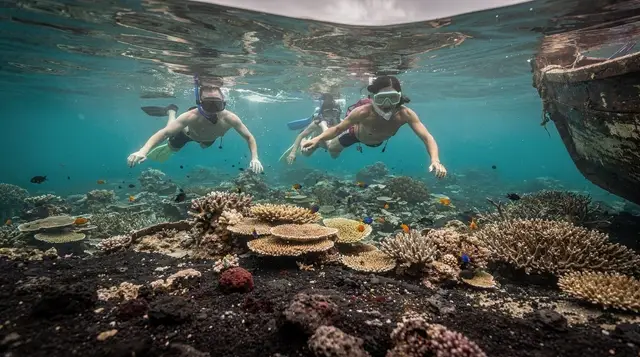
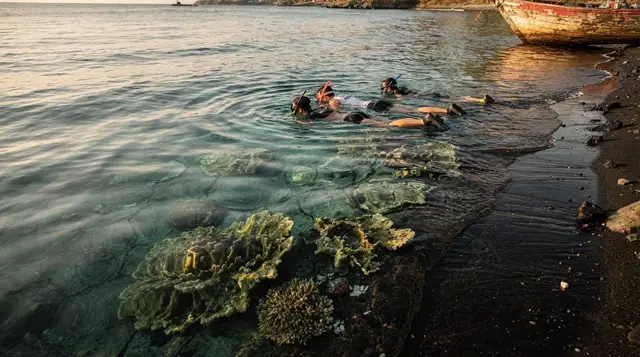
Amed vs Tulamben: Which East Bali Dive Base to Choose
Should I base in Amed or Tulamben for diving in East Bali?
Tulamben is built almost entirely around one thing: the USAT Liberty wreck, one of the most accessible and famous wreck dives in the world, reachable directly from the beach. Amed is a longer stretch of quieter fishing villages with its own strong house-reef diving and a more relaxed, less single-purpose atmosphere. Many divers base in one and day-trip to the other, since they sit only a short drive apart along the same coastline.
Amed and Tulamben sit along the same quiet stretch of East Bali’s coastline, close enough together that many dive operators run trips between both in a single day, yet they’ve developed slightly different identities within the region’s diving-focused tourism. Tulamben is defined almost entirely by one extraordinary asset: the USAT Liberty, a World War II-era shipwreck that sits close enough to shore to be swum to directly from the beach, making it one of the most accessible wreck dives anywhere in the world. Amed is a longer, more varied stretch of small fishing villages strung along the coast, with its own strong house-reef diving and a more spread-out, less single-attraction feel.
Neither town has Bali’s usual beach-holiday draws — the black volcanic sand beaches here are workable rather than picture-perfect, and the whole area is built around diving and a slower, quieter pace rather than surf, nightlife, or beach clubs. That’s precisely the point for the travellers who come here, and it’s worth knowing upfront if you’re comparing this coastline against Bali’s livelier south. Set expectations accordingly and the whole visit lands very differently than it would if you arrived hoping for a beach-club atmosphere. This guide sets out how Amed and Tulamben differ, so you can decide whether to base in one, split time between both, or fold a day trip to this coastline into a wider East Bali itinerary.
Amed vs Tulamben at a glance
| Amed | Tulamben | |
|---|---|---|
| Signature draw | House-reef diving, quieter fishing-village atmosphere | USAT Liberty wreck, one of the world’s most accessible wreck dives |
| Layout | Longer stretch of several small villages | More concentrated around the wreck site |
| Beach | Black volcanic sand, workable rather than scenic | Black volcanic sand, functional rather than a draw itself |
| Best for | Divers wanting variety and a quieter overall stay | Wreck-diving specifically, including beginners and course-takers |
| Non-diving appeal | Modest — salt farming, quiet villages, sunset views | Limited — the town exists almost entirely for the wreck |
Tulamben: built around one extraordinary wreck
The USAT Liberty is Tulamben’s entire reason for being on the international dive map, and it earns that reputation — a genuine World War II shipwreck, torpedoed and later beached by a volcanic eruption, now encrusted with coral and home to a dense population of reef fish, all reachable by walking straight in from the beach rather than needing a boat.
That accessibility makes it one of the most popular wreck dives in the world for both beginners doing a discover-scuba experience and experienced divers logging a bucket-list site, and the town’s entire dive infrastructure — schools, shops, guesthouses — has grown up specifically to serve it. A course like the Amed-Tulamben PADI Open Water course over 2 nights, 3 days is commonly run with the Liberty wreck as a centrepiece dive once certification training is complete.
Amed: quieter, more spread out, still excellent diving
Amed isn’t one village but a loose string of several — Jemeluk, Bunutan, Lipah among them — stretched along a longer, quieter section of coastline, each with slightly different house reefs and a generally slower, more residential feel than Tulamben’s wreck-focused concentration.
The diving here doesn’t have a single headline site the way Tulamben has the Liberty, but the overall variety — healthy house reefs, easy shore access at several points, and calmer conditions well suited to beginners — makes it a strong, well-rounded base for a multi-day diving stay. Divers who base here for several days often report enjoying the variety across sites more than they expected, precisely because no single dive dominates the itinerary the way the Liberty tends to in Tulamben.
Traditional salt farming, still practised along parts of the Amed coastline using centuries-old methods, adds a modest but genuine cultural layer to a stay here that Tulamben’s more singularly dive-focused town doesn’t really offer. Watching the process at the right time of day — the salt pans catching low morning or evening light — is one of the quieter, more rewarding non-diving moments this coastline offers.
Comparing the actual diving
The Liberty wreck at Tulamben is the standout single site of the two towns, with depths ranging from a few metres at the top of the structure down to around 30 metres, suiting everyone from discover-scuba beginners to advanced wreck divers logging multiple dives across a stay. A trip like Discover Scuba Diving in Amed-Tulamben, a one-day trip with lunch is a common, low-commitment way for non-certified visitors to experience the wreck directly.
Amed’s diving spreads across several house reefs and a scattering of smaller wreck and reef sites, offering more variety across a multi-day stay even if no single site matches the Liberty’s fame; a 2-day, 1-night Amed-Tulamben fun dive safari with 4 dives is a practical way to sample both towns’ best sites without committing to a longer stay in either.
What isn’t worth the detour
Don’t come to either town expecting a conventional Bali beach holiday layered around the diving — the beaches themselves are functional black volcanic sand, not the draw, and travellers expecting a Seminyak- or Nusa Dua-style beach scene will be disappointed by both towns equally. It’s also not worth rushing the Liberty wreck as a single quick dive if you have the time for more — many divers who do just one dive there wish afterward they’d budgeted for two or three across different depths and light conditions, since the wreck rewards a slower, more thorough exploration than a single pass allows.
Budget for a dive-focused stay
Both towns are considerably cheaper than Bali’s south coast for accommodation and food, reflecting their quieter, more locally oriented character and lower level of general tourism development beyond diving. That cost difference is often as pleasant a surprise to first-time visitors as the diving itself, particularly after a stretch of higher south-coast prices earlier in a trip.
The main cost driver in either town is the diving itself — course fees, boat or shore dive packages, and equipment rental — which is broadly comparable between the two, though Tulamben’s dive shops sometimes price slightly higher given the Liberty wreck’s drawing power and the concentrated demand it generates. Multi-dive packages and course bundles, like a combined open-water certification with wreck dives included, typically offer better value than booking each dive separately. Comparing a few local dive shops before committing is worth the time, since inclusions like tank rental, weight belts, and transport between sites can vary meaningfully between operators even at a similar headline price.
Getting there and around
Both Amed and Tulamben sit a genuinely long drive from South Bali’s main tourist areas — expect a couple of hours or more from Kuta, Seminyak, or Canggu, and a shorter but still significant drive from Ubud, given the winding East Bali coastal roads. Most visitors arrive by private driver or as part of an organised multi-day dive trip rather than self-driving a scooter the full distance, though scooters work fine for getting around locally once you’ve arrived.
Moving between Amed and Tulamben themselves is a short, easy drive along the coast road, which is exactly why so many dive operators run combined trips covering both in a single itinerary. That short distance is the main practical argument for not overthinking the choice between them too hard, since visiting both within the same stay adds relatively little to an itinerary already built around this stretch of coast.
Seasonality for diving here
Visibility and conditions at both the Liberty wreck and Amed’s house reefs are generally good year-round, since this stretch of coast is more sheltered than some of Bali’s more exposed dive sites elsewhere, though the dry season from roughly April to October typically offers the clearest water and calmest surface conditions for comfortable shore entries.
The wet season doesn’t rule out diving here, but heavier rain can affect visibility temporarily after a significant downpour, and it’s worth checking conditions with a local operator if you’re travelling during the wettest months and want the clearest possible water. Water temperature stays fairly consistent across both seasons, so a wetsuit choice made for one time of year generally holds up fine for the other without needing separate gear.
How this fits into a longer trip
For a dedicated diving trip, a Bali diving trip 10 days itinerary can anchor several days around Amed and Tulamben alongside other dive-focused stops like Nusa Penida or Menjangan Island. The learn to dive in Bali guide is worth reading first if certification itself, rather than a specific site, is still an open question, and the Menjangan Island diving guide covers the other main dive-focused stop on this side of the island.
A shorter add-on works too: a 2-day, 1-night beginner discover-scuba-diving adventure in Amed-Tulamben fits into a broader East Bali loop that also covers Besakih, Tirta Gangga, and Sidemen without requiring a full trip built solely around diving.
For the wider diving picture across Bali, the best diving in Bali guide, Tulamben Liberty wreck dive guide, and Amed diving guide go into more site-specific detail than fits into this comparison.
Non-diving days: what else there is to do
Neither town is built for non-diving sightseeing, but both offer a handful of worthwhile low-key activities for rest days between dives. Amed’s salt-farming villages are genuinely interesting to walk through, with traditional methods still in use along parts of the coastline, and the sunset views over the water toward Mount Agung’s silhouette are a quiet, reliable highlight most evenings.
Tulamben has less on offer beyond the wreck itself, though the black sand beach and a slower pace of village life still make for a restful non-diving day if you need one between dive sessions. Both towns work well as a base for a day trip inland to nearby East Bali sights like Tirta Gangga’s water palace or Besakih’s temple complex, which are close enough to justify the drive on a day away from the water. A driver familiar with the area can typically combine one or two of these inland stops into a single half-day out, leaving the rest of the day free to get back in the water.
Who each town actually suits
Tulamben suits divers whose main goal is the Liberty wreck specifically — course-takers wanting a strong training site, bucket-list wreck divers, or anyone who wants to maximise time in the water at one exceptional location without needing much else from the town around it. Amed suits divers who want more variety across a multi-day stay, a slightly more relaxed non-diving pace between dives, and a longer coastline to explore by scooter or on foot.
Neither is a wrong choice for a first dive trip to this part of Bali, and plenty of visitors end up doing exactly what this guide has suggested throughout — splitting time between both rather than picking one exclusively. If pressed to choose just one for a short trip, the deciding question is simple: is the Liberty wreck specifically the reason for the visit, or is a broader, more varied few days of diving the actual goal.
Frequently asked questions about Amed vs Tulamben
Do I need to be certified to dive the Liberty wreck?
No — a discover-scuba-diving experience, run by a qualified instructor, lets non-certified visitors experience the wreck’s shallower sections. Full certification opens up the wreck’s deeper areas and gives more flexibility over dive time and depth.
Which town is better for a non-diving companion travelling with a diver?
Amed has slightly more to offer a non-diver given its longer coastline, salt-farming villages, and general sense of place, though both towns are genuinely quiet and limited in non-diving activities compared with Bali’s south coast.
How far is Amed or Tulamben from South Bali?
Both are a genuinely long drive, typically a couple of hours or more from Kuta, Seminyak, or Canggu, given East Bali’s winding coastal roads. Plan for a significant chunk of a travel day either way.
Is the water always calm enough for beginners at the Liberty wreck?
Conditions are generally favourable, especially in the dry season, but currents can vary, and a qualified instructor will assess conditions and adjust the dive plan for beginners accordingly rather than assuming a one-size-fits-all approach.
Can I combine Amed and Tulamben in a single day trip from South Bali?
It’s possible but makes for a very long day given the drive time on both ends; most visitors get more out of at least one overnight stay to properly enjoy the diving without rushing back to South Bali the same evening.
Is snorkelling worthwhile here, or is it purely a scuba destination?
Snorkelling at both towns can be rewarding, particularly over the shallower sections of the Liberty wreck and Amed’s house reefs, though the area’s reputation and most memorable experiences are genuinely built around scuba diving specifically.
Which town has better accommodation options?
Both offer a similar range of simple guesthouses through to more comfortable dive-resort-style properties, with Tulamben’s options clustered tightly around the wreck site and Amed’s spread across its longer stretch of coastline.
Is it worth doing an open water certification course here rather than elsewhere in Bali?
Yes, particularly if the Liberty wreck or Amed’s reefs are a draw — completing your certification here means your training dives happen on genuinely excellent sites rather than a more generic training location elsewhere on the island.
Diving & snorkelling tours on GetYourGuide
Verified deep-linked GetYourGuide tours. Book through these links and we earn a small commission at no cost to you.
These are our own photographs of Bali, not the operator's pictures of this tour — open the tour page to see those.