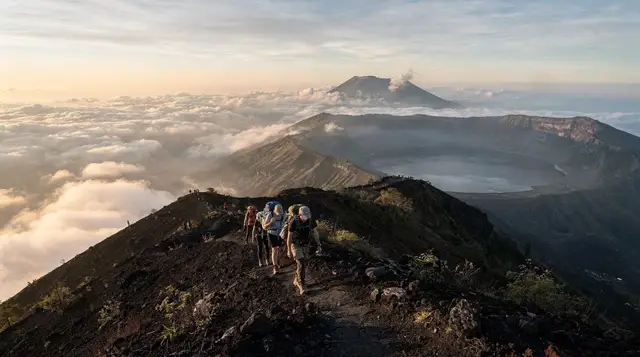
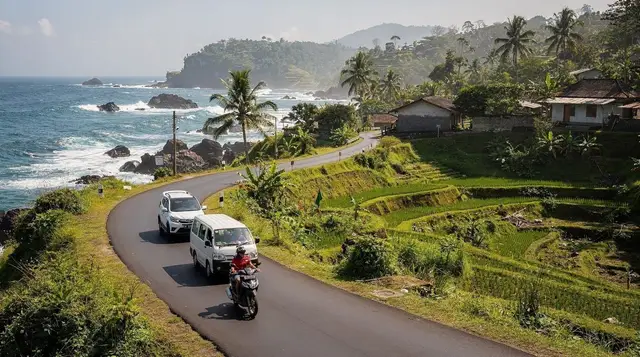
Gilimanuk sits at Bali’s westernmost point, and its entire reason for existing on a visitor’s itinerary comes down to one thing: it is the ferry port connecting Bali to Ketapang on Java, a short crossing across the Bali Strait that has become the standard overland route for travellers heading to Mount Ijen’s blue-fire crater or continuing further into East Java. Almost nobody travels to Gilimanuk as a destination in its own right, and this guide will not pretend otherwise — the honest value here is in understanding the crossing itself well enough that it does not eat up more of your day than necessary.
The port operates a continuous vehicle and passenger ferry service across the strait, a crossing measured in a short number of kilometres but one that can still involve real waiting time depending on traffic volume, time of day, and how the loading queue is moving. Most independent travellers heading to Ijen or beyond either drive themselves onto a vehicle ferry or arrange a coordinated transfer that handles the crossing as part of a larger overland package, which removes most of the queue-management uncertainty.
Beyond the port itself, Gilimanuk sits at the edge of West Bali National Park, meaning travellers with a bit of extra time can combine the ferry crossing with a stop at the park’s savanna and forest trails, or with diving and snorkelling further along the coast at Menjangan Island and Pemuteran, rather than treating the drive out here as purely functional.
Gilimanuk at a glance
| Where | Bali’s westernmost point, at the edge of West Bali National Park |
| Cost | Ferry tickets for foot passengers and vehicles are inexpensive; private transfer packages covering the crossing cost more but remove logistics stress |
| Time needed | The crossing itself is short, but total port time including queuing can add up; budget more than the crossing time alone suggests |
| Access | Self-drive scooter or car onto the vehicle ferry, or an organised private transfer that includes the crossing |
| Best time | Early morning or late evening tend to see less port congestion than the middle of the day |
Making the crossing without the stress
The single biggest practical tip for Gilimanuk is this: unless you specifically want the experience and flexibility of self-driving through the port process, a coordinated private transfer removes almost all of the friction. A service like the private transfer service from Bali to Gilimanuk handles the drive out from wherever you are staying and the port logistics together, which matters more than it sounds — queue management, ticket purchase, and vehicle loading at a working port are not always intuitive for first-time visitors unfamiliar with the process.
Onward transfers on the Java side
For travellers arranging their full Ijen crater or East Java trip as a coordinated package rather than handling each leg separately, transfer options exist covering the port itself and onward travel from the Ketapang side. The transfer options from Ketapang/Gilimanuk port to your Bali hotel is useful for the return leg, handling the logistics of getting back to your accommodation after a Java excursion without arranging each connection independently.
Coming back: return transfers to Bali
If you are travelling in the other direction — arriving from Java and heading back into Bali — the one-way private transfer from Gilimanuk port to Bali covers exactly that leg, useful for travellers who crossed independently but want a reliable, pre-arranged ride once back on Bali’s side of the strait. A broader option, the affordable private transfer from Gilimanuk to anywhere in Bali, covers destinations across the island rather than a single fixed drop-off point.
Extending the trip: Ijen and beyond
Most travellers passing through Gilimanuk are ultimately headed to Kawah Ijen’s blue-fire crater, one of East Java’s signature attractions, often as part of a longer overland loop covering Mount Bromo and other East Java volcanoes as well. Multi-day options like a two-day tour to Ijen, Bromo, and Madakaripura from Bali or a longer three-day tour covering Ijen, Tumpak Sewu, and Bromo from Bali bundle the Gilimanuk crossing into a full East Java itinerary, which is a far more efficient use of the transit time than treating the port crossing as its own separate trip.
The vehicle ferry process, step by step
For travellers self-driving a rented car or scooter onto the ferry rather than using a coordinated transfer, the general process involves queuing in a designated lane by vehicle type, purchasing a ticket at a booth near the loading area, and boarding once directed by port staff — a system that works reasonably smoothly once you understand it, but can feel confusing on a first attempt without any guidance. Signage exists but is primarily in Indonesian, and staff generally do not speak extensive English, so a degree of patience and observation of what other vehicles are doing goes a long way. If self-driving and managing this independently feels daunting, that is precisely the gap a private transfer service is designed to close.
Why Gilimanuk exists where it does
The town’s position at Bali’s narrowest point relative to Java is straightforward geography — this is simply the shortest practical crossing point across the Bali Strait, which is why a port developed here rather than elsewhere along the west coast. It has functioned as a transit point for a very long time, well before organised tourism made the Ijen crater run a common visitor itinerary, originally serving trade and general passenger transport between the two islands rather than tourist traffic specifically.
What isn’t worth the detour
Skip lingering in Gilimanuk town itself expecting sights beyond the port and its immediate surrounds — there is very little here in the way of attractions, and the honest advice is to move through efficiently rather than building in unnecessary time. Also skip assuming self-driving the crossing will always be faster than a coordinated transfer; unfamiliarity with the port process can easily eat up more time than a pre-arranged service that already knows the current queue patterns.
West Bali National Park’s proximity, revisited
Because the park’s boundary sits so close to the port itself, it’s worth reiterating just how easy it is to combine the two rather than treating a Gilimanuk crossing as purely functional. Even a short detour into the park on the Bali side — a couple of hours for a savanna walk or birding stop — turns what would otherwise be dead transit time into a genuine part of the trip, particularly for travellers who might not otherwise make it out to this corner of the island at all.
What it costs
Ferry tickets for foot passengers and vehicles are inexpensive relative to most transport costs in Bali. Private transfers covering the drive from South Bali plus the crossing cost considerably more but remove the logistics burden entirely, which is worth the premium for many travellers, particularly those also managing an onward Ijen or East Java itinerary in the same trip.
When to go
There’s no meaningful seasonal consideration for the crossing itself, though early morning or late evening tend to see lighter port traffic than the middle of the day, when both local commercial traffic and tourist transfers converge. If your goal is Ijen crater specifically, that destination’s own seasonal considerations, covered in the dedicated Ijen guide, matter more for planning purposes than Gilimanuk’s crossing timing.
Getting there and getting around
Gilimanuk sits at the far western end of Bali, a long drive from South Bali realistically taking most of a day each way if self-driving, with a shorter journey from Lovina or Pemuteran on the north coast. Self-drive scooter or car, or a private transfer service covering the whole journey, are the practical options; there is no meaningful public transport network serving independent tourist travel to the port from South Bali.
How Gilimanuk fits into a longer trip
Gilimanuk is best treated as a functional leg within a longer route rather than a stop in its own right — pair it with Pemuteran or the West Bali National Park if you have extra time on the Bali side, and read the Bali to East Java overland guide and the Ijen crater blue fire guide for how to plan the Java side of the trip properly.
The Bali and Java volcanoes, 5 days itinerary covers a full route built around exactly this crossing. Travellers with extra time on the Bali side beforehand can also fold in Lovina or Menjangan Island diving along the same stretch of coast.
Frequently asked questions about Gilimanuk
How long does the ferry crossing itself take?
The crossing across the strait is short, generally well under an hour, though total time at the port including queuing for vehicle loading can add considerably more depending on traffic.
Can I buy a ferry ticket on the spot, or do I need to book ahead?
Tickets are generally available on arrival at the port rather than requiring advance booking, though a pre-arranged private transfer removes any uncertainty around this process entirely.
Is Gilimanuk safe to pass through at night?
Yes, the port operates continuously and is a well-used, functional transit point rather than an area with particular safety concerns, though standard travel caution applies as anywhere.
Do I need my passport for the Bali-to-Java crossing?
Since this is a domestic Indonesian ferry crossing rather than an international border, standard identification is sufficient rather than passport-specific requirements, though carrying your passport as general travel practice is still sensible.
Is it worth stopping at West Bali National Park on the way to or from the ferry?
Yes, if your schedule allows — the park’s entrance sits close to the route through Gilimanuk, making it a logical add-on rather than a separate special trip for travellers already making the journey this far west.
Should I book a coordinated tour or arrange each leg of an Ijen trip separately?
For a first visit, a coordinated multi-day tour covering the Gilimanuk crossing and the Ijen or Bromo legs removes considerable logistics complexity compared with arranging the ferry, Java-side transport, and the volcano trek separately.
Is there anywhere to eat at the port while waiting?
Yes, basic warungs and food stalls operate around the port area, offering simple Indonesian dishes and drinks, though don’t expect an extensive menu or particularly fast service during busy periods.
How far in advance should I plan the crossing if heading to Ijen for sunrise?
Given the drive time to Gilimanuk, the crossing itself, and the further drive to Ijen’s trailhead on the Java side, most Ijen sunrise treks from Bali require an overnight or very early multi-hour journey — this is why most travellers book a coordinated overnight tour rather than attempting the whole route independently in a single push.