Ijen Crater Blue Fire: Is the Midnight Trek Worth It?
Is the Ijen blue fire trek worth the midnight start and the sulphur gas exposure?
Yes, for most visitors who go in prepared, but it demands real commitment: a genuine midnight departure, a steep trek in the dark, and time spent near active sulphur gas that requires a proper respirator mask, not a basic surgical one. The blue flame phenomenon itself is real and genuinely striking in person, but it's a small, specific area of the crater, and photos often exaggerate its scale compared to what you'll actually see.
Ijen Crater sits just across the strait from Bali in East Java, and it hosts one of the few places on Earth where you can see “blue fire” — flames from burning sulphuric gas that appear genuinely blue rather than the orange of ordinary fire, visible only in darkness. This is the entire reason for the trek’s punishing schedule: reaching the crater floor while it’s still dark enough to see the phenomenon means a midnight departure and a demanding hike up and then down into the crater itself, largely in the dark, before the gas becomes less visible and the site becomes more crowded with day visitors after sunrise.
It’s worth being clear-eyed about what you’re signing up for. This isn’t Bali — reaching Ijen means crossing to Java, typically via Banyuwangi at the eastern tip of the island, either by ferry and drive from Bali or as part of a longer East Java tour also covering Bromo or Tumpak Sewu. The trek itself involves a genuine climb in the dark, followed by a steep, difficult descent into the crater on loose volcanic terrain, and active sulphur gas that requires a proper respirator, not a flimsy surgical mask, given the real risk of respiratory irritation from prolonged exposure.
The reward, when conditions cooperate, is genuinely striking: pale blue flames flickering across a section of the crater floor and along vents in the rock, a phenomenon few places on the planet offer at this accessibility. It’s worth tempering expectations set by heavily edited or long-exposure photographs, though — in person, the blue fire is real but more subtle and localised than some images suggest, and how much of it you see depends on gas activity that varies night to night.
Ijen blue fire at a glance
| Where | Ijen Crater, near Banyuwangi, East Java |
| Cost | Entrance fee plus guide; gas mask rental typically included in organised tours |
| Time needed | A full overnight commitment — midnight departure, trek, crater visit, and descent by mid-morning |
| Access | Ferry and drive from Bali to Banyuwangi, or as part of a multi-day East Java tour |
| Best time | Dry season for safer trail conditions; check current crater access, as gas levels can trigger temporary closures |
The trek itself
From the trailhead, the ascent to the crater rim takes a couple of hours on a steady, well-established path, manageable for reasonably fit trekkers but genuinely tiring given the pre-dawn timing and, often, cool highland air at this elevation. From the rim, the descent into the crater to reach the blue fire viewing area is steeper and more technical, over loose volcanic rock, and this is where sulphur gas exposure becomes a real factor — a proper respirator mask is essential, and even with one, some visitors find the fumes genuinely uncomfortable and choose to view the phenomenon from a greater distance rather than the closest possible vantage point.
Sulphur gas: the real safety consideration
Ijen is an active sulphur mining site, and the gas that produces the blue fire is the same gas that poses a genuine respiratory hazard at close range. Reputable tour operators provide proper respirator masks, not the basic surgical or dust masks sometimes handed out by less careful operators, and it’s worth confirming this specifically before booking rather than assuming all tours meet the same safety standard. Anyone with respiratory conditions, including asthma, should think carefully about this trek and consult a doctor beforehand given the genuine gas exposure involved.
Combining with the sulphur mining operation
Beyond the blue fire, Ijen is also home to an active traditional sulphur mining operation, with workers carrying heavy loads of raw sulphur up from the crater floor by hand, a genuinely difficult and physically demanding livelihood that predates the site’s tourism popularity. A half-day tour combining Ijen crater’s blue fire with the sulphur mining operation gives context to this working side of the site, worth understanding as part of the visit rather than treating the crater purely as a photogenic backdrop.
Getting there from Bali
Because Ijen sits across the strait in Java, most Bali-based visitors approach via Banyuwangi, reachable by a combination of ferry and drive. A Banyuwangi-based Ijen crater and blue fire trekking tour is structured around this route specifically, while a combined Banyuwangi and Bali Ijen crater blue fire sunrise tour packages the full journey, including transport logistics from Bali, into a single booking.
Comparing Ijen to Bali’s own volcano treks
| Ijen (East Java) | Mount Batur (Bali) | Mount Agung (Bali) | |
|---|---|---|---|
| Unique feature | Blue fire phenomenon | Accessible sunrise summit | Bali’s highest, most sacred peak |
| Difficulty | High, plus gas exposure | Moderate | High, technical |
| Location | Requires crossing to Java | Central Bali | East Bali |
| Special gear | Proper respirator mask | Standard trekking gear | Standard trekking gear |
Approaching from Probolinggo if you’re combining with Bromo
For visitors structuring their East Java trip around Bromo first and Ijen second, or vice versa, approaching Ijen from the Probolinggo side rather than Banyuwangi is sometimes the more efficient route given the road network connecting the two volcanic areas. A Probolinggo-based Ijen crater blue fire tour with transfer included is built around this specific routing, useful if your multi-day East Java itinerary already has you based near Bromo and looking to add Ijen without backtracking through Banyuwangi separately.
Which approach makes more sense depends heavily on your overall route through the region — a tour operator or driver familiar with the current road conditions and typical multi-day itineraries can advise on the most efficient sequencing given wherever else you’re headed on the same trip.
The sunrise view from the crater rim
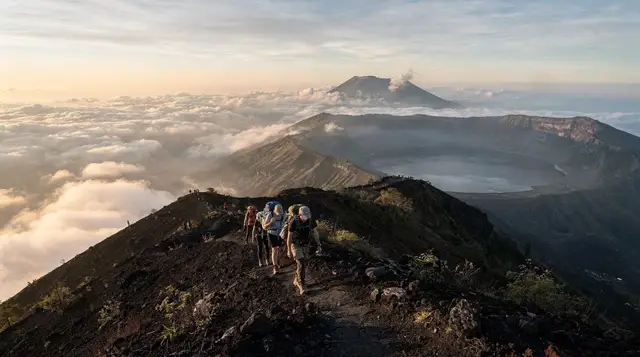
Beyond the blue fire itself, Ijen’s crater rim offers a striking sunrise view in its own right, overlooking the turquoise acidic crater lake below as daylight breaks — a genuinely different kind of sight from the blue fire, and one that rewards staying at the site past the point when the flames become less visible in growing daylight. The lake’s distinctive colour, caused by its high acidity and mineral content, is one of the largest of its kind in the world, and seeing both the fading blue flames and the lake catching the first light within the same visit is part of what makes the demanding schedule worthwhile for a lot of visitors.
What isn’t worth the detour
Skip attempting Ijen as a rushed same-day round trip squeezed into an already packed Bali itinerary — the ferry crossing, drive, midnight trek, and return trip together consume the better part of two days properly accounted for, and treating it as a casual add-on leads to either an exhausting, poorly executed visit or cutting corners on safety preparation that genuinely matters here. It’s also not worth booking with an operator who can’t clearly explain their gas mask policy when asked directly; this is one of the few Bali-region activities where cutting corners has real health consequences, not just a diminished experience.
What to pack for the crater trek
Warm layers are essential for the cold, high-altitude pre-dawn ascent, along with a headlamp given how much of the trek happens in complete darkness before any hint of sunrise. Sturdy trekking shoes with real grip matter more here than at most Bali-region hikes, given both the loose volcanic terrain and the added difficulty of navigating it in low light. Your respirator mask should be provided by your operator, but confirming this in advance rather than assuming it’s included is worth the extra question, particularly with budget operators.
A change of clothes for after the trek is worth having, since sulphur dust and general trail grime tend to cling to clothing more noticeably here than at most other hikes on this list. Cash is necessary for entrance fees, and water and snacks matter given the genuinely long duration of the full outing from midnight departure to mid-morning return.
What it costs
Entrance and guide fees apply at the site, with proper respirator rental typically bundled into organised tour pricing given how essential it is to a safe visit. Transport from Bali, whether by ferry and private car or as part of a multi-day East Java tour also covering Bromo, adds a further and often larger cost than the crater visit itself, reflecting the genuine distance and logistics involved in reaching this part of Java.
When to go
The dry season, roughly April to October, offers safer trail conditions for both the ascent and the crater descent. Gas activity at Ijen can vary night to night regardless of season, occasionally triggering temporary access restrictions to the crater floor for safety reasons, so checking current conditions close to your travel dates is a sensible precaution rather than an unnecessary one.
Getting there and getting around
Most Bali-based visitors reach Ijen via a ferry crossing to Java followed by a drive to Banyuwangi and then the trailhead, commonly arranged as part of an organised overnight or multi-day tour given the midnight departure required. Independent travel is possible but considerably more complex to arrange around the specific timing this trek demands. Once at the trailhead, the climb and crater descent are entirely on foot with a mandatory guide.
How this fits into a longer trip
Ijen fits naturally into the Bali and Java volcanoes, 5 days itinerary, commonly combined with Mount Bromo and Tumpak Sewu given their shared East Java location. The Mount Bromo sunrise guide and the Tumpak Sewu waterfall guide cover the other two major stops on this circuit.
For the logistics of the crossing itself, the Bali to East Java overland guide is worth reading before committing to a specific route, and Banyuwangi is the practical base most visitors use for this part of the trip. Anyone weighing this against Bali’s own volcano treks should also check the Batur vs Agung vs Rinjani comparison for how Ijen fits into the wider regional picture.
Frequently asked questions about Ijen Crater Blue Fire
Can I visit Ijen as a day trip from Bali?
Not realistically. Reaching Banyuwangi requires a ferry crossing and drive, and the trek itself demands a midnight departure, so this is better planned as an overnight or multi-day trip rather than a single-day round trip.
Is the blue fire really blue, or is that exaggerated in photos?
It’s genuinely blue, but often more subtle in person than long-exposure photography suggests. How much you see also depends on gas activity, which varies from night to night.
Do I really need a proper respirator, or is a basic mask enough?
A proper respirator is essential, not optional. Basic surgical or dust masks don’t adequately protect against the sulphur gas at close range, and reputable operators provide real respirators as standard.
Is Ijen suitable for visitors with asthma or respiratory conditions?
This requires careful individual consideration and ideally a doctor’s advice beforehand, given the genuine gas exposure involved. It’s not a trek to attempt casually if you have a known respiratory sensitivity.
How does Ijen compare to Bali’s Mount Batur trek?
They’re quite different — Batur is a moderate climb within Bali with no gas hazard, while Ijen requires crossing to Java, involves genuine sulphur gas exposure, and offers the unique blue fire phenomenon Batur doesn’t have.
What should I wear and bring?
Warm layers for the cold pre-dawn ascent, sturdy trekking shoes for the steep, loose terrain, and a proper respirator mask, typically provided by your tour operator. A headlamp is essential given how much of the trek happens in darkness.
Can I combine Ijen with Mount Bromo on the same trip?
Yes, this is a very common pairing, since both sit within the same general region of East Java and many multi-day tours combine the two along with Tumpak Sewu waterfall into a single circuit.
Best day trips from Bali on GetYourGuide
Verified deep-linked GetYourGuide tours. Book through these links and we earn a small commission at no cost to you.
These are our own photographs of Bali, not the operator's pictures of this tour — open the tour page to see those.