Diving Menjangan Island: Bali's Quiet Coral Wall
Is Menjangan Island worth the long drive for diving or snorkelling?
Yes, if calm water, strong visibility and a dramatic coral wall matter more to you than mantas or a wreck. Menjangan sits inside West Bali National Park off the island's remote north-west tip, which means fewer crowds and clearer water than the busier east-coast sites, at the cost of a genuinely long drive to get there from anywhere else on Bali.
Menjangan is a small, uninhabited island off Bali’s remote north-west coast, entirely within the boundaries of West Bali National Park, and it offers a style of diving that is genuinely different from anywhere else on the island. Instead of a wreck or a manta cleaning station, the draw here is a steep coral wall dropping into clear, generally calm water, with strong visibility for most of the year and a fraction of the boat traffic you’ll find at Tulamben or Nusa Penida. It’s the site most likely to appeal to divers who want a relaxed, scenic wall dive over a dramatic wildlife encounter.
That calm comes at a cost: Menjangan sits a genuinely long way from every other part of the island most visitors base themselves in. Reaching it usually means either an early departure from South Bali or Ubud that eats most of a day, or building a stay around nearby Pemuteran specifically so the site is a short boat ride away rather than a multi-hour road trip. Understanding that trade-off upfront is the difference between loving Menjangan and feeling like the drive wasn’t worth it.
Menjangan Island diving at a glance
| Where | West Bali National Park, off the island’s north-west tip, reached via Pemuteran or Labuhan Lalang |
| Cost | Includes a national park entry fee alongside standard dive or snorkel pricing |
| Time needed | A half day of diving once on site; a full day if travelling from South Bali or Ubud |
| Access | Boat from Pemuteran or the Labuhan Lalang jetty; a long drive to reach either from the south |
| Best time | Year-round, though the dry season (April–October) generally brings the clearest water |
What makes the wall at Menjangan different
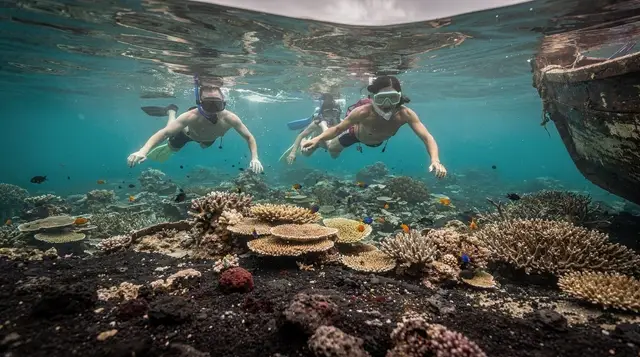
Where Tulamben’s Liberty wreck is about a single dramatic structure and Nusa Penida is about pelagic encounters in stronger current, Menjangan is about calm, scenic wall diving with strong coral cover and consistently good visibility. The wall drops steeply not far from the island’s shoreline, giving divers a genuine sense of depth and scale without needing to venture into open water or deal with the current strength found further along the coast. Soft coral growth and reef fish are the main attraction rather than big single encounters, which makes it a site that rewards slow, attentive diving over a rushed circuit.
A standard introduction to the site, such as basic diving at Menjangan Island, is a reasonable way to try the wall without committing to a full day of multiple dives. For certified divers who want a fuller day exploring more of the coastline, the Menjangan Island fun diving experience typically covers two or more sites around the island in a single outing.
Marine life you’re likely to encounter
The appeal at Menjangan is less about a single headline species and more about the density and health of the reef itself. Expect strong coral cover along the wall, a steady presence of common reef fish moving through in numbers, and the occasional larger visitor passing along the drop-off, though nothing here is as reliably predictable as the manta cleaning stations off Nusa Penida.
Turtles are seen regularly enough that most experienced local guides know roughly where to look on a given dive, though as with any wild encounter it isn’t something you should book expecting to see on a fixed schedule. For underwater photographers, the wide-angle reefscape shots the site offers — clear water, dramatic drop-offs, healthy coral — are arguably its strongest draw over any single marine-life encounter.
Why West Bali National Park status matters here
Menjangan’s inclusion within West Bali National Park isn’t just an administrative detail — it shapes the diving itself. Stricter management of the surrounding waters has helped keep the reef in noticeably better condition than more heavily trafficked dive areas elsewhere on the island, and boat numbers at any given site tend to be lower as a result of the park’s more limited operator access compared with open-access areas like Tulamben. That protection is also why the entry fee exists in the first place, and why anchoring and touching coral are taken more seriously here by operators than at some less formally managed sites.
Diving vs snorkelling at Menjangan
| Diving | Snorkelling | |
|---|---|---|
| What you see | The full wall, deeper coral formations and reef structure | The shallower upper reef, still with strong coral cover in clear water |
| Who it suits | Certified divers wanting calm, scenic wall diving | Non-divers, families, anyone travelling with a mixed group of divers and non-divers |
| Typical booking | A single or multi-site fun-dive package | A snorkelling day trip, often bundled with a boat tour of the island |
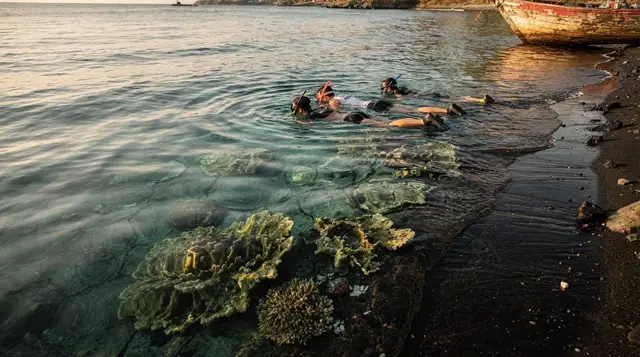
Because the water here is calmer and clearer than at most of Bali’s other dive sites, Menjangan works unusually well as a mixed-group destination. A trip like the Menjangan Island snorkelling trip with hotel pickup lets non-divers see much of the same reef from the surface while divers in the same group descend the wall, which is harder to arrange well at a site with stronger current or deeper structure.
What a first dive here actually involves
A typical Menjangan dive day starts with the boat crossing from Pemuteran or Labuhan Lalang, short enough that it rarely feels like the main event the way the Nusa Penida crossing can. Once on site, dives usually run along the wall at a gentle drift pace, with the guide pointing out coral formations and any resident marine life along the way rather than covering large amounts of ground quickly.
Surface intervals between dives are typically spent on or near the boat rather than back on shore, since Menjangan itself is largely undeveloped beyond the park ranger station. For an all-inclusive version of this, the all-inclusive fun dive at Menjangan Island bundles the transfer, equipment, and typically two dives into a single straightforward booking.
Combining diving with lunch and a full-day package
Given how far most visitors travel to reach Menjangan, full-day packages that combine diving with lunch and sometimes a second nearby stop are the norm rather than the exception. A package such as Menjangan Island scuba diving trip with lunch is built with that long day in mind, and operators based in Pemuteran, closer to the island itself, generally offer shorter transfer times than anything departing from further south.
What isn’t worth the detour
Skip Menjangan if your main interest is pelagic wildlife like manta rays or the drama of a wreck — this site simply isn’t built around either, and you’ll get a better version of what you’re actually looking for at Nusa Penida or Tulamben respectively. It’s also not worth the long drive as a rushed half-day add-on to a busier north Bali itinerary; the site rewards a properly planned day (or a short stay nearby) far more than a token stop squeezed between other activities.
What it costs
Costs at Menjangan include the standard diving or snorkelling package price plus a national park entry fee, since the island sits entirely within West Bali National Park’s boundaries. Full-day packages that include lunch and transport from further afield naturally cost more than a shorter trip booked once you’re already near Pemuteran. As with any diving day, confirm what’s included — equipment rental, park fees, lunch, and transfer — before comparing quotes across operators, since the headline price alone can be misleading.
When to go
Menjangan is diveable and snorkelable year-round, and its position in a relatively sheltered part of the coast means it’s less affected by the rougher sea conditions that can disrupt trips to Nusa Penida during the wetter months. That said, the dry season, roughly April to October, generally brings the clearest water and best overall visibility for the wall. Outside that window, expect occasional reduced clarity after heavy rain rather than site closures.
Getting there and getting around
Menjangan sits off Bali’s north-west tip, inside West Bali National Park, and is reached by a short boat crossing from either Pemuteran or the Labuhan Lalang jetty nearby. Getting to either point is the real logistical challenge: it’s a long drive from South Bali, Ubud, or even Lovina further along the north coast, so most visitors either commit to a full day trip with an early departure or build a short stay in Pemuteran specifically around diving here. There is no public transport option that makes sense for this trip; private driver, organised tour, or self-drive are the only realistic choices, and the roads through the national park area are quieter but also less developed than Bali’s main tourist routes.
How this fits into a longer trip
Menjangan works best as part of a north or west Bali loop rather than a single isolated day trip from the south. The north and west Bali 4-day itinerary sequences a stay near Pemuteran or Lovina with time at Menjangan Island and the surrounding West Bali National Park without the long round-trip drive a single day trip requires. For a wider look at the north coast, the north Bali day trip guide covers what else is worth combining with a stop near Pemuteran.
Divers building a trip around multiple sites should read the best diving in Bali guide for how Menjangan compares with Tulamben, Amed, and Nusa Penida, and the 10-day Bali diving trip itinerary for one way to sequence several of them without excessive backtracking. Non-divers travelling with a diving group might prefer the more accessible Gili Islands snorkelling guide if the long drive to Menjangan doesn’t suit the rest of the trip, and the diving with mola-mola in Bali post is worth reading for context on how Menjangan’s calm wall differs from the more current-driven sites further east.
Frequently asked questions about Diving Menjangan Island
Is Menjangan Island good for beginner divers?
Yes, generally more so than Nusa Penida, since currents are milder and visibility tends to be more consistent. It’s still open water diving, so a proper briefing and comfort in the water matter, but the conditions are among the more forgiving in Bali.
How do I get to Menjangan without a tour?
You can reach the Labuhan Lalang jetty by private driver or self-drive and arrange a boat and dive guide locally, but given the distance and the national park logistics, most visitors find an organised day trip or package simpler and not meaningfully more expensive.
Is the national park fee included in dive package prices?
Not always — check with your operator specifically, since Menjangan sits inside West Bali National Park and the entry fee is sometimes quoted separately from the diving or snorkelling cost.
Can I see manta rays at Menjangan?
No, Menjangan isn’t a manta site. If manta encounters are your priority, Nusa Penida’s Manta Point is the better choice; Menjangan’s appeal is calm wall diving and coral, not pelagic wildlife.
Is it worth staying overnight near Pemuteran instead of day-tripping?
If you want more than a single rushed day, yes. Basing yourself near Pemuteran for even one or two nights cuts the transfer time dramatically compared with a day trip from South Bali or Ubud, and gives you more flexibility on dive timing.
How does the water clarity at Menjangan compare with Tulamben or Nusa Penida?
Menjangan generally offers the clearest, calmest conditions of the three, particularly in the dry season, which is exactly why it appeals to divers who prioritise a relaxed wall dive over drama or current-driven encounters.
Can non-divers do anything at Menjangan?
Yes, snorkelling here works particularly well because of the calm, clear water, and several tours are built specifically to let snorkellers and divers explore the same reef area together from the surface and below.
Is Menjangan crowded like Tulamben can be?
No, this is one of its main selling points. Because of the distance from South Bali and the national park setting, Menjangan sees far fewer boats and divers on a typical day than the more accessible east-coast sites.
Does the national park fee apply to snorkellers too, or only divers?
It generally applies to anyone entering the park’s waters, snorkellers included, though the exact way it’s bundled into a package price varies by operator. Ask specifically if it isn’t obvious from the listing.
Is Pemuteran itself worth a stop beyond just diving at Menjangan?
It can be. Pemuteran is a quieter coastal village with its own artificial reef restoration project just offshore, and several divers who base themselves there for Menjangan end up doing a second, more relaxed dive or snorkel closer to the village itself rather than only visiting the island.
Diving & snorkelling tours on GetYourGuide
Verified deep-linked GetYourGuide tours. Book through these links and we earn a small commission at no cost to you.
These are our own photographs of Bali, not the operator's pictures of this tour — open the tour page to see those.