North Bali Day Trip: Waterfalls, Lakes and Empty Roads
Is a north Bali day trip worth the long drive?
Yes, if you go for the right reasons: waterfalls, cool-climate scenery, and roads without traffic, rather than trying to tick off every stop on the map in one day. The drive is the main cost — pick two or three targets rather than six, and you'll come back with a better day than most people who try to see the whole north in one push.
North Bali is the part of the island most first-time visitors never see, and that is exactly why it is worth the drive. While the south fills up with traffic and the Ubud ring road backs up behind tour buses, the roads north of Bedugul and Munduk stay quiet, the air cools down noticeably as you climb, and the waterfalls do not come with the queue-management systems that Tegenungan or Tibumana now need. The trade-off is honest and unavoidable: this is a full day built almost entirely around a long drive, with the sightseeing squeezed into the gaps.
What “north Bali” actually covers on a day trip is the stretch running from the twin lakes around Bedugul, through the clove-and-coffee hill town of Munduk, down to the black-sand coast at Lovina. Very few people manage all three properly in a single day and still enjoy themselves — the smarter version of this trip picks a lane, either the waterfall-and-lake route through Munduk or the temple-and-viewpoint route via Ulun Danu Beratan, and treats the rest as a reason to come back rather than a box to tick today.
This guide covers what the drive actually demands, which waterfalls reward the walk in and which don’t, and how to build a north Bali day that doesn’t collapse into eight hours in a car for twenty minutes of photos.
North Bali day trip at a glance
| Where | Bedugul, Munduk and Lovina, spanning the central highlands to the north coast |
| Cost | Driver or organised tour for the day, plus waterfall entrance fees and any hot-spring admission |
| Time needed | A full day, door to door — this is not a half-day excursion |
| Access | Private driver or organised tour; self-drive scooter is possible but long and often cold and wet in the hills |
| Best time | Dry season for road conditions and waterfall clarity; early departure regardless of season |
The drive is the trip, not a detour from it
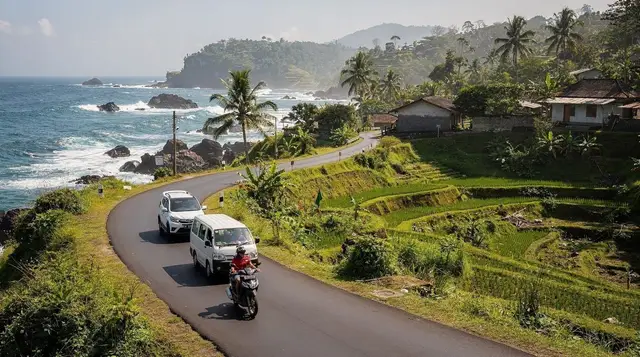
Set expectations here before anything else. The road north climbs steadily through Bedugul’s lake district, winds through Munduk’s clove plantations on a narrow two-lane road, and then drops back down toward the coast at Lovina. None of this is flat, none of it is fast, and a meaningful share of your day happens inside the car rather than at a stop. That is not a flaw in the itinerary — it is the itinerary. The hill roads through Munduk are genuinely some of the best driving scenery on the island, with terraced hillsides, plantation villages and mist that burns off by mid-morning most of the year.
Where this catches people out is when they try to stack too many stops onto one day and end up spending more time in transit between attractions than actually at them. A single loop — south to Bedugul, across to Munduk, down to Lovina, and back via the west coast road or back the way you came — is a full day even without extended stops. Trying to add a second waterfall cluster or a temple detour on top usually means arriving somewhere already tired and rushing the rest.
Sekumpul: the waterfall that earns its reputation
Sekumpul is usually cited as Bali’s best single waterfall, and on a clear day with reasonable water flow, it is hard to argue. The catch is the approach: getting down to the falls involves a real walk on uneven paths and steps, not a stroll from a car park, and the walk back up is the part people underestimate. A guide from a local waterfall association or from your driver’s network is standard here and genuinely useful, since the path network branches and the direct route is not obvious to first-timers. The Sekumpul waterfall guide covers the walk itself in more detail if this is your main target for the day.
Munduk’s waterfall loop: quieter, easier, still worth it
If Sekumpul’s walk sounds like more than you want, the cluster of waterfalls around Munduk village itself — including smaller falls reachable on shorter, better-maintained paths — gives you the same cool-climate, plantation-village atmosphere with less physical commitment. This is also where the clove and coffee plantation stops tend to happen, giving the day a slower, more varied rhythm than a straight waterfall-to-waterfall run.
The Munduk waterfall loop guide breaks down which of the falls in this area are worth the stop and which are skippable on a single day. A tour built specifically around this area, like the private North Bali tour that includes the Sambangan secret garden waterfall cluster, is a reasonable way to cover several falls without having to plan the walking order yourself.
Bedugul, the twin lakes, and Ulun Danu Beratan
Bedugul sits around the crater lakes of Buyan and Tamblingan, with the more famous Lake Beratan a little further along, home to the multi-tiered Ulun Danu Beratan temple that appears on Indonesia’s fifty-thousand-rupiah note. It is one of the most photographed temples on the island for good reason — the lakeside setting, especially with morning mist still sitting on the water, is genuinely different from anything in the south. It is also, unavoidably, one of the more visited single stops in this region, so arriving earlier in the loop rather than later gives you a real shot at the quieter version of it.
What isn’t worth the detour
Skip the roadside “coffee plantation” stops that appear every few kilometres along the tourist route unless you specifically want the luwak coffee demonstration — most are aimed squarely at tour groups and the coffee itself is not noticeably better than what a good Munduk warung serves with breakfast. If your day is built around waterfalls, resist the pull to add a Lovina dolphin-watching boat trip on the same day purely because it is nearby; the boats leave very early and the coastal detour adds real driving time that competes directly with your waterfall schedule. Do one or the other, not both, unless you are staying overnight in the north rather than doing this as a day trip from the south.
What it costs
Budget for a driver or organised tour for the full day, since self-drive scooter trips into the northern hills are longer, colder, and less forgiving of the narrow winding roads than most visitors expect. On top of transport, factor in small entrance fees at each waterfall and at Ulun Danu Beratan, plus a modest guide fee if you take one down to Sekumpul, which is worth paying for the path knowledge alone. A day trip built around two or three well-chosen stops, such as the North Bali full-day highlights tour, tends to work out more efficient than assembling the same route yourself with a rented scooter and a series of separate entrance-fee negotiations.
Seasonality: when the waterfalls actually look their best
Dry season, roughly April to October, gives the clearest views and the most reliable road conditions on the narrow hill routes, though the waterfalls themselves can run lower and less dramatic than in the wetter months. The rainy season, November to March, swells the waterfalls into their most photogenic state but adds real risk to the unpaved and stepped sections of path around Sekumpul and the smaller Munduk falls, plus the general hazard of driving mountain roads in heavy rain. If waterfall volume matters more to you than dry paths, aim for the shoulder months just after the wet season eases rather than the height of the dry season, when flow can thin out noticeably.
Getting there and getting around
There is no realistic public transport option for this route — chartered driver, organised tour, or a confident self-drive on a scooter with proper wet-weather gear are the choices. Given the road conditions, the altitude change, and the distance involved, most visitors are better served booking a full-day driver rather than trying to navigate the branching mountain roads solo, especially since several of the best waterfall car parks are unmarked on standard map apps.
A tour with a flexible, build-your-own stop list, such as the private North Bali tour with a choice of ten itinerary combinations, lets you weight the day toward waterfalls, lakes, or coffee culture depending on what your group actually wants rather than following a fixed script.
How this fits into a longer trip
A north Bali day trip works best either as a single well-planned day out of a South Bali or Ubud base, or as part of a dedicated loop that also covers the west of the island. If you have more time to give this region, the north and west Bali, 4 days itinerary threads Bedugul, Munduk and the west coast together without the single-day time pressure described above.
For the wider context on why Jatiluwih’s rice terraces sit on a similar route south of Bedugul, see the Jatiluwih rice terraces UNESCO guide and the subak irrigation explained page, both of which pair naturally with a Bedugul stop if you are routing through anyway.
For the broader menu of single-day trips out of South Bali, the best day trips from Bali guide compares this route against the alternatives, and hiring a private driver in Bali covers how to set up exactly this kind of flexible, multi-stop day.
Frequently asked questions about North Bali Day Trip
Is one day enough to see North Bali properly?
One day is enough to see a well-chosen slice of it — two or three stops done properly rather than everything on the map. Trying to cover Bedugul, Munduk’s full waterfall cluster, and Lovina in a single day usually means rushing every stop.
How early should I leave for a North Bali day trip?
Early. The drive itself takes up a meaningful part of the day, and arriving at Sekumpul or Ulun Danu Beratan before the bulk of the day’s visitors makes a real difference to both the crowds and, at the waterfalls, the light for photos.
Do I need a guide to reach Sekumpul waterfall?
Not strictly, but it is strongly recommended. The path network below the car park branches in ways that are not obvious from the top, and a local guide from the waterfall association speeds up the walk and adds context you would otherwise miss.
Is North Bali colder than the south coast?
Noticeably, yes, particularly around Bedugul and Munduk at higher elevation. It is not cold by most standards, but the difference from Kuta or Canggu is real enough that a light layer is worth packing.
Can I combine North Bali with Lovina’s dolphin watching in one day?
You can, but it is a demanding combination, since the dolphin boats leave very early and the coastal detour adds significant driving time on top of an already long waterfall-and-lake day. Most visitors get a better experience treating them as separate trips.
Is the road to Munduk difficult to self-drive?
It is narrow, winding, and unlit in places, with real elevation change. Confident, experienced scooter riders manage it, but it is a step up from South Bali’s more forgiving roads, and rain makes it considerably harder.
Is Ulun Danu Beratan worth visiting if I’ve already seen Tanah Lot?
Yes — the lakeside, misty highland setting is a genuinely different kind of temple photograph from Tanah Lot’s coastal cliff-and-sunset scene, and the two rarely disappoint the same visitor for the same reasons.
What should I wear for a North Bali waterfall day?
Closed shoes with real grip, quick-drying clothes, and a light jacket or jumper for the cooler hill sections. Sandals are common but a poor choice on the wet, sometimes slick paths down to falls like Sekumpul.
Best day trips from Bali on GetYourGuide
Verified deep-linked GetYourGuide tours. Book through these links and we earn a small commission at no cost to you.
These are our own photographs of Bali, not the operator's pictures of this tour — open the tour page to see those.