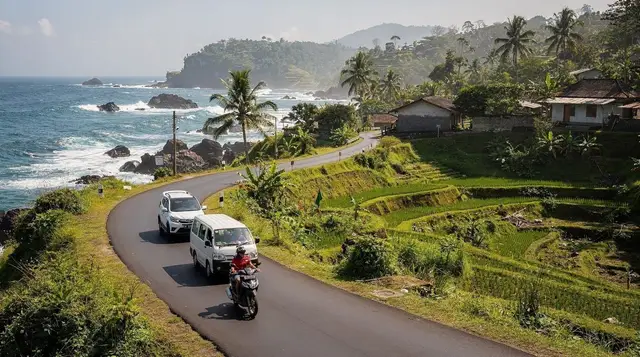
Lovina sits on Bali’s north coast, a long drive from the south’s resort belt and a genuinely different pace of travel once you arrive. The beaches here are black volcanic sand rather than the pale sand of the south, the water is generally calmer given the more sheltered coastline, and the whole stretch of small villages that make up the Lovina area feels considerably less developed than Kuta, Seminyak, or even Ubud. That is the honest pitch for coming here: not a single knockout attraction, but a quieter, slower version of coastal Bali.
The area’s best-known activity is the early-morning boat trip to watch wild dolphins offshore, a tradition that predates most of Bali’s organised tourism and has become the single thing most visitors associate with the name Lovina. It deserves an honest treatment rather than either uncritical hype or dismissal, because both extremes miss what the experience actually is.
Beyond the dolphins, Lovina works as a base for exploring North Bali more broadly — waterfalls, hot springs, and the old colonial town of Singaraja are all within a reasonable drive, making it a sensible one-or-two-night stop for anyone doing a loop of the island rather than sticking purely to the south and Ubud.
Lovina at a glance
| Where | North coast of Bali, a cluster of villages roughly two to three hours’ drive from South Bali or Ubud |
| Cost | Budget-to-mid-range accommodation is common; dolphin boat trips and other activities are priced separately and modestly |
| Time needed | At least one night to justify the drive; two nights allows time for nearby waterfalls and hot springs too |
| Access | Self-drive scooter, private driver, or as part of a North Bali multi-day tour |
| Best time | Year-round for the coast itself; dry season for calmer boat conditions |
The dolphin boat trips, honestly
Boats leave before sunrise, when dolphin sightings are considered most likely, in small motorised outrigger canoes that head out in a loose group rather than individually. Sightings are common enough that operators build entire businesses around them, but they are wild animals, not a scheduled show, and some mornings deliver only distant glimpses rather than the close encounters shown in marketing photos. The larger practical drawback for some visitors is the flotilla effect: on a busy morning, a dozen or more boats can converge around the same pod, which is a far cry from a solitary wildlife encounter and worth knowing before you set an alarm for the middle of the night.
A combined trip, such as the Lovina sunrise dolphin tour with snorkelling, extends the morning with time in the water afterwards rather than ending the outing the moment the boat returns to shore, which is a reasonable way to make the early start feel more worthwhile.
The black-sand coastline itself
Beyond the dolphin trips, Lovina’s beaches are worth a slower look on their own terms. The volcanic black sand absorbs heat more than the pale sand further south, so mid-afternoon walks can feel considerably hotter underfoot than the temperature alone would suggest — mornings and early evenings are the more comfortable windows.
The relatively sheltered bay keeps the water calmer than much of Bali’s open coastline, which makes it a reasonable spot for swimming rather than the surf-focused beaches of Canggu or Uluwatu, though it isn’t a destination beach in the way South Bali’s better-known stretches are. Fishing boats painted in bright colours, drawn up along the sand between outings, are as much a part of the scene as the water itself, a reminder that Lovina’s coast still supports a working fishing community rather than existing purely for tourism.
Combining Lovina with the rest of North Bali
Most visitors treat Lovina as a base rather than a single-purpose destination, using it as the anchor for a wider North Bali loop that can include Sekumpul waterfall, the Banjar hot springs, and Singaraja’s old colonial quarter. A structured option like the two-day tour combining a Lovina stay with temples and waterfalls packages several of these stops together with an overnight in the area, which suits travellers who want the region covered without planning each leg themselves.
If you are coming from or heading toward West Bali, the private transfer routing through Gilimanuk and Bedugul is a useful way to combine transport with sightseeing rather than treating the long drive as dead time.
A different kind of stay: retreats and slower travel
Because Lovina sees a fraction of South Bali’s visitor volume, it has become a base for a different style of travel — slower, wellness-oriented stays rather than nightlife or beach-club culture. Options like the three-day Lovina yoga retreat with a purification ceremony reflect that shift, aimed at travellers looking for a genuinely quieter few days rather than a fast-paced sightseeing stop. It is a different audience from most of what North Bali’s day-tour market serves, worth knowing about if a slower pace, rather than a checklist of waterfalls, is what you are actually after.
Snorkelling and diving from Lovina
Lovina’s calmer water and proximity to reef areas along the north coast make it a workable, lower-key base for snorkelling and introductory diving, distinct from the bigger dive destinations further east at Tulamben and Amed or across the strait at Menjangan. It will not compete with those spots on visibility or the drama of a wreck dive, but as an add-on to a dolphin trip or a standalone half-day activity, it’s a reasonable way to spend time in the water without the crowds found at Bali’s more famous dive sites. Ask locally about current conditions, since visibility here varies more with weather and runoff than at the clearer offshore sites further along the coast.
What isn’t worth the detour
Skip any operator promising a “guaranteed” dolphin sighting — reputable local guides are honest that sightings, while likely, are never certain, and anyone selling a guarantee is either overpromising or padding the trip with something else to fall back on. Also skip expecting a lively nightlife scene here; Lovina’s beachfront strip has some bars and restaurants, but it is a fraction of what Kuta or Canggu offer, and travellers coming specifically for nightlife will be disappointed.
Where the name comes from, and what “Lovina” actually covers
Lovina is not a single village but an informal stretch of coastline covering several adjoining villages, strung together along the coast road west of Singaraja — a distinction worth knowing since your accommodation might technically sit in one named village while every map and every tour brochure simply refers to the whole area as Lovina.
The name itself is often said to blend a reference to love with the local word for coconut palm, though accounts of its exact origin vary depending on who you ask locally, and it dates to the mid-20th century rather than any older colonial or indigenous naming convention. Practically, this means “Lovina” on a map or in a tour listing can mean anywhere along a reasonably long stretch of coast, so it’s worth checking exactly where your accommodation sits relative to the dolphin-boat departure points and the main restaurant strip before booking, particularly if walking distance matters to you.
What it costs
Lovina is generally more affordable than South Bali across accommodation, food, and activities, part of why it appeals to budget-conscious travellers doing a longer island loop. Dolphin boat trips are inexpensive relative to many of Bali’s paid activities, particularly on a shared boat; private options cost more but remain reasonable by comparison with equivalent water-based activities in the south. Factor in the cost of a private driver or multi-day tour if you are not self-driving, since public transport options this far north are limited.
When to go
The dry season, roughly April to October, brings calmer seas, which makes for a smoother boat trip and generally better sighting conditions, though dolphins are present off Lovina throughout the year. The wet season from November to March brings a higher chance of choppier mornings and short, heavy downpours, which can affect visibility on the water without necessarily cancelling trips outright — check conditions with your accommodation or operator rather than assuming either season rules it out.
Getting there and getting around
Lovina is a genuinely long drive from South Bali — expect the bulk of a half-day just in transit if coming from Kuta, Seminyak, or Canggu, with a shorter but still substantial drive from Ubud via the central highlands. There is no practical public transport for tourists covering this route; self-drive scooter (a long ride, only for confident riders), private driver, or an organised multi-day North Bali tour are the realistic options. Once in Lovina, the town itself and nearby villages are compact enough to get around on foot or a short scooter ride.
How Lovina fits into a longer trip
Lovina works best as an overnight stop within a wider North Bali loop rather than a day trip. Pair it with Singaraja, Sekumpul, Gitgit, and Banjar hot springs using the North Bali day trip guide or the fuller North and West Bali, 4 days itinerary. If your route continues west, Pemuteran and the West Bali National Park are a natural next stop.
Before booking, it’s worth reading the best time to visit Bali guide and the getting around Bali guide, since North Bali’s road conditions and travel times are meaningfully different from the more built-up south.
Frequently asked questions about Lovina Beach
Are dolphin sightings guaranteed on the Lovina boat trips?
No. Sightings are common but not certain, since these are wild animals rather than a captive display. Treat the trip as a likely-but-not-guaranteed wildlife encounter.
How early do the boats leave?
Trips leave before sunrise, since dolphins are considered easiest to spot in the early morning. Expect a genuinely early wake-up, well before dawn.
Is Lovina worth visiting if I’ve already done a lot of beach time in South Bali?
Yes, for a different reason — Lovina’s appeal is the quieter pace and black-sand coastline, not a better beach in the conventional sense. Go for the change of tempo, not to compare beaches directly.
How many boats go out at once?
On a busy morning, expect to share the water around a dolphin pod with a number of other boats rather than experiencing it alone — this is a known trade-off of the shared-boat format.
Is Lovina a good base for families?
Reasonably, yes — calmer water than much of the south coast, a slower pace, and activities like dolphin watching and nearby waterfalls suit families well, though facilities and entertainment options are more limited than South Bali’s family-oriented resorts.
Can I do Lovina as a day trip from Ubud?
It’s possible but not advisable given the drive time in each direction; an overnight stay makes far better use of the journey and lets you add nearby waterfalls or hot springs without rushing.
What’s the difference between Lovina and Pemuteran further west?
Both are quiet north-coast alternatives to South Bali, but Lovina is better known for dolphin watching and has a larger cluster of accommodation and warungs, while Pemuteran leans more toward diving and snorkelling around Menjangan Island and has a smaller, more low-key footprint.
Is there ATM or banking access in Lovina?
Yes, the main strip has ATMs and money-changers, though as with most of Bali outside the main tourist hubs, carrying enough cash for a day or two is sensible rather than assuming card payments are accepted everywhere.