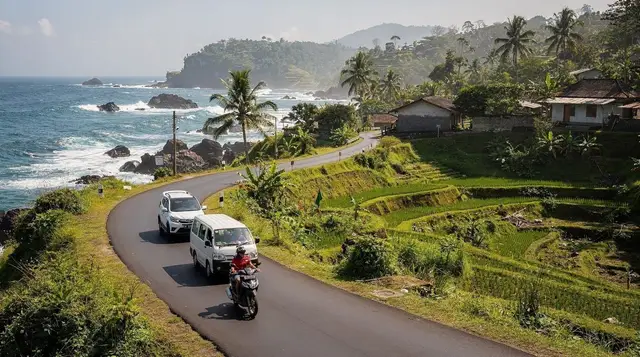
Pemuteran sits on Bali’s northwest coast, in the rain shadow of the island’s central mountains, which gives it a noticeably drier, sometimes almost arid feel compared with the lush green most visitors associate with Bali. The bay itself is calm and sheltered, protected by an offshore reef, and the pace of the town matches the water — this is a place built around diving, snorkelling, and a slower kind of stay rather than nightlife, shopping, or a packed activity list. If Amed already feels more developed than you want, or you are looking for something quieter than Tulamben’s dive-focused strip, Pemuteran is worth serious consideration.
What sets the area apart from most Bali dive bases is the Biorock reef project just offshore, one of the largest coral restoration initiatives of its kind in the world. Steel structures placed on the seabed carry a low electrical current that encourages accelerated coral growth, and the results — dense, actively growing coral formations in a bay that had previously seen significant reef damage — are visible even to snorkellers rather than only certified divers. It gives Pemuteran a sense of purpose beyond simply being a nice place to get in the water, appealing particularly to travellers with any interest in marine conservation.
Pemuteran also functions as a practical staging point for reaching Menjangan Island and the West Bali National Park’s marine areas, both a reasonably short boat ride away, and increasingly as a jumping-off point for overnight trips across to East Java’s Ijen crater, given the relatively short distance to the Gilimanuk ferry crossing from here compared with South Bali.
Because it draws a smaller, more specialised crowd than Bali’s headline beach towns, expect fewer restaurants, less nightlife, and a genuinely different rhythm to your days here — mornings built around dive or snorkel trips, afternoons spent slowly rather than rushing between attractions.
Pemuteran at a glance
| Where | Northwest coast of Bali, between Lovina and the West Bali National Park |
| Cost | Diving and snorkelling trips priced per activity; accommodation generally mid-range and less expensive than South Bali’s resort towns |
| Time needed | Two to three nights makes the most of the area; a single night is workable but rushed given the boat-trip logistics involved |
| Access | Self-drive scooter or private driver from South Bali or Lovina; a long but manageable drive |
| Best time | Dry season for the clearest water and calmest conditions; diving remains possible in the wet season with more variable visibility |
The Biorock reef, up close
Snorkelling directly over the Biorock structures is one of the more distinctive things you can do in Bali’s waters — dense coral growth on man-made steel frames, home to a genuinely active reef ecosystem that stands in visible contrast to more damaged sections of coastline nearby. The project has run for decades, making it one of the longest-standing coral restoration efforts globally, and the structures themselves have become artificial reef habitats in their own right, attracting fish life well beyond what the bare steel frames alone would suggest. It is a rare case of a marine conservation project that is also, straightforwardly, one of the better things to see in the water here.
Diving and snorkelling logistics
Most dive and snorkel operators in Pemuteran run trips both to the immediate bay, including the Biorock area, and further afield to Menjangan Island’s marine park, generally a manageable boat ride away. Options like discovering scuba diving in Pemuteran itself suit complete beginners wanting an introductory experience without committing to a full certification course, while more experienced divers can look at multi-dive packages covering both the local bay and Menjangan’s reef walls in the same trip.
Combining Pemuteran with East Java’s Ijen crater
Pemuteran’s position on the northwest coast, close to the Gilimanuk ferry crossing to Java, makes it a practical base for an overnight trip to Kawah Ijen, the East Java volcano famous for its blue flame phenomenon and turquoise crater lake.
A tour like the Kawah Ijen midnight tour with sunrise, departing from Pemuteran takes advantage of the shorter transfer distance compared with departing from South Bali, cutting a significant chunk of driving time off what is already a demanding overnight excursion. A similar option, the Mount Ijen blue fire tour with pickup from Pemuteran, covers the same territory with slightly different timing and inclusions.
A quieter jungle and snorkelling stay
For a slower, multi-day version of the Pemuteran experience, the two-day jungle trek, snorkelling, and Pemuteran stay combines time in the water with a walk through the drier forest habitat typical of this part of Bali, distinct from the wetter jungle further south and east. It is a useful option for travellers who want more than a beach-and-dive-only itinerary without leaving the area.
Mangrove kayaking and the quieter side of the bay
Beyond diving and snorkelling, the Banyuwedang mangrove forest near Pemuteran offers a genuinely different way to spend a slower morning or afternoon — kayaking through calm, sheltered channels lined with mangrove roots, a habitat that supports a very different ecosystem from the reef just offshore. It is a low-effort, low-intensity activity suited to travellers who want a break from being in a wetsuit, or to non-diving companions looking for their own activity while others in the group are underwater. The contrast between the arid, scrubby hills around Pemuteran itself and the dense green of the mangrove channels is more striking than photographs tend to suggest.
Local marine park regulations and why they matter
Menjangan Island and the surrounding waters, including parts of the bay near Pemuteran, fall within West Bali National Park’s protected marine area, which means diving and snorkelling here operate under stricter conservation rules than more commercially developed dive areas elsewhere in Bali — no touching coral, no standing on the reef even briefly, and generally smaller group sizes per boat.
This is part of why the reef around Pemuteran and Menjangan has recovered as well as it has compared with more heavily trafficked dive sites, and reputable operators here take these rules seriously rather than treating them as a formality. Choosing an operator who visibly enforces these standards, rather than the cheapest option available, makes a real difference to both your experience and the reef’s ongoing health.
Accommodation style in Pemuteran
Unlike South Bali’s dense resort strips, Pemuteran’s accommodation is spread more thinly along the bay, generally smaller-scale properties rather than large resort complexes, many with a specific focus on diving packages bundled into the room rate. This suits the area’s overall pace — quieter, more spread out, and oriented around getting in the water rather than a busy pool deck or beach club scene. Expect fewer restaurant options within walking distance of any given property than you would find in a denser tourist town, which is worth factoring into how you plan meals across a multi-night stay.
What isn’t worth the detour
Skip Pemuteran if an active nightlife scene, varied dining, or a lively beach-club atmosphere matter to your trip — this area simply does not offer that, and travellers expecting it will be disappointed regardless of how good the diving is. Also skip rushing a Pemuteran stay down to a single night purely to tick it off; the area rewards a slower pace, and the value of the Biorock project and Menjangan access is diminished if you are constantly checking the clock for the next stop on your itinerary.
What it costs
Diving and snorkelling trips are priced per activity, generally comparable to or slightly less expensive than equivalent trips from Amed or Tulamben, while accommodation across the area tends to run more affordable than South Bali’s resort belt, reflecting the more modest tourism infrastructure. Multi-dive packages and any Ijen crater add-on will be the larger single costs within a Pemuteran-based itinerary.
When to go
Dry season, roughly April through October, offers the calmest seas and clearest underwater visibility, which matters more here than at most Bali destinations given how central diving and snorkelling are to the appeal. Diving remains possible through the wet season, but expect more variable visibility and a higher chance of choppy conditions affecting boat trips to Menjangan specifically.
Getting there and getting around
Pemuteran is a genuinely long drive from South Bali, realistically most of a day if coming directly from Kuta, Seminyak, or Canggu, with a shorter but still substantial journey from Lovina. Self-drive scooter or private driver are the practical options; there is no meaningful public transport serving this stretch of coast. Once settled in the area, most activities are boat-based rather than requiring further driving.
How Pemuteran fits into a longer trip
Pemuteran pairs naturally with Menjangan Island and the West Bali National Park as a diving-and-nature-focused leg of a longer trip, and works as a staging point for Gilimanuk if East Java’s volcanoes are next on your route. Read the best diving in Bali guide and the menjangan island diving guide before booking, and use the North and West Bali, 4 days itinerary to sequence Pemuteran alongside Lovina without excessive backtracking.
If Ijen crater is part of your plan, the Ijen crater blue fire guide and the Bali to East Java overland guide cover the logistics of that leg in more depth.
Frequently asked questions about Pemuteran Bay
Do I need to be a certified diver to enjoy Pemuteran?
No — the area offers introductory scuba experiences for beginners as well as full certification courses, alongside plenty of accessible snorkelling directly over the Biorock reef that requires no certification at all.
What is the Biorock project, in simple terms?
It’s a coral restoration technique using low-voltage electrical current run through submerged steel structures to accelerate coral growth, creating an artificial reef that has become a genuine marine habitat over time.
How does Pemuteran compare to Amed for diving?
Pemuteran is quieter and calmer, with the Biorock project as a distinctive draw; Amed offers a wider range of dive sites and a somewhat larger, more developed tourism infrastructure. Neither is objectively better — the choice comes down to pace and priorities.
Is Pemuteran a good base for non-divers travelling with a diver?
Reasonably, yes — the calm bay, beaches, and slower pace suit non-diving companions, though the area’s activity options beyond the water are genuinely limited compared with South Bali.
How far is Pemuteran from the Gilimanuk ferry crossing to Java?
Close enough to make it a sensible staging point for an Ijen crater trip, considerably shorter than the drive required from South Bali.
Is snorkelling directly from the beach possible, or do I need a boat?
Some snorkelling is possible directly from shore, but the best sites, including parts of the Biorock reef and certainly Menjangan Island, require a short boat trip.
Is Pemuteran a good stop for a broader West Bali itinerary?
Yes — its position between Lovina and the West Bali National Park makes it a natural midpoint for travellers doing a full loop of the north and west coasts, rather than backtracking through South Bali between separate stops.
How many dives are realistic in a single day from Pemuteran?
Most operators run two to three dives per day depending on the sites chosen and surface intervals required for safety, similar to standard practice at other Bali dive bases.
Is there an entry fee for the marine park around Menjangan?
Yes, a marine park fee applies for diving or snorkelling within the protected area, typically collected by your dive operator as part of the trip cost rather than paid separately.