Bali and the East Java Volcanoes in 5 Days
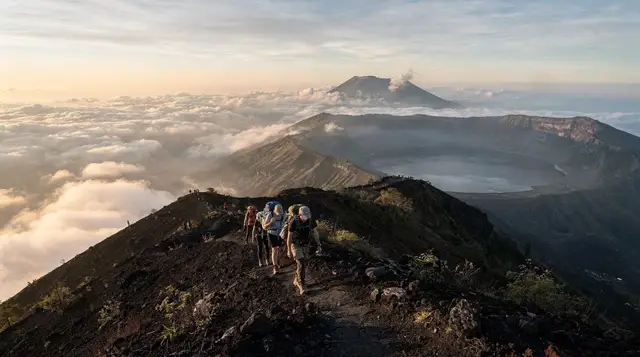
East Java’s volcanoes sit just across the strait from Bali, close enough that a dedicated trip is genuinely feasible without a domestic flight, yet demanding enough — in early starts, cold, and altitude — that they attract a different kind of traveller than the rest of this site typically covers. Ijen’s blue fire, a rare phenomenon caused by burning sulphuric gas visible only in darkness, and Bromo’s vast sea-of-sand caldera at sunrise are both genuinely spectacular, and neither exists anywhere on Bali itself.
This itinerary treats the trip as a compact loop: cross from Bali to Banyuwangi, trek Ijen overnight, then continue on toward Bromo for a second early start, before returning. Five days is tight for both volcanoes plus the crossing and driving between them, but it’s workable if you accept the pace rather than trying to add extra stops along the way.
Be honest with yourself before booking about the physical demands. Both treks start in the middle of the night, involve real cold at altitude that surprises visitors expecting tropical heat throughout, and require a reasonable level of fitness for the walking involved, even though neither is a technical climb.
The five days at a glance
| Route | Bali (east coast) → ferry to Banyuwangi → Ijen → Bromo (via Malang or Probolinggo) → return |
| Access | Ferry crossing from Bali’s Gilimanuk or Ketapang side, then overland driving throughout |
| Best time | Dry season, April to October, for clearer crater views and safer trekking conditions |
| Pace | Two overnight, pre-dawn treks in five days — genuinely demanding, not a relaxed itinerary |
| Difficulty | Challenging: cold, altitude, early starts, and real walking distance on both treks |
Day one: Bali to Banyuwangi
Cross from Bali’s east coast to Banyuwangi by ferry, a short but essential crossing that connects the island to mainland Java. Use the rest of the day to rest before Ijen’s overnight trek — this is not the day to add extra sightseeing, since the trek itself starts in the middle of the following night and a tired start makes a genuinely demanding hike considerably harder.
Day two: Ijen’s blue fire and sunrise
Begin the Ijen trek in the small hours of the morning, well before dawn, to reach the crater rim while it’s still dark enough to see the blue flames burning around the sulphur vents below. A guided Ijen sunrise trek is the standard, sensible way to do this — a local guide knows the trail in the dark and understands the gas conditions that occasionally require altering the route near the crater floor. Descend as the sun rises over the wider crater landscape, and rest for the remainder of day two before continuing toward Bromo.
The gas at Ijen’s crater is genuinely hazardous in concentrated pockets near the mining paths at the bottom, and a proper respirator or gas mask, not just a cloth covering, is the standard safety equipment for anyone descending close to the sulphur vents.
Day three: to Bromo, via Malang or Probolinggo
Travel from the Ijen area toward Bromo, a drive that takes a substantial part of the day given the distance and Java’s mountain roads. Some travellers break the journey through Malang, which has its own worthwhile stops if you have any flexibility, though this itinerary treats it primarily as a waypoint given the five-day constraint. Arrive near Bromo in the evening and rest ahead of a second pre-dawn start. Travellers who’d rather not self-arrange this transfer can book a private multi-day Java tour that covers the transport between regions alongside guided stops, which removes a genuine logistics headache from an already tight schedule.
Day four: Bromo’s sunrise and the sea of sand
Bromo’s sunrise viewpoint delivers one of the more photographed volcanic landscapes in Indonesia: an active, smoking crater rising out of a flat, ash-grey caldera floor known as the sea of sand, with the sun coming up behind a ring of surrounding peaks. A multi-day package such as the combined Ijen, Bromo and waterfall tour covers this whole loop as a single booking if you’d rather not coordinate transport and guides separately for each leg. After sunrise, most visitors descend into the caldera itself for a closer look at the active crater before the heat and crowds build.
Day five: return to Bali
Head back toward the Banyuwangi ferry crossing and return to Bali, or continue onward if your trip extends further into Java. Build genuine buffer time into this day — the return journey covers real distance, and a missed ferry or delayed connection has a bigger knock-on effect on a tight five-day trip than it would on a longer, more flexible one.
Ijen versus Bromo: what makes each one worth the effort
| Ijen | Bromo | |
|---|---|---|
| Signature sight | Blue flames from burning sulphuric gas, visible only in darkness | Sunrise over an active crater and a vast ash-grey caldera |
| Trek difficulty | Steep, with a genuine gas hazard near the crater floor | Less steep, but a long walk or jeep ride across the sea of sand |
| Best time to arrive | Well before dawn, to see the blue fire while still dark | Before sunrise, for the classic caldera panorama |
| Crowd levels | Smaller, more serious trekking crowd | Larger, including many day-tripping visitors from Malang and Surabaya |
Both are worth doing if your five days allow it, but they reward slightly different kinds of travellers — Ijen suits those genuinely interested in the geology and willing to manage a real hazard responsibly, while Bromo is a more purely scenic, slightly less demanding experience that still requires the same early start.
Health and altitude considerations before you go
Sulphur dioxide exposure at Ijen isn’t a minor discomfort for people with asthma or other respiratory conditions — it can trigger a genuine reaction, and anyone with a relevant medical history should discuss the trek with a doctor beforehand and be prepared to turn back if conditions near the crater floor feel unsafe. Altitude at both sites is enough to cause mild shortness of breath in unfit or unacclimatised travellers, though neither is high enough to risk serious altitude sickness for most people.
Hydration matters more on these treks than the cool pre-dawn temperature might suggest, since the descent and any time spent around the crater rim in daylight can still involve real heat exposure once the sun is up. Carrying enough water for a multi-hour trek, rather than relying on buying it along the way, is standard advice from most reputable guides.
Practical notes for the overland leg
Java’s roads between Banyuwangi, Ijen, and Bromo cover real distance through varied terrain, and travel times can run longer than a map suggests, particularly around Probolinggo’s approach to Bromo where local jeep convoys can cause delays during peak sunrise hours. Phone signal is generally reliable along the main routes but drops out near both crater rims, so download any offline maps or confirmation documents you might need before setting out each pre-dawn morning. Cash is the more reliable payment method throughout rural East Java, including at some ticket booths and smaller roadside stops.
What isn’t worth the detour
Skip trying to add Yogyakarta, Borobudur or Prambanan onto this itinerary — they sit a considerable further distance west into Java, well beyond what five days built around Ijen and Bromo can accommodate, and belong to a separate trip entirely. Also skip walking close to Ijen’s sulphur mining paths without a proper gas mask just to get a closer photo; the gas exposure risk there is real, not exaggerated for effect, and it’s the one part of this itinerary where cutting a corner has a genuine safety cost rather than just a comfort one.
Budget for five days
This trip costs more per day than a standard Bali itinerary, reflecting the guided treks, the ferry crossing, and the overland transport across a genuinely large distance in East Java. A combined multi-day package covering both volcanoes is often more cost-effective than booking each leg separately, given the transport and guide logistics involved in stringing the trip together independently. Warm layers and a proper gas mask are a small but worthwhile spend given what they add to both safety and comfort on two demanding pre-dawn treks.
When to go
The dry season, April to October, is the more reliable window for both treks: clearer crater views, safer footing on Ijen’s steep sulphur-mining paths, and less risk of the sea-of-sand caldera at Bromo turning to mud. Wet season treks are possible but considerably less pleasant and occasionally cancelled outright if conditions at either crater are judged unsafe.
Getting there and around
The route from Bali starts with a ferry crossing from the island’s eastern side to Banyuwangi on Java, after which the whole trip is overland by car or guided transport, since there’s no meaningful rail or bus network suited to visitors moving quickly between Ijen and Bromo. A guided multi-day package that handles the transport, guiding and accommodation together removes most of the logistics burden, which matters more on this itinerary than most others on this site given the distances and pre-dawn timings involved.
How this fits into a longer trip
If five days feels rushed once you’re planning it, the bali off the beaten path, 10 days itinerary shows one way to extend a similar trip with more Bali time either side. For deeper context on each crater specifically, read Ijen crater blue fire guide and Mount Bromo sunrise guide before booking, and what to pack for a volcano trek is worth reading regardless of which itinerary you follow.
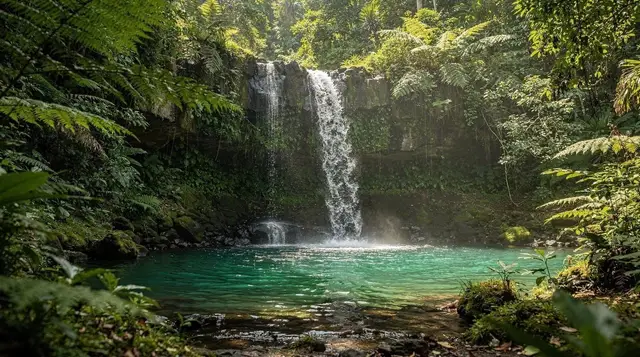
Anyone extending the loop toward Malang specifically should also check Tumpak Sewu waterfall guide, a worthwhile detour that pairs naturally with the drive between Ijen and Bromo. For an honest look at whether the overnight hike is worth it, see Ijen blue fire: is it worth the night.
Frequently asked questions about Bali and the East Java Volcanoes in 5 Days
Do I need a Java-specific visa to do this trip?
No — Java is part of Indonesia, so the same visa or e-VOA that covers Bali applies here too, with no separate border process beyond the ferry crossing itself.
How fit do I need to be for these treks?
Reasonably fit. Neither trek is a technical climb, but both involve real walking distance on uneven terrain in the dark and cold, and a sedentary traveller may find both genuinely demanding.
Is the blue fire visible with the naked eye, or only in photographs?
It’s visible to the naked eye in the dark, though photographs with longer exposure times do make it appear more vivid than it looks in person. It’s still a genuinely striking sight either way.
Can I do just one of the two volcanoes instead of both?
Yes, and it’s a reasonable way to shorten the trip if five days feels like too much. Ijen alone is achievable in a shorter loop from Bali; Bromo alone usually makes more sense combined with time in Malang or further into Java.
Is it cold enough to need real winter clothing?
At the crater rims before dawn, yes — temperatures can feel close to freezing at altitude, a genuine shock after Bali’s heat. Proper layers, a hat and gloves matter more than people expect before their first trip.
Do I need a guide, or can I do these treks independently?
A guide is standard practice for both, particularly for Ijen given the gas hazards and the value of local knowledge navigating in the dark. It’s not strictly mandatory everywhere, but it’s the sensible choice for nearly all visitors.
What happens if a trek is cancelled due to conditions?
Reputable operators will cancel or reroute a trek if gas levels or weather conditions are judged unsafe, and a good operator will have a clear policy on rescheduling or refunds in that case — worth checking before you book.
Is this trip suitable for children?
It’s demanding even for fit adults, given the cold, altitude and pre-dawn timing, so it isn’t the easiest choice for young children. Older, physically capable teenagers who are used to hiking can generally manage it.
Can I see the blue fire without doing the full overnight trek?
Some operators offer an afternoon Ijen hike instead, but the blue fire itself is only visible in darkness, so seeing it specifically does require either the overnight trek or a very early departure timed to arrive before dawn.
Should I book this trip as a package or arrange each leg myself?
A combined multi-day package is considerably simpler given the ferry crossing, overland transport, and two separate guided treks involved. Arranging each leg independently is possible but adds real coordination effort for a five-day trip with little slack.
Volcano & sunrise trekking on GetYourGuide
Verified deep-linked GetYourGuide tours. Book through these links and we earn a small commission at no cost to you.
These are our own photographs of Bali, not the operator's pictures of this tour — open the tour page to see those.