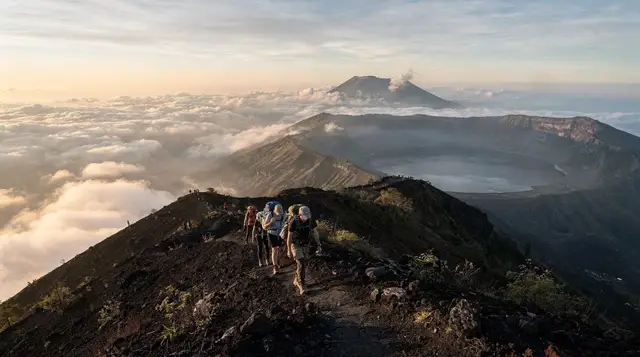
Mount Bromo is one of the more photographed volcanic landscapes in Southeast Asia, and the standard way to see it involves being awake and in a jeep hours before sunrise, parked among dozens of identical jeeps at a viewpoint on the rim of the wider Tengger caldera, waiting for the sky to change colour over an active crater rising out of a flat expanse of grey volcanic sand. It is a genuinely strange, striking scene, and it is also, in high season, a genuinely crowded one.
The volcano itself sits inside the Bromo Tengger Semeru National Park, part of a much larger caldera that also contains Mount Batok and, further off, Java’s highest peak, Mount Semeru, which still occasionally sends up its own plume in the background of Bromo photographs. The “sea of sand,” a broad plain of dark volcanic ash and sand between the caldera rim and the active cone, is crossed by 4x4 jeep before most people even reach the crater itself, and this drive across an open volcanic plain in the dark is as much a part of the experience as the sunrise viewpoint.
What makes Bromo different from many volcano visits elsewhere is how accessible the spectacle is relative to how dramatic it looks. You do not need serious trekking fitness to see Bromo’s most famous view — a jeep and a short walk or horse ride covers most of it — which is exactly why it draws such consistent crowds, and why managing expectations about solitude matters more here than almost anywhere else on this list.
Mount Bromo at a glance
| Where | Bromo Tengger Semeru National Park, East Java, near the gateway village of Cemoro Lawang |
| Cost | National park entrance fee plus jeep hire, usually bundled into an organised tour |
| Time needed | An overnight trip: predawn jeep departure, sunrise viewpoint, crater rim walk, return by mid-morning |
| Access | Overland from Malang, Surabaya, Probolinggo, or Banyuwangi; from Bali, via the Gilimanuk-Ketapang ferry and an overland transfer |
| Best time | Dry season for stable jeep access across the sand sea; shoulder months for smaller crowds at the sunrise viewpoint |
The predawn jeep convoy
Tours depart the staging village in the small hours, typically well before 4am, so the fleet of open-sided 4x4 jeeps can reach the main viewpoint before first light. The drive itself, through darkness and then a slow lightening sky over rolling volcanic terrain, is memorable in its own right, but it is also cold — the elevation and the pre-dawn hour combine to make this one of the more consistently underestimated cold-weather stretches of a Southeast Asia holiday. A straightforward Mount Bromo sunrise tour paired with Madakaripura waterfall is the most common way to see the highlights in a single day if your time in East Java is limited.
The sunrise viewpoint, honestly
The classic Bromo sunrise photograph — the crater and Batok silhouetted against a plain of mist and sand, lit gold — is real and achievable, but getting it usually means sharing a crowded platform with a wall of tripods and phone screens, particularly during July, August, and the Christmas and New Year period. It is worth treating the viewpoint as a shared spectacle rather than expecting a quiet, private nature moment, and arriving early enough to actually claim a decent spot rather than assuming the jeep drop-off guarantees one.
Crossing the sea of sand and reaching the crater
After the sunrise viewpoint, jeeps descend into the sand sea itself and drop passengers near the base of Bromo’s cone, from where a set of stairs leads up to the crater rim. Horses are available for hire to cover part of the flat approach across the sand if walking it does not appeal, though the final staircase to the rim is on foot regardless. Standing at the rim, looking down into an active, smoking crater with the sand plain stretching out behind you, is for many visitors the more genuinely awe-inspiring part of the visit than the sunrise photograph itself, and it is a mistake to treat it as optional.
The Tengger people and the local context
Bromo sits within Tengger territory, home to a distinct Hindu minority in an otherwise largely Muslim East Java, with their own customs and an annual Yadnya Kasada ceremony in which offerings are thrown into the crater as part of a harvest and ancestor tradition. Timing a visit around this ceremony, if it happens to align with your trip, gives a very different atmosphere from the ordinary sunrise-tour crowd, though it also means considerably larger numbers of local pilgrims on site. Outside of ceremony dates, the villages around the caldera rim, including Cemoro Lawang, retain a distinct highland character worth a slower look if your schedule allows more than the standard overnight dash.
Combining Bromo with Ijen
Bromo and Ijen are frequently linked into a single East Java loop given their relative proximity within the region, and a two-day Mount Bromo sunrise and Ijen Crater tour is the standard way most travellers do both without excessive backtracking.
It makes for two consecutive predawn starts, which is genuinely tiring, but it is also the most time-efficient way to see East Java’s two headline volcanic landscapes on a single trip. For travellers coming from Bali specifically, a longer three-day Mount Bromo and Mount Ijen trip departing Bali builds in the ferry crossing and overland transfer time that a Java-based itinerary can skip.
Extending to a longer East Java loop
Travellers with more than a single overnight to spare sometimes extend the standard Bromo tour into a longer East Java loop, taking in Ijen’s blue fire and Tumpak Sewu’s waterfall on the same trip rather than treating Bromo as an isolated overnight dash from Bali. A four-day East Java tour built around the Mount Bromo sunrise jeep experience is one way operators package this longer version, bundling several of the region’s headline sights into a single booking rather than stitching together separate day trips yourself. It suits travellers who would rather pay once for a coordinated itinerary than manage East Java’s overland logistics piece by piece.
Sharing a jeep versus booking privately
Most Bromo sunrise tours split jeep costs across a small group of strangers assigned to the same vehicle, which keeps the per-person price down but means less control over departure timing and viewpoint positioning.
A shared Bromo sunrise jeep trip on a sharing basis is the standard budget-friendly option and works fine for most travellers, but if you specifically want to dictate your own pace, arrive earlier than the group consensus, or simply prefer not sharing a predawn ride with unfamiliar people, a private jeep booking is worth the extra cost. The trade-off is purely comfort and control, not access — both routes reach the same viewpoint and the same crater.
Where to base yourself
Cemoro Lawang, right on the caldera rim, is the closest base and the most atmospheric, though facilities are basic. Probolinggo, Malang, and Surabaya all serve as slightly more distant but better-equipped alternatives, with organised tours typically handling the overnight transfer to the caldera rim regardless of which town you start from. Malang in particular has become a popular base for East Java’s volcano circuit generally, given its milder climate and better range of accommodation and food compared with the smaller villages closer to the crater itself.
What isn’t worth the detour
Skip any tour promising to avoid the crowds entirely at the main sunrise viewpoint during peak season — it is not a realistic claim, and operators who make it are usually just routing you to a lesser, more distant vantage point instead. It is also not worth attempting the sand sea crossing independently by rental scooter; the terrain is loose and disorienting in the dark, and the jeep system exists for good reason. Finally, if crowds genuinely put you off, consider that a shoulder-season visit reduces but does not eliminate them — Bromo’s fame means it rarely feels truly empty at sunrise regardless of month.
For travellers weighing up whether to arrange transport privately or through a booked tour, it is worth noting that the caldera rim road network is confusing after dark even with a map, and local jeep drivers know the informal queueing order at the viewpoint car park that outsiders would otherwise miss entirely. That local knowledge, more than the driving itself, is the real value of booking through an established operator rather than trying to self-drive the final stretch.
Budget
Costs are built around the national park entrance fee and jeep hire, usually shared among a small group to keep the per-person cost down, plus whatever accommodation you choose near the caldera. Horse hire for the sand sea crossing is an optional add-on cost most visitors decide on at the trailhead itself rather than in advance. Multi-day combined tours with Ijen or further East Java stops cost proportionally more but save considerably on the transport and logistics you would otherwise have to arrange separately. Booking a day or two ahead during peak months is also worth doing, since jeep availability at the busiest viewpoints can genuinely sell out around the Christmas, New Year, and August holiday stretches.
When to go
Dry season, April to October, is the reliable window for stable jeep access and the best odds of a clear sunrise unobstructed by cloud. July and August, alongside the Christmas and New Year period, bring the heaviest crowds of the year to the main viewpoint, so shoulder months within the dry season offer a meaningfully calmer experience without sacrificing the weather reliability. Wet season visits are possible but come with a real risk of cloud obscuring the sunrise entirely and rougher jeep conditions across the sand sea.
Getting there and getting around
From Bali, reaching Bromo means the Gilimanuk to Ketapang ferry crossing followed by a substantial overland transfer, which is why most Bali-based travellers join a multi-day organised tour rather than arranging each leg themselves. From within East Java, Malang, Surabaya, and Probolinggo all connect to the caldera rim by road, with organised transfers timed to arrive before the predawn jeep departure. Once at the caldera, movement is entirely by jeep, on foot, or by horse — there is no independent driving into the restricted sand sea area. The Bali to East Java overland guide covers the wider logistics if Bromo is one stop within a longer Java loop.
How Bromo fits into a longer trip
Bromo sits naturally within the same East Java loop as Ijen Crater, Tumpak Sewu, and a base in Malang or Banyuwangi, and the Bali and Java volcanoes, five days itinerary threads all of them together without excessive backtracking. Before booking, the Mount Bromo sunrise guide goes deeper into timing the viewpoint well, and the what to pack for a volcano trek guide covers the cold-weather gear that catches so many visitors out.
Is Mount Semeru visible from the Bromo viewpoint?
On a clear day, yes — Java’s highest volcano rises in the background beyond Bromo and Batok, and it occasionally sends up its own visible plume, adding a second layer of drama to the classic sunrise photograph. Semeru itself is a separate, much more serious climb reserved for experienced trekkers with permits, not something added on to a standard Bromo sunrise tour.
How cold does it actually get at the viewpoint before sunrise?
Cold enough to catch out travellers who packed only for tropical heat — temperatures at the caldera rim before dawn regularly drop to a level that feels genuinely sharp after weeks of Bali warmth. A proper jacket, not just a light layer, makes a real difference to how much you enjoy the wait for sunrise.
Frequently asked questions about Mount Bromo
How early do Mount Bromo sunrise tours actually start?
Most depart the staging area well before 4am to reach the main viewpoint ahead of first light. Exact timing shifts slightly by season since sunrise time itself moves.
Is the crowd at the sunrise viewpoint really that bad?
In peak season, yes — expect a packed platform with jeeps parked in rows and a wall of cameras. Shoulder months and an early arrival both help, but genuine solitude is not realistic at the main viewpoint.
Do I need to be fit to see Mount Bromo’s crater?
Not particularly. The sand sea crossing is by jeep and optionally by horse, and the final approach to the crater rim is a set of stairs rather than a technical climb, manageable for most reasonably able visitors.
Can I visit Mount Bromo without joining a jeep tour?
Independent access is restricted within the sand sea area, and the terrain plus darkness make an independent scooter approach genuinely risky. A jeep, whether privately hired or shared, is the standard and sensible way in.
Is Mount Bromo worth visiting if I have already done a volcano sunrise trek elsewhere in Indonesia?
The sea-of-sand setting is distinctive enough from Bali’s Mount Batur or Java’s Ijen that most repeat volcano-trekkers still find it worthwhile, though if crowds bother you more than scenery excites you, factor that into the decision.
What should I wear on the Bromo sunrise tour?
Warm layers for the predawn cold at the viewpoint, removable as the sun rises and the temperature climbs quickly. Closed shoes matter for the sand sea and the crater rim stairs.
Can Mount Bromo be combined with Ijen Crater in one trip?
Yes, and it is the most common way travellers see both, usually as a two-day tour with a predawn start on each day. It is tiring but efficient.