Tumpak Sewu Waterfall: Java's Answer to Bali's Falls
Is Tumpak Sewu worth adding to a Bali trip?
Yes, if you're already planning to see Mount Bromo or Ijen, since Tumpak Sewu sits within reasonable reach of both and is commonly combined into the same East Java loop. It's not a Bali waterfall — it requires crossing to Java, either by a flight into Surabaya or Malang, or as part of a multi-day tour — so treat it as an East Java add-on rather than a day trip from Bali itself.
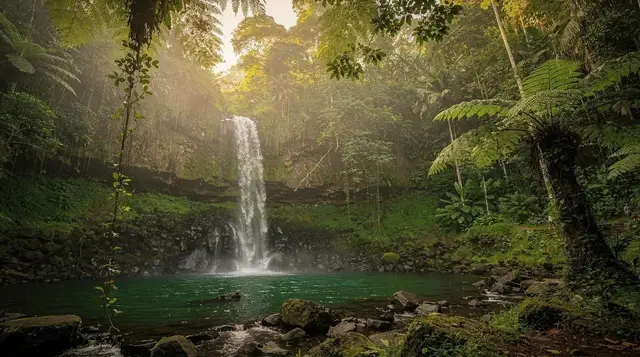
Tumpak Sewu is often described as Indonesia’s most dramatic waterfall, and the description isn’t hyperbole — it’s a wide, horseshoe-shaped curtain of water dropping into a jungle gorge in East Java, visible in full from an overlook and reachable up close via a genuinely demanding descent into the gorge itself. It’s not in Bali. This matters because a fair number of visitors search for it assuming it’s a Bali day trip, when in fact reaching Tumpak Sewu means crossing to Java, either by flight into Surabaya or Malang followed by a drive, or as part of a longer overland route that also covers Bromo and Ijen.
For anyone already planning a trip to Mount Bromo or Ijen Crater — both popular East Java add-ons from Bali given their volcanic scenery — Tumpak Sewu fits naturally into the same loop, since all three sit within a broadly similar region of East Java, connected by roads that many multi-day tours already run between Malang, Surabaya, and Banyuwangi. Treating Tumpak Sewu as an isolated day trip from Bali itself isn’t realistic; treating it as part of a combined East Java itinerary makes considerably more sense logistically and is how most visitors actually experience it.
The waterfall itself rewards the effort of getting there. The main overlook gives a sweeping view of the full horseshoe curtain, but the more memorable experience for most visitors is the descent into the gorge itself, down steep, sometimes slippery paths and ladders, ending at the base where you can stand close enough to feel the spray and appreciate the genuine scale of the falls from below.
Tumpak Sewu at a glance
| Where | East Java, near Lumajang, reachable from Malang or Surabaya |
| Cost | Entrance fee plus guide fee for the gorge descent, which is effectively required |
| Time needed | A full day from Malang or Surabaya; longer if combined with Bromo or Ijen |
| Access | Flight to Surabaya or Malang from Bali, then a drive; or as part of a multi-day East Java tour |
| Best time | Dry season for safer trail and gorge conditions; check current access, as the site periodically closes after heavy rain |
The overlook vs the gorge descent
Most visitors start at the main overlook point, which gives a genuinely impressive wide view of the entire horseshoe-shaped waterfall from a safe, easily reached vantage. This alone is worth the trip for many people, and it requires none of the physical effort of the full descent. Those who continue into the gorge face a considerably more demanding route: steep, sometimes muddy steps and ladders down into the ravine, with a final stretch involving wading through the river to reach the base of the falls. The reward is a completely different perspective — standing close enough to feel the water’s spray and appreciate the scale that the overlook, for all its sweeping view, doesn’t fully convey.
Why a guide matters here more than at most waterfalls
The gorge descent at Tumpak Sewu isn’t a casual walk — the path involves genuine scrambling, sometimes slippery ladders, and a river crossing at the base, and conditions shift with recent rainfall in ways that aren’t always obvious from the top. Local guides based at the site know the current safest route and carry real authority to advise against attempting the descent on days when conditions are too hazardous. A private one-day trip to Tumpak Sewu waterfall from Malang includes this guided access as standard, removing the guesswork of arranging it independently on arrival.
Combining with Goa Tetes cave
A short distance from Tumpak Sewu sits Goa Tetes, a cave and canyon feature with its own waterfall dropping through a rock opening, commonly visited on the same day as Tumpak Sewu given the proximity. A combined tour from Lumajang covering both Tumpak Sewu waterfall and Goa Tetes is a practical way to see both in a single organised day, useful if you want variety beyond just the one waterfall.
Above the clouds: pairing with a highland viewpoint
For a different kind of add-on, several tours combine Tumpak Sewu with B29 Peak, a highland viewpoint known for sunrise views above the cloud line, structured as a multi-day trip given the early start a sunrise viewpoint requires. An “above the clouds” tour covering B29 Peak and Tumpak Sewu waterfall over three days and two nights is worth considering if you have the time for a more immersive East Java trip beyond a single rushed day.
Malang vs Surabaya as your starting point
Both Malang and Surabaya serve as viable starting points for a Tumpak Sewu trip, and the choice mostly comes down to flight availability and what else is on your East Java itinerary. Malang sits closer to the waterfall itself, generally meaning a shorter drive and more time actually at the site rather than in transit. Surabaya, as East Java’s larger hub, often has more frequent and sometimes cheaper flight connections from Bali, at the cost of a longer onward drive. If your trip also includes Bromo, Malang’s proximity to that volcano as well makes it the more efficient single base for both attractions.
Neither city is typically a destination in its own right for waterfall-focused visitors — both function primarily as gateways, with most travellers spending minimal time in the city itself before heading out to the natural attractions that are the actual point of the trip.
Private vs group tours for the descent
Given the physical demands and safety considerations of the gorge descent, it’s worth thinking about whether a private or group tour suits your trip better. A private tour, such as a private Tumpak Sewu waterfall tour from Malang or Surabaya, lets you set your own pace on the descent and skip waiting on slower or faster group members, which matters more here than at an easier attraction given how much the terrain rewards a comfortable, unhurried pace. Group tours are typically cheaper and still include the same guided access, but come with less flexibility on timing and pacing through the more demanding sections.
What isn’t worth the detour
Skip attempting a same-day round trip from Bali purely to see Tumpak Sewu — the flight, drive, and gorge descent combined make this an unrealistic single-day undertaking from the island, and rushing it undercuts both your safety on the descent and your enjoyment of the site. It’s also not worth attempting the full gorge descent if conditions are clearly poor on the day — heavy recent rain, a guide advising against it, or your own fitness not being up to a genuinely demanding scramble are all good reasons to settle for the overlook instead, which remains impressive on its own.
What to pack for the gorge descent
Sturdy shoes with real grip are non-negotiable for anyone attempting the full descent — this is genuinely demanding terrain, and inadequate footwear is one of the most common reasons visitors turn back partway or, worse, suffer an avoidable slip. A dry bag is worth carrying for phones and cameras, since the final approach to the base of the falls involves wading through the river and standing close enough to the falls themselves to get thoroughly wet from spray. A change of clothes left at the vehicle is a sensible piece of planning, since there’s no realistic way to stay dry through the full experience.
Beyond gear specific to the descent, standard tropical trekking essentials apply: sun protection for the parts of the walk not shaded by gorge walls, water, and a basic level of fitness comfortable with sustained scrambling in both directions.
What it costs
Entrance and guide fees together are the main cost of visiting, with the guide fee effectively mandatory for the gorge descent given the route’s difficulty and the lack of independent navigation options. Flights from Bali to Surabaya or Malang add a separate transport cost, along with ground transport for the drive to the site itself. Multi-day tours combining Tumpak Sewu with Bromo and Ijen bundle these costs into a single package, which is often more cost-effective than arranging each leg independently.
When to go
The dry season, roughly April to October, offers the safest conditions for the gorge descent, since the trail and ladders become considerably more hazardous when wet. The site periodically closes to visitors after periods of heavy rain or when conditions in the gorge are assessed as too dangerous, so checking current access status before travelling out, particularly during the wetter months from November through March, is a sensible precaution rather than an unnecessary one.
Getting there and getting around
Reaching Tumpak Sewu from Bali requires a flight to Surabaya or Malang, followed by a drive of a couple of hours to the site itself. Most visitors arrange this as part of an organised tour given the logistics involved, particularly if combining the waterfall with Bromo or Ijen on the same trip. Once at the site, the overlook is reached by a short walk, while the gorge descent requires a local guide and genuine physical effort over uneven, sometimes slippery terrain.
How this fits into a longer trip
Tumpak Sewu fits naturally into a broader Bali and Java volcanoes, 5 days itinerary, commonly combined with Mount Bromo and Ijen Crater given their shared East Java location. The Mount Bromo sunrise guide and the Ijen Crater blue fire guide cover the other two major stops on this circuit in detail.
For the logistics of getting from Bali to this part of Java, the Bali to East Java overland guide is worth reading before committing to a specific route, and Malang and Banyuwangi are the two main bases most visitors use for this wider region.
Frequently asked questions about Tumpak Sewu Waterfall
Can I visit Tumpak Sewu as a day trip from Bali?
Not realistically. It requires a flight to Surabaya or Malang followed by a drive, so it’s better planned as part of a multi-day East Java trip combined with Bromo or Ijen rather than a single-day round trip from Bali.
Is the gorge descent at Tumpak Sewu dangerous?
It’s genuinely demanding, with steep steps, ladders, and a river crossing, and conditions can be hazardous after rain. A local guide is strongly recommended and typically included in organised tours, and conditions are assessed daily for safety.
Can I see Tumpak Sewu without doing the full gorge descent?
Yes, the main overlook gives a sweeping, genuinely impressive view of the full waterfall without requiring the descent, making it accessible to visitors who’d rather not attempt the more demanding route into the gorge.
How does Tumpak Sewu compare to Sekumpul in Bali?
They’re both trekking-required waterfalls with real physical demands, but Tumpak Sewu’s horseshoe scale and gorge descent are generally considered even more dramatic, at the cost of requiring a flight to Java rather than a drive within Bali.
Is it better to combine Tumpak Sewu with Bromo or with Ijen?
Both pairings work, and many multi-day tours combine all three given their shared East Java region. Bromo tends to pair more naturally given proximity to Malang, while Ijen often anchors a route from the Banyuwangi side, closer to Bali.
What’s the best time of year to visit?
The dry season, roughly April to October, offers the safest gorge descent conditions. Check current access status before travelling regardless of season, since the site periodically closes after heavy rain.
Do I need any special fitness level for the gorge descent?
Reasonable fitness and comfort with steep, uneven, sometimes slippery terrain are needed. It’s not suitable for anyone with significant mobility limitations, and even fit visitors should expect a genuinely demanding scramble rather than a casual walk.
Waterfall & hiking tours on GetYourGuide
Verified deep-linked GetYourGuide tours. Book through these links and we earn a small commission at no cost to you.
These are our own photographs of Bali, not the operator's pictures of this tour — open the tour page to see those.