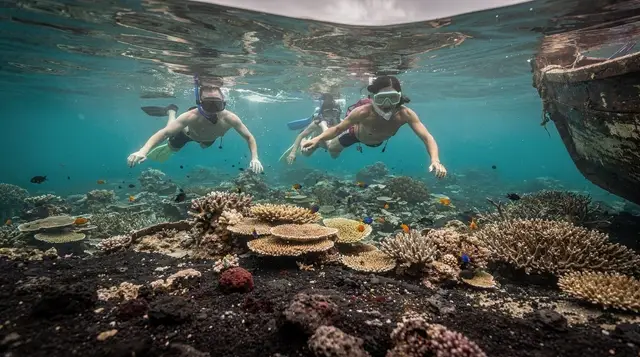
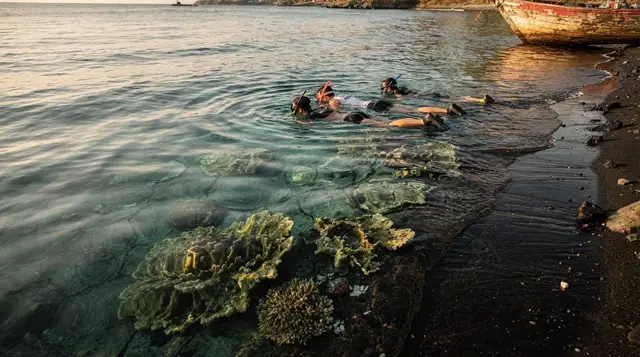
Bali Diving Trip: A 10-Day Itinerary Around Tulamben, Amed and Nusa Penida
Bali’s two best-known dive draws sit on opposite sides of the island: the Liberty wreck and Amed’s muck diving in the east, and Nusa Penida’s manta cleaning stations off the southeast coast, reached by boat from Sanur. Plenty of shorter itineraries try to squeeze both into a handful of days by treating the transfer between them as an afterthought, and it shows in how rushed the diving ends up feeling once you’re actually there. This one doesn’t do that.
Ten days splits reasonably evenly between the two regions, with the transfer treated as a real day rather than a gap glossed over in the schedule. The first stretch bases in Tulamben and Amed for the wreck and the area’s distinctive muck diving; the second moves back toward Sanur for a Nusa Penida manta trip, with a buffer day either side of the transfer itself. It’s a slower structure than some diving itineraries, and that’s deliberate — diving is more enjoyable and safer when it isn’t squeezed around rushed travel days.
Whether you’re already certified or working toward a first certification, the notes below flag which days assume prior certification and which suit a beginner doing an introductory dive instead. Not every day here requires the same level of experience, and it’s worth being honest with yourself about which category you’re in before booking.
Bali diving trip, 10 days at a glance
| Regions covered | Tulamben and Amed in the east, Nusa Penida off Sanur |
| Pace | Two dive-focused stretches with a genuine transfer day between them |
| Best for | Certified divers and beginners doing an introductory course, both catered for on different days |
| Budget | Mid-range, with diving itself as the main recurring cost |
| What’s skipped | Menjangan Island and West Bali’s reef diving — a genuinely different region better suited to a separate trip |
Days 1–2: Arrival and the transfer east
Treat arrival day as unstructured given typical flight times, and use day two for the transfer to Tulamben or Amed. It’s a real travel day rather than a short hop — the roads on this stretch of coast are narrower and slower than the distance on a map suggests — so keep expectations modest and don’t plan a dive for the same day you arrive at your base. Settling in properly before the first dive tends to make a genuine difference to how the rest of the stretch goes.
Day 3: The Liberty wreck, from the beach
Tulamben’s USAT Liberty wreck is one of the more accessible wreck dives anywhere, reachable directly from the beach without a boat, which makes it a good first dive of the trip regardless of experience level. A discover scuba diving experience at the WWII Liberty wreck suits divers doing this for the first time or without recent certification, while a Bali diving for beginners trip to the Liberty wreck is a good alternative structured specifically around newer divers.
Day 4: More Tulamben, or Amed’s muck diving instead
Certified divers who want to keep exploring the wreck rather than repeat the same route can look at a Tulamben scuba diving experience covering different sections of the site. If muck diving appeals more than a second wreck dive, Amed’s black sand slopes are known for smaller, unusual marine life rather than the wreck’s scale, and it’s worth treating as a genuinely different style of dive rather than a lesser version of Tulamben.
Day 5: Certification or a nitrox course
If you’re not yet certified and want to be able to dive more independently after this trip, this is the day to start an open water course rather than repeating more introductory dives. For already-certified divers wanting to extend bottom time on the deeper sections of the wreck, an Amed enriched air nitrox diving course is worth considering — nitrox extends allowable dive time at depth compared with standard air, which matters more on multi-dive days like these than on a single casual dive.
Day 6: A second wreck day for certified divers
For divers who came specifically for the Liberty wreck and want to make the most of the site’s different depths and angles, five fun dives in Tulamben for certified divers covers a fuller exploration than a single discover dive allows. This is a certified-divers-only day rather than an introductory one, so check your own certification level against the listing before booking.
Day 7: Rest and the transfer back toward Sanur
Build in a genuine rest day here, both for the diving itself — a surface interval matters before more diving or before flying — and for the transfer back toward South Bali ahead of the Nusa Penida stretch. Use the day for sightseeing that doesn’t involve the water, a proper meal, and an early night before an early Nusa Penida boat the following morning.
Day 8: Nusa Penida and the manta cleaning stations
Nusa Penida’s manta rays are present year-round at the island’s known cleaning stations, making this one of the more reliable manta-diving destinations in the region regardless of when in the year you visit, though July to October also brings the seasonal chance of the much rarer mola-mola sunfish. An early boat from Sanur gives the best chance of calmer water and less crowded dive sites before the day-trip boats from the mainland arrive in numbers.
Day 9: A second Nusa Penida day, or a rest day
If the first Nusa Penida day went well and conditions allow, a second day exploring different sites around the island — rather than repeating the same cleaning station — is a reasonable way to make the most of being based near Sanur. For divers feeling the accumulated fatigue of a diving-heavy ten days, a full rest day is just as reasonable a choice, particularly with a flight the following day to plan around.
Day 10: A buffer day and departure
Standard diving guidance calls for a genuine surface interval before flying, and this final day is built around respecting that rather than squeezing in one more dive right before the airport. Use it for a slow morning, any last souvenir shopping, and a comfortably timed transfer to Ngurah Rai, accepting that the diving part of the trip is genuinely done by this point.
What isn’t worth the detour on a diving trip
Menjangan Island and West Bali’s reef diving are a genuinely different, worthwhile region, but they sit far enough from both Tulamben and Nusa Penida that adding them to this specific ten-day trip would mean cutting real time from one of the other two regions rather than getting a fair look at all three. It’s a better fit for a separate trip or a longer itinerary than a rushed third stop here. It’s also not worth trying to dive every single day without a break — fatigue affects both enjoyment and safety more than most divers on a first multi-day trip expect.
Budget for a diving trip
Diving itself is the main recurring cost across the trip, and certified divers doing fun dives will generally spend less per day than beginners working through a certification course, which involves more instructor time and course materials. Equipment rental adds up if you don’t own your own gear, so it’s worth checking whether a package includes rental or charges separately before comparing prices between operators. Accommodation in Tulamben and Amed tends to be simpler and cheaper than South Bali’s more built-up areas, which helps offset the cost of the diving itself.
When to go diving
Bali’s diving is workable across most of the year, but visibility and conditions are generally more reliable in the dry season from roughly April to October. July through October specifically brings the best chance of mola-mola sightings at Nusa Penida on top of the year-round manta rays, which is worth factoring in if that particular sighting matters to you. Check the best time to visit Bali guide for the wider seasonal picture alongside diving-specific timing.
Getting around on a diving trip
A private driver for the transfer between South Bali or Sanur and the Tulamben/Amed area is worth the cost given the distance and the amount of gear typically involved — it’s not a comfortable trip by scooter with dive equipment in tow. Once based in either region, most dive operators handle transport to the dive sites themselves as part of the package, so day-to-day movement is less of a concern than the two longer transfer days.
How this fits into a longer trip
If ten days of diving leaves you wanting to explore the region beyond Tulamben, Amed and Nusa Penida, Menjangan Island diving and the Gili Islands snorkeling guide both cover genuinely different areas worth a separate trip.
The best diving in Bali guide and learn to dive in Bali guide are useful companions if certification is part of your plan, and diving with mola-mola in Bali covers that specific seasonal sighting in more depth than fits here. Divers deciding between Bali’s two main dive bases should also read Amed vs Tulamben before booking accommodation.
Food and recovery across the trip
Tulamben and Amed are quieter, more low-key areas than South Bali, and the food scene reflects that — simple warungs and dive-lodge restaurants rather than a wide range of dining options, which suits the early nights and rest-focused pace this itinerary needs anyway. Staying well hydrated matters more on a diving-heavy trip than it might elsewhere, since dehydration is a genuine factor in diving safety and fatigue, not just general travel comfort.
Packing for a diving trip
Most dive operators provide standard equipment as part of a package, so bringing your own gear is only worth the extra luggage if you already own well-fitted equipment you’re comfortable travelling with. A certification card, logbook and proof of any relevant insurance are worth having on hand regardless, since operators typically ask for them before certified dives. Reef-safe sunscreen matters more here than almost anywhere else on a Bali trip, given how much time is spent in and around genuinely healthy reef areas that a lot of standard sunscreen can damage.
Choosing a dive operator that actually looks after the reef
Not every dive operator in Tulamben, Amed or Nusa Penida treats reef conservation the same way, and it’s worth asking a few direct questions before booking rather than assuming any listed operator is equally careful. A good sign is a dive briefing that covers buoyancy control and a clear no-touch policy before you’re anywhere near the water, along with small group sizes that make it realistic for a guide to actually watch what everyone’s doing near coral or a wreck. Operators involved in local reef monitoring or clean-up efforts, where you can find that information, are usually a reasonable signal of a more conservation-minded outfit generally.
This matters more in Bali specifically than in some other dive destinations, given how much pressure sites like the Liberty wreck and Nusa Penida’s cleaning stations already face from visitor numbers. Reef-safe sunscreen, avoiding fin contact with coral, and not touching or chasing marine life — including mantas at the cleaning stations, where getting too close can disrupt the natural behaviour you’re there to see — are small individual habits that add up across a ten-day trip with this many dives.
Frequently asked questions about Bali Diving Trip
Do I need to be certified before this trip?
No — several days in this itinerary are structured around introductory discover dives suited to beginners, though certified divers get more from the fuller exploration days like the five-dive Tulamben trip.
Is the transfer between Tulamben/Amed and Nusa Penida really worth a full day?
Yes — it’s a genuine travel day on narrower coastal roads, and treating it as a quick hop tends to leave both the diving and the transfer itself feeling rushed and more tiring than necessary.
Will I definitely see manta rays at Nusa Penida?
Sightings are frequent but never guaranteed, since these are wild animals. Most operators have a strong track record at the known cleaning stations, but treat any absolute guarantee with scepticism.
Is the Liberty wreck suitable for a first-time diver?
Yes, in its introductory discover-dive form — it’s one of the more accessible wreck dives anywhere, reachable directly from the beach, which is part of why it’s such a popular first dive.
How many rest days should a diving-heavy trip include?
At least one within each region, plus a genuine buffer day before flying home, in line with standard guidance about surface intervals before flying after diving.
Is Amed’s muck diving different from Tulamben’s wreck diving?
Yes, genuinely — Amed’s black sand slopes suit smaller, unusual marine life rather than a large wreck structure, and it’s worth treating as a different style of diving rather than a lesser version of Tulamben.
Should I bring my own dive gear or rent locally?
Renting is perfectly workable and what most dive operators expect, and it saves on luggage. Bringing your own is worth it mainly if you already own well-fitted gear you’re used to diving in.
Is July to October really the best time for this trip?
It’s the best window if a mola-mola sighting at Nusa Penida specifically matters to you, since mantas are present year-round regardless. Outside that window, the trip works just as well for the wreck and manta diving alone.
Diving & snorkelling tours on GetYourGuide
Verified deep-linked GetYourGuide tours. Book through these links and we earn a small commission at no cost to you.
These are our own photographs of Bali, not the operator's pictures of this tour — open the tour page to see those.