Tumpak Sewu earns its nickname, “a thousand waterfalls,” honestly: rather than a single drop, it is a wide, curved wall of cascades pouring into a river gorge from multiple points along the cliff face, forming a natural amphitheatre that is genuinely one of the more dramatic waterfall sights in Indonesia. It sits in the Lumajang regency of East Java, in the shadow of Mount Semeru, Java’s highest and most active volcano, which occasionally appears in the background of photographs taken from the right angle.
What separates Tumpak Sewu from most of the polished, easy-access waterfalls on a typical Bali itinerary is the effort required to see it properly. The best viewpoint, down in the gorge close to the base of the falls, requires a descent involving steep steps, sometimes a fixed ladder section, and usually a river crossing that can mean wading through knee- or thigh-deep water depending on recent rainfall. This is not a five-minute walk from a car park, and travellers who arrive expecting an easy stroll are often the ones disappointed by the experience, not because the falls are unimpressive but because they were unprepared for what reaching them actually demands.
The reward for that effort is a viewpoint that puts you close enough to feel the spray and see the full curved sweep of the cascades at once, a perspective that no photograph from the rim above quite captures. For travellers willing to get wet, muddy, and a little tired, Tumpak Sewu tends to rank among the most memorable single stops on an East Java loop.
Tumpak Sewu at a glance
| Where | Lumajang regency, East Java, on the slopes below Mount Semeru |
| Cost | Entrance fee plus a local guide, usually bundled into an organised day tour |
| Time needed | Half a day for the falls alone; a full day if combined with the nearby B29 sunrise viewpoint |
| Access | Overland from Malang, typically as a day trip or combined with a Bromo or Ijen loop |
| Best time | Dry season for a safer, shallower river crossing and less slippery descent steps |
The descent, and why a guide matters
Reaching the base viewpoint involves a marked but genuinely steep and sometimes slippery path down into the gorge, including sections with fixed ladders or steps cut into the rock, followed by a river crossing near the base of the falls. Water levels and current strength vary meaningfully with recent rainfall, and a local guide’s read of current conditions is worth far more here than an independent attempt based on trip reports from a different season. A guided private day trip to Tumpak Sewu waterfall from Malang handles this local knowledge as standard, along with the transport from Malang that most travellers need regardless.
Nearby Goa Tetes cave
Close to Tumpak Sewu, Goa Tetes is a smaller cascade formation inside a cave-like rock overhang, often visited as a short add-on to the main waterfall trip by travellers who want a second, quieter cascade without significant extra travel time. It gets a fraction of the visitors that the main amphitheatre does, partly because most day-trip itineraries treat it as optional rather than core, which makes it worth asking about specifically if your guide’s standard route does not already include it.
The B29 sunrise viewpoint
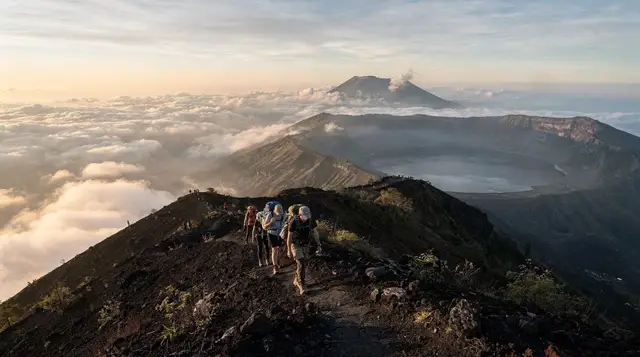
A short drive from Tumpak Sewu, the B29 peak has become known as a sunrise viewpoint sitting above a sea of cloud, similar in spirit to Bromo’s famous vista but considerably less crowded. Combining a predawn B29 sunrise with an afternoon at Tumpak Sewu makes for a full and rewarding day, and the Above the Clouds tour combining B29 Peak and Tumpak Sewu Waterfall is built around exactly that pairing. It suits travellers who have already done one predawn volcano sunrise at Bromo and want a quieter alternative rather than a repeat of the same crowded viewpoint.
Combining Tumpak Sewu with Bromo
Given their relative proximity within East Java, Tumpak Sewu is frequently paired with a Bromo sunrise as a two-day loop, letting you tick off two of the region’s most photographed landscapes without excessive backtracking. A two-day Tumpak Sewu and Bromo sunrise tour is the standard way operators package this combination, usually based out of Malang or Probolinggo. For travellers with more time, extending further to include Ijen turns the same loop into East Java’s full volcanic-and-waterfall circuit, covered by tours such as the three-day tour covering Tumpak Sewu, Bromo and Ijen.
Camping and multi-day options near the falls
For travellers who want more than a single afternoon at the falls, some operators run overnight camping trips near the gorge, combining the waterfall visit with a night under canvas and, often, a simple barbecue dinner arranged by the guide team.
A two-day trip from Malang including camping and a barbecue near Tumpak Sewu is a reasonable option for travellers who want to linger rather than treat the falls as a single rushed stop between other bookings, and it also means tackling the descent and the river crossing without the time pressure of a single-day itinerary. The trade-off is basic camping facilities rather than a proper bed, which suits some travellers far better than others.
The wider Lumajang landscape
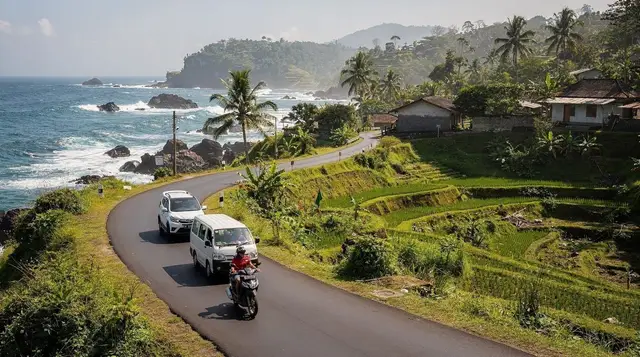
Tumpak Sewu sits within a broader stretch of East Java shaped by Mount Semeru’s ongoing activity, and the volcanic soil that feeds the region’s rice and coffee farming is the same material that has, over a long geological timescale, carved the gorge the falls now pour into. Travellers who spend a full day rather than a rushed half-day in the area often notice this wider landscape more — terraced farmland on the approach roads, small villages that see relatively little tourist traffic compared with Bali, and a general sense of a working agricultural region that happens to contain one of Indonesia’s more dramatic natural features rather than a landscape built around tourism.
What isn’t worth the detour
Skip attempting the descent in anything other than proper footwear, and skip it entirely if there has been heavy recent rain and your guide advises against the river crossing — the falls will still be there on a better day, and the risk is not one worth taking for a single photograph. It is also not a destination to rush as a brief stop between two other bookings; the descent, time at the base, and climb back out take longer than the falls’ modest footprint on a map might suggest, and treating it as a quick twenty-minute stop generally leads to a rushed, dissatisfying visit.
Choosing between the rim viewpoint and the base descent
Not every visitor makes the full descent, and there is a legitimate middle option: several points along the gorge rim give a wide, elevated view of the full curved amphitheatre without the steps, ladder, or river crossing required to reach the base. This upper view is genuinely worthwhile in its own right, particularly for travellers with knee problems, limited time, or simply no appetite for getting soaked, and it is worth discussing with your guide at the start rather than assuming the base viewpoint is the only option worth having.
That said, the scale and immersive quality of standing at the base, with spray in the air and the full height of the cascades directly overhead, is different enough from the rim view that most fit travellers who make the descent consider it worth the effort.
What a typical guided visit actually involves, step by step
A standard organised visit begins with a drive from Malang to the trailhead, followed by registration and a safety briefing from the local guide team, who will also assess current river conditions before confirming whether the base crossing is advisable that day.
The descent itself typically takes a modest chunk of the visit, followed by time at the base viewpoint for photographs, then the return climb, which most visitors find noticeably more tiring than the way down given it is entirely uphill on the same wet, sometimes slippery terrain. Bringing a change of dry clothes to leave in the vehicle is one of the more practical pieces of advice past visitors consistently pass on, since the drive back is considerably more comfortable out of soaked clothing.
Guides typically carry a basic first-aid kit and know the safest hand-holds on the steeper ladder sections, which is worth remembering if the pace of the group ahead of you feels rushed — there is no harm in asking to slow down or take the steps at your own speed rather than matching a faster group.
Budget
Costs are centred on an entrance fee at the site plus a local guide, almost always arranged through an organised day tour from Malang given the driving distance and local knowledge required. Combined tours that add the B29 sunrise viewpoint or extend into a Bromo and Ijen loop cost proportionally more but consolidate transport and guiding into a single booking rather than several separate arrangements.
When to go
Dry season, roughly April to October, is meaningfully safer here than at most other stops on this trip, since the river crossing near the base of the falls becomes both deeper and faster-flowing after heavy rain, and the descent steps turn genuinely slippery. Outside the dry season, guides may advise against the river crossing entirely on a given day depending on recent rainfall, which can mean missing the closest viewpoint even if you have already made the descent.
Getting there and getting around
Malang is the standard base for reaching Tumpak Sewu, with most visitors joining an organised day tour rather than arranging independent transport, given the distance and the local knowledge needed for safe river-crossing conditions. There is no public transport route that makes sense for tourists heading to the falls. Once at the site, the descent and the river crossing are entirely on foot, with no vehicle shortcut to the base viewpoint.
How Tumpak Sewu fits into a longer trip
Tumpak Sewu slots naturally into the same East Java loop as Mount Bromo and Ijen Crater, typically based from Malang or reached en route between Malang and Banyuwangi. The Bali and Java volcanoes, five days itinerary threads all three together in a single loop from Bali. For a deeper look at the falls specifically, the Tumpak Sewu waterfall guide covers the descent route in more detail, and the Mount Bromo sunrise guide is worth reading if you are pairing the two on the same trip.
Frequently asked questions about Tumpak Sewu
Is Tumpak Sewu suitable for young children or older travellers with limited mobility?
Not really — the descent involves steep steps, sometimes a ladder section, and a river crossing, all of which demand reasonable fitness and steady footing. Travellers with mobility concerns are better served viewing from the upper rim rather than attempting the base viewpoint.
How wet do I actually get at Tumpak Sewu?
Expect to get properly wet at the river crossing near the base, potentially up to your thighs depending on water levels, plus spray from the falls themselves at the closest viewpoints. Pack accordingly, including a dry bag for phones or cameras.
Can I visit Tumpak Sewu independently without a guide?
It is technically possible, but a local guide’s knowledge of current river conditions and the safest line down the steps is genuinely valuable given the physical demands and the way conditions shift with recent rainfall. Most travellers book through an organised day tour rather than going solo.
Is Mount Semeru visible from Tumpak Sewu?
On a clear day, yes, though it is a backdrop rather than the main subject of most viewpoints at the falls themselves. The B29 peak nearby offers a more dedicated volcanic panorama.
How does Tumpak Sewu compare to Bali’s best waterfalls?
It is considerably larger in scale and more physically demanding to reach than most of Bali’s popular waterfalls, which tend to be shorter, easier walks. Travellers who found Bali’s waterfalls underwhelming after the crowds often rate Tumpak Sewu as a genuine step up in both scale and effort required.
What should I bring for the visit?
Proper grip footwear, a change of clothes or at least dry layers for after the river crossing, a waterproof bag for electronics, and enough water and snacks for what amounts to a short but genuinely physical trek.
Is Tumpak Sewu affected by Mount Semeru’s volcanic activity?
Access can be affected during periods of heightened volcanic activity on Semeru, since parts of the surrounding area fall within monitored exclusion zones from time to time. Check current conditions with a local operator before travelling if Semeru has been active recently, rather than relying on outdated trip reports.
How does a trip to Tumpak Sewu usually start?
Most organised day trips depart Malang in the morning, drive a couple of hours to the trailhead, and begin the descent once the day is already underway, unlike Bromo or Ijen’s predawn departures. It makes Tumpak Sewu a comparatively civilised start time relative to the region’s volcano treks.