Nungnung, Tibumana, and Kanto Lampo: Ubud's Quieter Waterfalls
Which is better: Nungnung, Tibumana, or Kanto Lampo?
They suit different priorities. Kanto Lampo has the most distinctive rock-shelf setting and is the most photographed of the three; Tibumana is the easiest, quietest option with a short, gentle path; Nungnung is the most demanding, with a long staircase down, but rewards the effort with one of the tallest, most powerful waterfalls in the Ubud area. Most visitors are better served picking one or two rather than trying to fit all three into a single day.
Tegenungan gets most of the attention as Ubud’s go-to waterfall, largely because it’s the easiest to reach and the first name that comes up in a quick search. A short distance further afield, three other waterfalls — Nungnung, Tibumana, and Kanto Lampo — offer a genuinely quieter experience, each with a distinct character that separates it from being just “another Tegenungan alternative.” Knowing the differences between them, rather than treating all three as interchangeable, makes it much easier to pick the right one for the time and effort you actually want to spend.
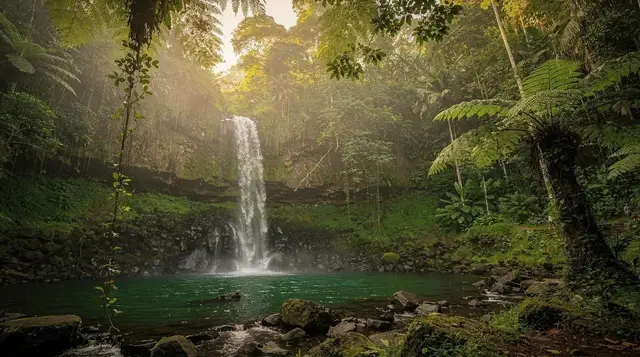
Kanto Lampo stands out for its setting: rather than a single drop into a pool, water spreads across a wide, layered rock shelf, creating a distinctive terraced look that’s become one of the most photographed waterfall compositions near Ubud. Tibumana is the calmest of the three, with a shorter, easier path and a genuinely peaceful pool at the base, making it the pick for anyone who wants a waterfall visit without much physical effort. Nungnung asks the most of you — a long descent down a steep staircase — but delivers one of the tallest and most powerful waterfalls within a reasonable drive of Ubud, with a genuine sense of scale the other two don’t quite match.
None of these three see Tegenungan’s crowd density, though Kanto Lampo has become busier in recent years as its photogenic rock-shelf setting has spread on social media. Tibumana and Nungnung remain noticeably quieter, for different reasons — Tibumana because it’s simply less well known, and Nungnung because the physical effort required filters out a portion of casual visitors.
The three waterfalls at a glance
| Nungnung | Tibumana | Kanto Lampo | |
|---|---|---|---|
| Access difficulty | High — long steep staircase | Low — short, easy path | Moderate — short walk with some steps |
| Distinctive feature | Height and power | Calm, easy-access pool | Wide, layered rock-shelf setting |
| Crowd level | Low | Low | Moderate, rising |
| Best for | Those wanting a proper waterfall trek without Sekumpul’s distance | A relaxed, low-effort stop | Photography |
Nungnung: the trek closest to Ubud
Nungnung sits a genuine drive from central Ubud, and reaching the waterfall itself requires descending a long, steep staircase — several hundred steps in total — through jungle terrain before the falls come into view. The effort pays off in scale: this is one of the taller, more powerful waterfalls within reasonable driving distance of Ubud, with considerably more volume and force than Tibumana or Kanto Lampo. The climb back out is the real test, and it’s worth pacing yourself rather than rushing, particularly in the heat of midday.
Kanto Lampo: the photogenic rock shelf
Kanto Lampo’s defining feature is the way water spreads across a wide, stepped rock formation rather than falling in a single narrow drop, creating a layered, almost sculptural look that photographs distinctively well. The short walk in from the car park makes it more accessible than Nungnung while still requiring a bit more effort than Tibumana’s flat approach. A combined tour covering Kanto Lampo waterfall, Ubud Palace, and the art market pairs the waterfall with central Ubud’s cultural sights, useful for visitors who want to combine natural scenery with the town’s more urban attractions in the same day.
For a different pairing, a tour combining Trunyan cemetery, Tirta Empul, and Kanto Lampo waterfall mixes the waterfall with two genuinely distinctive cultural sites, offering a fuller day than the waterfall alone would provide.
Tibumana: the easy, calm option
Tibumana requires the least effort of the three, with a short, largely flat path from the car park to a genuinely peaceful waterfall and pool setting. This makes it the pick for families, anyone short on time, or visitors who’ve already done a more demanding trek elsewhere and want a relaxed stop rather than another physical challenge. The trade-off is that Tibumana’s single-drop waterfall, while attractive, doesn’t have quite the visual distinctiveness of Kanto Lampo’s rock shelf or Nungnung’s scale.
Combining a waterfall with monkey forest and other Ubud stops
Given how close these waterfalls sit to central Ubud, most visitors fold one into a broader day covering other attractions. A tour combining Kanto Lampo waterfall, the Monkey Forest, and a jungle swing covers three genuinely different experiences in a single organised day, while a tour pairing a hidden Ubud rice terrace and sacred temple with Kanto Lampo leans more toward a quieter, cultural version of the same idea.
How these three sit relative to Tegenungan
Tegenungan remains the default choice for many visitors purely because it’s the first result and the shortest drive from central Ubud, and there’s nothing wrong with that waterfall on its own merits — it’s wide, easy to reach, and genuinely attractive. What these three alternatives offer isn’t a “better” waterfall in some absolute sense, but a meaningfully different crowd experience for a similar or only slightly greater amount of effort. If you’ve already visited Tegenungan on a previous trip, or simply want to see what a quieter version of the same idea looks like, any of these three delivers that without requiring Sekumpul’s full-day commitment in the north.
It’s also worth knowing that “quiet” is relative and can shift over time — Kanto Lampo in particular has moved from a genuinely obscure option a few years ago to a fairly well-known stop today, which is a reminder that any specific ranking of “quietest waterfall near Ubud” has a shelf life shorter than a static guide might suggest.
Choosing based on what else is on your day’s itinerary
The right choice among the three often comes down less to the waterfalls themselves and more to what else you’re doing that day. If Ubud Palace, the art market, or the Monkey Forest are already on your list, Kanto Lampo’s proximity to organised tours covering those sights makes it the more convenient pairing. If your day is centred on Tirta Empul or a rice terrace visit, Tibumana’s easy, low-effort path fits without adding much physical demand to an already full day. And if you’re specifically looking for a genuine hike with a rewarding payoff, closer to Ubud than Sekumpul’s full-day commitment, Nungnung is the one built for that.
What isn’t worth the detour
Skip trying to fit all three waterfalls into a single day purely to “collect” them — each involves its own drive and walk, and rushing between them undercuts the point of choosing a quieter alternative to Tegenungan in the first place. It’s also not worth attempting Nungnung’s staircase if you’re short on time or energy that day; a rushed, exhausted version of that particular trek isn’t a good trade, and Tibumana or Kanto Lampo will serve you better on a day when you don’t have the time or stamina for a genuine climb.
What to bring for any of the three
All three waterfalls involve at least some wet or uneven ground near the falls, so footwear with real grip is worth prioritising over anything purely fashion-focused, particularly for Nungnung’s staircase and Kanto Lampo’s rock shelf, where a slip carries more consequence than on Tibumana’s gentler approach. A change of clothes and a dry bag for valuables are sensible if you plan to swim at any of the pools, and sun protection matters for the exposed sections of path even though much of the walk-in at each site passes through shaded jungle.
Cash is worth carrying for entrance fees, since none of these smaller sites are set up for card payment, and water is essential, particularly for the Nungnung staircase, where the climb back out in tropical heat is genuinely more demanding than it might look from photos alone.
What it costs
Each of the three charges a modest entrance fee at the site, broadly comparable across all three and generally in line with other waterfalls near Ubud. Transport is the main additional cost, with a scooter or Grab sufficient for Tibumana and Kanto Lampo given their proximity to Ubud, while Nungnung’s slightly longer drive makes a private driver a more comfortable option for some visitors, particularly given the physical demand of the staircase itself.
When to go
Early morning is the best window at all three, both for cooler conditions on Nungnung’s staircase and for calmer crowds at increasingly popular Kanto Lampo. The dry season, roughly April to October, keeps paths and steps in better condition throughout, which matters most at Nungnung given the length and steepness of its descent. Tibumana’s easy, largely flat path is the most forgiving of the three regardless of season or time of day.
Swimming and cooling off at each site
The pool at the base of Tibumana is generally the calmest and most swim-friendly of the three, given the waterfall’s gentler drop and the more sheltered setting of the pool itself. Kanto Lampo’s spread-out rock shelf offers shallower spots for wading and cooling off rather than a single deep pool, which suits a quick dip more than sustained swimming. Nungnung’s pool, fed by a considerably more powerful drop, carries stronger current near the base of the falls, so it’s worth being more cautious there, particularly for anyone not confident swimming against moving water. As with any of Bali’s waterfalls, conditions can shift after rain, so a quick assessment on arrival is worth doing regardless of which of the three you choose.
Getting there and getting around
All three waterfalls sit within a reasonable drive of central Ubud, reachable by scooter, Grab, or a private driver. Tibumana and Kanto Lampo are close enough that either works well as a scooter trip for confident riders, while Nungnung’s slightly greater distance and the physical demand of the visit itself make a private driver a sensible choice for those who’d rather not manage both a longer drive and a strenuous staircase on their own steam.
How this fits into a longer trip
These three waterfalls work well as a quieter alternative to Tegenungan within a broader Ubud stay, and the best waterfalls in Bali guide covers how they compare to the island’s other options if you’re deciding how to split your time. For those also drawn to Tegalalang’s rice terraces, the Tegalalang rice terrace guide covers a natural pairing given the proximity.
Anyone building a longer Ubud-based itinerary should check the Ubud day trip from South Bali guide for how a waterfall stop fits into a single day, or the Bali 7 days itinerary for a longer stay that has room for more than one of these waterfalls across separate days.
Frequently asked questions about Nungnung, Tibumana, and Kanto Lampo
Which of the three is easiest for families with young children?
Tibumana, given its short, largely flat path and calm pool. Nungnung’s long staircase is not well suited to young children, and Kanto Lampo’s moderate path sits somewhere in between.
Is Kanto Lampo still worth visiting if it’s gotten more crowded?
Yes, the distinctive rock-shelf setting is still worth seeing, but go early to have the best chance of a quieter visit — its growing popularity means midday and early afternoon now see real crowds compared to a few years ago.
How long does the Nungnung staircase take?
Budget meaningfully more time than the distance alone suggests, both for the descent and especially for a slower, more tiring climb back out. It’s not a quick in-and-out visit the way Tibumana is.
Can I visit more than one of these waterfalls in a single day?
It’s possible given their relative proximity to each other and to Ubud, but most visitors get more out of choosing one or two rather than rushing through all three, since each involves its own drive and walk.
Do any of these waterfalls have facilities like changing rooms?
Basic facilities exist at most, though don’t expect much beyond simple changing areas and perhaps a small warung near the car park. None of the three has the developed infrastructure of a more commercial attraction.
Is swimming allowed at these waterfalls?
Generally yes at all three, conditions permitting, though it’s worth checking current water levels and any posted guidance, particularly after heavy rain when flow and current can be stronger than they appear.
Which waterfall photographs best?
Kanto Lampo, by a clear margin, thanks to its distinctive wide, layered rock-shelf setting that reads differently from a typical single-drop waterfall. Nungnung’s scale also photographs well, though the staircase makes getting the shot more of an effort.
Waterfall & hiking tours on GetYourGuide
Verified deep-linked GetYourGuide tours. Book through these links and we earn a small commission at no cost to you.
These are our own photographs of Bali, not the operator's pictures of this tour — open the tour page to see those.