The Lempuyang Reflection Photo: How It's Actually Done
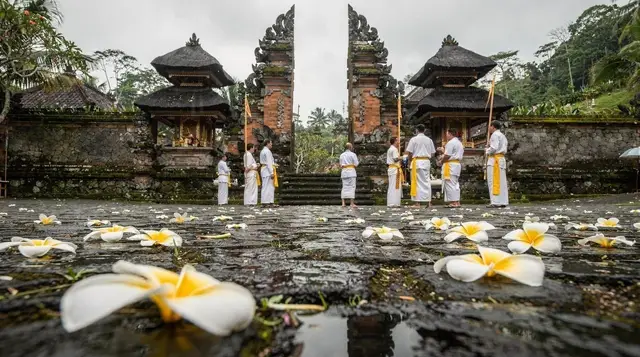
The mirrored reflection photo at Lempuyang temple’s so-called Gate of Heaven is one of the most recognisable images in Bali travel content, and one of the most misunderstood. Few single photos have driven as much traffic to one specific location on the island, and few are as widely misunderstood in terms of what actually happens to produce them. There’s no actual reflecting pool beneath the towering split gate with Mount Agung framed behind it — the water in the photo is an illusion, created with a simple handheld mirror held just beneath the camera lens. Once you know this, the whole experience reframes itself: not a rare, spontaneous natural phenomenon, but a well-organised, staff-managed photo op with a genuine queue behind it.
This piece explains exactly how the shot is made, what the actual visit involves from arrival to photo, and whether the wait is worth it — an honest answer that depends more on your own expectations than on the temple or the photo itself. Reading it before you go should leave you better prepared than the majority of visitors who arrive expecting either a natural phenomenon or a completely private, spontaneous moment.
How the mirror trick actually works
A staff member, or occasionally your own guide, holds a small reflective surface — sometimes a proper mirror, sometimes a smartphone screen or a piece of reflective material — directly beneath the camera lens at a precise angle, creating a mirrored duplicate of the gate and sky above in the lower half of the frame. The angle matters more than the specific object used to create the reflection, and experienced staff at the site adjust it quickly based on the photographer’s height and the exact camera position to get a convincing result on the first or second attempt.
The visitor stands at a marked spot a short distance from the gate, and the resulting image, especially once slightly edited or with strong midday light, reads convincingly as a photo taken beside a still reflecting pool. It’s a simple, low-tech effect, not a photography skill you need to learn yourself, and it works because most viewers of the final image have no reason to question a placid pool of water they’ve never seen for themselves. Once explained, most first-time visitors find the trick almost charmingly low-tech compared with what the finished, widely shared photo seems to promise.
What the queue actually looks like
Lempuyang’s popularity means the queue for this specific shot is a genuine, consistently expected part of the visit rather than an occasional inconvenience limited to particularly busy days. Staff manage a fast-moving line, giving each visitor or small group a brief window — typically just long enough for a handful of poses — before moving to the next person. Arriving as early as your schedule allows is the single most effective way to reduce the wait, since the line lengthens steadily through the morning as more visitors and tour groups arrive. A pre-dawn or first-light arrival, while genuinely demanding, offers the shortest realistic queue of the entire day for anyone willing to make that trade-off.
Is the wait actually worth it?
This is a genuinely subjective question, and the honest answer depends heavily on what you’re actually hoping to get from the visit rather than on any universal ranking of whether the site is objectively worth the wait. If the specific photo matters enough to justify a real wait, most visitors who go in with that expectation set correctly come away satisfied — the setting itself, gate and volcano together, is striking independent of the mirror trick. If you’re mainly curious about Lempuyang as a temple complex and the photo is secondary, the wait can feel like a disproportionate use of time relative to the rest of what the site offers.
Beyond the photo: the temple itself
It’s worth remembering Lempuyang is a genuine, significant Hindu temple complex, not merely a photo backdrop, and treating the whole visit as a single rushed stop for the mirrored shot means missing the broader site. Visitors who slow down and spend time beyond the photo spot consistently report a richer, more satisfying visit overall, independent of how the mirror shot itself turns out.
The complex actually comprises several temples across different elevations on the mountain, with the Gate of Heaven representing just one specific point within a larger pilgrimage route that most visitors never explore beyond the photo spot itself. Continuing further up the mountain, where far fewer visitors go, reveals additional temples and viewpoints that carry the same significance within the wider pilgrimage route without any of the crowding found at the famous gate.
Making the most of your visit
A guided sunrise private tour with a photoshoot is worth considering if beating the crowds matters more to you than sleep — arriving before the general daytime queue builds gives both a calmer photo experience and better light.
Travellers wanting to extend the day with an additional Instagram-worthy stop can also look at the Lempuyang and Ubud heaven swing photo tour, which pairs the temple with a jungle swing stop in the same outing. Pairing the temple with the wider East Bali loop, such as a combined Lempuyang and Tirta Gangga day tour, makes better use of the drive out to this part of the island than treating Lempuyang as a single isolated stop.
A step-by-step look at the actual process
| Step | What happens |
|---|---|
| Arrival and queue | Join the line at the designated photo spot, staff manage the order |
| Your turn | Move to the marked position facing the gate, with Agung visible behind on a clear day |
| The mirror | A staff member or guide holds a reflective surface just below the camera lens |
| The pose | A brief window, usually enough for a few different poses or angles |
| Moving on | Step aside promptly for the next visitor, keeping the line moving |
Knowing this sequence in advance removes most of the uncertainty that can make the experience feel rushed or confusing on the day — it’s a well-practised routine, and staff move efficiently through a high volume of visitors precisely because the steps are so consistent from one visitor to the next.
What makes a genuinely good version of this photo
Beyond the mirror technique itself, a few practical, easily overlooked factors make a genuinely real difference to how the final image actually turns out. Clothing choice matters more than most visitors plan for — flowing fabric or a single strong colour photographs noticeably better against the grey stone gate and pale sky than a busy pattern or plain white, which tends to wash out. Timing for a clear view of Mount Agung behind the gate matters too, since cloud cover builds through the morning in most seasons, making an earlier visit the more reliable choice for a fully visible volcano backdrop rather than a photo with the peak obscured.
Posing simply, rather than attempting an elaborate sequence in your brief window, tends to produce better results than trying to recreate a complex shot you’ve seen elsewhere — the gate and reflection illusion do most of the visual work on their own, and a straightforward, centred pose lets that come through clearly.
Why this specific temple became so famous for one photo
Lempuyang’s gate and mirror combination spread widely on social platforms specifically because it produces a visually striking, easily recognisable image that reads as effortless and serene despite the genuine logistics behind it. That gap between the polished final image and the managed, queued reality behind it is a pattern that shows up repeatedly across Bali’s most photographed locations, and understanding it here specifically makes it easier to recognise and plan around at other similarly famous spots elsewhere on the island and beyond.
What isn’t worth the detour
Skip paying extra for a “professional photographer” add-on purely for this specific shot — the mirror technique is standard practice that any staff member or guide at the site already knows how to execute well, and the marginal quality improvement from a dedicated photographer rarely justifies the added cost for this one particular photo. Spend the saved cost instead on a slower, unhurried exploration of the wider temple complex, which delivers more genuine value than a marginally sharper version of the same well-known shot. Also skip visiting purely for this shot if genuine patience for a queue isn’t something you have on the day; a rushed, frustrated visit undermines the whole point of what’s meant to be a striking, memorable photo.
How this fits into planning your trip
Read Lempuyang Gates of Heaven: the truth for the fuller mechanics and etiquette of visiting, and best photo spots in Bali and the truth about Bali’s Instagram spots for the wider context of how this fits among Bali’s other well-known photo locations. East Bali, 4 days covers a full itinerary built around this and nearby temples, and bali temple etiquette and dress code is worth reading before any temple visit on the island.
Frequently asked questions about Lempuyang Reflection Photo
Is the reflection in the photo completely fake?
The pool of water is an illusion created by a handheld mirror; the gate, sky and Mount Agung backdrop are all genuinely real and photographed as seen.
How long does the queue typically take?
It varies considerably by time of day and season, generally shortest at opening and longest through the middle of the day as tour groups arrive.
Can I take the photo myself, or do I need staff assistance?
Staff or a guide typically hold the mirror for you, since the angle and positioning require a second person; it isn’t easily done solo while also holding your own camera.
Is Lempuyang worth visiting if I don’t care about the specific photo?
Yes, as a genuine, significant temple complex with real cultural and religious weight beyond the one famous shot, though the crowds are still worth knowing about in advance regardless of your priority.
What’s the best time of day for the clearest Mount Agung view behind the gate?
Earlier in the day generally offers better odds, since cloud cover tends to build over the mountain as the morning progresses.
Do I need to tip the staff member holding the mirror?
It isn’t strictly required, but a small tip is a reasonable, appreciated gesture given the brief but genuinely helpful service provided.
Is it disrespectful to prioritise this photo at a site with religious significance?
Not inherently, provided you’re respectful of the site’s actual purpose and any worshippers present, and don’t treat the whole visit purely as a backdrop with no regard for its religious context.
Is the photo spot accessible for visitors with limited mobility?
The approach involves some walking and steps typical of a hillside temple complex, so visitors with limited mobility should check current access conditions or ask a tour operator in advance.
Can I retake the photo if I’m not happy with the first attempt?
Depending on how busy the queue is that day, a quick second attempt is sometimes possible, though on very busy days staff generally move visitors through promptly to keep the line moving for everyone waiting.
Is there a fee specifically for the mirror photo, separate from temple entry?
The photo itself is typically included as part of the standard temple visit and queue system, though practices can vary, so it’s worth checking current arrangements with your tour operator or on arrival.
Temple & culture tours on GetYourGuide
Verified deep-linked GetYourGuide tours. Book through these links and we earn a small commission at no cost to you.
These are our own photographs of Bali, not the operator's pictures of this tour — open the tour page to see those.