Lempuyang's Gates of Heaven: The Truth About the Photo
Is the famous Lempuyang lake reflection actually real?
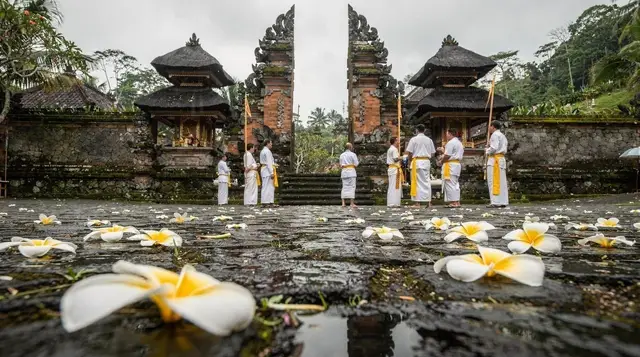
No. The water you see beneath the split gate in almost every Lempuyang photo is a small mirror held under the camera lens by an assistant, reflecting the sky to fake a lake that does not exist at that spot — the real ground beneath the gate is a paved car park. That does not make the temple itself fake; Lempuyang is a genuinely significant pilgrimage site, but the specific viral photo is a well-known staged effect, not documentary reality.
If you have seen one photo from Bali more than any other, there is a decent chance it was Lempuyang’s split gate, framing Mount Agung in the distance with a perfectly still lake reflecting the whole scene beneath it. It is one of the most shared travel images to come out of Southeast Asia in the past decade, and it is also, in one specific and important way, not what it appears to be — there is no lake at that spot. The reflection is created by a small handheld mirror, placed just beneath the camera lens by an assistant working the site, reflecting the sky to fake water that is not actually there.
This is worth explaining plainly and early, because it changes what kind of visit you should plan for. If you arrive expecting to stand at the edge of a genuine reflective lake, you will be disappointed — what is actually beneath the gate is a paved car park, and the “lake” only exists in the final photograph through the mirror trick. If you arrive understanding this in advance, treating the photo as a fun, collaboratively staged shot rather than a documentary record, the visit tends to land considerably better.
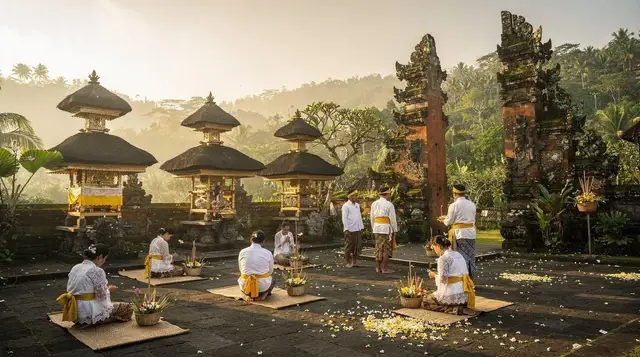
None of this makes Lempuyang itself illegitimate. The temple, formally Pura Luhur Lempuyang, is one of Bali’s Sad Kahyangan — six directional temples considered among the island’s most sacred — and it sits partway up a genuine mountain with a real, demanding pilgrimage route continuing well beyond the gate where most tourist photos are taken. The photo trick and the temple’s real significance are two separate things, and understanding both makes for a more honest, more satisfying visit than chasing the image alone.
Lempuyang at a glance
| Where | Mount Lempuyang, East Bali, part of the Sad Kahyangan network of directional temples |
| Cost | Entrance fee plus, in practice, an informal queue system and mirror-photo service at the gate |
| Time needed | An hour or more including the queue for the photo; a full pilgrimage to the summit temple is a much longer undertaking |
| Access | Private driver or organised tour; the drive itself is a genuine distance from South Bali or Ubud |
| Best time | Early morning for the clearest view of Mount Agung and shorter queues before tour buses arrive |
How the mirror photo actually works
An assistant stationed at the gate holds a small mirror flat beneath your phone or camera lens as you take the photo, positioned to reflect the sky and the gate above, creating the illusion of a still lake at ground level. It is a genuinely clever, low-tech effect, and once you know to look for it, you can usually spot mirror assistants working the queue at the site itself. Tipping the assistant for their help with the shot is standard practice, and most visitors find the process good-humoured rather than deceptive once they understand what is actually happening.
The real pilgrimage beyond the gate
What most tourist visits to Lempuyang never reach is the actual summit temple, accessible via a staircase of well over a thousand steps climbing the mountain from the lower gate area. This is a genuine, physically demanding pilgrimage route used by Balinese Hindu worshippers, not a tourist attraction, and very few visitors who come purely for the gate photo attempt it. For travellers with a genuine interest in the site’s religious significance rather than just the photograph, understanding that this deeper pilgrimage exists — even if you do not attempt it yourself — is part of appreciating Lempuyang honestly rather than reducing it entirely to a single viral image.
Managing the queue
Because the gate photo has become such a specific, singular draw, the site operates an informal but generally orderly queue system, with waits that can stretch considerably during peak hours as tour groups arrive in waves. Arriving early, ideally as close to opening as your itinerary allows, meaningfully reduces the wait compared with a midmorning or midday arrival once multiple tour buses have converged on the site. An all-inclusive private tour to Lempuyang’s Gates of Heaven is one way to build an early arrival into your itinerary without coordinating the logistics yourself.
Combining Lempuyang with Besakih
Given their relative proximity within East Bali, Lempuyang is frequently paired with a visit to Besakih, the island’s most significant temple complex, on the same day. The Besakih Temple and Lempuyang Gates of Heaven tour covers both in a single coordinated route, which makes sense given the driving distances involved in reaching East Bali’s temple cluster from South Bali or Ubud. See the Besakih Mother Temple guide for the fuller detail on that complex.
A flexible, customisable option
For travellers who want more control over timing, particularly to arrive very early and avoid the worst of the queue, a customisable private tour to Lempuyang’s Gate of Heaven from Denpasar allows the departure time to be set specifically around beating the crowds, rather than joining a fixed group schedule that may arrive later in the morning once queues have already built.
Why the mirror trick became so widespread
The technique itself is simple enough that it likely emerged organically among photographers and local assistants working the site once the gate’s photogenic potential became clear, rather than being a single deliberate marketing invention. What made it spread so widely is the combination of a genuinely striking composition — a symmetrical stone gate framing a sacred volcano — with a mirror effect simple enough to replicate and share as a photography tip across travel blogs and social media.
By now, the technique is common knowledge among experienced Bali travellers and openly discussed by most tour operators who bring visitors to the site, which is part of why treating it as a fun, known collaboration rather than a hidden deception is the more accurate framing.
Photo etiquette at a heavily queued spot
Because the gate photo draws such consistent demand, a certain etiquette has developed around the queue itself: taking your turn promptly, not monopolising the spot for an extended personal photoshoot while others wait, and being mindful that the assistant holding the mirror is working through a long line of visitors rather than devoting unlimited time to any single group. Bringing your own ideas for poses or compositions in advance, rather than figuring it out on the spot while others wait behind you, is a considerate way to keep the queue moving without feeling rushed yourself.
Lempuyang’s place among Bali’s six holiest temples
Beyond the viral photo, Lempuyang holds genuine standing as one of the Sad Kahyangan, the six directional temples traditionally considered the most sacred on the island, each associated with a cardinal or intercardinal direction and a specific protective role within Balinese Hindu cosmology. This puts it in the same broad category of significance as Besakih, even though the two temples differ enormously in scale, architecture, and how tourism has shaped the visitor experience at each. Knowing this context is worth carrying into the visit, since it reframes Lempuyang from “the lake photo temple” into a site with genuine, longstanding religious weight that happens to also host one of Bali’s most recognisable modern photo opportunities.
What isn’t worth the detour
Do not pay a significant premium for a “guaranteed no queue” promise unless it is backed by a genuinely early, verifiable arrival time — the queue exists because of shared demand for a single photo spot, and no operator can simply bypass it without arriving before the crowd does. It is also not worth attempting the full summit staircase casually or unprepared if you have not budgeted the time and physical effort it genuinely requires; treat it as a separate, deliberate undertaking rather than an impulsive add-on to the gate photo.
Budget
The entrance fee itself is modest. The main informal cost most visitors do not anticipate is the tip expected by the mirror-photo assistant, which is customary rather than fixed. Transport, given the genuine distance from South Bali, is the larger cost variable, particularly if arranged as a private tour timed for an early arrival.
When to go
Early morning is unambiguously the best time, both for the clearest view of Mount Agung in the background of the photo before cloud typically builds later in the day, and for the shortest queues before tour groups converge midmorning. Dry season offers the most reliable clear-sky views of Agung, though the site is visitable and the photo achievable year-round regardless of season.
Getting there and getting around
Lempuyang sits a genuine distance from South Bali and even from Ubud, making a private driver or organised tour the standard and sensible way to arrive, particularly given how much an early departure improves the visit. There is no practical public transport route to the site for tourists.
How this fits into your wider Bali trip
Lempuyang pairs naturally with Besakih and other East Bali temple stops on the same day, and it fits well within the East Bali, 4 days itinerary. Read the Bali temple etiquette guide before your visit, and the blog piece on the Lempuyang reflection photo for a closer look at the mirror trick specifically if you want more detail before arriving.
Are there other viewpoints at Lempuyang besides the mirror-photo gate?
Yes, the wider temple grounds and the lower stretches of the pilgrimage staircase offer other vantage points and photo opportunities beyond the single famous spot, though none carry the same viral recognition as the mirror-assisted gate shot.
Frequently asked questions about Lempuyang’s Gates of Heaven
Is the Lempuyang lake photo fake?
The lake itself does not exist at ground level — it is created through a mirror held beneath the camera lens by an assistant at the site. The temple and its setting are real; the specific reflective water effect in the photo is a staged trick.
How long is the wait for the photo?
It varies considerably by time of day, with early morning generally offering the shortest queues before tour buses converge on the site later in the morning.
Do I need to climb the full staircase to see the temple?
No, most visitors see only the lower gate area where the famous photo is taken. The full summit temple climb is a separate, much longer pilgrimage undertaking that relatively few tourists attempt.
Should I tip the mirror-photo assistant?
Yes, a small tip is customary and expected for their role in creating the photo, and most visitors find the interaction good-humoured rather than transactional.
Is Lempuyang worth visiting given that the famous photo is staged?
Most visitors still find it worthwhile — the mountain setting, the genuine temple architecture, and the collaborative fun of the photo process hold up well even once you know how the trick works.
What is the best time of year to visit for a clear view of Mount Agung?
Dry season, roughly April to October, offers the most reliable clear skies, though even within the dry season, early morning before cloud builds is more important than the specific month.
Temple & culture tours on GetYourGuide
Verified deep-linked GetYourGuide tours. Book through these links and we earn a small commission at no cost to you.
These are our own photographs of Bali, not the operator's pictures of this tour — open the tour page to see those.