Nusa Penida’s cliff-and-turquoise-water photographs — Kelingking Beach’s T-rex-shaped headland above all — have made it one of the most recognisable single images associated with Bali in recent years, which is exactly why expectations and reality diverge for a lot of first-time visitors. The island delivers genuinely dramatic coastal scenery, but getting to it involves a boat crossing, then driving roads that range from paved to seriously rough, often on a rented scooter that was not really built for the terrain. None of this makes Nusa Penida not worth visiting — it emphatically is — but going in with accurate expectations about the effort involved changes the day considerably.
The island splits roughly into a west coast known for cliffside viewpoints (Kelingking, Broken Beach, Angel’s Billabong) and an east side centred on Crystal Bay and, further out by boat, Manta Point, one of the more reliable manta ray snorkelling and diving sites in Indonesia. Very few day-trip itineraries cover both sides properly given the driving distances and road quality involved, which is the single most important planning decision for a Nusa Penida visit: pick a side, or commit to an overnight stay if you want both.
Crowding has become a real factor at the most photographed spots, particularly Kelingking’s viewpoint, where a queue for the classic photo angle is now a normal part of the experience rather than an occasional inconvenience. This is worth knowing honestly rather than glossing over, since it shapes how much of the famous “empty paradise” version of these photos you should actually expect to recreate yourself.
Nusa Penida at a glance
| Where | Island southeast of Bali, a boat crossing from Sanur, Padang Bai, or Nusa Lembongan |
| Cost | Boat crossing, plus scooter rental or a private driver for the day, plus any diving or snorkelling activity fees |
| Time needed | A full day minimum for a day trip; two days recommended to properly cover both the west cliffs and east manta sites |
| Access | Fast boat from Sanur (most common), Padang Bai, or Nusa Lembongan/Ceningan |
| Best time | Dry season for calmer crossings and better road conditions; July to October specifically for mola-mola sightings alongside the year-round manta rays |
The boat crossing and getting around once there
Fast boats run regularly from Sanur, the most common departure point, with the crossing taking a meaningful chunk of the morning depending on sea conditions — this is open water, not a sheltered channel, and can be genuinely choppy outside the calmest dry-season days. A straightforward crossing option is the fast boat transfer to and from Nusa Penida, which handles just the crossing if you plan to arrange a scooter or driver independently once on the island.
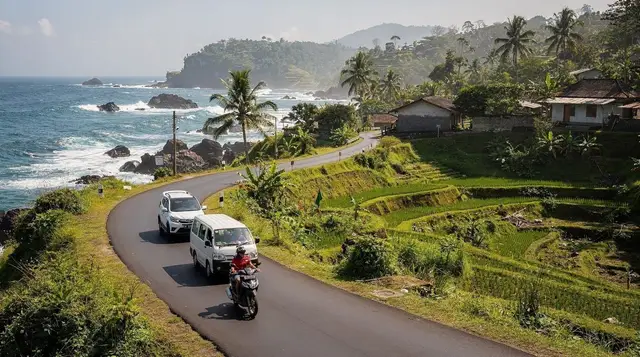
Once there, road conditions vary considerably: main routes between the harbour and the most popular west-side viewpoints are paved and manageable, but several of the final approach roads to specific spots remain rough, steep, and genuinely challenging on a scooter, particularly for less experienced riders. Many visitors, especially on a first trip, are better served by a private driver for the day than self-driving, given both the road conditions and the driving distances involved on an island considerably larger than it looks in photos.
Manta rays, mola-mola, and the diving scene
Manta Point on Nusa Penida’s south coast is one of the more consistent manta ray sites in Indonesia, with sightings likely year-round given the site functions as a natural cleaning station the rays visit regularly. From July through October, the island’s waters also become one of the world’s more reliable spots for mola-mola (sunfish) sightings, a genuinely different and much rarer encounter that draws dedicated divers specifically for that window. A trip like the Nusa Penida diving tour with hotel transfer and lunch covers the logistics of reaching these sites from South Bali in a single organised day.
For non-divers, snorkelling directly with mantas is entirely possible and one of the most memorable wildlife encounters available in Bali’s wider waters — a genuinely different tier of experience from a standard reef snorkel.
The case for an overnight stay
If your schedule allows, staying a night on Nusa Penida rather than rushing back to Sanur on the last boat changes the visit considerably — early morning and late afternoon at the main viewpoints are noticeably quieter than the midday rush of day-trip boats, and an overnight stay makes it realistic to cover both the west coast cliffs and the east side’s manta and Crystal Bay area without an exhausting single-day itinerary. A packaged option like the two-day Nusa Penida trip with accommodation and meals is built specifically around this idea, spreading the island’s highlights across two more relaxed days rather than one rushed one.
For a different pace entirely, a private yacht trip combining manta rays and a land tour is worth considering for travellers wanting to skip the shared fast-boat crowding and scooter logistics in favour of a more curated, private day.
Broken Beach and Angel’s Billabong, compared
Broken Beach (Pasih Uug) is a dramatic natural rock archway opening onto a hidden cove, best appreciated from above along the clifftop rather than by descending to the water, which is not straightforwardly accessible at this particular spot. A short walk away, Angel’s Billabong is a natural tidal pool set into the cliffside, swimmable at the right tide but genuinely dangerous to enter when the tide and swell are wrong — check current conditions with a local guide or your driver rather than assuming it is always safe to get in the water, since incidents here are not unheard of. Both sit close enough together to visit in the same stop, and together with Kelingking make up the core of most west-coast day-trip itineraries.
Crystal Bay, and why it’s different from the rest
Crystal Bay, on the island’s western side near the harbour, offers something the more famous clifftop spots do not: an actual accessible swimming and snorkelling beach rather than a viewpoint. It’s a natural stop to combine with a Manta Point or mola-mola diving day, or simply a place to cool off and relax after a morning of clifftop photography and driving. Sunset here has its own following among visitors who stay on the island overnight, generally quieter than the crowded viewpoints during the middle of the day.
What isn’t worth the detour
Skip attempting all four of the island’s most famous west-side spots (Kelingking, Broken Beach, Angel’s Billabong, and Crystal Bay) in a single day trip — the driving time between them, combined with queueing at each viewpoint, makes for a rushed, frustrating day rather than an enjoyable one; pick two or three and do them properly instead. Also skip the very cheapest, unofficial scooter rentals offering rock-bottom prices with no helmet or clear insurance situation — Nusa Penida’s roads are genuinely more demanding than Bali’s main island roads, and this is not where to cut corners on equipment quality.
What it costs
The boat crossing is a modest fixed cost each way, while getting around the island — scooter rental or a private driver for the day — is the larger variable expense, with a driver costing meaningfully more than self-drive scooter but removing the road-difficulty risk. Diving and snorkelling trips to Manta Point add a further activity cost on top, generally worthwhile given the reliability of sightings there.
When to go
Dry season, roughly April through October, gives calmer boat crossings and better road conditions on the island’s more exposed dirt sections. Within that window, July through October specifically adds the chance of mola-mola sightings alongside the year-round manta rays, making it a particularly good stretch for anyone prioritising the diving and snorkelling side of a Nusa Penida visit over the cliffside photography.
Getting there and getting around
Fast boats from Sanur are the most common route, with Padang Bai and a connection via Nusa Lembongan or Nusa Ceningan as alternatives depending on where you are based. Once on the island, self-drive scooter works for confident, experienced riders comfortable with rough terrain; a private driver for the day is the more comfortable and often more time-efficient choice for everyone else, particularly first-time visitors unfamiliar with the specific roads.
How Nusa Penida fits into a longer trip
Nusa Penida pairs naturally with Nusa Lembongan and Nusa Ceningan if you’re exploring the wider Nusa Islands group, best planned using the Nusa Islands, 3 days itinerary. Read the nusa penida manta point guide, the nusa penida day trip guide, and the honest blog piece on whether Nusa Penida in one day is too much before deciding between a day trip and an overnight stay.
For a broader comparison of the two main Nusa islands, Nusa Penida vs Nusa Lembongan is worth reading, and Sanur is the natural mainland base for most boat departures.
Frequently asked questions about Nusa Penida
Can I visit Nusa Penida as a day trip from South Bali?
Yes, and most visitors do exactly this via a fast boat from Sanur, though be realistic that a single day means covering only two or three highlights rather than the whole island.
Is the queue at Kelingking Beach’s viewpoint really that bad?
During peak hours, yes — it’s become one of the busier single photo spots in the wider Bali region. Arriving early morning or accepting a shorter wait than you’d like are the two realistic options.
Do I need diving experience to see manta rays at Manta Point?
No — snorkelling with mantas is entirely possible and is how most visitors experience the site, though certified divers can also visit via scuba for a different perspective.
Is self-driving a scooter on Nusa Penida a bad idea?
Not inherently, but only recommended for genuinely experienced riders comfortable with steep, sometimes unpaved roads. Less experienced riders are considerably better served by a private driver for the day.
What’s the best way to see both the west cliffs and the east manta sites?
An overnight stay is the realistic way to do both properly without an exhausting, rushed single day of driving across the island.
Is Nusa Penida crowded year-round, or only in peak season?
The most famous viewpoints see steady visitor traffic across most of the year now, though the July–August and December–January peak periods bring noticeably larger crowds than the shoulder months.
How rough is the water on the boat crossing?
It varies with conditions — dry season crossings are generally calmer, while wet season or windy days can produce a genuinely choppy ride; those prone to seasickness should plan accordingly.
Is Angel’s Billabong safe to swim in?
Only under the right tide and swell conditions — this natural tidal pool can become genuinely dangerous when the sea is rough, and checking current conditions with a local guide before entering the water is a real safety consideration, not just excess caution.
How many days would it realistically take to see all of Nusa Penida’s highlights?
Two to three days allows a comfortable pace covering the west coast cliffs, Crystal Bay, and the Manta Point diving or snorkelling area without the exhausting rush of a single-day itinerary.
Are there accommodation options on Nusa Penida itself?
Yes, a growing range from budget guesthouses to more comfortable clifftop stays, concentrated mainly near the harbour area and along the west coast closer to the main viewpoints.