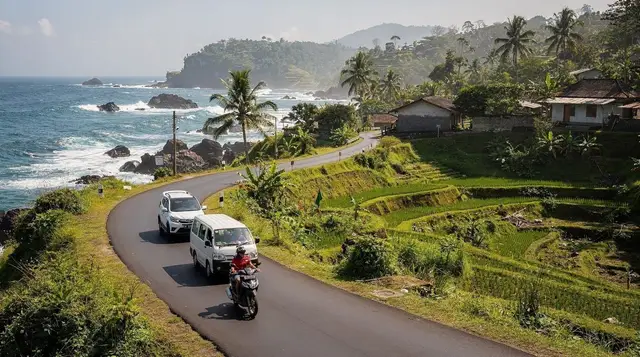
Three Weeks in Bali on a Backpacker Budget
Backpacking Bali on a genuine budget is entirely realistic, but it looks different from the version most travel content assumes. Three weeks is enough time to move slowly — staying five or six nights in a region rather than two or three — which is itself one of the biggest levers on cost, since fewer transfers and less pressure to see everything in a rush both save real money over the length of a trip.
This itinerary moves through five regions: Canggu for an easy, social start with a strong hostel and co-living scene, Ubud for rice terraces and a slower pace, East Bali’s Sidemen for quiet countryside, Amed for budget-friendly diving and snorkelling, and the Nusa Islands to close out the trip with cliff viewpoints and manta rays. It deliberately skips Lombok and the Gilis, on the basis that adding a second island crossing to an already full three weeks stretches the budget and the schedule further than necessary.
Keeping costs down over three weeks comes down to a few consistent habits more than any single big decision: eating at local warungs rather than tourist-oriented cafés, using Grab and Gojek instead of private drivers for most trips, and choosing hostels or simple guesthouses over villas. None of this makes the trip feel deprived — if anything, it tends to produce a more grounded sense of each place than a faster, more expensive version of the same route.
The three weeks at a glance
| Regions | Canggu, Ubud, Sidemen (East Bali), Amed, Nusa Islands |
| Pace | Five to six nights per region on average |
| Transport | Scooter rental, Grab/Gojek, and local boats rather than a private driver throughout |
| Best time | Dry season, April to October, for easier travel and calmer boat crossings |
| Budget style | Hostels and guesthouses, warungs over restaurants, activities chosen selectively |
Days one to six: Canggu
Start in Canggu, which has developed a genuine budget-friendly backpacker and digital-nomad infrastructure alongside its surf culture: hostels, shared co-working spaces, and a dense cluster of affordable warungs. A two-hour private beginner surf lesson is a worthwhile splurge even on a tight budget if you’ve never surfed before, and Canggu’s beach breaks are a reasonable, forgiving place to start. For a longer commitment, a three-day surfing class builds real progress rather than a single taste of it.
Rent a scooter for this stretch if you’re licensed and comfortable riding — it’s consistently the cheapest way to get around Canggu’s sprawl, which is more spread out than it first appears. For airport arrival specifically, a shared or fixed-rate transfer from the airport to Canggu or Uluwatu is a straightforward, predictable cost for your first ride rather than negotiating a fare fresh off a long flight.
Days seven to eleven: Ubud
Move up to Ubud for a slower five days, trading Canggu’s surf-and-café scene for rice terraces and a quieter evening routine. Ubud has its own solid hostel and guesthouse scene, and the town centre is walkable enough that a scooter becomes optional here rather than essential. Use a couple of these days for genuinely free exploration — walking the Campuhan Ridge, wandering the market, sitting in on a free or low-cost yoga class — rather than booking every day around a paid activity.
Days twelve to fifteen: Sidemen and East Bali
Head into East Bali for a quieter four days, based around Sidemen’s rice terraces. This is one of the cheapest stretches of the whole trip, given how much of the appeal here is simply walking through the countryside rather than paying for organised activities. If your budget allows one splurge in this region, a day covering Besakih and Lempuyang with a shared-cost driver, split between a small group of other travellers, keeps the per-person cost down compared with a solo private tour.
Days sixteen to nineteen: Amed
Continue to Amed’s black-sand coast for budget-friendly diving and snorkelling, including the accessible Liberty wreck at nearby Tulamben. Diving is genuinely one of the more affordable activities of its kind here compared with many other parts of the world, and Amed specifically has a range of smaller, locally run dive operators that cost less than the bigger operations elsewhere on the island.
Days twenty and twenty-one: Nusa Islands and departure
Close the trip with a couple of days on Nusa Lembongan, using it as a base for a day trip across to Nusa Penida’s cliff viewpoints. Keep the final day light for the return journey to the airport, allowing for the boat crossing back to Sanur and the drive from there.
Where the real savings come from over three weeks
| Choice | Budget option | Higher-cost equivalent |
|---|---|---|
| Accommodation | Hostel dorm or shared guesthouse room | Private villa or resort room |
| Food | Local warungs | Tourist-oriented cafés and restaurants |
| Transport | Rental scooter or Grab/Gojek | Private driver for the whole trip |
| Activities | Selective splurges (surf lessons, diving) | Booking every available paid activity |
| Region-to-region moves | Public or shared boats, staying longer per region | Frequent short stays with more transfers |
None of these choices individually makes a dramatic difference, but stacked across three weeks they compound into a genuinely different total cost than a mid-range version of the same route. The single biggest lever is arguably the pace itself — staying five or six nights per region rather than two or three cuts down on both transport costs and the accommodation premium that shorter, more frequent bookings often carry.
Meeting other travellers along the route
This particular route passes through some of Bali’s most established backpacker hubs, and Canggu and Ubud in particular have a strong existing culture of hostels with communal spaces built specifically for travellers to meet each other. It’s worth leaning into this rather than defaulting to a private room throughout — shared dorm stays, communal breakfasts, and hostel-organised activities are often where genuinely useful, current advice about the rest of the route comes from, sometimes more reliable than anything found online.
Group activities booked with other travellers you’ve met along the way, particularly for East Bali’s temple tours or a Nusa Penida day trip, are also a straightforward way to split costs that would be considerably higher solo.
Practical money-saving notes for this specific route
Withdraw cash in larger amounts less frequently rather than making many small withdrawals, since many Indonesian ATMs charge a flat fee regardless of the amount taken out. Bring a reusable water bottle and use refill stations, widely available at hostels and cafés along this route, rather than buying bottled water constantly across three weeks — tap water isn’t safe to drink directly, but refill points using filtered water are common in backpacker-oriented areas. Cook or self-cater occasionally if your accommodation allows it, particularly during the Sidemen and Amed legs where warung options, while cheap, are more limited than in Canggu or Ubud.
Negotiate scooter rental rates for a longer period upfront rather than renting week by week — a single three-week rental, or a couple of longer regional rentals, is typically cheaper than repeatedly renting fresh in each new location.
What isn’t worth the detour
Skip adding Lombok and the Gilis to this itinerary unless you’re willing to extend the trip meaningfully beyond three weeks — the extra crossing, and the higher relative cost of accommodation and food on the Gilis, stretch an already full budget trip further than it needs to go. Also skip paying for a private driver on every leg of this trip; Grab, Gojek and the occasional shared-cost arrangement with other travellers cover most needs at a fraction of the cost.
Budget for three weeks
This itinerary is built specifically to keep costs down through choices that compound over three weeks: hostels and simple guesthouses instead of villas, warungs instead of tourist restaurants, and scooters or ride-hailing apps instead of a private driver. The most significant single splurges worth budgeting for are the surf lessons in Canggu and the diving around Amed, both of which deliver genuine value even on a tight overall budget. Boat transfers to the Nusa Islands are a smaller but real recurring cost worth factoring in at the end of the trip.
When to go
The dry season, April to October, makes budget travel noticeably easier throughout — better scooter conditions, calmer boat crossings to the Nusa Islands, and more reliable diving visibility around Amed. The wet season is workable but adds friction to nearly every part of a budget-focused trip, from muddier scooter rides to occasional boat delays.
Getting around
A rental scooter is the backbone of budget travel across most of this itinerary, cheap and flexible for getting around Canggu, Ubud and East Bali, provided you’re licensed and have appropriate insurance. Grab and Gojek cover shorter trips and airport transfers without needing your own vehicle. The Nusa Islands leg requires a boat rather than road transport, and local boats between the islands themselves are considerably cheaper than any tourist-oriented package.
How this fits into a longer trip
If three weeks isn’t quite enough, this itinerary extends naturally by adding a fourth region rather than rushing the existing five — bali on a budget, 10 days covers a shorter version of a similar budget-focused approach if you’re deciding how to compress it instead.
For the practical logistics behind this kind of trip, read scooter rental and licence in Bali, grab and gojek in Bali, and bali budget guide before you go. For the East Bali and Amed legs specifically, Sidemen and Amed diving guide are worth reading in advance, and fast boats to Nusa and Gili covers the crossing for the final stretch of this itinerary.
Frequently asked questions about Three Weeks in Bali on a Backpacker Budget
Is three weeks too long to spend in Bali specifically?
Not for a budget trip moving through multiple regions at a relaxed pace. It only feels long if you’re trying to fill every day with paid activities rather than letting some days be genuinely unstructured.
Is it cheaper to book activities in advance or on arrival?
Both work, but activities booked once you’re already in a region, rather than from home, are sometimes cheaper and give more flexibility to bundle with other travellers you meet along the way.
Do I need an international driving permit for a scooter?
Yes, and it’s required both by Indonesian law and by most travel insurance policies covering scooter use. Renting without one risks both a fine and invalidated insurance in the event of an accident.
Is hostel accommodation widely available outside Canggu and Ubud?
It’s more limited in Sidemen and Amed specifically, where simple guesthouses are more common than dedicated hostels, though both remain affordable by international standards.
How much should I budget daily on this itinerary?
Costs vary by region and personal spending habits, but this itinerary is built around consistently choosing the more affordable option at each decision point — accommodation, food and transport — rather than a fixed daily figure.
Is solo travel safe on this route?
Bali is a well-established destination for solo travellers, including on a budget, and this route in particular passes through areas with a strong existing backpacker presence where meeting other travellers is straightforward.
Should I book all three weeks of accommodation before arriving?
Not necessarily — booking the first few nights in Canggu ahead is sensible, but many backpackers book each subsequent region a few days ahead once they have a feel for their pace, which also allows flexibility to extend a region that turns out to be worth more time.
Is it worth buying a local SIM card for three weeks?
Yes, a local SIM or eSIM is generally cheap relative to the rest of the trip’s costs and makes booking transport, activities and accommodation on the move considerably easier than relying solely on wifi.
How do I keep laundry costs down on a longer trip?
Most budget accommodation along this route offers inexpensive laundry service priced by weight, which is generally more practical than hand-washing for a three-week trip, and considerably cheaper than equivalent services in South Bali’s more tourist-dense areas.
tours.21 days
Verified deep-linked GetYourGuide tours. Book through these links and we earn a small commission at no cost to you.
These are our own photographs of Bali, not the operator's pictures of this tour — open the tour page to see those.