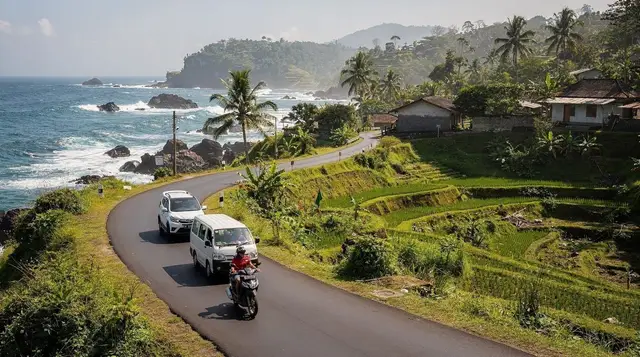
Nusa Lembongan is the more developed, more easily navigated of Bali’s two main Nusa islands, and that trade-off is worth understanding upfront: you give up some of Nusa Penida’s most dramatic clifftop drama in exchange for paved roads, an established range of accommodation, and a genuinely relaxed pace that suits a multi-night stay far better than a rushed day trip. For travellers who found Nusa Penida’s road conditions or crowding off-putting from research alone, Lembongan is frequently the better fit.
The island built its early tourism reputation on surfing, with several reef breaks along its coastline drawing surfers well before Nusa Penida’s clifftop photographs made the wider island group famous on social media. Devil’s Tears, a dramatic clifftop blowhole formation, and the mangrove forest along the island’s interior waterways round out a set of attractions that reward slower exploration rather than a single rushed day.
Diving and snorkelling here benefit from the same rich waters that make the wider Nusa area known for manta rays and, from July through October, mola-mola sightings — Lembongan-based dive operators run trips to sites shared with Nusa Penida, making it a viable diving base in its own right rather than requiring a Penida-specific stay.
Nusa Lembongan at a glance
| Where | Nusa Islands group, a short boat ride from Sanur, connected to Nusa Ceningan by a footbridge |
| Cost | Boat crossing plus scooter rental or driver; accommodation ranges from budget to comfortable mid-range |
| Time needed | One to three nights makes the crossing worthwhile; a rushed day trip is possible but sells the island short |
| Access | Fast boat from Sanur; some routes also connect via Nusa Penida or Padang Bai |
| Best time | Dry season for calmer crossings and more consistent surf conditions; July–October for mola-mola diving |
Surfing Lembongan’s reef breaks
Several named reef breaks ring the island, generally more consistent and better known among surfers than anything on Nusa Penida, making Lembongan the more natural base if surfing is a priority for your Nusa Islands time. The Nusa Lembongan surf lesson for all levels is a sensible starting point for beginners or intermediate surfers wanting local knowledge of the breaks’ specific character, which can be more technical than beginner-friendly breaks in South Bali like Kuta.
Diving, mola-mola, and manta season
Lembongan-based dive operators access many of the same rich sites associated with the wider Nusa area, including manta ray encounters and, in the July-to-October window, mola-mola sightings that draw dedicated divers from across Bali. Basing yourself here rather than making a Penida-specific trip is entirely viable if diving is your main draw, since boat access to the shared dive sites works comparably well from either island.
Mangroves and the quieter interior
A network of mangrove channels along part of Lembongan’s coastline offers a genuinely calm, slow-paced contrast to the surf breaks and cliffside lookouts elsewhere on the island, explored by traditional boat rather than on foot. It’s a low-effort activity that suits travellers wanting a change of pace mid-stay, and one of the clearer examples of how Lembongan rewards a multi-day visit over a single rushed day trip.
Combining Lembongan, Penida, and Ceningan
Because the three islands sit close together, with Lembongan and Ceningan connected by a footbridge and Penida a short further boat ride away, many visitors treat the group as a single multi-day destination rather than three separate trips. A Nusa Lembongan day trip with fast boat and island tour is a reasonable single-day option if time is genuinely limited, while a more relaxed Nusa Lembongan day tour covers the island’s main sights at a steadier pace.
Seaweed farming and the island’s other economy
Beyond tourism, Lembongan has a long-standing seaweed farming industry visible along parts of its shallow coastline, particularly at low tide when the farming plots become clearly exposed. It’s a genuine local livelihood rather than a staged attraction, and walking or cycling past the farms offers a different, more grounded view of the island than its beaches and surf breaks alone provide. Some tours include a stop specifically to see the farming process, worth requesting if this kind of local economic detail interests you.
Yacht charters and a more private option
For travellers wanting to see the Nusa island group without the logistics of shared fast boats and separate scooter arrangements on each island, a private yacht charter is a genuine alternative. The private luxury yacht charter covering Nusa Penida and Lembongan combines snorkelling stops, island views, and a considerably more comfortable, unhurried pace than the standard fast-boat-and-scooter circuit most day-trippers follow, at a correspondingly higher cost.
Accommodation style on Lembongan
Compared with Nusa Penida’s more limited, increasingly clifftop-focused accommodation, Lembongan offers a broader range spanning simple beachfront guesthouses to more comfortable resort-style properties, generally clustered around the main village and beach areas rather than spread thinly across the island. This makes logistics simpler for a multi-night stay — most restaurants, dive shops, and surf rental outfits sit within easy walking or short scooter distance of the main accommodation areas.
What isn’t worth the detour
Skip expecting Lembongan’s clifftop scenery to match Nusa Penida’s most famous viewpoints — it genuinely does not have an equivalent to Kelingking Beach, and travellers coming purely for that specific style of photograph will be better served spending their time on Penida instead. Also skip treating the mangrove tour as a major highlight if you have limited time; it’s a pleasant, calm addition but not essential in the way the surf breaks or diving are for most visitors’ priorities.
Sunset spots and the island’s slower evenings
Several beachfront spots along Lembongan’s west-facing coast offer reliably good sunset views without the intense crowding found at some of South Bali’s more famous sunset locations, part of the island’s broader appeal as a place to slow down rather than chase a packed schedule. Evenings here tend toward simple beachfront dinners and an early night rather than any real nightlife, consistent with the wider Nusa islands’ generally quieter character compared with the Bali mainland.
What it costs
Boat crossings from Sanur are a modest fixed cost, and accommodation across Lembongan spans budget to comfortable mid-range options, generally less expensive than equivalent South Bali beachfront stays. Surf lessons and diving trips are the larger activity costs, priced comparably to similar activities elsewhere in Bali’s wider dive and surf scene.
Cycling and getting around beyond scooters
Given Lembongan’s smaller size and generally manageable roads, cycling is a genuine alternative to scooter rental for travellers who prefer not to ride a motorbike, particularly along the flatter routes near the main village and coastline. It is slower and more physically demanding on the island’s few hillier stretches, but offers a quieter, more observant way to see the mangroves and coastal roads than passing through on a scooter.
When to go
Dry season, roughly April through October, brings calmer boat crossings and more consistent surf conditions on the reef breaks. The July-to-October window specifically overlaps with mola-mola season for divers, making it a particularly good stretch if diving is a priority alongside surfing.
A short history of Lembongan’s tourism development
Lembongan’s tourism roots trace back further than Nusa Penida’s more recent social-media-driven rise, largely thanks to its surf breaks drawing a smaller, dedicated community of surfers well before the wider Nusa island group became a mainstream Bali add-on. That earlier development explains why the island has a more settled range of accommodation and dining options today, built up gradually rather than expanding rapidly in response to a sudden surge in visitor numbers the way parts of Nusa Penida have in recent years.
Getting there and getting around
Fast boats from Sanur are the standard route, with the crossing considerably shorter and generally calmer than some open-water Nusa Penida routes given Lembongan’s position. Once on the island, scooter rental is straightforward given the more manageable, largely paved road network compared with Nusa Penida, making self-driving a realistic option here even for less experienced riders.
How Nusa Lembongan fits into a longer trip
Nusa Lembongan pairs naturally with Nusa Ceningan via the footbridge connecting the two, and with a Nusa Penida day trip for travellers wanting both the easier base and the dramatic clifftop photography. Use the Nusa Islands, 3 days itinerary to plan a combined stay, and read Nusa Penida vs Nusa Lembongan if you’re still deciding where to base yourself.
For surfers, the Bali surf guide for beginners and the Bali surf trip, 10 days itinerary offer wider context on how Lembongan’s breaks compare to the mainland.
Frequently asked questions about Nusa Lembongan
Is Nusa Lembongan easier to get around than Nusa Penida?
Yes, considerably — the road network is smaller and largely paved, making self-drive scooter a realistic option even for less experienced riders, unlike several of Nusa Penida’s rougher access roads.
Can beginners surf at Nusa Lembongan?
Some breaks suit beginners with instruction, though several of the island’s reef breaks are more technical; a lesson with a local instructor is the sensible way to find an appropriate spot for your level.
Is Devil’s Tears safe to visit?
Yes, when viewed from the designated clifftop areas — it’s a powerful natural blowhole, not a swimming spot, and should be admired rather than approached at water level.
How does diving from Lembongan compare to diving from Nusa Penida?
Both access many of the same shared dive sites in the surrounding waters, including manta ray and mola-mola locations, so the choice comes down more to where you’d rather be based than a meaningful difference in dive access.
Is a day trip to Nusa Lembongan worthwhile, or should I stay overnight?
A day trip covers the basics, but an overnight stay of at least one or two nights lets you properly fit in surfing, diving, and the mangrove tour without rushing.
How do I get from Lembongan to Nusa Ceningan?
A yellow footbridge connects the two islands directly, making it an easy walk or scooter ride rather than requiring a separate boat crossing.
Is Nusa Lembongan busy or quiet compared to Bali’s main beach towns?
It’s considerably quieter than Kuta, Seminyak, or Canggu, though busier than it was some years ago as the wider Nusa island group has grown in popularity — treat it as a relaxed, low-key destination rather than either a party town or a fully secluded escape.
What’s the best way to get money and pay for things on the island?
ATMs exist around the main village area, but cash is still king for smaller warungs and activity bookings, so carrying enough for a few days is sensible rather than relying entirely on card payments.
Can I do a Nusa Penida day trip while based on Lembongan?
Yes, and it’s a common approach — using Lembongan as a comfortable base and taking a shorter boat hop or organised day tour across to Penida for its clifftop highlights, then returning to Lembongan for the night.