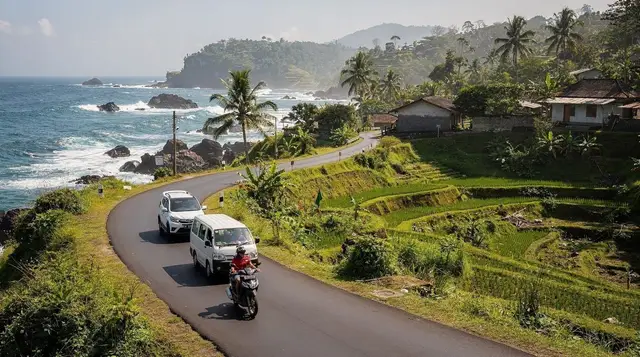
Canggu was rice fields and a handful of surf breaks known mainly to a small circle of surfers until well into the 2010s. What’s there now is a sprawling, still-expanding mix of cafes, coworking spaces, boutique hotels and villas that has grown faster than the road network underneath it, which is the single fact that shapes almost every practical decision about visiting: where you stay relative to where you want to be matters more here than in almost any other South Bali town.
The area’s identity has shifted accordingly. Surfing remains a genuine draw, with several distinct breaks suited to different skill levels within a short ride of each other, but Canggu’s bigger pull for a lot of visitors now is the lifestyle built around it: laptop-friendly cafes, yoga studios, a strong smoothie-bowl-and-oat-milk food culture, and a long-stay crowd of remote workers that has reshaped the area’s economy and, inevitably, its prices.
This guide covers what a Canggu stay actually involves: the surf breaks and who they suit, the traffic reality that catches first-time visitors off guard, the cafe and coworking scene, and how to decide whether a short visit or a longer stay makes more sense for your trip.
Canggu at a glance
| Where | South Bali, north of Seminyak along the coast |
| Cost level | Mid-range; cafes and villas often priced closer to Seminyak than Kuta |
| Time needed | 3-7 days for a visit, weeks to months for remote workers |
| Access | A taxi, Grab or Gojek ride from Ngurah Rai Airport (DPS); allow more time than for Kuta or Legian given traffic |
| Best time | Dry season for the most consistent surf; the cafe scene works year-round |
Surf breaks for every level
Canggu’s coastline holds several named breaks within a short stretch of each other, and unlike Kuta’s single beginner-friendly beach break, they cover a genuine range of ability levels. Batu Bolong and Echo Beach are the two most talked-about, both with a mix of beach and reef sections depending on the swell and tide.
For a first lesson, a straightforward option is a private two-hour beginner surf lesson in Canggu, which puts you with an instructor one-on-one rather than in a group. If you’re planning to actually improve rather than just try it once, a three-day surf course gives enough repetition to build real technique rather than a single afternoon of pop-ups.
Confident surfers looking for something with more consequence than Kuta’s soft break will find better options in Canggu’s reef sections, and locals and long-stay surfers tend to rate the quality of the breaks here well above the beginner-friendly beach at Kuta, though conditions here demand real experience — the beginner surf guide and the dedicated Canggu surf guide both break down which break suits which level in more detail than fits here.
The cafe and coworking scene
This is arguably what most visitors actually come for now, whether or not they’d frame it that way. Canggu’s back lanes hold a dense concentration of cafes built around laptop-friendly seating, reliable wifi and a food menu leaning heavily toward smoothie bowls, avocado toast and specialty coffee. It’s a genuinely pleasant way to spend a slow morning, and the density of good options within walking distance of most accommodation is higher here than almost anywhere else on the island. Many of these cafes double as informal offices for the resident remote-work crowd, with power outlets built into the seating and staff who don’t mind a laptop sitting open for a couple of hours over a single order.
Traffic: the thing nobody warns you about enough
Canggu’s rapid growth has outpaced its road infrastructure, and this is genuinely the single biggest practical complaint from visitors who’ve stayed more than a few days. Narrow lanes never designed for the current volume of scooters and cars back up badly around Berawa and Batu Bolong at peak times, particularly in the late afternoon and early evening. A ride that should take ten minutes can take considerably longer.
The practical takeaway is to build slack into your plans rather than scheduling tightly, and to consider walking or cycling for short distances within a single neighbourhood rather than always relying on a scooter or ride-hail for trips of a few hundred metres. Choosing accommodation within walking distance of the specific cafes, surf break or coworking space you plan to use most is a more effective fix than hoping the traffic improves during your stay.
A change of pace: rice fields and creative workshops
Away from the surf and cafe strips, Canggu still holds genuine rice-field scenery threaded through its back lanes, a reminder of what the area looked like before the current wave of development. Walking or cycling these lanes early in the morning, before the heat and traffic both build, is one of the more understated ways to spend a couple of hours here.
For something more hands-on, an aesthetic journal-making workshop fits the area’s creative, slower-paced side, and is a reasonable way to spend a rainy afternoon that doesn’t involve a laptop or a surfboard.
Yoga, wellness and the long-stay culture
Canggu’s identity as a wellness hub runs alongside its surf and cafe reputation rather than separately from it. Yoga studios sit within walking distance of most accommodation, and the pace of classes on offer, from drop-in sessions to multi-week programmes, reflects the area’s large population of visitors staying weeks or months rather than days. It’s a genuinely useful base if a slower, health-focused trip is part of the plan. Multi-day and week-long retreats are also common here, often bundling accommodation, yoga and meals into a single package, which suits travellers who want structure rather than piecing a wellness trip together themselves.
That same long-stay culture shapes the social scene too. Coworking spaces double as informal meeting points as much as workspaces, and it’s entirely normal to build a loose daily rhythm here — surf or yoga in the morning, work from a cafe through the middle of the day, sunset drinks or dinner in the evening — in a way that feels less like a typical holiday itinerary and more like temporarily living somewhere.
Nightlife around Berawa and Echo Beach
Canggu’s evening scene has grown alongside everything else, concentrated mainly around Berawa and, to a lesser extent, near Echo Beach. It runs closer to Seminyak’s more design-led bars than Kuta’s volume-driven strip, with beach clubs, sunset bars and a handful of clubs that get genuinely busy on weekends. It’s less chaotic than Kuta after dark, though “quiet” isn’t really the right word for it either. Live music nights and themed events rotate through the bigger venues regularly, which is worth checking in advance if a specific act or event is part of the draw rather than a general night out.
What isn’t worth the detour
Some of Canggu’s most Instagrammed cafes and “aesthetic” venues charge a premium for the setting that isn’t matched by the food, and the queue to get a table with the right backdrop can eat a genuine chunk of a morning. Weekday mornings before mid-morning tend to be the easiest window to avoid the worst of it. If a specific photo isn’t the point, a less-hyped cafe a street or two back usually serves better food for less, with no queue.
The area’s rapid short-term rental growth has also pushed some genuinely charmless, cookie-cutter villa developments into what were rice fields a few years ago; if rice-field views are part of why you’re booking a villa, check recent photos rather than trusting the listing’s older marketing shots, since the surrounding land can change fast. It’s a fair trade-off for many visitors given everything else Canggu offers, but it’s worth going in with accurate expectations rather than a photo from several years ago.
Budget in Canggu: roughly what to expect
Canggu’s cafe-and-coworking economy has pushed prices up compared with Kuta or Legian, closer to Seminyak’s range for cafes, smoothie bowls and boutique accommodation, even though the area doesn’t have Seminyak’s beach club culture driving costs the same way. Longer-stay accommodation, aimed at the digital nomad market, can offer better value than short nightly rates if you’re in Canggu for more than a week or two.
Street food and local warungs away from the main tourist lanes remain considerably cheaper than the cafe scene. See the Bali budget guide for a wider picture. A useful pattern for keeping costs down without giving up the cafe culture entirely is mixing the two: a specialty coffee or brunch at a well-known spot every couple of days, with local warungs filling in the rest, rather than eating every meal at cafe prices.
Weather and crowds through the year
Canggu follows South Bali’s broader seasonal pattern: dry season, roughly April through October, brings the steadiest surf conditions and the busiest cafe scene. Wet season brings short, heavy downpours rather than washed-out days, though the west-coast swell that Canggu’s breaks depend on tends to be at its best across this same dry stretch. July, August and the Christmas–New Year period bring the heaviest crowds, both in the water and in the more popular cafes.
Getting to and around Canggu
Canggu sits further from Ngurah Rai Airport than Kuta, Legian or Seminyak, and the transfer takes noticeably longer given the traffic on the approach roads. An airport transfer covering Canggu and Uluwatu is worth pre-booking rather than arranging on arrival, particularly late at night when finding a reliable driver on the spot is harder.
Within Canggu, a scooter is genuinely the most practical way to get around given how spread out the area is, but the traffic and road conditions mean it’s not the place to learn — see the scooter rental and licence guide before renting. Ride-hailing apps work, though pickup can be slow at peak times given the same traffic that affects everyone else. Bicycles have also become a genuinely practical option for short hops within a single neighbourhood like Berawa or Batu Bolong, sidestepping both the traffic and the parking hassle that scooters run into around the busiest cafes.
How this fits into a longer trip
Canggu pairs naturally with Seminyak to the south for a change between laid-back surf culture and more polished dining, and with Ubud inland for travellers wanting rice terraces and a slower pace beyond what Canggu’s own back lanes offer. Surf-focused travellers building a longer trip around it often follow the ten-day surf trip itinerary, while remote workers researching a longer stay should read the digital nomads in Canggu piece for a fuller picture of the long-stay logistics.
For a direct comparison of Canggu against its southern neighbours, see the Kuta vs Seminyak vs Canggu guide, and for the choice between Canggu and inland Ubud specifically, the Ubud vs Canggu guide lays out the trade-offs in more depth.
Frequently asked questions about Canggu
Is Canggu good for beginner surfers?
Yes, in parts. Some breaks suit beginners while others are better suited to experienced surfers; check conditions and choose an instructor who matches your level rather than assuming any Canggu lesson is beginner-friendly by default.
How bad is the traffic in Canggu, really?
Bad enough to genuinely factor into your planning, particularly on the main roads around Berawa and Batu Bolong at peak times. Building extra time into any plan involving a ride across the area is worth doing.
Is Canggu expensive compared to Kuta?
Generally yes, particularly for cafes, coworking spaces and boutique accommodation, though genuinely budget options still exist away from the most marketed strips.
Do I need a scooter in Canggu?
It’s the most practical way to get around given how spread out the area is, but the traffic and road conditions mean it’s not a good place to learn to ride for the first time.
Is Canggu suitable for a short holiday, or only long stays?
Both work. A few days is enough to sample the surf and cafe scene; the area’s popularity with longer-stay remote workers doesn’t mean a short visit is wasted.
How far is Canggu from the airport?
Further than Kuta, Legian or Seminyak, and the transfer takes noticeably longer in practice due to traffic on the approach roads, so build in extra time.
Is Canggu quieter than Kuta?
In terms of nightlife volume, generally yes, though Canggu has its own scene, particularly around Berawa. The bigger difference is what fills the daytime: cafes and surf here versus the beach and shopping strip in Kuta.
Can I work remotely from Canggu?
Yes, it’s one of the most established digital nomad hubs in Southeast Asia, with a dense concentration of coworking spaces and wifi-friendly cafes. Visa rules for remote work should be checked separately, since tourist visas don’t automatically permit local employment.
Is Canggu suitable for families?
It can work for families with older kids interested in surfing, but the traffic and lack of a single obvious family-beach focus make it less straightforward than Sanur or Legian for a family-first trip.