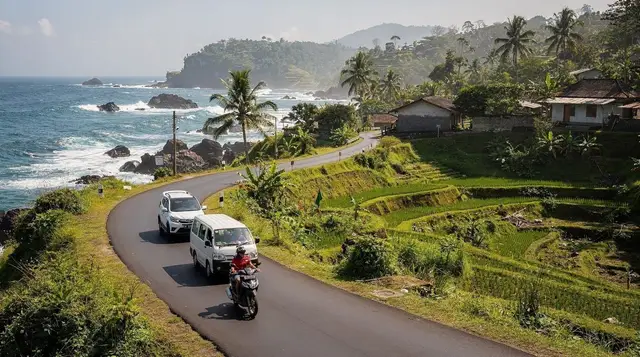
Nusa Penida vs Nusa Lembongan: Which Island Fits Your Trip
Should I visit Nusa Penida or Nusa Lembongan, or both?
Nusa Penida has the dramatic clifftop viewpoints most visitors picture — Kelingking, Angel's Billabong, Broken Beach — but rough roads and long, tiring loops to see them. Nusa Lembongan is smaller, calmer, easier to get around, and a more comfortable place to actually stay. Many trips use Lembongan as a base and take a boat across to Penida for the viewpoints, which is genuinely the most practical approach for most travellers.
Nusa Penida and Nusa Lembongan sit within sight of each other off Bali’s southeast coast, separated by a short boat crossing, yet they offer genuinely different experiences of the same island group. Nusa Penida is the larger, wilder island — dramatic limestone cliffs, the viewpoints that dominate every Bali Instagram feed, and roads that are still catching up with the tourism the island now receives. Nusa Lembongan is smaller, calmer, and considerably more developed for tourism, with a compact village, easier roads, and a laid-back beach-town feel that Penida doesn’t really offer.
The honest answer for most travellers isn’t a simple choose-one recommendation, but rather an understanding of what each island does well, followed by a plan built around those strengths. Lembongan works better as a base to actually stay and relax; Penida works better as a place to see spectacular viewpoints on a focused day trip, ideally without also trying to sleep there every night given the state of its roads.
This guide breaks down where they genuinely differ, so you can decide whether to split time between both, base in one and day-trip to the other, or skip one entirely. None of those approaches is inherently wrong; the right one depends mostly on how much time you have and how much you value clifftop drama versus a genuinely relaxing few days by the water.
Nusa Penida vs Nusa Lembongan at a glance
| Nusa Penida | Nusa Lembongan | |
|---|---|---|
| Size and feel | Larger, wilder, less developed | Smaller, more developed, easier to navigate |
| Roads | Rough, winding, slow going in places | Better maintained, shorter distances |
| Signature sights | Kelingking, Angel’s Billabong, Broken Beach | Devil’s Tears, mangroves, easy beach access |
| Best for | Clifftop viewpoints, day trips, diving/snorkelling with manta rays | Relaxed stays, easier logistics, a calmer base |
| Typical visit style | Day trip from Bali or a short, focused stay | Multi-night base, sometimes paired with Ceningan |
Nusa Penida: the dramatic, harder-going island
Nusa Penida is where the postcard shots come from — Kelingking’s T-rex-shaped cliff, the natural infinity pool at Angel’s Billabong, the collapsed sea cave at Broken Beach. The scenery genuinely earns its reputation. Kelingking’s viewpoint in particular has become one of the single most photographed spots in all of Indonesia, and while that reputation brings crowds, the view itself genuinely holds up against the hype once you’re standing at the top of the cliff looking down at the curved beach far below.
What doesn’t always make it into the photos is the getting-there: roads on Penida are still rough and winding in large sections, distances between viewpoints are longer than the island’s small size on a map suggests, and a full loop of the west-side highlights realistically eats most of a day.
Underwater, Penida is one of the best places on the island chain to see manta rays year-round, and mola-mola (sunfish) from roughly July to October, which is a serious draw in its own right beyond the clifftop views. For divers and snorkellers specifically, that combination — reliable manta encounters plus a seasonal shot at the far rarer mola-mola — puts Penida on a genuinely short list of places in Southeast Asia worth planning a trip around for the marine life alone.
Nusa Lembongan: smaller, easier, better for actually staying
Lembongan is a fraction of Penida’s size, with a compact village, considerably better roads, and a tourism infrastructure that’s had longer to develop — more restaurants, better-established accommodation, and an easier, more relaxed rhythm generally. Devil’s Tears, its own dramatic clifftop blowhole formation where waves crash through a narrow rock channel, gives Lembongan a genuine signature sight of its own rather than making it purely a stepping stone to Penida.
The mangrove forest on Lembongan’s inland side offers a calmer, completely different kind of activity from Penida’s clifftop drama, and the island connects easily by a yellow bridge to the smaller, quieter Nusa Ceningan next door. Seaweed farming, visible along parts of the coastline, is still a genuine local industry here, giving Lembongan a working-island character alongside its tourism that’s easy to miss if you only stick to the main restaurant strip.
Comparing the underwater experience
Both islands sit within the same broader manta ray and mola-mola habitat that makes this stretch of water so well known among divers, but the specific dive and snorkel sites differ meaningfully between them. Penida’s Manta Point and Crystal Bay are among the most reliable manta-ray encounters in the whole Nusa chain, and a trip like a two-dive trip for certified divers around Nusa Penida is built specifically around that reputation.
Lembongan’s surrounding waters offer their own strong snorkelling and diving, generally in calmer conditions than some of Penida’s more exposed sites, making it a slightly gentler starting point for less experienced swimmers or first-time snorkellers before tackling Penida’s more demanding spots.
What isn’t worth the detour
Don’t try to squeeze a full Penida loop and a Lembongan visit into a single rushed day trip from mainland Bali — the boat crossings and road time on both islands make that combination genuinely exhausting rather than enjoyable, and you’ll likely remember the transit more than the sights. On Penida specifically, it’s not worth chasing every viewpoint on a list if time is tight; picking two or three of the best-known spots and doing them properly, with time to actually enjoy each one, beats a rushed checklist approach that leaves you sitting in a car for most of the day.
Budget comparison
Lembongan’s more developed tourism infrastructure means a wider range of accommodation and dining options at every price point, generally with slightly better value at the budget end given the longer-established competition among local operators there. Penida’s accommodation and dining have caught up considerably in recent years, particularly near the main viewpoints, but options can be sparser and pricier relative to quality outside the most popular areas.
Boat transfers between the mainland and either island, and between the two islands themselves, are a relatively fixed cost regardless of which combination you choose, so factor a crossing or two into the budget either way. Scooter rental costs are similar across both islands, though tour and driver rates on Penida can run a little higher given the more demanding roads and longer routes drivers have to cover.
Access and getting between them
Fast boats run regularly from Sanur to both Nusa Penida and Nusa Lembongan, and a short, dedicated crossing connects the two islands to each other directly — a boat transfer between Nusa Penida and Nusa Lembongan makes island-hopping between the two straightforward without routing back through the mainland each time.
Once on Penida, a scooter or a hired driver for the day is close to essential given the road conditions and distances between sights; on Lembongan, a scooter is easier to manage comfortably, and some of the compact village area is even walkable. First-time riders unfamiliar with steep, unpaved sections should lean toward a driver rather than self-driving on Penida specifically, since the consequences of a mistake on some of its steeper stretches are more serious than on Lembongan’s gentler roads.
Seasonality for both islands
Both islands follow Bali’s broader dry-season and wet-season pattern, with the dry months from roughly April to October offering calmer seas for the boat crossings and generally better underwater visibility for diving and snorkelling. July through October specifically overlaps with the mola-mola season, adding another reason to weight a Penida-focused trip toward that window if underwater sightings are a priority alongside the clifftop views.
The wet season brings a higher chance of choppier crossings and reduced visibility underwater, though it doesn’t rule out a visit entirely — just worth checking conditions and being flexible with dates if diving or snorkelling is the main draw. Sea conditions on the crossing itself can also be genuinely rougher in the wet season, so travellers prone to seasickness may want to weight a visit toward the drier months regardless of what’s planned on land.
How this fits into a longer trip
For a longer Bali stay, basing in Lembongan for two or three nights and taking a dedicated day trip across to Penida for the viewpoints is a genuinely comfortable way to see both without exhausting yourself on Penida’s roads every day. A full-day option like a full-day private tour of East Nusa Penida departing from Lembongan or a private full-day highlights tour of West Nusa Penida from Lembongan covers the two different sides of Penida’s sights without needing to change accommodation.
A Nusa islands 3 days itinerary is built around exactly this kind of split, giving enough time for both islands without rushing either one. For a broader look at how the Nusa islands fit into a wider Bali trip, the best day trips from Bali guide and the Nusa Penida day trip guide are worth reading alongside this comparison, and the Bali and Gili islands 7 days itinerary shows how a Nusa stop can fit into an even longer island-hopping route through the wider archipelago.
If diving is a priority for either stop, the best diving in Bali guide and the Nusa Penida manta point guide go into the specific sites and seasonal timing in more depth than fits here.
Choosing where to actually sleep
If you only have time for one overnight stay in the Nusa islands, Lembongan is the easier, more comfortable choice for most travellers — better roads for evening walks, a wider choice of restaurants, and accommodation that’s had longer to mature into genuinely good options across most budgets.
Staying overnight on Penida makes more sense if diving or an early-morning start at the west-side viewpoints, before the day-tripper crowds arrive from the mainland, is the priority; getting to Kelingking or Angel’s Billabong at first light is a real advantage of already being on the island rather than arriving by boat that morning. Neither choice is wrong, but knowing which trade-off you’re making — comfort versus early access — makes the decision much easier than picking blind. Some travellers split the difference by staying two nights on Lembongan and one on Penida specifically to catch that early window, which works well if the itinerary has the flexibility for a short, focused overnight rather than a longer stay.
Crowd levels and when each island feels busiest
Nusa Penida’s most famous viewpoints get genuinely crowded by mid-morning once the day-trip boats from Sanur have landed and dispersed across the west-side loop, and by early afternoon the queues for a clear, people-free photo at Kelingking or Angel’s Billabong can be long enough to test anyone’s patience. Arriving early, ideally by staying overnight nearby or taking one of the first boats across, is the single most effective way to beat the crowds at Penida’s headline sights.
Even shifting a visit by an hour earlier than a typical day-trip departure can make a genuine difference to how crowded the platforms at each viewpoint feel. Lembongan doesn’t see the same single-point crowding, since its attractions — the mangroves, Devil’s Tears, the beaches — are more spread out and don’t funnel everyone toward the same narrow viewpoint at the same time of day. That difference alone is worth weighing if crowd-free photos matter more to you than ticking off Penida’s specific, famous sights.
Frequently asked questions about Nusa Penida vs Nusa Lembongan
Can I visit Nusa Penida as a day trip from mainland Bali without staying overnight?
Yes, and it’s how most visitors experience the island — a fast boat from Sanur, a full day covering the main west-side viewpoints, and a return boat in the evening. It makes for a long day, but it’s a well-established route.
Is Nusa Lembongan worth visiting if I only care about Penida’s famous viewpoints?
If Penida’s viewpoints are the sole priority, you could skip Lembongan entirely and day-trip directly to Penida. But using Lembongan as a comfortable base, even for just one or two nights, makes the whole visit less rushed.
Do I need a scooter on both islands?
A scooter or hired driver is close to essential on Penida given the road conditions and distances. On Lembongan, a scooter makes things easier, but the village area itself is more walkable than anywhere comparable on Penida.
Is Nusa Ceningan worth adding to a Lembongan visit?
Yes, if you’re already on Lembongan — the yellow bridge connecting the two makes Ceningan an easy, low-effort addition, and it offers its own quieter, less-visited version of the same lagoon and clifftop scenery.
How rough are Nusa Penida’s roads, really?
Rough enough that an inexperienced scooter rider should think carefully before self-driving the full loop, particularly on the steeper, less-paved sections leading to some viewpoints. A hired driver removes this concern entirely and is a common, sensible choice.
Is snorkelling better on Penida or Lembongan?
Penida generally offers the more dramatic encounters, particularly with manta rays at Manta Point, while Lembongan’s surrounding waters tend to be calmer and more forgiving for less experienced snorkellers.
How long does the boat crossing between the two islands take?
It’s a short crossing, one of the quickest inter-island hops in the area, making a same-day visit between the two genuinely practical if your schedule allows for it.
Is it possible to see Kelingking and Broken Beach in the same day trip?
Yes, they’re commonly combined on the same west-side loop along with Angel’s Billabong, though it makes for a long, road-heavy day. Starting early is the key to seeing all three without feeling rushed at the end.
Best day trips from Bali on GetYourGuide
Verified deep-linked GetYourGuide tours. Book through these links and we earn a small commission at no cost to you.
These are our own photographs of Bali, not the operator's pictures of this tour — open the tour page to see those.