Tiu Kelep and Sendang Gile: Lombok's Waterfall Pair
Which is better: Tiu Kelep or Sendang Gile?
They're usually visited together rather than compared, since Sendang Gile is the first, easier waterfall on the path and Tiu Kelep sits further up the same trail, requiring a river crossing and more walking to reach. Sendang Gile alone suits visitors short on time or fitness; the full walk to Tiu Kelep rewards those willing to do a bit more trekking with a genuinely more dramatic waterfall.
Sendang Gile and Tiu Kelep sit on the northern slopes of Mount Rinjani near the village of Senaru, and they’re the closest thing Lombok has to a signature waterfall pairing — visited together by nearly everyone who makes the trip, since reaching Tiu Kelep means passing Sendang Gile first on the same trail. This isn’t two separate destinations you choose between; it’s effectively one trek with two distinct payoffs at different points along the way, which makes planning simpler than it might sound from the two names.
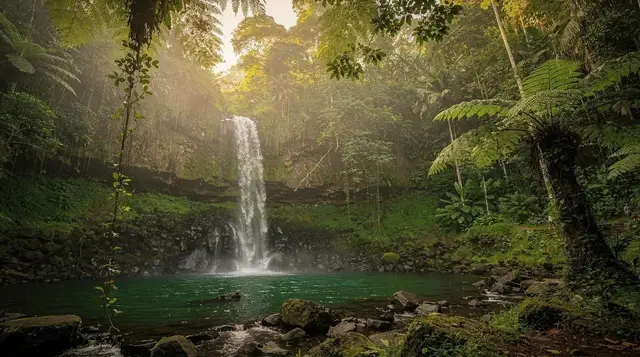
Sendang Gile is the first waterfall you reach from the car park, a genuinely impressive drop reached by a well-maintained path and a short set of stairs, manageable for most fitness levels without much difficulty. Tiu Kelep sits further along the same trail, requiring additional walking and a river crossing to reach, and rewards the extra effort with a waterfall many visitors consider the more dramatic of the two, with a wide curtain of water you can walk behind at certain water levels.
Because both sit on Rinjani’s slopes, the setting benefits from the same lush, cooler highland forest that makes this part of Lombok feel distinctly different from the island’s beach-focused south coast. It’s a legitimate day trip destination in its own right, and also a common stop for trekkers preparing for or recovering from a Rinjani summit attempt based in nearby Senaru.
Sendang Gile and Tiu Kelep at a glance
| Where | Near Senaru village, on Mount Rinjani’s northern slopes, Lombok |
| Cost | Entrance fee at the site; a local guide is commonly used for the walk to Tiu Kelep |
| Time needed | Half a day, including the walk to both waterfalls and back |
| Access | Drive from Senggigi or Kuta Lombok to Senaru, then walk from the car park |
| Best time | Morning for cooler conditions; dry season for easier, safer footing |
The walk to Sendang Gile
From the car park in Senaru, a clear, well-maintained path descends toward Sendang Gile, involving a set of stairs but nothing especially strenuous for most visitors. This makes it a genuinely accessible waterfall even for those not planning to continue on to Tiu Kelep, and a reasonable option for families or anyone with limited time who still wants to see one of Lombok’s better-known natural sights.
Continuing to Tiu Kelep
Past Sendang Gile, the trail continues along the river, involving more uneven terrain and, near the end, a crossing of the river itself to reach Tiu Kelep’s viewing area. This section demands more from you physically than the first stretch to Sendang Gile, and wet feet are close to unavoidable given the crossing. The reward is a wider, more powerful waterfall setting, with the option at certain water levels to walk behind the falling water itself, a distinctive experience not available at Sendang Gile.
Combining the waterfalls with a wider Senaru day
Given the drive required to reach Senaru from Lombok’s main tourist areas, most visitors build the day around more than just the waterfalls. A guided tour to Lombok’s biggest waterfalls, Sendang Gile and Tiu Kelep handles the transport and guiding for the full walk in a single organised trip. For those wanting to add a scenic viewpoint to the day, a tour combining Sendang Gile, Tiu Kelep, and Selong Hill pairs the waterfall trek with a highland viewpoint overlooking the surrounding countryside and, on a clear day, Rinjani itself.
The Rinjani connection
Senaru is one of the two main starting points for treks up Mount Rinjani, and Sendang Gile and Tiu Kelep sit close enough to this trailhead that many visitors either build the waterfalls into a rest day before or after a summit attempt, or visit them as a standalone experience without any intention of trekking further up the volcano. If Rinjani is part of your plans, timing a waterfall visit either as a warm-up walk before the main trek or a gentler activity for the day after summiting is a sensible way to make full use of a Senaru-based stay.
Comparing the two waterfalls
| Sendang Gile | Tiu Kelep | |
|---|---|---|
| Access difficulty | Easy, well-maintained path | Moderate, includes a river crossing |
| Distinctive feature | Reliable, accessible drop | Wider curtain you can walk behind |
| Suitable for | Most fitness levels, families | Those willing to do more walking |
| Typical visit | First stop on the trail | Continuation past Sendang Gile |
Choosing a tour operator for this trek
A range of operators offer guided access to Sendang Gile and Tiu Kelep, and the differences between them tend to come down to group size, transport comfort, and whether the tour bundles in additional stops. A standard Sendang Gile and Tiu Kelep waterfall tour covers the essentials — transport, entrance, and guided walking — without extra add-ons, which suits visitors who want a straightforward, efficient version of the trip.
Alternatively, a similarly structured Sendang Gile and Tiu Kelep waterfalls tour offers a comparable itinerary, and it’s worth comparing group size and departure times between operators rather than assuming all such tours are functionally identical.
For visitors who’d rather not deal with matching a group’s pace on the river crossing and uneven sections, checking whether a private option is available with a specific operator is worth the extra cost, particularly if trekking with older children or anyone less confident on uneven, wet terrain.
What isn’t worth the detour
Skip visiting Senaru purely for Sendang Gile alone if you’re reasonably fit and have the time to continue to Tiu Kelep — the additional walk is genuinely worth the extra effort, and stopping short means missing what many consider the more impressive of the two waterfalls. It’s also not worth attempting the river crossing to Tiu Kelep during or shortly after heavy rain when water levels are visibly elevated; the crossing point becomes considerably more hazardous, and waiting or turning back is the sensible choice on those days.
Wildlife and forest along the trail
The forest surrounding both waterfalls forms part of the wider Rinjani ecosystem, and the walk offers a reasonable chance of spotting native wildlife, including several monkey species that move through the trees along the path, particularly in the quieter early morning hours before larger groups arrive. The dense highland forest here differs noticeably from the drier vegetation found closer to Lombok’s south coast, another reminder of how much the island’s climate and landscape shift with elevation and proximity to Rinjani’s slopes.
Birdlife is also active along this stretch, and a guide familiar with the area can often point out species you’d otherwise walk straight past, adding a layer of interest to the trek beyond the two waterfalls themselves for visitors who enjoy that kind of detail.
What it costs
A modest entrance fee applies at the site, covering path maintenance for both waterfalls. Local guides are commonly hired for the walk, particularly to Tiu Kelep given the river crossing, and this adds a further but generally reasonable cost to the visit. Transport to Senaru from Lombok’s main tourist areas is the larger cost consideration given the distance and driving time involved.
What to bring
Sturdy footwear with real grip is the single most important item, given both the stairs at Sendang Gile and the river crossing to Tiu Kelep. A dry bag for phones and cameras is worth carrying, since spray and the crossing itself make it near-certain you’ll get wet at some point during the walk. Insect repellent is more useful here than at the coast, given the denser highland forest setting, and a light layer for the cooler air at this elevation compared to Lombok’s beaches is worth having, particularly for an early start.
Cash is necessary for the entrance fee and any guide costs, since card payment isn’t a realistic option this far from the main tourist strips, and water is essential for the walk itself, especially if you’re continuing all the way to Tiu Kelep.
When to go
Morning is the best time for cooler, more comfortable walking conditions, particularly given the physical effort involved in reaching Tiu Kelep. The dry season, roughly April to October, offers safer, more predictable river conditions for the crossing to Tiu Kelep, while the wetter months can bring higher, faster-moving water that makes the crossing more hazardous or occasionally impassable.
Getting there and getting around
Senaru sits on Lombok’s northern slopes, reached by a genuine drive from Senggigi, Kuta Lombok, or other south coast bases. A private driver or organised tour is the most practical way to make this trip, given the distance and the value of a guide for the walk itself. Once at the car park in Senaru, the walk to both waterfalls is entirely on foot, with local guides available on-site for those who’d rather not navigate the trail independently.
How this fits into a longer trip
These waterfalls fit naturally into a broader stay around Senaru or a wider visit to Mount Rinjani, and pair well with the Mount Rinjani trek guide if a summit attempt is part of your Lombok plans. For those exploring Lombok more broadly, the Bali and Lombok, 2 weeks itinerary shows how a Senaru waterfall day fits alongside the island’s beaches and surf spots.
Travellers weighing Lombok against Bali for their trip should also check the Bali vs Lombok comparison, and those interested in the wider waterfall scene across both islands can compare this pairing to the best waterfalls in Bali guide for a fuller sense of how Lombok’s natural sights stack up against Bali’s.
Frequently asked questions about Tiu Kelep and Sendang Gile
Do I need to visit both waterfalls, or is Sendang Gile enough?
Sendang Gile alone is a worthwhile, easily accessible waterfall on its own, but most visitors with reasonable fitness continue to Tiu Kelep, since it’s widely considered the more impressive of the two and involves only a moderate amount of additional walking.
Is the river crossing to Tiu Kelep dangerous?
It can be, particularly after heavy rain when water levels rise. In normal dry-season conditions it’s manageable with proper footwear and care, but checking current conditions locally before attempting it is a sensible precaution.
Do I need a guide for this walk?
It’s not strictly required for Sendang Gile, but a guide adds real value for the fuller walk to Tiu Kelep, particularly around the river crossing and general trail conditions, especially if there’s been recent rain.
How does this waterfall pair relate to trekking Mount Rinjani?
Senaru, where these waterfalls are located, is one of the two main starting points for a Rinjani summit trek. Many visitors combine a waterfall visit with their Rinjani trip, either as a warm-up or a rest-day activity.
How long does the full walk to both waterfalls take?
Budget half a day including the drive to Senaru, the walk to both waterfalls, and the return. The walking portion itself is manageable within a couple of hours for most fitness levels, excluding transport time.
Is this a good day trip from Senggigi or Kuta Lombok?
Yes, though it involves a genuine drive given Senaru’s location on Rinjani’s northern slopes. Most visitors treat it as a dedicated day trip rather than combining it with unrelated south coast activities on the same day.
What should I wear for the walk?
Sturdy shoes with good grip, given the uneven terrain and the river crossing to Tiu Kelep. A change of clothes is worth carrying if you plan to get in the water at either waterfall, since the crossing itself often means wet feet regardless.
Waterfall & hiking tours on GetYourGuide
Verified deep-linked GetYourGuide tours. Book through these links and we earn a small commission at no cost to you.
These are our own photographs of Bali, not the operator's pictures of this tour — open the tour page to see those.