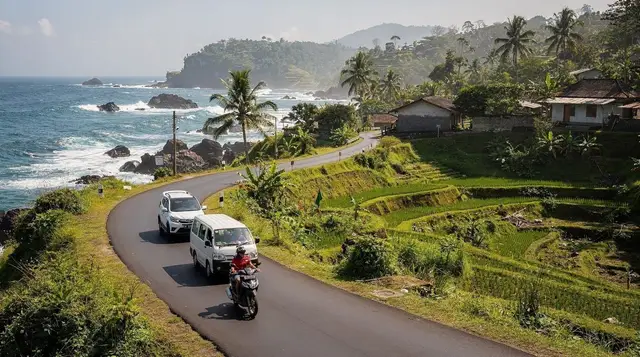
Lombok sits directly east of Bali across a narrow strait, but the cultural distance is considerably greater than the physical one. Where Bali is predominantly Hindu, Lombok’s population is majority Muslim, with the island’s indigenous Sasak culture forming a genuinely distinct identity from Balinese Hindu traditions — different architecture, different ceremonies, different everyday rhythms around mosques rather than temples. Visitors expecting a quieter, less crowded version of Bali often find the actual experience more culturally distinct than that framing suggests, which is exactly the appeal for travellers seeking something different rather than more of the same.
Tourism development on Lombok remains considerably more concentrated and less mature than Bali’s, outside a handful of areas — Senggigi’s older resort strip, Kuta Lombok’s surf-focused south coast, and the Gili Islands off the northwest coast, which function almost as their own separate destination in visitor perception despite technically belonging to Lombok. Away from these pockets, infrastructure is noticeably more basic: rougher roads, fewer amenities, and a slower overall pace of travel that rewards patience over efficiency.
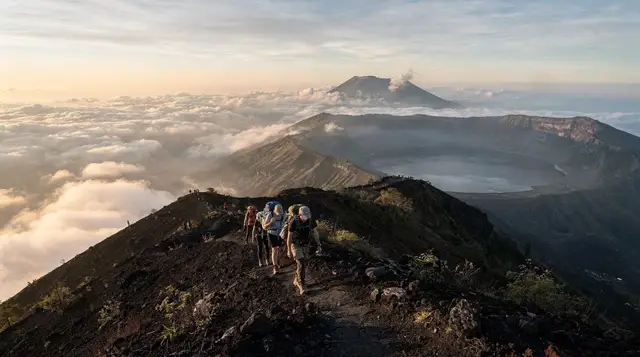
The island’s dominant natural landmark is Mount Rinjani, Indonesia’s second-highest volcano, whose multi-day trek to the crater rim and beyond ranks among the more serious hiking undertakings available anywhere in the country, distinct from Bali’s shorter sunrise volcano climbs. Combined with excellent surf breaks along the south coast and the Gili Islands’ snorkelling and diving, Lombok offers a genuinely varied set of reasons to visit beyond simply being “next to Bali.”
Lombok at a glance
| Where | Island directly east of Bali, across the Lombok Strait |
| Cost | Generally less expensive than Bali across accommodation and food, particularly outside the more developed tourist pockets |
| Time needed | Four to seven days for a meaningful visit covering more than one region of the island |
| Access | Ferry or fast boat from Bali (Padang Bai or Serangan), or a short flight into Lombok’s international airport |
| Best time | Dry season, roughly April to October; Rinjani trekking has its own seasonal access considerations worth checking specifically |
Sasak culture and everyday Lombok
The Sasak people are Lombok’s indigenous majority, and their culture is genuinely distinct from Balinese Hindu tradition in architecture, custom, and religious practice, centred on Islam rather than Hinduism. Traditional Sasak villages, with their distinctive thatched-roof houses and communal layouts, offer visitors a window into this culture that is entirely different from anything on the Bali mainland, and worth approaching with the same respectful curiosity you’d bring to Balinese temple visits, adjusted for a different religious and cultural context.
Mount Rinjani, briefly
Rinjani’s summit trek is a serious multi-day undertaking, involving a genuine crater lake, hot springs, and a summit push that ranks among the more demanding treks available in Indonesia — considerably more involved than any single-day Bali volcano climb. It deserves its own dedicated planning rather than a same-day decision, and is covered in full detail on the dedicated Rinjani and Senaru destination pages linked below.
South coast surfing and Kuta Lombok
Lombok’s south coast, centred on Kuta Lombok (not to be confused with Bali’s Kuta), has developed a genuine reputation among surfers for consistent, high-quality reef breaks with a fraction of the crowd found at equivalent Bali breaks. The area’s pink sand beaches, most notably Tangsi, add a further distinct draw beyond the surf itself.
West Lombok’s villages and hidden spots
Beyond the well-known south coast and Rinjani, West Lombok’s villages and countryside offer quieter, less-visited stops worth the extra time if you have it. A panoramic walking tour of Murpeji village in West Lombok covers exactly this kind of lesser-known area, while a broader full-day tour of South Lombok’s hidden paradise spots strings together several less-visited beaches and viewpoints along the island’s southern coastline.
Whale sharks and the wider marine life
For a genuinely different wildlife encounter beyond the Gili Islands’ reef snorkelling, some operators run trips further afield to spots known for whale shark sightings, combined with time on smaller nearby islands. The two-day whale shark and Kenawa Island adventure from Lombok is a notable option for travellers with the extra time and specific interest in this kind of marine wildlife experience, distinct from the standard Gili snorkelling most visitors default to.
Ferry crossing options, compared
Several routes connect Bali to Lombok, each with different trade-offs. Public ferries from Padang Bai are the least expensive but slowest option, running on a more variable schedule and often taking considerably longer than travellers expect once queuing and loading time is included. Faster boat services from Serangan or other harbours cut the crossing time significantly at a higher price point, while flying between Denpasar and Lombok’s airport is the fastest option overall, worth the modest extra cost if your itinerary is tight. Choosing between them comes down to budget, luggage, and how much of your trip you’re willing to spend in transit versus at your destination.
Traditional villages and craft traditions
Beyond Sasak architecture generally, several specific villages on Lombok maintain distinct craft traditions worth seeking out, from pottery to traditional weaving, each reflecting a slightly different aspect of Sasak material culture. These villages rarely appear on standard South Bali-style tour itineraries, and visiting typically requires either a specifically arranged tour or a willingness to explore more independently with a local driver, but the craft traditions on display offer a genuinely different cultural experience from anything found on the Bali mainland.
What isn’t worth the detour
Skip expecting South Bali-level infrastructure and English-language ease outside Lombok’s main tourist pockets — this can be a genuinely refreshing change for travellers seeking it deliberately, but a frustration for those unprepared for it. Also skip attempting to properly cover Rinjani, the south coast surf areas, and the Gili Islands all within a rushed three-or-four-day trip; each deserves real time, and cramming them together tends to shortchange all three.
A brief note on Lombok’s history and status
Lombok was historically its own separate sultanate before coming under Dutch colonial administration alongside the rest of the Dutch East Indies, a distinct political history from Bali’s own line of Hindu kingdoms. Today it forms part of West Nusa Tenggara province, administratively separate from Bali, which is part of why the island has developed its own distinct tourism identity and infrastructure timeline rather than simply being an extension of Bali’s development. Understanding this background helps explain why Lombok feels like visiting a genuinely different place rather than a Bali suburb, despite the short crossing between the two.
What it costs
Lombok is generally less expensive than Bali across accommodation, food, and many activities, particularly once you move beyond the more developed pockets like Senggigi and the Gili Islands. Transport between regions of the island, given rougher roads and greater distances in places, can take longer than the distance alone suggests, worth factoring into how much ground you realistically plan to cover.
When to go
Dry season, roughly April through October, is the more reliable window for most of Lombok’s activities, from surfing to general sightseeing. Mount Rinjani trekking specifically often has its own seasonal access considerations, including periods when the trek is closed for safety or environmental management reasons — check current status directly with a trekking operator before finalising travel dates if Rinjani is a priority.
Choosing a base for your Lombok time
Where you base yourself on Lombok shapes the whole trip considerably given the island’s size and variable road quality. Senggigi suits travellers wanting an established, if somewhat older-style, resort strip with easy onward Gili access; Kuta Lombok suits surfers and those drawn to the quieter south coast; and a Rinjani-focused trip generally means basing near Senaru or Sembalun on the volcano’s flanks for at least part of the stay. Few visitors comfortably cover all three areas well without a longer trip of a week or more.
Getting there and getting around
Lombok is reached from Bali via ferry or fast boat crossings from Padang Bai or Serangan, or by a short flight into Lombok’s own international airport, generally the faster option if time is limited. Once on the island, distances between regions can be substantial and roads more variable in quality than Bali’s main routes, making a private driver or organised transport a sensible choice for covering multiple areas within a single trip.
How Lombok fits into a longer trip
Lombok pairs naturally with the Gili Islands off its northwest coast, and with Mount Rinjani and Senaru for travellers prioritising the volcano trek. Use the Bali and Lombok, 2 weeks itinerary or the Bali and Gili Islands, 7 days itinerary to plan a combined trip, and read the Bali vs Lombok guide and Bali to Lombok ferry and flights guide before booking transport.
Surfers should also read the surfing in Lombok guide and consider Kuta Lombok and Senggigi as base options for different parts of the island.
Frequently asked questions about Lombok Island
Is Lombok safe to visit as an independent traveller?
Yes, it’s a well-established travel destination with no particular safety concerns beyond standard common-sense precautions, though infrastructure and English-language ease are more limited outside the main tourist areas.
How long does the ferry crossing from Bali take?
It varies by route and boat type, generally a meaningful chunk of a morning or afternoon rather than a quick hop; a flight is faster if time is genuinely limited.
Do I need to dress more conservatively in Lombok than in Bali?
Generally yes, particularly away from the main tourist beaches — Lombok’s Muslim-majority culture means more modest everyday dress is appreciated outside specifically tourist-oriented areas.
Is Mount Rinjani suitable for a first-time trekker?
It’s a serious multi-day trek requiring genuine fitness; it’s not the place to attempt your first ever multi-day hike without some prior hiking experience and careful preparation.
Can I visit the Gili Islands without going to mainland Lombok at all?
Yes, many visitors reach the Gilis directly by boat from Bali without spending significant time on Lombok’s mainland, though this means missing the island’s distinct Sasak culture and Rinjani entirely.
Is Lombok cheaper than Bali overall?
Generally yes, particularly outside the more developed pockets like the Gili Islands and Senggigi, though prices in those specific tourist areas can approach Bali’s levels.
Is a rental car or scooter a good idea on Lombok?
Scooter rental works reasonably well on the more established routes, but distances between regions can be significant and some roads are considerably rougher than Bali’s main routes; a private driver for longer cross-island journeys is often the more comfortable choice.
What’s the food like in Lombok compared to Bali?
Lombok’s cuisine shares similarities with broader Indonesian food but has its own distinct dishes, generally spicier on average than typical Balinese cooking, with a strong Sasak culinary identity worth seeking out beyond the more generic tourist-restaurant menus.
Are there direct flights to Lombok from outside Indonesia?
Some international connections exist, though many visitors still arrive via Bali first, either flying onward or taking a boat crossing, rather than flying directly into Lombok from their home country.