Bali to Lombok: Ferry, Fast Boat, or Flight?
What's the best way to get from Bali to Lombok?
A fast boat is the most common choice for tourists without a vehicle, offering a quicker crossing than the car ferry with hotel pickup included. A short domestic flight is the fastest option if time matters more than cost. The car ferry between Padang Bai and Lembar is the slowest but the only option if you're bringing your own vehicle across.
Lombok sits close enough to Bali that the crossing barely registers as an international-feeling journey, yet three genuinely different transport options exist for making it, each suited to a different kind of traveller. A car ferry connects Padang Bai on Bali’s east coast to Lembar on Lombok, built primarily for vehicles and cargo but usable by foot passengers too. Fast boats, run by several private operators, connect various ports on both islands directly, generally faster and more tourist-oriented. And a short domestic flight covers the same distance in the least time, at the highest cost.
None of these is universally “best” — the right choice depends on your budget, your schedule, and whether you’re bringing a vehicle. This guide compares all three honestly so you can pick based on what actually matters for your specific trip.
Bali to Lombok at a glance
| Option | Best for | Trade-off |
|---|---|---|
| Fast boat | Most tourists, especially heading to the Gilis en route | Open-water crossing; sea conditions vary |
| Car ferry (Padang Bai–Lembar) | Bringing a vehicle, or the most budget-conscious option | Slowest crossing of the three |
| Domestic flight | Time-pressed travellers | Fastest but priciest; still needs airport transfers on both ends |
Fast boat: the standard tourist choice
Fast boats are the most commonly used option for visitors without a vehicle, running from ports including Padang Bai and Serangan on Bali’s side to various points on Lombok and often routing via or near the Gili Islands, which makes them a natural choice if your itinerary includes both destinations. A direct route from Padang Bai, such as the Padang Bai to Gili Islands and Lombok fast ferry transfer, covers the crossing efficiently, often with hotel pickup included at either end, removing a layer of logistics from an already multi-step travel day.
The car ferry: slow, but the only option for vehicles
The car ferry between Padang Bai on Bali and Lembar on Lombok is the traditional, budget-conscious way to cross, running frequently throughout the day and accommodating both vehicles and foot passengers. It is considerably slower than a fast boat, and the crossing itself, plus the drive to and from each port, makes for a longer travel day overall. This remains the only realistic option if you’re bringing your own car or a rented vehicle across from Bali to Lombok rather than relying on transport once you arrive.
Flying: fastest, at a price premium
A short domestic flight between Bali and Lombok covers the distance in far less time than either boat option, which matters if your schedule is tight or you specifically want to minimise travel time over cost. It’s worth remembering that a flight doesn’t eliminate transfer time entirely — getting to and from each airport, plus standard check-in buffers, still adds a meaningful chunk to the total door-to-door journey, even if it’s shorter overall than a boat crossing.
Choosing based on your onward plans
If your Lombok visit is really about reaching the Gili Islands rather than Lombok’s mainland specifically, a fast boat routing via or near the Gilis, such as the Gili Islands or Lombok Bali fast ferry ticket, lets you decide your exact stop once booked rather than committing to a Lombok-mainland-only route and adding a separate leg later. If Mount Rinjani’s multi-day trek is your main draw, factor in that reaching the trailhead from either Lombok’s main port or airport still requires further overland transport, which is worth planning as its own leg regardless of how you crossed from Bali.
The return crossing: Lombok back to Bali
The reverse journey works the same way, with fast boats, the car ferry, and flights all running in both directions on similar schedules. If you’re basing yourself around Senggigi on Lombok’s west coast for part of your stay, a direct return route like the fast ferry ticket from Senggigi, Lombok, back to Bali avoids backtracking to a different port than the one convenient to your accommodation. Booking your return leg at the same time as your outbound journey, if your dates are fixed, can occasionally secure a better combined rate and removes one more thing to arrange while you’re mid-trip and focused on enjoying Lombok itself.
Booking in advance vs on the day
During quieter periods, fast boat and ferry tickets are often available to book the same day or even at the port itself, giving genuine flexibility if your plans are still developing. During peak season — July, August, and the Christmas/New Year window — popular departure times can sell out a few days ahead, so booking in advance during these windows is the safer approach rather than assuming a walk-up ticket will be available. Flights should generally be booked further ahead regardless of season, since domestic flight capacity on this short route is more limited than the frequent boat departures.
Bringing luggage, surfboards, or a motorbike across
Fast boats generally handle standard luggage without issue, though bulkier items like surfboards sometimes carry an additional fee or require advance notice to the operator so they can plan for the extra space. The car ferry is the only realistic option if you’re bringing a motorbike or vehicle across, since fast boats aren’t built for this kind of cargo. If you have oversized or unusual luggage, checking with your chosen operator before booking day avoids an awkward surprise at the port when you’re trying to board with gear they weren’t expecting.
What isn’t worth the detour
Skip booking the absolute cheapest, least-reviewed fast boat operator purely to save a small amount — as with the Gili Islands crossings, safety and reliability standards vary meaningfully between companies on this route, and it’s not the place to cut corners for a modest saving. Also avoid treating a flight as automatically the “easy” choice without accounting for the airport transfer time on both ends, which can erode much of the time advantage over a well-organised fast boat with hotel pickup included.
What it costs
The car ferry is generally the most affordable of the three options, fast boats sit in the middle, and flights command the highest price for the fastest journey time. None of these costs are large relative to a full trip budget, so the decision more often comes down to time and comfort priorities than a strict cost calculation — see the Bali budget guide for how this fits into a broader trip budget.
Seasonality and crossing conditions
Dry season, roughly April to October, generally offers calmer conditions for the fast boat crossing, while the wetter months from November to March bring a higher chance of rough seas and potential delays. The car ferry, being a larger, more stable vessel, is less affected by rough conditions than the smaller fast boats, which is worth factoring in if your travel dates fall in a less predictable weather window and reliability matters more to you than speed.
Getting to and from the ports and airports
Whichever option you choose, factor in the transfer time to reach your departure point — Padang Bai for the ferry and several fast boat routes, or the airport for a flight — since these aren’t always close to South Bali’s main tourist areas. A ticket combining transport with the crossing itself, like the Eka Jaya fast ferry transfer to the Gili Islands and Lombok, bundles hotel pickup into the booking, which simplifies this specific piece of planning considerably.
How this fits into a longer trip
This crossing sits at the centre of any Bali-Lombok combination trip — see Bali and Lombok, 2 weeks for a full itinerary built around both islands, or Bali and Gili Islands, 7 days if the Gilis specifically, rather than Lombok’s mainland, are your main draw. The Bali vs Lombok comparison is worth reading if you’re still deciding how much time to give each island, and Gili Islands from Bali covers the day-trip-versus-overnight decision once you’ve settled on your crossing method.
Frequently asked questions about Bali to Lombok
Is the fast boat or the car ferry better for tourists?
The fast boat is generally the better choice for tourists without a vehicle, offering a quicker crossing with hotel pickup commonly included, though the car ferry remains a valid, more budget-conscious alternative.
How long does the crossing take?
It varies by option — the car ferry is the slowest, fast boats are considerably quicker, and flying is fastest of all, though transfer time on both ends narrows that gap somewhat.
Do I need the car ferry if I’m not bringing a vehicle?
No — foot passengers can use the car ferry, but a fast boat is generally the more convenient and comparably priced option if you don’t have a vehicle to transport.
Is flying to Lombok worth the extra cost?
If time is your priority over cost, yes. For most tourist itineraries, a fast boat offers a reasonable balance of speed, cost, and convenience without the airport transfer overhead on both ends.
Can I combine a Lombok crossing with a Gili Islands stop?
Yes, many fast boat routes stop at or near the Gili Islands en route, which is worth checking for specifically if both destinations are on your itinerary.
Which port should I use for the fast boat from Bali?
Padang Bai and Serangan are among the most commonly used, though the right choice depends on your specific accommodation location and the operator you book with.
Is the crossing rough?
It can be, particularly on the open-water fast boat routes during the wetter months from November to March. The car ferry, being larger, is generally more stable in rougher conditions.
How do I get to Mount Rinjani after crossing to Lombok?
Reaching the Rinjani trailhead requires further overland transport from Lombok’s main port or airport, which is worth planning as a separate leg regardless of which crossing method you use to reach the island.
Can I bring a motorbike or scooter across from Bali to Lombok?
Only via the car ferry between Padang Bai and Lembar — fast boats aren’t equipped for vehicle transport, so the ferry is the only realistic option if you need to bring a bike or car across.
Should I book my Bali-Lombok crossing in advance?
During peak season (July, August, Christmas/New Year), yes — popular departure times can sell out a few days ahead. Outside peak season, same-day or a day or two ahead is often sufficient.
Is it worth booking the return crossing at the same time as the outbound one?
If your dates are fixed, it can occasionally secure a better combined rate and removes one more booking task from the middle of your trip, though it does reduce flexibility if your plans might shift.
Are surfboards allowed on the fast boat?
Generally yes, though bulkier items like surfboards can carry an additional fee or require advance notice so the operator can plan for the extra space — worth confirming with your chosen operator before your booking day.
Is the car ferry a reasonable choice even without a vehicle?
Yes, it accepts foot passengers and remains one of the more budget-conscious options, though it’s the slowest of the three crossing methods described here.
Transport passes & transfers on GetYourGuide
Verified deep-linked GetYourGuide tours. Book through these links and we earn a small commission at no cost to you.
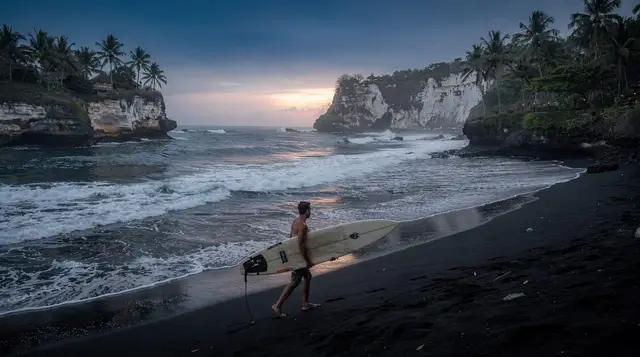
These are our own photographs of Bali, not the operator's pictures of this tour — open the tour page to see those.