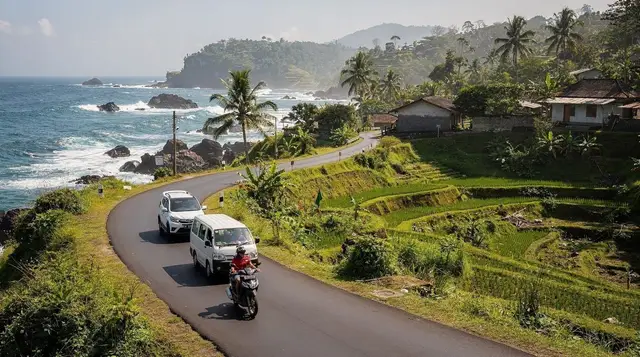
Two Weeks Across Bali and Lombok
Bali and Lombok sit close enough together that combining them feels obvious on a map, and far enough apart in character that doing so properly takes real time. Bali’s south coast and Ubud are dense with infrastructure, temples and restaurants; Lombok, a short ferry or flight away, is quieter, less developed, and built around a very different landscape — Mount Rinjani’s volcanic bulk, empty beaches on the south coast, and villages that haven’t been reshaped by tourism the way much of Bali has.
Two weeks is the minimum this combination really deserves. A shorter trip forces a rushed one-or-two-night stop on each side, which does neither island justice and adds more transit days proportionally than a longer trip does. This itinerary splits the fortnight roughly in half: a week across South Bali, Ubud and East Bali, then a crossing to Lombok for its south coast and a slower interior stretch, with the option to detour through the Gili Islands on the way.
The honest trade-off is that two weeks still isn’t enough to do everything on either island in depth. This itinerary picks a deliberately narrower slice of each — it skips North Bali entirely and doesn’t attempt Mount Rinjani’s multi-day trek — on the basis that seeing less, properly, beats seeing more, badly.
The two weeks at a glance
| Islands | Bali (South Bali, Ubud, East Bali) and Lombok (south coast, interior) |
| Crossing | Fast boat between Bali and Lombok, or via the Gili Islands |
| Pace | One week on each island, roughly, with a flexible day either side for the crossing |
| Access | Flights into and out of Bali; fast boats or a short domestic flight to Lombok |
| Best time | Dry season, April to October, for calmer boat crossings and better surf and dive conditions on both islands |
Days one to four: South Bali and Ubud
Start in South Bali for two or three days to adjust to the time zone and heat, then move up to Ubud for a similar stretch. This isn’t the place to rush — the point of a two-week trip is that you don’t need to see Ubud’s rice terraces and temples in a single frantic day. Use Ubud as a base for a slower look at the town itself, plus one day trip into the surrounding countryside if a specific site interests you.
Keep South Bali simple: a couple of nights near the coast to recover from travel, without trying to cram in every beach club and viewpoint before you’ve even adjusted to being on the island.
Days five to seven: East Bali before the crossing
Spend the middle stretch of the Bali week in East Bali, working through Besakih and the temple sites before making your way toward Amed’s coast, which sits conveniently on the route toward the eastern crossing points to Lombok. A guided tour once you’ve reached Lombok’s south coast is worth booking ahead if a specific hidden beach or viewpoint has caught your eye, since some of the better spots are hard to find independently.
This sequencing — Bali finishing in the east, rather than looping back to the south before crossing — cuts down on backtracking considerably compared with treating East Bali as a side trip from South Bali.
Day eight: the crossing to Lombok
Cross from Bali to Lombok by fast boat, either directly or via a stop on the Gili Islands if you want to build in a night there. A direct fast ferry transfer toward the Gili Islands and Lombok is the standard way to make the crossing without booking a domestic flight, and it’s worth an early departure to make the most of the arrival day on the other side.
Build in some slack around this day specifically — sea conditions occasionally delay crossings, and a two-week itinerary with a fixed onward flight has less room to absorb a delayed boat than a more open-ended trip would.
Days nine to eleven: Lombok’s south coast
Lombok’s south coast is the island’s answer to Bali’s better beaches, without anything like the same crowds or development. Base yourself around Kuta Lombok — a different, much smaller town from its Bali namesake — and use it to reach the string of bays and beaches along the coast, several of which require a short hike or a local driver to find.
For a broader sense of how the south coast compares beach by beach, it’s worth reading best beaches in Bali first for context on what South Bali offers by comparison, since the two coastlines suit different priorities despite sitting a short crossing apart. An organised walking tour through a west Lombok village is a good way to add cultural context to what would otherwise be a purely beach-focused stretch.
Days twelve to fourteen: interior and departure
Spend the final stretch either exploring Lombok’s interior — waterfalls and rice terraces around the island’s centre, well away from the coast — or returning toward Senggigi for an easier final base near the airport or the ferry terminal back to Bali. Keep the very last day light regardless of which you choose, since Lombok’s onward transport options are less frequent than Bali’s, and missing a connection here costs more time to recover from.
If waterfalls and rice terraces have already featured heavily on the Bali side of the trip, an alternative for these final days is simply slowing down entirely — a stretch of unstructured time near Senggigi or Kuta Lombok, with no fixed itinerary at all, is a reasonable way to close out two weeks that have otherwise moved fairly constantly between regions and islands.
Splitting the fortnight differently
| If you care most about | Spend more time in | Spend less time in |
|---|---|---|
| Temples and culture | East Bali, Ubud | Lombok’s south coast |
| Surf and beaches | Lombok’s south coast, Bali’s Bukit Peninsula | East Bali’s temple loop |
| Diving and snorkelling | Amed, the Gili Islands | Ubud |
| A quieter, less developed trip | Lombok throughout | South Bali |
There’s no single correct split of fourteen days between the two islands — it depends heavily on what you actually want from the trip. The version in this itinerary leans toward a balanced first-timer’s introduction to both islands; travellers with a stronger existing interest in surf, diving or culture specifically should shift days accordingly rather than following the split rigidly.
Practical notes for travelling between two islands
Pack lighter than you might for a single-island Bali trip. Moving between South Bali, Ubud, East Bali and then across to Lombok means more packing and unpacking than a one-base trip, and a soft bag is considerably easier to manage through boat transfers than a hard suitcase. Keep photocopies or photos of your passport and any onward tickets accessible separately from the originals, since the crossing between islands is one more point where documents can go missing.
Currency is the same Indonesian rupiah on both islands, so there’s no need to change money again after crossing, but ATM access is noticeably sparser on Lombok outside Kuta Lombok and Senggigi, so withdraw what you need before or shortly after arriving rather than assuming machines will be nearby wherever you end up.
What isn’t worth the detour
Skip trying to fit Mount Rinjani’s summit trek into this itinerary — it’s a genuinely serious multi-day commitment on its own, and squeezing it into a two-island trip does justice to neither the trek nor the rest of the trip. Also skip treating the Gili Islands as a mandatory stop if beach parties aren’t your priority; they’re a worthwhile detour but not an essential one, and Lombok’s own south coast offers a quieter, comparably beautiful alternative without the added crossing.
Budget for two weeks
Lombok runs noticeably cheaper than Bali for accommodation and food, which helps balance a trip that otherwise front-loads costs in the more developed South Bali and Ubud legs. The fast boat crossings between islands, and any detour through the Gili Islands, are a real recurring transport cost worth budgeting separately from daily spending. Two weeks of a mid-range private driver or a mix of rental scooters and organised day tours is the most flexible way to manage transport across both islands without committing to a single fixed cost model for the whole trip.
When to go
The dry season, April to October, suits both islands well: calmer boat crossings, better surf on Lombok’s south coast, and clearer skies for Rinjani views from a distance even if you’re not trekking it. Avoid scheduling the crossing itself around days with known rough sea conditions if you have any flexibility, since delayed boats have a bigger knock-on effect on a fixed two-week schedule than on a more open trip.
Getting there and around
Fast boats are the standard way to cross between Bali and Lombok, with the Gili Islands often served as a stop along several routes. Within Bali, a private driver or rental scooter covers South Bali, Ubud and East Bali comfortably; within Lombok, distances are similar in scale but the road network is less developed, so a private driver is the easier choice for most visitors, especially around the south coast’s less obvious beach access roads.
How this fits into a longer trip
If two weeks still feels rushed once you’re there, this itinerary can be adapted from the shorter Bali and Gili Islands, 7 days plan, which covers similar ground on the Bali side with a lighter Gili-focused crossing instead of the full push into Lombok. For the Bali portion specifically, Bali 10 days and East Bali, 4 days both cover pieces of what this itinerary compresses into its first week. Before booking the crossing, read Bali to Lombok ferry and flights and Bali vs Lombok for a clearer sense of what changes once you’re on the other side.
Frequently asked questions about Two Weeks Across Bali and Lombok
Is two weeks really necessary, or could I do this in ten days?
Ten days is workable if you’re willing to spend less time in Ubud or East Bali specifically, but it starts to feel rushed on both islands rather than relaxed on either. Two weeks is the more comfortable minimum.
Do I need a visa or entry process separately for Lombok?
No — Lombok is part of Indonesia, so the same visa and entry rules that apply to Bali cover the whole trip. There’s no separate border crossing beyond the boat or flight itself.
Is Lombok much less developed than Bali?
In most areas, yes, noticeably. Kuta Lombok and Senggigi have decent tourist infrastructure, but the island as a whole has far less of the density found in South Bali or Ubud.
Should I fly or take the boat to Lombok?
The fast boat is more common and often more convenient given how it can route via the Gili Islands, but a short domestic flight is faster if your schedule is tight and you’d rather skip the crossing.
Is it safe to rent a scooter on Lombok?
It’s broadly similar to Bali in terms of road conditions, though some stretches on the south coast are rougher. An international driving permit and appropriate insurance matter on both islands.
Can I add the Gili Islands without extending the trip?
Yes, most crossings between Bali and Lombok can route through the Gilis with a short stopover, though staying a night or two there instead of just passing through will add time you’d need to take from elsewhere in the itinerary.
What’s the biggest mistake people make planning this trip?
Trying to see too much of both islands rather than accepting a narrower, deeper itinerary. Two weeks sounds like a lot until it’s split across two islands with a crossing in between.
Is Lombok’s south coast good for beginner surfers?
Some spots are, and beginner lessons are widely available around Kuta Lombok specifically, but several of the more scenic bays further along the coast have stronger breaks better suited to experienced surfers.
How much of this trip needs to be booked in advance?
Accommodation in peak months is worth booking ahead on both islands, and any fast boat crossing during busy periods too. Day tours and activities within each region can generally be arranged a day or two ahead once you’re there.
Should I bring a change of currency for emergencies?
Carrying a reasonable amount of rupiah in cash is more useful than a second currency — Indonesia operates almost entirely in rupiah outside the largest hotels, and foreign cash is hard to use directly even in tourist areas.
tours.14 days
Verified deep-linked GetYourGuide tours. Book through these links and we earn a small commission at no cost to you.
These are our own photographs of Bali, not the operator's pictures of this tour — open the tour page to see those.