Bali vs Lombok: How the Two Islands Actually Compare
Should I visit Bali or Lombok, or both?
They're different enough to justify combining if time allows. Bali has denser tourism infrastructure, more culture and dining variety, and better-developed roads. Lombok is quieter, less developed, majority Muslim rather than Hindu, and home to Mount Rinjani and the Gili Islands. A short boat crossing separates them, which makes a combined trip genuinely practical rather than an either-or decision for most itineraries longer than a week.
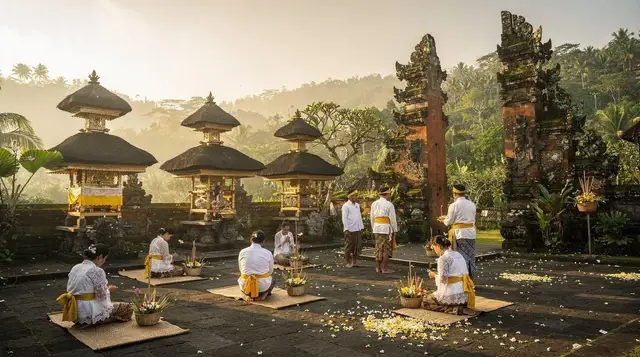
Bali and Lombok sit close enough together that a fast boat covers the distance in a matter of hours, yet they represent two genuinely different versions of Indonesian island travel. Bali is Hindu, densely developed for tourism, and has decades of infrastructure — roads, restaurants, a full range of accommodation — built specifically around international visitors. Lombok is majority Muslim, considerably less built up outside its established pockets, and still has large stretches that feel unpolished by tourism in a way almost nowhere on Bali does anymore.
Neither island is a lesser version of the other; they’re simply at different points in their tourism development, with different cultural identities layered underneath. Comparing them purely on which has the better beaches or better food misses the point somewhat, since the difference that matters most for planning is how developed each area is for tourism, not which island wins on any single category.
Bali’s advantage is convenience, variety, and infrastructure that just works. That translates into less planning friction day to day — booking a driver, finding a good meal at short notice, getting a scooter fixed — which matters more to some travellers than it does to others. Lombok’s advantage is space, quiet, and landscapes — Mount Rinjani chief among them — that feel more raw than anything comparable on Bali today.
For travellers who can spare the time, combining both rather than picking one is often the better answer, and this guide is written with that possibility in mind as much as a straight either-or comparison. Even a short Lombok add-on to an otherwise Bali-focused trip tends to leave a strong impression, since the contrast between the two islands is sharp enough to notice within a day or two of arriving.
Bali vs Lombok at a glance
| Bali | Lombok | |
|---|---|---|
| Religion and culture | Hindu-majority, distinct temple culture | Muslim-majority, different customs and pace |
| Development | Dense tourism infrastructure island-wide | Developed in pockets (Senggigi, Kuta Lombok), quieter elsewhere |
| Signature landscapes | Rice terraces, volcanoes, beaches | Mount Rinjani, Gili Islands, less-visited beaches |
| Roads and transport | Generally better maintained, more Grab/Gojek coverage | Rougher in places, less ride-hailing coverage outside main towns |
| Best for | First-time visitors, variety, easy logistics | Travellers wanting more space and a quieter, less commercial feel |
What actually differs day to day
The most immediate difference for a visitor moving between the two is the pace and density of tourism infrastructure. Bali’s well-trodden areas have Grab and Gojek working reliably, an enormous range of restaurants and cafés, and roads that, while often congested, are generally well paved.
Lombok has genuine tourism hubs — Senggigi, Kuta Lombok, the areas around Mount Rinjani’s trailheads — but step outside them and the island feels noticeably quieter and less built for tourists, in both a good and occasionally inconvenient way. That trade-off is exactly what draws a certain kind of traveller to Lombok in the first place — the same relative lack of polish that can be inconvenient for logistics is also what preserves a sense of space and quiet that’s increasingly hard to find on Bali’s busier stretches.
Ride-hailing apps have far less coverage on Lombok outside the main towns, so private drivers and pre-arranged transport matter more there than they typically do on Bali. Booking a driver a day ahead, rather than expecting to hail one on the spot, is the more reliable approach almost everywhere on Lombok outside its busiest tourist hubs.
Cultural differences worth understanding
Bali’s Hindu identity shapes everything from daily offerings on the street to the temple calendar that structures much of island life. Lombok, being majority Muslim, has a different rhythm entirely — mosque calls to prayer rather than gamelan and incense, different dress norms in more conservative areas, and a distinct Sasak cultural identity (Lombok’s indigenous ethnic group) that’s separate from both Balinese Hindu and broader Indonesian Muslim culture.
Visitors moving between the two islands notice the shift quickly, and it’s worth approaching Lombok with the same respect for local customs and dress that Bali’s temple culture demands, adjusted for what’s appropriate in a Muslim-majority setting instead. Neither culture is more or less welcoming to visitors, but they call for a slightly different kind of attentiveness, and travellers who’ve spent time getting used to Bali’s Hindu customs shouldn’t assume the same specific etiquette transfers directly across the crossing.
Landscapes and signature experiences
Bali’s landscape variety is genuinely broad within a relatively compact island — rice terraces, volcanoes, beaches on both coasts, and a wet, green interior around Ubud. Lombok’s headline landscape feature is Mount Rinjani, Indonesia’s second-highest volcano, whose multi-day trek is a serious draw for hikers well beyond what Bali’s Batur or Agung treks offer in scale and difficulty.
South Lombok’s beaches, less developed than Bali’s equivalents, include striking stretches like Kuta Lombok’s Tanjung Aan, and a full-day tour like the South Lombok hidden paradise full-day tour covers several of the island’s less-visited coastal spots in one trip. The relative lack of crowds at even well-known Lombok beaches is one of the more consistent surprises for visitors arriving fresh from Bali’s busier south coast.
Food and daily life
Bali’s food scene spans everything from warungs serving nasi campur to destination fine dining in Seminyak, reflecting decades of international tourism investment. That range gives visitors an easy way to eat well on almost any budget, on almost any night, without much advance planning required.
Lombok’s food culture centres more on Sasak specialities like ayam taliwang (spiced grilled chicken) and plecing kangkung, and while its restaurant scene has grown considerably around Senggigi and Kuta Lombok, it doesn’t yet match Bali’s sheer range and polish outside those specific pockets. Alcohol is more restricted in parts of Lombok given its Muslim-majority population, though it remains available in tourist areas and at most hotels and restaurants catering to visitors — a noticeably different backdrop from Bali’s more visibly alcohol-forward beach-club culture. This is worth knowing ahead of time rather than discovering it mid-trip, particularly for visitors used to Bali’s more permissive, drink-forward tourist areas.
Surf and diving comparison
Both islands offer strong surf and diving, but with different characters. Bali’s west coast breaks (Kuta, Canggu, Uluwatu) are more established and easier to access, with a mature surf-school industry built around them.
Lombok’s surf scene, particularly around Kuta Lombok and further south, is less crowded and increasingly well regarded among experienced surfers looking for quieter line-ups than Bali’s busier spots now offer. Access to some of the better breaks still requires more effort — a boat trip or a longer drive down rougher roads — which naturally filters out some of the crowding that busier, easier-to-reach Bali breaks now see.
Diving around the Gili Islands and Lombok’s coast rivals Bali’s own strong diving reputation, with generally clearer water and a healthy reef system that draws a dedicated following of its own separate from the crowds visiting for Rinjani or the beaches. Turtles are a particularly reliable sighting around the Gilis, adding another reason divers and snorkellers build a Lombok-side detour into an otherwise Bali-centred trip.
What isn’t worth the detour
Don’t attempt Mount Rinjani without proper preparation, gear, and a licensed guide — it’s a genuinely demanding multi-day trek at altitude, not a spontaneous add-on to a beach holiday, and every year brings reports of underprepared trekkers running into serious trouble. It’s also not worth rushing a Lombok visit into one single, hurried day trip from Bali if the goal is genuinely to experience the island’s quieter character — a day trip mostly shows you transit time and a handful of sights, not the slower pace that’s Lombok’s actual appeal. And don’t expect Lombok’s nightlife to rival Bali’s south coast; if beach clubs and a lively evening scene are the priority, Bali remains the stronger choice by a wide margin.
Budget comparison
Lombok is generally cheaper than Bali across accommodation, food, and local transport, particularly outside its most developed tourist pockets, reflecting its earlier stage of tourism development. A comparable mid-range villa or guesthouse tends to run noticeably less on Lombok than an equivalent property in Bali’s busiest areas, and everyday costs like a meal at a local warung follow the same pattern.
Bali’s wider range means you can find comparably priced budget options, but Lombok’s cost advantage is real once you’re outside Senggigi or Kuta Lombok’s pricier stretches. If keeping costs down over a longer combined trip matters, weighting more nights toward Lombok, and treating Bali as the shorter, pricier leg, is a practical way to stretch a fixed budget further without sacrificing much in the way of experience. Transport between the two islands — fast boats, or flights via Lombok’s own international airport — adds a fixed cost to any combined trip, worth budgeting for separately from either island’s day-to-day expenses.
Getting between Bali and Lombok
Fast boats connect Bali’s ports (commonly Padang Bai or Serangan) to Lombok in a few hours, a well-established and comfortable route for most travellers; an Eka Jaya fast ferry transfer to the Gili Islands is a common way to combine the crossing with a Gili stop before continuing to mainland Lombok.
Flights are also an option via Lombok International Airport, useful if the boat schedule doesn’t fit your itinerary or if rougher sea conditions in the wet season make a flight the more comfortable choice. Comparing both options against your specific dates before booking is worth the extra few minutes, since price and convenience can shift noticeably by season. For more detail on the crossing itself, the Bali to Lombok ferry and flights guide covers routes, timing, and what to expect on the journey.
Seasonality across both islands
Bali and Lombok share broadly the same dry-season and wet-season pattern, roughly April to October dry and November to March wet, since they sit close together geographically. Mount Rinjani’s trek is typically closed during the wettest months for safety reasons, so anyone planning that specific trek needs to check the current season’s opening dates rather than assuming year-round access.
That closure window is worth checking well before booking flights, since a trip built around the trek can be seriously disrupted by arriving during a closed period. The Gili Islands and Lombok’s south coast beaches are workable in both seasons, though the dry months offer calmer boat crossings and more reliable underwater visibility for snorkelling and diving. For a deeper look at the trek’s specifics and current seasonal access, the Mount Rinjani trek guide and the broader best time to visit Bali guide, which covers the shared regional climate pattern, are both useful companions to this comparison.
How this fits into a longer trip
For travellers with ten days or more, combining Bali and Lombok is a genuinely strong itinerary structure — a few days on Bali’s south coast or in Ubud, a boat crossing, then time on Lombok or a Gili Islands stop before returning. A Bali and Lombok 2 weeks itinerary is built around exactly this combination, and a Bali and Gili Islands 7 days itinerary offers a shorter version for travellers with less time.
If a wildlife-focused stop appeals, a 2-day whale shark and Kenawa Island adventure from Lombok pairs well with the Rinjani or Gili side of a Lombok stay. For first-timers still deciding how much of the wider region to attempt on one trip, the how many days in Bali guide is a useful starting point before layering a Lombok extension on top of a core Bali itinerary. For the specific comparison between the Gili Islands themselves, the Gili Trawangan vs Air vs Meno guide is worth reading alongside this one.
Frequently asked questions about Bali vs Lombok
Is Lombok safe to visit?
Yes, it’s a well-established travel destination with no unusual safety concerns beyond the ordinary caution any traveller should apply — being sensible on mountain treks, respecting local customs, and standard road safety awareness given rougher roads in places.
How long does the boat from Bali to Lombok take?
A few hours by fast boat from Bali’s main crossing points, making it entirely practical as part of a longer trip rather than a major logistical undertaking.
Is Mount Rinjani suitable for a first-time trekker?
It’s a serious multi-day trek at altitude and isn’t recommended as a first mountain trek for someone with no hiking experience. Reasonable fitness, proper gear, and a licensed guide are essential regardless of experience level.
Are the Gili Islands part of Bali or Lombok?
Administratively, the Gili Islands belong to Lombok, even though they’re often marketed alongside Bali due to proximity and shared tourism routes.
Is Lombok more budget-friendly than Bali?
Generally yes, particularly outside its most developed pockets like Senggigi and Kuta Lombok, reflecting the island’s earlier stage of tourism development compared with Bali.
Do I need different clothing for Lombok than for Bali?
Lombok’s Muslim-majority culture calls for slightly more modest everyday dress in local towns and villages than Bali’s beach areas typically require, though beach and resort areas follow similar norms to comparable spots on Bali.
Is it worth visiting Lombok if I’ve already done a lot of the “typical” Bali sights?
Yes — Lombok’s quieter pace, Rinjani, and less-developed beaches offer a genuinely different experience rather than more of the same, which makes it a strong choice for repeat visitors to the region.
Can I do Lombok as a day trip from Bali?
Technically yes given the boat times, but it makes for a very long day with little time to actually experience anything beyond transit. A one or two-night minimum gives a far better sense of what Lombok actually offers.
Popular Bali experiences on GetYourGuide
Verified deep-linked GetYourGuide tours. Book through these links and we earn a small commission at no cost to you.
These are our own photographs of Bali, not the operator's pictures of this tour — open the tour page to see those.