Tukad Cepung Waterfall: The Cave-Like Canyon Falls
What makes Tukad Cepung different from other Bali waterfalls?
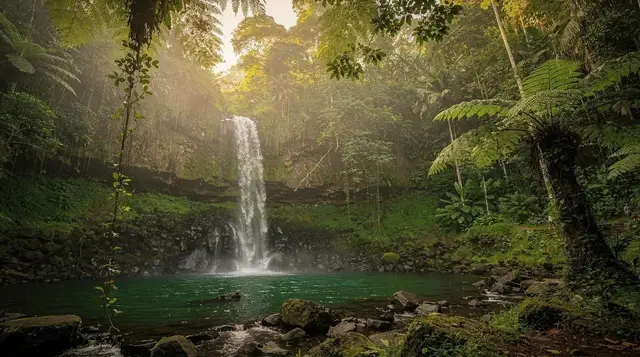
It drops into a narrow, enclosed rock canyon rather than an open jungle valley, which creates a cave-like setting where sunlight streams down through a gap in the rock above the falls at certain times of day. That lighting effect, rather than the waterfall's size, is the main reason it's become one of the most photographed waterfalls on the island.
Most of Bali’s well-known waterfalls drop through open jungle, framed by greenery and sky. Tukad Cepung does something different: it falls into a narrow, enclosed rock canyon, walled in on both sides, which gives the setting a cave-like feel unlike almost anywhere else on the island. At certain times of day, sunlight breaks through a gap in the rock formation above the falls and streams down in visible beams through the mist thrown up by the water, an effect that’s become the single most reproduced photo of any Bali waterfall.
That specific lighting effect is also the main reason to time a visit carefully, since it doesn’t happen all day. Arrive at the wrong hour and you’ll still see a genuinely striking canyon waterfall, but you’ll miss the visible light-beam effect that draws most visitors here in the first place. The window when the sun angles correctly into the canyon shifts through the day and with the season, which is worth understanding before you make the drive out.
The approach to the waterfall also differs from most others on the island — rather than a jungle path, you walk along a narrow riverbed within the canyon itself, wading through shallow water for stretches, with the rock walls closing in as you near the falls. It’s a shorter, less physically demanding walk than somewhere like Sekumpul, but the canyon setting means conditions can change quickly if rain falls upstream, and it’s worth knowing that before you commit to the walk.
Tukad Cepung at a glance
| Where | East Bali, inland from the Bangli and Kintamani area |
| Cost | A modest entrance fee at the site |
| Time needed | An hour or so for the walk in, viewing, and walk back |
| Access | Scooter or private driver; a moderate drive from Ubud, further from South Bali |
| Best time | Late morning into early afternoon for the light-beam effect; check current timing locally, as it shifts seasonally |
The canyon walk
From the car park, a path descends toward the riverbed, and from there the route follows the shallow river itself into the canyon, with rock walls rising on either side as you get closer to the falls. Expect wet feet — this isn’t an optional detail, since much of the approach genuinely runs through the water rather than alongside it. The walk is short compared to a trek like Sekumpul, but the footing is uneven and slippery in places, so it demands more care than its brevity might suggest.
As you near the waterfall itself, the canyon narrows further and the sound of falling water builds well before you can see it, adding to the sense of arriving somewhere genuinely enclosed and separate from the open landscape outside.
Why the canyon setting is genuinely unusual
Bali’s geology produces plenty of dramatic waterfalls, but the specific combination found at Tukad Cepung — a narrow rock canyon with a partially enclosed roof allowing a controlled shaft of light to enter — is genuinely rare even by the island’s standards. Most of Bali’s waterfalls sit in open jungle valleys where light floods in evenly throughout the day; Tukad Cepung’s canyon walls block most ambient light, which is precisely what makes the beam effect visible and photogenic when the sun does align correctly, rather than being washed out by surrounding brightness the way it would be at an open-air waterfall.
This also means the atmosphere inside the canyon differs noticeably from anywhere else on this list — cooler, damper, and with a genuine echo to the sound of the falling water bouncing off the enclosed rock walls. Even visitors who arrive outside the optimal lighting window often come away describing the setting itself, independent of the photo, as one of the more memorable stops of an East Bali day.
Photography tips for the light-beam shot
Getting the widely shared light-beam photo takes more than just showing up at roughly the right time. A tripod helps considerably given the low light levels inside the canyon even during the beam window, and a wide-angle lens captures more of the canyon’s scale than a standard zoom. Patience matters too — the beam’s intensity and position shift as the sun moves, so waiting even ten or fifteen minutes can meaningfully change the shot compared to the first angle you see on arrival. Because the spot draws a steady stream of visitors during the peak window, be prepared to wait your turn for an unobstructed angle, or to work around other people in the frame with a bit of creative composition.
Combining Tukad Cepung with East Bali’s temples
Tukad Cepung’s location in the island’s east makes it a natural stop alongside some of Bali’s most significant temples. A combined tour of Besakih temple, Tukad Cepung waterfall, and Penglipuran village strings together the island’s largest temple complex, this distinctive canyon waterfall, and one of Bali’s best-preserved traditional villages in a single day, which makes efficient use of the drive out to East Bali.
For a route weighted more toward East Bali’s water palace, a tour combining Tirta Gangga water palace with Tukad Cepung waterfall covers a different, equally worthwhile combination.
Pairing with Sidemen’s valley
If a quieter, slower version of East Bali appeals more than the busier temple circuit, a guided tour through Sidemen’s valley combined with a Tukad Cepung waterfall visit pairs the canyon falls with one of East Bali’s most scenic, least crowded rural areas, offering a genuinely different pace from the temple-heavy itineraries that dominate most East Bali day trips.
Snorkelling and the Blue Lagoon, paired differently
For visitors approaching East Bali from the Padangbai or Candidasa direction rather than from Ubud, Tukad Cepung is sometimes combined with a very different kind of stop: snorkelling at the Blue Lagoon on the nearby coast. A combined tour of Blue Lagoon snorkelling and the Tukad Cepung waterfall mixes a coastal marine activity with the canyon waterfall in a single day, which works well logistically since both sit reasonably close together relative to East Bali’s wider geography, even though they offer genuinely different kinds of scenery and activity.
This pairing is worth considering specifically if you’re staying somewhere along the east coast rather than in Ubud, since it avoids the longer inland detour that a Besakih- or Sidemen-focused day would require.
What isn’t worth the detour
Skip visiting Tukad Cepung specifically chasing the light-beam photo without first confirming current timing — arriving at the wrong hour for that effect, particularly outside the window when the sun angles correctly into the canyon, means missing the exact thing that draws most visitors, leaving you with a nice but less remarkable waterfall photo instead. It’s also not worth attempting the walk in during or immediately after heavy rain, given the genuine flash flood risk in an enclosed canyon setting; if conditions look uncertain, ask locally before proceeding.
What to bring
Water shoes or sandals you’re comfortable getting wet are the single most useful item for this specific waterfall, given how much of the approach runs directly through the riverbed. A dry bag for your phone or camera is worth carrying too, both for the water crossing itself and for the mist thrown up near the falls, which reaches further than it might look like it would from a distance. A change of clothes left in the car is a small but genuinely useful piece of planning, since you will very likely finish the visit with wet shoes and lower legs regardless of how careful you are.
Beyond the waterfall-specific items, standard East Bali day-trip essentials apply: sun protection for the drive and any temple stops, cash for entrance fees and informal donations, and enough water to stay comfortable across what’s often a full day of stops across the region’s winding roads.
What it costs
A modest entrance fee applies at the site, covering path maintenance and the basic facilities at the car park. Beyond that, the main cost is transport, given the drive from Ubud or South Bali into East Bali’s interior. If you’re combining the visit with temple stops or Sidemen’s valley as part of an organised tour, pricing covers the full day’s transport and often a guide rather than the waterfall alone.
Crowd patterns through the day
Tukad Cepung’s crowd levels track the light-beam window fairly closely — the canyon is at its busiest during the hours locals and guides know the effect is strongest, with a noticeable thinning both earlier and later in the day. If your priority is a quieter canyon experience over the specific photo, visiting outside that peak window trades the beam effect for a calmer, less crowded walk through the same striking setting. Some photographers deliberately choose this trade-off, preferring to experience the canyon’s acoustics and atmosphere without competing for a clear sightline during the busiest stretch.
When to go
The specific hour that produces the light-beam effect shifts through the day and across the seasons, so it’s worth checking current local guidance rather than relying on a fixed recommendation — generally, a late morning to early afternoon window tends to work, but confirming with a driver or recent visitor reports before you go is the more reliable approach. The dry season, roughly April to October, is the safer choice for both trail conditions and flash-flood risk, given the canyon’s exposure to sudden water level changes after rain.
Getting there and getting around
Tukad Cepung sits inland in East Bali, reached by a moderate drive from Ubud and a longer one from South Bali, along roads that wind through the island’s central highlands. A scooter is a viable option for confident riders, though a private driver removes the stress of navigating unfamiliar roads, particularly if you’re combining the waterfall with other East Bali stops on the same day. Once at the site, the approach to the falls is on foot, wading through the riverbed within the canyon.
How this fits into a longer trip
Tukad Cepung fits naturally into a broader East Bali day trip, easily combined with Besakih, Sidemen, or Tirta Gangga depending on which direction you approach from. The East Bali, 4 days itinerary covers how to sequence these stops without excessive backtracking across the region’s winding roads.
For comparison with Bali’s other well-known waterfalls, the best waterfalls in Bali guide and the Sekumpul waterfall guide cover the north Bali alternative. If temples are the main draw for your East Bali day, the Besakih Mother Temple guide and the Lempuyang Gates of Heaven guide are worth reading alongside this one.
Frequently asked questions about Tukad Cepung Waterfall
What time of day does the light-beam effect actually happen at Tukad Cepung?
It shifts with the season and the sun’s angle into the canyon, generally falling somewhere in the late morning to early afternoon window, but it’s worth checking current local guidance or recent visitor reports rather than assuming a fixed hour, since this can vary meaningfully.
Do I need to get wet to see the waterfall?
Yes, the approach walks directly through the riverbed within the canyon for a genuine stretch, so wet feet are essentially unavoidable. Water shoes or sandals you don’t mind getting soaked are far more practical than trainers.
Is Tukad Cepung dangerous during the wet season?
The canyon setting carries a real flash flood risk if heavy rain falls upstream, even when it appears dry at the waterfall itself. Heed any local warnings about current conditions, and avoid the walk if rain is falling or has recently fallen heavily in the area.
How does Tukad Cepung compare to Sekumpul?
They’re quite different — Tukad Cepung is a shorter, easier walk through a narrow canyon known for its distinctive light effect, while Sekumpul is a longer, more demanding trek to a cluster of much larger falls in an open jungle valley. Many visitors do both on separate days if time allows.
Can I combine Tukad Cepung with Besakih temple in the same day?
Yes, this is a common and practical pairing given both sit in East Bali, and several organised tours combine the two along with other regional stops like Penglipuran village.
Is a guide necessary at Tukad Cepung?
Not strictly, since the path is relatively short and easy to follow, though local knowledge of the current best timing for the light-beam effect and of any changing river conditions adds real value, particularly if photography is a priority.
How crowded does it get?
It draws a steady stream of visitors, particularly around the window when the light effect is strongest, so expect some waiting for a clear photo without other people in frame during that specific period. Outside that window, it’s noticeably quieter.
Waterfall & hiking tours on GetYourGuide
Verified deep-linked GetYourGuide tours. Book through these links and we earn a small commission at no cost to you.
These are our own photographs of Bali, not the operator's pictures of this tour — open the tour page to see those.