Tabanan is the regency covering much of central-west Bali’s rice-growing heartland, and it is easy to pass through it without really seeing it — most visitors know the name only because Jatiluwih’s famous terraces sit administratively within it, and drive straight there without stopping anywhere else along the way. That is a reasonable choice on a tight schedule, but it skips over a considerably larger and quieter landscape than the one postcard stop suggests.
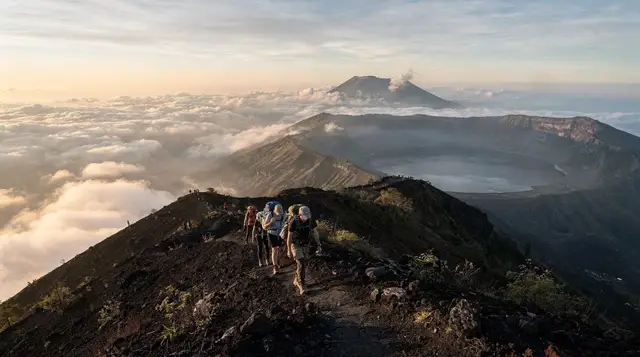
The regency’s geography centres on Mount Batukaru, a forested volcanic peak that, unlike Batur or Agung, sees relatively few visitors given its lack of a well-marketed sunrise trek circuit. Around its slopes, terraced rice fields and small farming villages stretch across a landscape that is arguably as scenic as Jatiluwih itself, just without the same name recognition or infrastructure built up around it.
Treated as a destination in its own right rather than a corridor to somewhere else, Tabanan suits travellers who enjoy slower back-road exploration, motorcycle touring, or a genuine forest trek away from Bali’s more crowded volcano circuits. It asks more patience and planning than a single famous stop, and rewards it with noticeably fewer other visitors along the way.
Tabanan at a glance
| Where | Central-west Bali regency, spanning Mount Batukaru’s slopes and surrounding rice country |
| Cost | Mostly transport and activity-dependent; no single major entrance fee for the regency itself |
| Time needed | A full day to cover several stops, longer for a Batukaru trek |
| Access | Self-drive scooter or car, private driver, or an organised motorcycle or jeep tour |
| Best time | Dry season for the clearest views and least demanding back-road driving |
Mount Batukaru, the volcano fewer people trek
Mount Batukaru is Bali’s second-highest peak, its slopes densely forested rather than bare like Batur’s exposed cone, and it hosts one of the island’s most significant temples, Pura Luhur Batukaru, at its base. Unlike Batur’s heavily booked sunrise circuit, a Batukaru trek is a quieter, more forest-immersed climb, appealing to hikers who want genuine solitude over a crowded summit at dawn.
A guided route such as the Tabanan Mount Batukaru sunrise trekking tour covers this quieter volcano circuit directly, aimed at hikers who have already done Batur and want something with fewer other groups on the trail.
Belimbing, a rice terrace village without the crowds
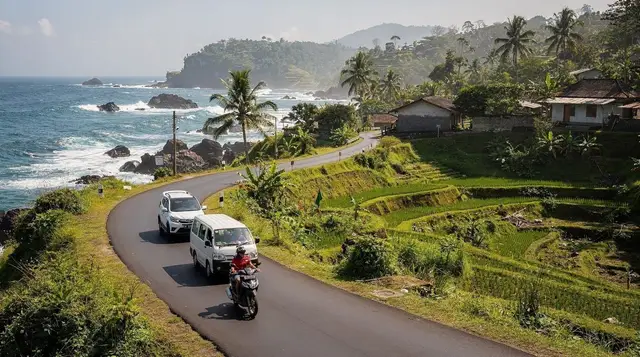
Belimbing sits within Tabanan regency and offers terraced rice field views that rival Jatiluwih’s in scenic quality, spread across steep valley slopes rather than Jatiluwih’s broader plateau. Because it lacks the same UNESCO branding and tour-bus infrastructure, Belimbing tends to see a fraction of the visitors, making it a genuine option for travellers who found even Jatiluwih busier than expected.
The Tabanan Belimbing rice terrace trekking and local life tour covers walking routes through this village and its surrounding terraces, mixing landscape with a closer look at everyday village life away from the main tourist stops.
Back roads on two wheels
Tabanan’s network of quiet back roads, winding between rice terraces, small temples and forest edges, makes it a genuinely appealing area for motorcycle touring, distinct from the more congested main roads further south and east. The Spirit of Tabanan motorcycle tour is built specifically around this back-road network, aimed at riders who want genuine road time through rural scenery rather than a single-stop destination visit.
For a faster-paced, rougher alternative covering some of the same terrain, the Tabanan jungle trail enduro motocross adventure trades the scenic cruising pace for a more technical off-road ride through forest trails, suited to experienced riders rather than casual tourers.
A gentler alternative: jeep touring with a swim stop
Not every visitor wants to trek or ride a motorcycle through the regency, and Tabanan’s back roads are equally accessible by a more relaxed jeep tour with stops built in for swimming or a break from the drive. The Tabanan private jeep tour with hotel pickup and swim stop covers this lower-effort version of exploring the same rice country and volcano foothills, with door-to-door pickup removing the need to arrange transport separately.
Batukaru vs Batur: choosing a volcano trek
Travellers deciding between a Batukaru and a Batur trek are often choosing between two genuinely different experiences rather than a straightforward “better or worse” comparison.
| Mount Batukaru | Mount Batur | |
|---|---|---|
| Terrain | Dense forest, muddier trail | Exposed volcanic scree |
| Crowds | Considerably quieter | Heavily booked, busy summit |
| Infrastructure | Less commercially developed | Well-established guide association |
| Best for | Hikers wanting solitude | First-time trekkers wanting a well-worn route |
If Batur’s more established, crowded sunrise circuit still appeals more, the Mount Batur sunrise trek guide covers that alternative in full.
Temples and villages along the way
Beyond Batukaru and the terrace villages, Tabanan regency’s back roads pass a number of smaller temples and traditional villages that rarely appear on a standard South Bali itinerary. These are not individually major attractions in the way Besakih or Tanah Lot are, but strung together on a slow drive or ride, they build a picture of rural Balinese life that a single famous stop cannot provide on its own. This is arguably Tabanan’s real strength as a destination: not one standout site, but a cumulative sense of a working agricultural region seen at a walking or riding pace rather than from a tour bus window.
Travellers who enjoy stopping wherever looks interesting, rather than following a fixed checklist of named attractions, tend to get the most out of this part of Bali. A loosely planned day with a general direction, rather than a tight schedule of must-see stops, suits Tabanan’s back roads considerably better than it would suit a single-destination day near the south coast.
Wildlife and forest along the Batukaru slopes
The forest cover on Mount Batukaru’s slopes is denser and more intact than the vegetation around Bali’s more heavily visited volcanoes, a reflection of the area’s lower visitor numbers and more limited development. Birdlife in particular is more noticeable here on a quiet forest trek than on the exposed, well-trodden paths of Batur or Kintamani, rewarding hikers who move slowly and quietly rather than pushing straight for a summit view. This is not a wildlife-watching destination in the way a dedicated nature reserve would be, but it is a genuine point of contrast with Bali’s more exposed, crowded trekking routes.
Planning a realistic day given the regency’s size
Tabanan is large enough that trying to cover Batukaru, Belimbing, several back roads and Jatiluwih in a single rushed day tends to leave you with too little time at any one stop to actually appreciate it. A more realistic approach is choosing one focus, either the volcano trek, the rice terrace villages, or a back-road ride, and treating the rest of the regency as material for a future visit rather than a checklist to exhaust in one go. This is a genuinely different planning mindset from a single-site stop like a temple or waterfall, where the whole visit fits neatly into a couple of hours.
Travellers coming from the south coast should also build in extra time for the drive itself, since Tabanan’s rural roads, while quieter and more scenic than Bali’s main routes, are also slower going than a similar distance on a major road would suggest.
Choosing between a motorcycle tour, a jeep, and self-driving
Tabanan’s back roads are accessible by several different modes, and the right choice depends more on your comfort level and group composition than on the roads themselves. A guided motorcycle tour suits confident riders who want a genuine road-focused experience with someone else handling navigation and route knowledge. A jeep tour suits travellers who want the scenery and stops without riding themselves, particularly useful for mixed groups or families. Self-driving by car or scooter offers the most flexibility but demands real confidence with rural, sometimes poorly signposted roads and a willingness to occasionally backtrack if a turn is missed.
None of these is objectively better than the others; they simply trade convenience, control and cost against one another in different proportions. Travellers unsure which suits them best are generally safer defaulting to a guided option for a first visit, then considering self-driving on a return trip once the general layout of the regency’s roads feels more familiar.
What isn’t worth the detour
Skip treating Tabanan purely as a drive-through corridor to Jatiluwih if you have any spare time at all; the regency’s other rice terrace villages and back roads offer a genuinely different, quieter version of the same scenery. Also reconsider a Batukaru trek if you are not reasonably prepared for mud and forest terrain underfoot, since it demands more from unprepared hikers than its lower profile compared to Batur might suggest.
What it costs
There is no single major entrance fee covering the regency, since Tabanan is a broad administrative area rather than one ticketed site. Individual stops, temple entries, and guided treks or tours each carry their own separate, generally modest costs. As with most of central Bali’s highland areas, transport is the larger cost variable, and a private driver, motorcycle tour, or jeep tour typically costs more than solo fuel but removes the navigation challenge of Tabanan’s less signposted rural roads.
When to go
Dry season, roughly April to October, gives the clearest views from Batukaru’s upper slopes when cloud cover allows, and keeps back roads and trekking trails in their driest, most manageable condition. The wet season from November to March brings a higher chance of muddy trails on any Batukaru trek and short, heavy showers on motorcycle routes, though the rice terraces themselves stay lush and green throughout, since cultivation continues year-round.
Getting there and getting around
Tabanan regency stretches across central-west Bali, reached by main roads from the south coast that then branch into progressively narrower, quieter routes as you head toward Batukaru and the terrace villages. There is no public transport serving the rural parts of the regency usefully for tourists, so this is scooter, motorcycle tour, private driver, or organised jeep tour territory, and the back roads, while quieter than Bali’s main routes, are also less signposted and benefit from local knowledge or a GPS route planned in advance.
How this fits into a longer trip
Tabanan connects naturally with Jatiluwih and Bedugul for a central highlands day that covers rice terraces, a lake temple, and quieter back roads without retracing the same route twice. Travellers assembling a broader itinerary should look at the north and west Bali, 4 days itinerary, which threads several of these central and western stops together in a sensible sequence.
For volcano trekking specifically, the what to pack for a volcano trek guide applies equally to a Batukaru climb as it does to Batur or Agung, and the Batur vs Agung vs Rinjani comparison guide is a useful reference even though Batukaru isn’t covered by name, since the general trekking logistics carry across Bali’s volcanoes.
Frequently asked questions about Tabanan
Is Tabanan the same as Jatiluwih?
No. Jatiluwih is a specific UNESCO-listed rice terrace site that happens to sit within Tabanan regency, which covers a much larger area including Mount Batukaru and numerous other villages and terrace landscapes.
How difficult is the Mount Batukaru trek compared to Batur?
Generally considered more physically demanding underfoot due to dense forest cover and mud, though it lacks Batur’s crowded, well-worn trail. It suits hikers who prioritise a quieter route over a highly established one.
Can I visit Tabanan without a guide or driver?
Yes, if you’re comfortable with rural roads and confident navigation, though a guide or driver adds real value on the more remote back roads and is close to essential for a Batukaru trek.
Is Belimbing worth visiting if I’ve already seen Jatiluwih?
Yes, for travellers who want a similar rice terrace landscape without the same crowd levels. The two sites offer genuinely different terrain, with Belimbing’s terraces spread across steeper valley slopes.
Is motorcycle touring in Tabanan safe for less experienced riders?
The scenic back-road routes are generally manageable for riders with reasonable experience, but Bali’s rural roads still carry real hazards, and an International Driving Permit plus proper gear are non-negotiable regardless of route.
What is Pura Luhur Batukaru?
It is one of Bali’s most significant temples, sitting at the base of Mount Batukaru in dense forest, and it is considerably quieter than the island’s more visited coastal and lake temples.
Is Tabanan safe for solo travellers exploring the back roads?
Generally yes, using the same common-sense precautions that apply across rural Bali: telling someone your rough route, keeping your phone charged, and avoiding unfamiliar roads after dark, since lighting and signage thin out considerably away from the main routes.
Do I need multiple days to see Tabanan properly?
A single full day covers a reasonable selection of highlights, but a Batukaru trek or a deeper exploration of the back roads and terrace villages benefits from more time if it’s available.
Is Tabanan a good base for staying overnight, or better as a day trip?
Most travellers treat it as a day trip from the south coast or Ubud, since accommodation options are more limited than in established hubs, but a short overnight stay near Belimbing or Batukaru is a reasonable option for anyone prioritising an early trek start.