Uluwatu Temple and the Kecak Dance
Is Uluwatu Temple and the Kecak dance worth doing on the same evening?
Yes, and most visitors do exactly that — the temple's clifftop setting is genuinely dramatic in late-afternoon light, and the Kecak fire dance performance held nearby at sunset is one of the more distinctive cultural experiences on the island. Arrive early for both: the temple itself gets busy in the golden hour before sunset, and the dance amphitheatre fills up well before the performance starts.
Uluwatu Temple sits perched on a limestone cliff at the southwestern tip of the Bukit Peninsula, with a sheer drop to the Indian Ocean below that makes it one of the more dramatically positioned temples on an island that does not lack for scenic religious sites. It is one of Bali’s directional sea temples, part of a network historically positioned to guard the island spiritually, and the combination of that significance with the sheer physical drama of the clifftop setting is what draws such consistent crowds toward late afternoon.
Most visits are timed deliberately for sunset, and for good reason — the temple’s western-facing position over open ocean makes it one of the better sunset vantage points on the island, and the timing conveniently coincides with the nearby amphitheatre’s evening Kecak fire dance performance, a distinctive piece of Balinese performing arts built around a circular chant rather than conventional instruments. Combining the two into a single evening is the standard, sensible way most travellers experience Uluwatu, and this guide covers what both actually involve.
There is a third element worth mentioning up front, since it catches enough visitors off guard to deserve its own warning: Uluwatu’s resident macaque population is notorious, even by Bali standards, for snatching sunglasses, hats, phones, and anything else left within reach, sometimes trading the stolen item back for food. It is a genuinely common occurrence rather than a rare exception, and it shapes how you should approach the visit practically.
Uluwatu Temple at a glance
| Where | Southwestern tip of the Bukit Peninsula, South Bali |
| Cost | Temple entrance fee; Kecak dance tickets sold separately or bundled depending on the operator |
| Time needed | A couple of hours for the temple and clifftop walk, plus roughly an hour for the dance performance |
| Access | Private driver, scooter, or organised tour from anywhere in South Bali; a genuine drive from Ubud |
| Best time | Late afternoon into sunset, timed to combine the temple visit with the evening Kecak performance |
The clifftop walk and temple grounds
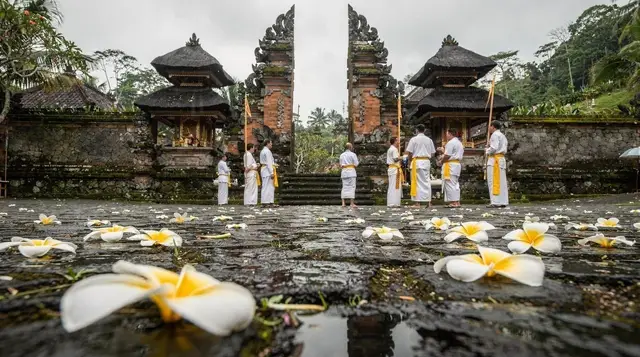
Beyond the temple’s central structure, a marked pathway runs along the clifftop for a considerable stretch, giving sweeping views over the ocean and the limestone cliffs the whole peninsula is built on. Most visitors spend at least as much time on this walk as inside the temple itself, since the view is the primary draw for a large share of arrivals rather than the temple architecture specifically, though the temple’s gates and structure are worth genuine attention in their own right, following the same split-gate design found across Balinese temple architecture generally.
The monkeys, seriously
Uluwatu’s long-tailed macaques have developed a well-documented habit of grabbing loose items from visitors — sunglasses, hats, water bottles, and phones are the most common targets — and in some cases will trade the item back for food offered by temple staff who are experienced at this exact negotiation. It is worth treating this as a genuine practical concern rather than an exaggerated warning: secure anything loose, keep sunglasses on a strap or in a bag rather than perched on your head, and do not attempt to retrieve a stolen item yourself.
The Kecak fire dance, explained
The Kecak dance is a distinctive Balinese performance built around a large chorus of men, typically dozens, seated in concentric circles, chanting a rhythmic “cak” sound in place of conventional musical instruments, while performers act out scenes from the Ramayana epic at the centre.
At Uluwatu, the performance is staged in a cliffside amphitheatre timed for sunset, with fire elements incorporated toward the climax, making it one of the more visually and acoustically striking cultural performances readily accessible to visitors on the island. Booking a Kecak Fire Dance entry ticket combined with Uluwatu Temple entrance is the simplest way to cover both in a single, straightforward booking.
Choosing a guided option
For travellers who want the logistics handled, including transport, timed entry, and seating, a guided Uluwatu Temple tour with Kecak dance options removes the guesswork around arrival timing and seating that independent visitors sometimes get wrong. This is particularly useful during peak season, when the amphitheatre’s popularity means arriving even slightly late can mean a distant, obstructed view rather than a clear line of sight to the performance.
Combining Uluwatu with the Bukit’s beaches
Given Uluwatu’s position at the tip of the Bukit Peninsula, many visitors combine the temple and dance with a day exploring the peninsula’s cliff-access beaches beforehand, an option covered by the Padang Padang Beach, Uluwatu Temple and Kecak dance tour. It makes for a full day rather than a single-purpose evening outing, pairing beach time with the temple’s sunset drama in one coordinated itinerary. See the Bukit Peninsula hidden beaches guide for more detail on which beaches suit which kind of traveller.
The full sunset experience
For travellers who want the complete package without piecing it together themselves, the Uluwatu Temple and Kecak Fire Dance sunset experience bundles the temple visit, timed for the best light, with the evening performance as a single coordinated outing, which is the most straightforward way to see both without worrying about timing them correctly yourself.
Seating and viewing angles at the amphitheatre
The Kecak amphitheatre is built into the natural clifftop terrain, with tiered stone seating arranged around the circular performance space, and the quality of your view depends noticeably on where you sit relative to both the performers and the setting sun behind them. Seats toward the centre and slightly elevated tend to give the most balanced view of both the chanting circle and the fire elements toward the climax, while very front-row positions, though close to the action, sometimes lose the wider visual composition that makes the performance so striking as a whole. Arriving with at least thirty to forty minutes of buffer before the show gives a realistic chance of choosing a seat deliberately rather than taking whatever remains.
A wider peninsula day combining adventure and culture
Some visitors extend their Uluwatu evening into a fuller day built around the peninsula’s other activities, pairing water-based adventure with the temple and dance in a single itinerary. The parasailing and jet ski Uluwatu tour with Kecak dance is one way operators package this combination, suited to travellers who want an active, adrenaline-focused day capped off with the cultural performance rather than a purely relaxed sightseeing pace.
The history and meaning behind the performance
Though the Kecak dance has become closely associated with Uluwatu’s tourist-facing evening shows, its roots trace back to a Balinese trance ritual, later adapted in the early twentieth century into the narrative, Ramayana-based performance seen today, with input from both Balinese performers and Western artists living on the island at the time. Understanding this layered history adds genuine depth to the experience beyond the simple visual spectacle of the fire and chanting, and it is worth reading a short primer on the Ramayana story being enacted if you want to actually follow the narrative rather than simply watching an impressive but unexplained performance.
What isn’t worth the detour
Skip any operator promising a “front row guaranteed” seat at a steep premium unless securing a specific vantage point matters more to you than the cost difference — a reasonable seat is achievable for most visitors with a sensible arrival time, without paying a significant markup. It is also not worth visiting Uluwatu purely for the temple interior if the clifftop walk and sunset are what actually draw you; the interior areas open to non-worshippers are modest compared with the exterior views that are the real reason most people come.
Budget
Costs are modest: a temple entrance fee, and a separate or bundled Kecak dance ticket, both considerably cheaper than comparable evening cultural experiences elsewhere in the world. Transport is the larger variable, whether via a private driver, scooter, or an organised tour that bundles transport with the entrance and dance tickets into a single price.
When to go
Late afternoon into sunset is the standard and sensible time to visit, both for the light on the clifftop and for the timing of the Kecak performance itself, which runs at sunset specifically. Dry season, April to October, offers the most reliable clear skies for the sunset itself, though the performance runs regardless of season and cloud cover simply changes the visual backdrop rather than cancelling the show.
Getting there and getting around
Uluwatu sits at the southern tip of the Bukit Peninsula, a genuine drive from Ubud and a shorter one from Kuta, Seminyak, or Canggu. A private driver or organised tour is the standard way to arrive, particularly for an evening visit when returning by scooter in the dark adds a layer of complexity many travellers prefer to avoid. See Uluwatu and the Bukit Peninsula pages for more on the wider area’s access.
How this fits into your wider Bali trip
Uluwatu and the Kecak dance are a near-essential stop on almost any Bali itinerary, and they pair naturally with a day exploring the Bukit Peninsula’s beaches or surf breaks beforehand. For a comparison with Bali’s other major sunset temple, read the Tanah Lot sunset guide, and for the general dress code and behavioural expectations that apply here as much as anywhere, see the Bali temple etiquette guide.
If you are still assembling your overall route, the Bali, 3 days itinerary typically slots an Uluwatu sunset in as a natural closing stop to a South Bali day.
Can I skip the temple and just watch the Kecak dance?
Yes, tickets for the dance performance are generally available separately from full temple access, so if the clifftop walk does not interest you as much as the performance, you can plan around the dance alone. Most visitors, however, find the combination worthwhile given how close together the two experiences sit.
Is there an indoor alternative if it rains?
The Uluwatu performance is held in an open-air clifftop amphitheatre and generally proceeds regardless of light rain, though a serious downpour can occasionally affect the schedule. Check with your ticket provider on the day if weather looks uncertain.
Frequently asked questions about Uluwatu Temple and the Kecak Dance
Do I need to book Kecak dance tickets in advance?
It is strongly recommended in peak season, when the amphitheatre fills close to capacity. Shoulder season allows more flexibility to buy on arrival, though booking ahead removes any uncertainty either way.
How long does the Kecak performance last?
Roughly an hour, timed to start around sunset and run through the fire-dance climax as darkness falls.
Is Uluwatu Temple worth visiting outside of sunset?
The clifftop views are impressive at any time of day, though the light and the coinciding Kecak performance are the main reasons most visitors specifically time their arrival for late afternoon rather than visiting at midday.
How do I protect my belongings from the monkeys?
Keep sunglasses, hats, and phones secured rather than loose or perched on your head, and avoid holding food visibly. If something is taken, temple staff are experienced at negotiating a trade-back with food rather than confrontation.
Is the Kecak dance performance suitable for children?
Generally yes — it is a visual, rhythmic performance without dialogue that most children find engaging, though the fire elements toward the end and the crowded evening setting are worth factoring in for very young children.
Can I combine Uluwatu with other Bukit Peninsula stops in one day?
Yes, and it is a common pairing — several tours combine a beach stop, such as Padang Padang, with the temple and evening dance performance as a single full-day itinerary.
What should I wear to Uluwatu Temple?
A sarong and sash are required for temple entry, almost always available to rent on site, alongside standard modest dress with shoulders covered. See the Bali temple etiquette guide for the full dress code.
Temple & culture tours on GetYourGuide
Verified deep-linked GetYourGuide tours. Book through these links and we earn a small commission at no cost to you.
These are our own photographs of Bali, not the operator's pictures of this tour — open the tour page to see those.