Where to Eat Babi Guling: A Practical Guide
What is babi guling and why is it so hard to find after lunchtime?
Babi guling is Bali's spit-roasted, spice-stuffed pig, traditionally a ceremonial dish and now a daily specialty at dedicated warungs across the island. Most specialist warungs prepare a fixed amount each morning and sell it as a lunch dish, closing once that day's portion runs out — sometimes as early as early afternoon — which is why arriving at dinnertime hoping to find it fresh often disappoints.
Babi guling — whole pig stuffed with a turmeric-based spice paste, spit-roasted until the skin crackles, then chopped and served with rice, vegetables, and lawar — is the dish most visitors mean when they ask about “real Balinese food.” It carries genuine ceremonial weight in Balinese Hindu culture, traditionally prepared for temple offerings and family celebrations, and the version served daily at specialist warungs today is a direct descendant of that ceremonial cooking rather than a dish invented for tourists.
Finding a genuinely good version comes down almost entirely to two things: choosing a warung that specialises in it rather than one that offers it as a side item on a broader menu, and timing your visit correctly, since most specialist places cook a fixed batch each morning and simply close once it sells out. This guide covers how to think about both, along with what to actually expect once your plate arrives.
Babi guling at a glance
| What it is | Spit-roasted, spice-stuffed whole pig, traditionally a ceremonial dish |
| Where to find it | Specialist warungs, concentrated particularly around Ubud and Gianyar |
| Best time | Lunch — many specialist warungs sell out by early-to-mid afternoon |
| Cost | Inexpensive by most international standards for a full plate |
| Watch for | Vegetable-only lawar available on request if you’d rather skip the traditional blood-based version |
What actually comes on the plate
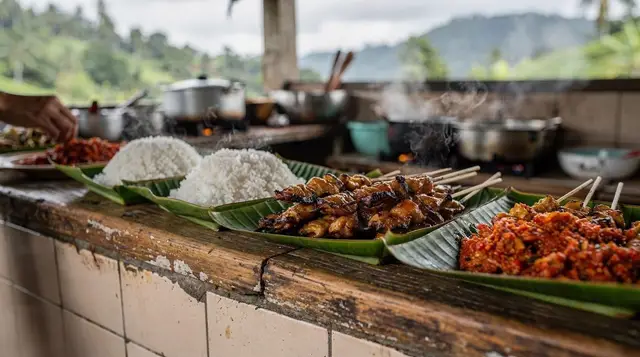
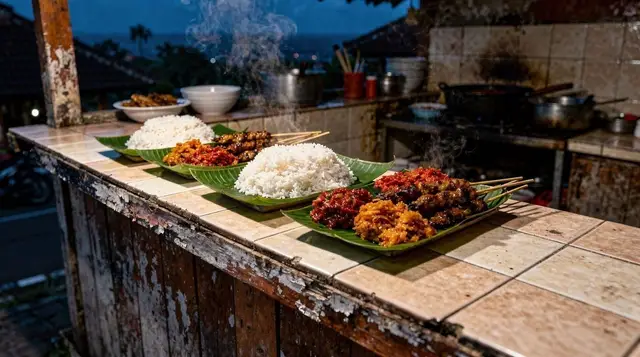
A typical serving includes chopped roast pork with its crisped skin, a portion of rice, lawar (the mixed minced meat, vegetable, and spice dish traditionally made with fresh blood, though vegetable-only versions exist), a piece of blood sausage in some regional variations, and often a light vegetable soup on the side. The spice paste used to stuff and season the pig — turmeric, galangal, garlic, chilli, and a mix of other aromatics ground together — is what gives the dish its distinctive depth, and it’s worth paying attention to, since the quality of that paste is usually what separates an excellent warung from a mediocre one far more than the meat itself.
How to spot a genuine specialist warung
A few practical signals help separate a warung that specialises in babi guling from a broader restaurant that offers it as one item among many. Specialist places are often visibly built around the dish — a whole roasted pig or a large pan of freshly chopped portions visible near the entrance, a menu that’s short rather than sprawling, and a lunchtime-only or lunchtime-heavy operating pattern rather than a full-day kitchen.
Queues of local customers, particularly around midday, are a reasonably reliable sign too, since Balinese diners tend to know which warungs are worth the visit far better than any online review can capture. A long, varied menu covering pizza, pasta, and a dozen Indonesian dishes alongside babi guling is a fairly clear signal that the pork isn’t the kitchen’s core focus.
Learning the etiquette around ceremonial food
Because babi guling has such deep roots in temple ceremonies and family celebrations, it’s worth approaching it with a bit more awareness than an ordinary meal. If you happen to be offered babi guling as part of witnessing or being invited to a genuine Balinese ceremony rather than at a commercial warung, treat it as a genuine honour rather than simply another meal, and follow your host’s lead on etiquette around eating, seating, and timing. This is a different context entirely from ordering a plate at a lunch warung, and conflating the two — treating a ceremonial offering casually, for instance — can come across as disrespectful even if unintentionally so.
Why lunchtime, specifically
Preparing babi guling properly takes hours of slow roasting, and most specialist warungs start the process early in the morning to have it ready by late morning or midday. Because it’s cooked in a fixed batch rather than made to order, once that day’s portion sells out, it’s genuinely gone — there’s no kitchen quietly keeping a backup pig roasting for the dinner crowd. This is the single most common reason visitors report disappointment: arriving in the evening expecting a full menu and finding the specialist dish unavailable, sometimes with only a generic tourist-facing alternative left on offer.
Learning to make it yourself
If tracking down a specific warung feels like too much effort, or you’d simply rather understand the dish from the inside, a hands-on class that covers Balinese ceremonial cooking is a genuine alternative. A class such as the Celuk village cooking class with a local instructor walks through traditional spice-paste preparation and technique with a local teacher, giving you a much clearer sense of what goes into the dish than simply eating it ever could.
For a broader cultural morning that includes food as one part of a wider visit, the all-inclusive Celuk village tour covering culture and food combines a village visit with a food-focused stop.
Night markets as a backup plan
If you’ve missed the lunchtime window for a specialist babi guling warung, a night market visit is a reasonable alternative evening plan, offering a wide spread of other genuinely Balinese and Indonesian dishes even if babi guling specifically isn’t among them. A guided outing like the traditional night market food tour from Ubud, private is a good way to make the most of an evening that didn’t go according to plan on the babi guling front, introducing you to other specialities you might not have found alone.
What isn’t worth the detour
Skip any restaurant advertising babi guling on a full all-day menu without any indication of freshly cooked batches — this is often a sign the dish is being kept warm for extended periods rather than served as intended, and the quality difference compared to a genuine specialist warung is usually obvious once you’ve tried both. It’s also not worth travelling a long distance across the island purely to chase one specific famous warung’s reputation if a closer, well-regarded alternative exists; the dish’s quality varies less between well-run specialist warungs than online rankings sometimes suggest.
Pairing it with a wider Gianyar day
Because some of the most respected babi guling warungs sit in and around the Gianyar regency, it’s worth thinking about the meal as one stop within a wider day rather than a destination trip on its own. This area is also known for traditional craft villages, including Celuk’s long-standing silver work, which makes it easy to combine a midday babi guling stop with a cultural or craft visit either side of lunch.
A tour like the Celuk art village UTV buggy ride and chocolate factory tour is one way to add an active, family-friendly element to a day built around this part of the island, timed so a specialist lunch stop fits naturally into the middle of the itinerary rather than as an isolated errand.
Regional differences worth knowing
Babi guling varies somewhat by region across Bali, with different areas known for slightly different spice-paste balances and accompaniments. Warungs around Ubud and Gianyar have built particularly strong reputations, partly because of the concentration of both traditional cooking knowledge and visitor demand in that part of the island, but well-regarded specialists exist elsewhere too, including around Denpasar. If you’re travelling through several regions, trying more than one version is a genuinely worthwhile comparison rather than assuming the first plate you try represents the dish definitively.
What it costs
A plate of babi guling at a specialist warung is inexpensive by most international standards, reflecting its status as an everyday lunch dish for Balinese people as much as a tourist attraction. Restaurants that serve a more polished, tourist-oriented version, sometimes as part of a set menu or buffet, typically charge more for a version many locals would consider a step down from the specialist original. A guided food tour or cooking class costs considerably more again, since you’re paying for a guide’s knowledge or hands-on instruction rather than just the meal itself.
When to go
There’s no strong seasonal pattern to babi guling availability — this is a daily dish rather than a seasonal specialty — but timing within the day matters enormously, as covered above. If your trip coincides with a major Balinese ceremony like Galungan, when the dish carries particular ceremonial significance, you may notice increased demand and even earlier sell-outs at specialist warungs, so plan accordingly if you’re travelling during one of these periods.
Getting there and getting around
Specialist babi guling warungs are spread across the island, with a particular concentration around Ubud and the nearby Gianyar regency, an area also known for traditional craft villages like Celuk. Grab and Gojek work well for reaching warungs in more built-up areas; in quieter village settings, a private driver or scooter is often more practical given patchier ride-hailing coverage outside the main tourist centres.
How this fits into a longer trip
Babi guling pairs naturally with a broader food-focused day in and around Ubud rather than needing to be its own dedicated outing. The Balinese food guide gives a wider overview of dishes worth trying beyond this one, while the warung etiquette and food safety guide covers practical advice for eating at local warungs generally. If you’re interested in cooking rather than just eating, the Ubud cooking classes guide goes into far more detail on choosing between class options.
For travellers building out a full day around Ubud, pairing a lunchtime babi guling stop with a cultural or craft-village visit works well logistically, and the Bali street food safety guide is worth a read if warungs and markets generally are new to you. The choosing a Bali cooking class post and the Bali belly: what actually causes it post both offer useful, grounded context before you commit to a full day of local eating.
Frequently asked questions about Where to Eat Babi Guling
What time should I actually go to eat babi guling?
Aim for lunch, ideally by midday, at any well-known specialist warung. Many prepare a fixed batch each morning and close once it sells out, sometimes by early-to-mid afternoon.
Is babi guling always spicy?
The pork itself isn’t typically fiery, though sambal served alongside it can be genuinely hot. Treat the sambal as optional and taste a small amount first if you’re unsure of your spice tolerance.
Can I find a version without pork?
Not really, since pork is the essential defining ingredient of the dish itself. If pork is off the table for you, bebek betutu (slow-cooked spiced duck) is a reasonable ceremonial-dish alternative to explore instead.
Is the lawar served alongside babi guling always made with raw blood?
Traditionally yes, but vegetable-only versions exist and are usually available on request, particularly at warungs used to serving a wider range of visitors.
Are there vegetarian options at babi guling warungs?
Limited ones — these warungs specialise in a pork dish, so vegetarian choices tend to be minimal. If you’re vegetarian, a broader restaurant or a dedicated vegetarian-friendly warung will serve you far better.
Is it worth travelling across the island for one particularly famous babi guling warung?
Generally not necessary. Quality varies less between well-regarded specialist warungs than online rankings can suggest, and a closer, well-reviewed option will usually serve you just as well as a famous, distant one.
Can I learn to make babi guling in a cooking class?
Full traditional preparation, including spit-roasting a whole pig, isn’t practical for a typical tourist cooking class given the time and scale involved, but many classes cover the same core spice paste and related techniques used in the dish.
How does babi guling compare with bebek betutu?
Both are ceremonial dishes built around slow cooking and an intense spice paste, but babi guling is pork and typically spit-roasted, while bebek betutu is duck or chicken, wrapped and steamed or slow-cooked in banana leaf rather than roasted on a spit.
Bali food & drink tours on GetYourGuide
Verified deep-linked GetYourGuide tours. Book through these links and we earn a small commission at no cost to you.
These are our own photographs of Bali, not the operator's pictures of this tour — open the tour page to see those.