Warung Etiquette and Food Safety in Bali
How do I eat safely at Balinese warungs without missing out on the best local food?
Favour busy warungs with high turnover, where food is cooked fresh and not sitting out for hours, drink bottled or filtered water rather than tap water, and ease into spicier, richer dishes rather than diving straight in on day one. None of this means avoiding warungs — it means choosing well and pacing yourself.
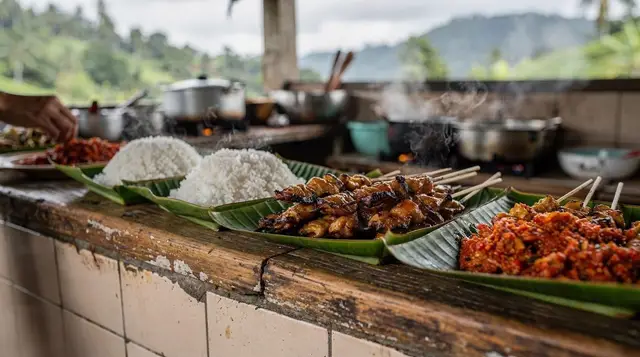
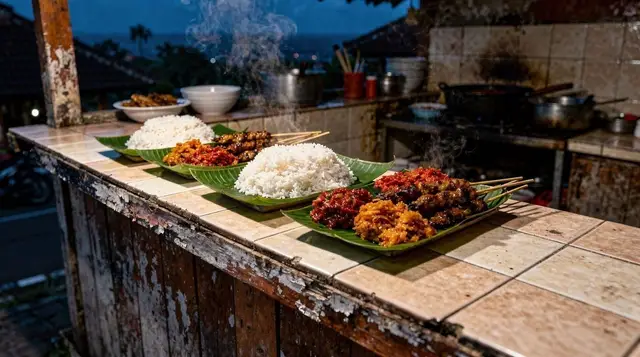
A warung is a small, family-run food stall or simple restaurant, and they’re where most of the island’s best, most genuine everyday cooking actually happens — far more so than at hotel restaurants or international-menu spots built for tourists. Eating well in Bali largely means getting comfortable with warungs, but a fair number of visitors approach them with either excessive caution, avoiding anywhere that doesn’t look polished, or none at all, eating wherever looks interesting without any real judgement about hygiene or freshness. Neither extreme serves you well.
This guide is about the practical middle ground: how to actually judge whether a warung is a good bet, basic etiquette that makes the experience smoother for both you and the people running the place, and food-safety habits genuinely worth developing rather than paranoid rules that just mean missing out on some of the best food available.
Warung eating at a glance
| What it is | Small, often family-run food stalls and simple restaurants serving local dishes |
| Best signal of quality | High customer turnover and visibly fresh, actively cooked food |
| Cost | Inexpensive by most international standards |
| Water | Always bottled or confirmed filtered — Bali’s tap water is not safe to drink |
| Pace | Ease into spicier, richer dishes over the first few days rather than diving straight in |
Judging a warung before you sit down
The single most reliable signal isn’t appearance — plenty of excellent warungs are simple, plastic-chair operations with no polish at all — it’s turnover. A warung with a steady stream of local customers is cooking and selling food quickly enough that little sits around for long, which matters more for food safety than how new the paint looks. Watching how food is stored and reheated, if visible from the street, is also worth a glance: dishes kept warm under cover in a display case that’s regularly restocked are generally safer bets than food that’s clearly been sitting exposed for an extended period.
Nasi campur warungs and the buffet-style display
A large share of Bali’s warungs serve nasi campur, rice with a selection of pre-cooked dishes displayed at room temperature or under warming lamps for you to choose from, rather than everything cooked to order. This buffet-style setup is completely normal and not inherently riskier than an à la carte kitchen, but it does put more weight on the turnover principle above — a nasi campur warung that’s constantly refilling and rotating its dishes throughout the lunch rush is a considerably safer bet than one where the same tray has clearly been sitting since the morning. If you’re unsure how long a dish has been out, it’s entirely reasonable to ask, and busy local warungs restock frequently enough that this is rarely an issue in practice.
Basic etiquette that actually matters
Warung etiquette isn’t complicated, but a few habits go a long way. Take your shoes off if you notice a pile of sandals at the entrance, even in a casual food setting — this is a common convention, not just a temple rule. Use your right hand for eating and passing things where possible, since the left hand carries traditional associations that matter more to some older or more traditional proprietors than others, though this matters less at busy, younger-staffed spots.
Keep your voice reasonably measured — warungs are often small, family-run spaces rather than loud restaurant environments — and don’t expect rushed table turnover or Western-style prompt bill delivery; asking for the check directly (“bisa minta bon?”) is completely normal and expected rather than rude.
Guided food tours as a lower-risk introduction
If warung culture feels unfamiliar and you’d rather ease in with some guidance, a guided food tour is a genuinely useful first step, since experienced guides already know which specific stalls and warungs are reliable, letting you sample more broadly with less individual guesswork. An outing like the Ubud night market food tour introduces you to a working local market with a guide who can steer you toward the busiest, freshest stalls. A similar option, the Ubud night market and village food tour, extends the same idea with an additional village stop.
For a more private, less crowded version, the traditional night market food tour from Ubud, private covers similar ground at your own pace with a smaller group, which suits travellers who’d rather not navigate a busy market as part of a larger tour.
Water, ice, and the habits that actually matter most
Bali’s tap water is not safe to drink, and this single fact drives more preventable stomach trouble than almost anything related to the food itself. Stick to bottled or confirmed-filtered water throughout your trip, including for brushing your teeth if you want to be thorough, and be a little cautious with ice at less-established spots, though most warungs and restaurants catering regularly to travellers use ice made from treated water. Fresh fruit and vegetables that have been washed in tap water are a less obvious risk that catches some visitors off guard — this is less of a concern at busy, established warungs than at informal roadside stalls, but it’s worth being aware of if you’re prone to a sensitive stomach.
Building tolerance gradually, not avoiding food entirely
A meaningful share of preventable stomach trouble in Bali has less to do with contamination and more to do with a sudden shift in diet — richer, spicier, more coconut-oil-heavy food than many visitors are used to, eaten in larger quantities across a compressed holiday schedule.
Easing in over the first couple of days, rather than sampling every specialty dish and every warung on day one, gives your system time to adjust and genuinely reduces discomfort for a lot of travellers, independent of any actual food-safety issue. This isn’t a reason to hold back from local food generally — it’s a pacing suggestion, not a restriction, and most visitors who ease in gradually report feeling comfortable eating widely by the second half of a typical trip.
Morning markets: a gentler starting point
If night markets feel like too much at once, a morning market visit is a calmer, less crowded alternative that still gives a genuine sense of local food culture, often paired with breakfast dishes rather than the heavier evening street-food spread. A guided outing like the Ubud sunrise morning market and local food culture tour covers this quieter version of the experience, useful if you’d rather ease into warung and market culture before a busier evening outing later in your trip.
Travelling with kids or a sensitive stomach
If you’re travelling with children or already know you have a sensitive stomach, the same principles above apply with a bit more caution baked in: lean toward the busiest, highest-turnover warungs rather than experimenting at quieter unfamiliar spots, stick more strictly to bottled water including for washing bottles or preparing food if travelling with a baby, and introduce new dishes gradually rather than all at once. None of this should mean skipping warungs altogether — some of the calmer, more child-friendly options, particularly ones serving simpler rice-and-vegetable dishes alongside the richer specialities, work well even for cautious eaters.
What isn’t worth the detour
Skip warungs with food clearly sitting out uncovered for long stretches with little apparent turnover, regardless of how enticing the smell or how cheap the price — this is exactly the pattern most associated with genuine food-safety risk. It’s also not worth avoiding warungs entirely out of excessive caution; doing so means missing some of the best and most representative food on the island for a level of risk that sensible, basic precautions largely address.
What it costs
Warung meals are inexpensive by most international standards, and this holds true regardless of how careful you are about choosing well — a busy, high-turnover warung with excellent food safety practices typically doesn’t cost meaningfully more than a quieter, riskier alternative nearby. Guided food tours cost considerably more, since you’re paying for a guide’s local knowledge and the convenience of not having to judge every stall yourself, which is a reasonable trade-off particularly early in a trip before you’ve built your own sense of what to look for.
When to go
Food safety isn’t strongly seasonal, though the wetter months from roughly November to March can mean slightly higher humidity and faster spoilage for food left uncovered, making the turnover and storage signals covered above even more worth paying attention to during that period. Lunchtime and early evening tend to be the busiest, freshest windows at most warungs; very late-night options, where they exist, carry a bit more uncertainty simply because turnover slows and food has often been sitting longer.
Getting there and getting around
Warungs are everywhere across Bali, from dense clusters in tourist areas like Ubud, Canggu, and Seminyak to single stalls in quiet villages with far less passing trade. Grab and Gojek make reaching a specific warung in built-up areas straightforward; in quieter areas, a scooter or private driver is more practical, and simply walking and choosing based on the crowd-and-turnover principle covered above works surprisingly well almost anywhere on the island.
How this fits into a longer trip
Warung eating is less a single activity than a habit that runs through an entire Bali trip, so it’s worth reading a little before you go rather than treating it as a one-off decision. The Balinese food guide gives a wider overview of specific dishes worth seeking out, and the where to eat babi guling guide and the Bali street food safety guide both go deeper into specific aspects touched on here. If cooking rather than just eating interests you, the Ubud cooking classes guide is a natural next stop.
For a broader take on how food safety concerns actually play out in practice, the Bali belly: what actually causes it post is worth reading before your trip, and the choosing a Bali cooking class post is useful if a guided, hands-on introduction appeals to you more than navigating warungs solo from day one.
Frequently asked questions about Warung Etiquette and Food Safety in Bali
Is it actually safe to eat at street-side warungs in Bali?
Yes, for the most part, provided you use the turnover and freshness signals covered here. Busy warungs cooking food to order or in small fresh batches are generally a safe, reliable choice.
What’s the single biggest food-safety risk in Bali?
Tap water, by a wide margin — this includes drinking it directly, using it to brush teeth, or consuming unwashed produce that’s been rinsed in it. Bottled or confirmed-filtered water avoids the bulk of this risk entirely.
Should I avoid ice completely?
Not necessarily. Most established warungs and restaurants that regularly serve travellers use ice made from treated water. If you’re at a very informal or unfamiliar spot and unsure, it’s reasonable to ask or skip the ice.
Is it rude to ask for the bill directly at a warung?
No, this is completely normal. Warungs don’t typically operate on a Western restaurant’s prompt-bill-delivery model, so asking directly is expected rather than impolite.
Do I need to tip at a warung?
Tipping isn’t a strong local expectation at casual warungs the way it is in some countries, though rounding up or leaving small change is appreciated and increasingly common in more tourist-frequented spots.
How do I know if a warung is family-run versus a bigger operation?
Scale and atmosphere are usually the clearest signals — a handful of tables, a visible open kitchen, and a small, consistent staff generally indicate a family-run operation, though this isn’t a strict food-safety indicator either way.
Is spicy food itself a food-safety risk?
No, spice level is a comfort and tolerance issue rather than a safety one. Easing into spicier dishes is more about avoiding digestive discomfort from an unfamiliar diet shift than any actual risk.
What should I do if I do get sick despite taking precautions?
Rest, stay hydrated with bottled water or an oral rehydration solution, and seek medical attention if symptoms are severe or persist beyond a couple of days. Most travellers’ stomach upsets in Bali are mild and short-lived, but don’t ignore worsening symptoms.
Bali food & drink tours on GetYourGuide
Verified deep-linked GetYourGuide tours. Book through these links and we earn a small commission at no cost to you.
These are our own photographs of Bali, not the operator's pictures of this tour — open the tour page to see those.