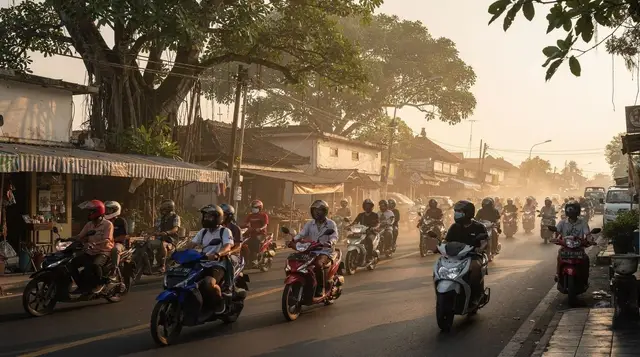
Scooter Accidents in Bali: The Honest Risk Picture
Scooter accidents involving visitors are common enough in Bali that they’re a recurring, well-documented topic in traveller forums, insurance claim data, and conversations with clinic staff working in the busier tourist areas of the island. It’s worth being direct about this rather than treating it as a minor footnote, because the decision to rent a scooter is one of the more consequential choices a visitor makes, and it deserves the same level of honest consideration as any other genuine safety topic on this site.
None of this means scooters are uniquely dangerous or that riding one is a bad idea by default — millions of trips happen safely every year, and why Bali traffic is so bad is worth reading alongside this piece for the wider context on what actually makes the roads feel so chaotic.
It means the risk factors are specific and identifiable, and understanding them changes the odds meaningfully in your favour. The goal of this piece is the same as the rest of this site’s approach to safety topics generally: not to scare anyone off, and not to minimise a genuine risk either, but to lay out exactly what raises and lowers the odds so you can make an informed choice rather than relying on either fear or false confidence.
Why visitors specifically are overrepresented in accident statistics
Bali’s traffic patterns differ enough from many visitors’ home countries that the adjustment period itself is a genuine risk window. Left-hand traffic flow (for visitors from right-hand-drive countries or vice versa), a much higher density of scooters weaving between cars, and driving norms that rely more on continuous negotiation between road users than strict lane discipline all take real time to adapt to.
Visitors who rent a scooter within their first day or two, before that adjustment has happened, are disproportionately represented in accident reports compared with those who’ve had more time to acclimatise. Fatigue compounds this further: a long-haul flight followed by an immediate scooter rental combines unfamiliar traffic conditions with reduced reaction time and judgement, a combination that shows up repeatedly in accident accounts from visitors describing their first day or two on the island.
The licensing and insurance issue that catches people out
A significant number of visitor accidents involve riders without a valid international driving permit specific to motorcycles, which is both a legal requirement and, critically, a condition many travel insurance policies attach to coverage. Riding without one doesn’t just risk a fine — it can void medical and liability coverage entirely in the event of an accident, turning an already bad situation into a genuinely expensive one.
This is one of the more avoidable risk factors on this list, since it’s entirely a matter of preparation before the trip rather than anything about the ride itself. Arranging the permit before departure, through the appropriate motoring authority in your home country, is generally straightforward and inexpensive relative to the financial exposure of riding uninsured, yet it’s routinely skipped by travellers who either don’t know the requirement exists or assume, incorrectly, that a standard driving licence alone is sufficient.
Road conditions that catch out unfamiliar riders
Beyond traffic patterns, Bali’s road surfaces themselves vary considerably — potholes, uneven patches after rain, loose gravel on rural roads, and poorly marked speed bumps are all more common than on well-maintained roads in many visitors’ home countries. Rain specifically changes conditions fast: a dry road can become genuinely slick within minutes once the island’s short, heavy downpours start, catching out riders who haven’t adjusted their speed or following distance for wet conditions — one more reason to check the Bali rainy season honest review before deciding how much you’ll actually be relying on a scooter day to day.
What actually reduces the risk
Taking a structured lesson before riding independently, particularly for less experienced riders, meaningfully changes the odds. A scooter lesson with a professional instructor in a controlled setting is a genuinely useful investment even for visitors who’ve ridden scooters at home, since Bali’s specific traffic conditions are different enough to warrant a refresher.
The alternative: skipping the scooter entirely
For visitors who’d rather not take on the risk at all, Bali has legitimate alternatives that cover most needs without ever getting on a scooter. Grab and Gojek cover point-to-point trips reliably in most tourist areas, and a private driver for day trips or a full itinerary removes the need for self-driven transport altogether. A pre-arranged airport transfer to Canggu or Uluwatu is a straightforward way to start a trip without needing transport decisions on day one at all.
For ongoing transport beyond a single transfer, a fixed airport transfer booking or a private driver arrangement for specific days removes scooter risk from the equation entirely for travellers who decide the trade-off isn’t worth it, without meaningfully limiting what you’re able to see and do.
The insurance question, in more detail
Standard travel insurance policies frequently include specific conditions around scooter use that catch travellers out precisely when they need coverage most, a detail worth weighing alongside the wider entry paperwork covered in Bali visa guide. Common conditions include holding a valid international driving permit endorsed for motorcycles, wearing a helmet at the time of the accident, and not exceeding the insured scooter’s engine capacity limit if one is specified in the policy. Reading the actual policy wording before a trip, rather than assuming standard travel insurance automatically covers scooter accidents, is a genuinely important step that a surprising number of travellers skip.
If your existing travel insurance doesn’t cover scooter use adequately, a supplementary policy or an upgrade specifically covering motorcycle and moped use is worth the modest additional cost relative to the financial exposure of an uninsured accident and subsequent medical treatment, which can be substantial without coverage.
How rental shop quality varies
Not all scooter rental operations maintain their fleet to the same standard, and a bike with worn brake pads, bald tyres, or a poorly adjusted chain adds real risk independent of the rider’s own skill or caution, particularly on wet roads where reduced traction from worn tyres becomes far more consequential than on dry pavement. Before riding away from any rental shop, a quick check of the brakes, tyre tread, lights and horn takes only a couple of minutes and can catch an obvious mechanical issue before it becomes a problem on the road.
Reputable operators, including those attached to established hotels or specifically set up for tourists, tend to maintain their fleets more consistently than the cheapest street-side options, though price alone isn’t always a reliable indicator either way. Asking directly how frequently a shop services its bikes, and looking at the general condition of the fleet on display rather than just the one bike you’re handed, are both reasonable, low-effort ways to get a sense of standards before committing to a rental for the duration of your stay.
Reading Bali’s specific traffic culture
One adjustment that catches many visitors off guard is how much of Bali’s traffic flow relies on constant, low-speed negotiation between road users rather than strict adherence to marked lanes and right-of-way rules in the way many Western drivers expect. Horns are used frequently as a courtesy signal — announcing presence rather than expressing frustration — which can feel aggressive to unfamiliar ears but is a normal part of how traffic communicates here. Learning to read this pattern, largely by observing before riding rather than trying to memorise a rulebook, is one of the more useful, if less tangible, adjustments a new rider can make.
What to do if you’re involved in an accident with a local driver
Minor scooter-to-scooter incidents are common enough in Bali’s dense traffic that there’s an established, generally informal local process for resolving them on the spot, often involving a small direct payment to cover damage rather than a formal police report for minor cases. For anything involving injury or significant damage, involving local police and your insurance provider is the appropriate path regardless of how minor either party suggests it is.
Staying calm, avoiding confrontation, and prioritising medical assessment over an immediate financial settlement are all sensible defaults in any accident involving genuine injury. Photographing the scene, noting the other party’s contact and any registration details, and keeping a written record of what happened while it’s fresh in memory all make a subsequent insurance claim considerably smoother than trying to reconstruct events days later.
What isn’t worth worrying about disproportionately
Don’t let scooter accident stories push you toward avoiding Bali altogether, or toward an unnecessarily fearful approach to every ride — the risk is real but manageable, and the vast majority of rentals happen without incident. Equally, don’t dismiss the risk as overblown internet chatter; clinic and insurance data in tourist areas consistently show scooter accidents as one of the more common sources of visitor injury, which is different from most other transport-related travel content on this site.
How this fits into planning your trip
For the practical mechanics of renting and licensing, read scooter rental and licence in Bali before booking anything, and getting around Bali and grab and gojek in Bali for the full range of alternatives. Hiring a private driver in Bali is worth reading if you’d rather skip self-driven transport for at least part of your trip, and bali safety guide covers the wider picture beyond just scooters.
Frequently asked questions about Scooter Accidents in Bali
Do I legally need an international driving permit to ride a scooter in Bali?
Yes, and it’s required both by local law and by the terms of most travel insurance policies. Riding without one risks a fine and, more seriously, voided insurance coverage in an accident.
Is it safer to rent from a hotel or a street-side shop?
Not necessarily safer in terms of the scooter itself, but hotel-arranged rentals sometimes come with better-maintained bikes and clearer accountability if something goes wrong mechanically.
How much riding experience should I have before renting in Bali?
There’s no fixed threshold, but genuine prior experience on similar roads, or a local lesson before riding independently, both meaningfully reduce risk for less experienced riders.
Are helmets actually required?
Yes, and a properly fitted helmet is a basic, non-negotiable safety measure regardless of local enforcement levels, which can vary.
What should I do immediately after a scooter accident?
Prioritise medical attention first, then document the scene and any other parties involved for insurance purposes, and contact your travel insurance provider as soon as practical.
Is riding at night riskier than during the day?
Yes, generally — reduced visibility, less predictable road conditions, and a higher likelihood of impaired drivers all add risk after dark, particularly on rural roads with limited lighting.
Should I avoid scooters entirely if I’m a nervous rider?
If you’re genuinely uncomfortable, it’s entirely reasonable to rely on ride-hailing apps and private drivers instead. There’s no requirement to ride a scooter to have a good trip in Bali.
Is Canggu or Kuta more dangerous for scooter riders than other parts of Bali?
Denser, higher-traffic areas like Canggu, Kuta and Denpasar generally see more incidents simply due to higher traffic volume and congestion, compared with quieter rural roads, though rural roads carry their own risks from surface conditions and less predictable local traffic.
Does wearing full protective gear, not just a helmet, make a meaningful difference?
Yes — long sleeves, closed shoes and, ideally, dedicated riding gear reduce the severity of road-rash injuries in a low-speed fall, which are among the most common scooter injuries among visitors.
Can I rent a scooter without a licence at all if the shop doesn’t ask?
Some shops don’t check documentation carefully, but riding without a valid licence remains illegal and risks voided insurance regardless of whether a rental shop enforces the requirement.
Transport passes & transfers on GetYourGuide
Verified deep-linked GetYourGuide tours. Book through these links and we earn a small commission at no cost to you.
These are our own photographs of Bali, not the operator's pictures of this tour — open the tour page to see those.