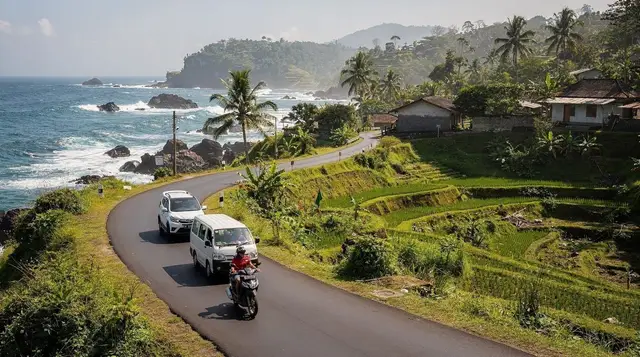
Three Days Across the Nusa Islands
Most visitors see Nusa Penida on a single exhausting day trip from Bali: an early boat, a full day being driven between three or four cliff viewpoints on the island’s west side, and a late boat back, having never set foot on Lembongan or Ceningan at all. It is a genuinely tiring way to see a beautiful place, and it skips the two smaller, calmer islands connected to Penida by a yellow bridge that most single-day itineraries simply don’t have time for.
Three days changes the shape of the trip completely. Staying overnight means an early start at the famous viewpoints before the day-tripper boats arrive, a slower pace across Lembongan and Ceningan, and enough time in the water for snorkelling or diving without treating it as an afterthought squeezed between road stops. It costs more than a single day trip and means packing an overnight bag, but it is a substantially better version of the same destination.
The honest trade-off is accommodation and infrastructure: Nusa Penida in particular has developed fast, but roads are rougher and slower than mainland Bali, and options are more spread out. This itinerary keeps the logistics manageable by basing on Lembongan, which is smaller, calmer and easier to get around, and treating Penida as a series of day excursions from there.
The three days at a glance
| Base | Nusa Lembongan, with day trips across to Nusa Penida |
| Islands covered | Nusa Penida, Nusa Lembongan, Nusa Ceningan |
| Access | Fast boat from Sanur to Lembongan, then local boat or the yellow bridge between the three islands |
| Best time | Dry season, April to October, for calmer boat crossings and clearer water |
| Pace | One full day on Penida’s west side, one day covering Lembongan and Ceningan, one flexible day for diving, snorkelling or rest |
Day one: Sanur to Lembongan, then straight into Penida’s west side
Take an early fast boat from Sanur rather than a later crossing — sea conditions are typically calmer earlier in the day, and it gives you the most usable daylight. Drop your bag at your Lembongan accommodation first, then arrange a local boat transfer across to Penida itself for the west-side cliff viewpoints, which are the island’s best-known sights and the reason most people come at all.
Because you’re not racing a single-day tour schedule, arrive at the first viewpoint as early as realistically possible. The crowds at Penida’s most photographed spots build fast once the day-tripper boats land mid-morning, and an early arrival is the single biggest factor in how much you enjoy these stops. Keep the day to two or three viewpoints rather than trying to cover the whole west coast — the driving between them on Penida’s narrow, hilly roads takes longer than it looks on a map.
Day two: Lembongan and Ceningan without the rush
Spend day two on the two smaller islands, connected to each other by the yellow suspension bridge. Lembongan itself is compact enough to explore by scooter or bicycle in a morning: mangrove forest, a seaweed farming area, and a couple of good, quieter beaches away from the crowds that gather at Penida’s viewpoints. Cross the bridge to Ceningan for a slower, less developed feel — it has a fraction of Lembongan’s visitor numbers and a couple of worthwhile viewpoints of its own, including a cliffside blue lagoon.
This is a good day to build in genuine downtime rather than another full itinerary. A local boat hop between the islands covers the practical transport if you’d rather not manage it yourself, but a scooter is genuinely the easiest way to see Lembongan and Ceningan at your own pace if you’re comfortable riding one.
Day three: diving, snorkelling, or a slow final morning
The area around Nusa Penida is one of the more reliable places in Indonesia to see manta rays, and a half-day out on the water is worth building into the trip if you haven’t already. Choose based on your comfort in the water: certified divers get considerably more from the experience than snorkellers, since the best manta sightings are often at a depth snorkelling doesn’t reach, though surface encounters do happen. A good option that keeps the group small is a private snorkelling trip around Nusa Penida’s cleaning stations, which avoids the crowded larger group boats that circulate through the same spots at peak times.
If diving or an organised snorkel trip doesn’t suit your last day, a slower final morning around Lembongan before your return boat is a reasonable alternative to forcing in one more activity. Some travellers extend the trip by a day specifically to add a second water-based morning without rushing the departure, since the crossing back to Sanur and any onward travel that day can eat into the afternoon more than expected.
Diving or snorkelling: which suits your three days better
| Diving | Snorkelling | |
|---|---|---|
| Manta ray sightings | More reliable, including deeper cleaning stations | Possible but weather- and location-dependent |
| Certification needed | Yes, for the best sites, though introductory dives exist | No, suitable for most swimmers |
| Cost | Higher, and rises further with equipment rental | Lower, and widely available as a half-day trip |
| Best for | Travellers already certified or willing to do a short intro dive | Families, non-swimmers who are still comfortable in open water, tighter budgets |
Neither option is objectively better — it depends on your comfort in open water and how much of the three days you want to dedicate to it. If you’re already a certified diver, it’s worth prioritising over snorkelling purely for the depth and reliability of sightings. If you’re not, a well-run snorkelling trip with a good guide is still a genuinely worthwhile morning rather than a consolation option.
Packing and practical notes specific to these islands
Bring more cash than you think you’ll need. Card payment infrastructure on Lembongan and especially Penida is less consistent than mainland Bali, and small local boat operators, warungs and scooter rental stands often deal in cash only. A reef-safe sunscreen matters more here than almost anywhere else on the trip, given how much of the three days is spent in or near the water around genuinely healthy reef areas. If you’re prone to seasickness, pack accordingly — the boat crossings are a real part of this itinerary, not a footnote, and happen at least twice in three days.
Phone signal and data coverage are patchier on Penida than on Lembongan or mainland Bali, particularly away from the main settlements, which is worth knowing if you’re relying on a map app to navigate the west-coast viewpoint loop by scooter.
What isn’t worth the detour
Skip trying to add Nusa Penida’s east side — the beaches and viewpoints on the far side of the island from the standard west-coast loop — onto this same three-day trip unless you’re extending it further. The roads there are rougher and the distances longer than the west-side loop, and cramming both sides into three days just recreates the rushed, exhausting version of Penida this itinerary is designed to avoid. Also skip booking a Penida day tour from Bali once you’re already staying on Lembongan — it’s a strictly worse, more expensive version of what a local boat and a scooter or driver can do for you directly from where you’re already based.
Where to actually stay on Lembongan
Most visitors base themselves near Jungutbatu or Mushroom Bay, the two main beach areas on Lembongan’s west side, both of which have a reasonable spread of guesthouses and mid-range rooms within walking distance of restaurants and boat access points. Jungutbatu tends to be slightly livelier and closer to the main pier from Sanur; Mushroom Bay is smaller and calmer, with a shorter stretch of beach that suits travellers prioritising quiet over convenience. Either works well as a base for day trips across to Penida, so the choice comes down more to atmosphere than logistics.
Booking accommodation with a generator or reliable backup power is worth checking specifically on these islands — outages are more common than on the mainland grid, and it matters more if you’re relying on air conditioning through the heat of the day.
Budget for three days
Costs on Lembongan and Penida run a little higher than equivalent options on mainland Bali, reflecting the extra logistics of getting supplies to the islands, though Lembongan in particular still has a wide range of accommodation from simple guesthouses to nicer beachfront rooms. Boat transfers between Sanur and Lembongan, and the local hops between the three islands, are a real recurring cost across three days rather than a single one-off, so factor them in alongside accommodation and food. A dive or snorkel trip on the final day is usually the single largest expense of the three days, and it is worth treating as a deliberate splurge rather than an assumed default if your budget is tight.
When to go
The dry season, roughly April to October, gives calmer crossings between the islands and clearer water for snorkelling and diving, and it’s the more reliable window if manta ray sightings are a priority — they’re present year-round at Nusa Penida, but rough seas in the wet months can cancel trips outright. Avoid scheduling this trip in a way that leaves no buffer day if bad weather delays a boat crossing, particularly if you have an onward flight to catch soon after.
Getting there and around
Fast boats run from Sanur to Lembongan and take a manageable chunk of a morning, and they’re the standard way to reach the islands — there is no bridge from mainland Bali. Once across, transport between the three islands is by small local boat between Lembongan and Penida, and by the yellow bridge on foot, scooter or car between Lembongan and Ceningan. A scooter is the easiest way to get around on Lembongan and Ceningan if you’re licensed and comfortable riding one; Penida’s rougher roads make a private driver a more comfortable choice for most visitors, especially for the west-coast viewpoint loop.
How this fits into a longer trip
This three-day block pairs naturally with a longer South Bali or Ubud stay either side of it, since Sanur — the departure point for the boats — sits a short distance from both. If you’re deciding how the islands fit into a wider plan, the Nusa Penida day trip guide covers the shorter, single-day version of this trip for comparison, and the Nusa Penida vs Nusa Lembongan guide is useful if you’re trying to decide where to actually base yourself.
Snorkellers specifically should also read diving with mola-mola in Bali for the separate, more seasonal side of diving around Penida. For the wider Gili and Lombok area beyond these three islands, look at Bali and the Gili Islands, 7 days, which uses a similar fast-boat structure further east. Divers specifically should also read the best diving in Bali and Nusa Penida manta point guides before booking a trip.
Frequently asked questions about Three Days Across the Nusa Islands
Can I do the Nusa Islands as a day trip instead of staying overnight?
Yes, and many visitors do exactly that from Sanur or South Bali. It’s simply a more rushed, more crowded version of the west-coast highlights, and it skips Lembongan and Ceningan almost entirely.
Do I need to book boats in advance?
In peak season, yes, particularly for popular morning departure times. In quieter months you can often book a day or two ahead once you’re in Bali, but booking ahead removes the risk of a sold-out sailing.
Is Nusa Penida safe to ride a scooter on?
The roads are rougher and hillier than mainland Bali, with some stretches unpaved, which makes it more demanding than Kuta or Ubud. If you’re not a confident rider, a private driver for the day is a more comfortable choice than pushing your limits on unfamiliar terrain.
Will I definitely see manta rays?
Sightings are frequent but never guaranteed, since these are wild animals in open water. Most operators have a strong track record at the known manta cleaning stations, but treat any guarantee with scepticism.
Which island should I actually stay on?
Lembongan is the easiest base: calmer, better set up for visitors, and a short local boat from Penida’s attractions. Staying directly on Penida is possible but the accommodation and roads are less developed.
Is three days too long if I’m not interested in diving?
Not necessarily — the viewpoints, the bridge walk between Lembongan and Ceningan, and simply slowing down after a rushed single day are enough to fill three days even without getting in the water, though a shorter two-day version is reasonable if diving isn’t a priority.
How rough is the boat crossing from Sanur?
It can be choppy, especially later in the day or during the wetter months, and some travellers do get seasick. Sitting toward the back and lower in the boat generally helps, and an early morning crossing tends to be calmer.
Is there ATM access on Nusa Penida and Lembongan?
Yes, but machines are fewer and less reliable than on the mainland, and they can run out of cash during busy periods. Withdraw what you need before crossing over rather than assuming you’ll find a working machine when you need one.
Can I bring a suitcase, or should I pack lighter for this trip?
Pack lighter if you can. Boat crossings, uneven paths at some landing points, and scooter transport on Penida’s rougher roads are all easier with a soft bag or backpack than a wheeled suitcase.
tours.3 days
Verified deep-linked GetYourGuide tours. Book through these links and we earn a small commission at no cost to you.
These are our own photographs of Bali, not the operator's pictures of this tour — open the tour page to see those.