How to Dress for a Balinese Temple, Without Overthinking It
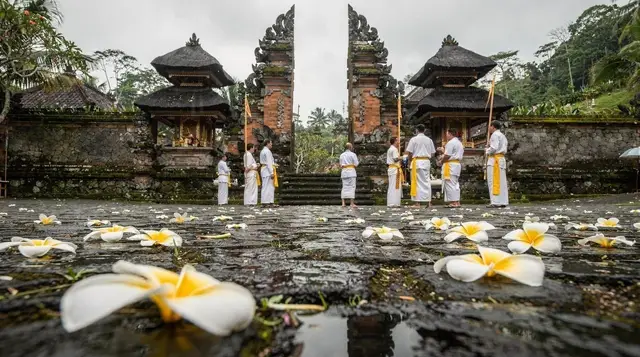
The core of Balinese temple dress code is simpler than the amount of anxious pre-trip searching about it suggests: a sarong covering the legs, tied with a sash at the waist, and you’re covered for the overwhelming majority of temples you’ll visit as a tourist. What makes this confusing for first-time visitors isn’t the rule itself but the fact that it’s applied with real inconsistency between temples — some have a formal counter renting sarongs for a small fee, others simply hand them out freely at the entrance, and a few, particularly smaller village temples not set up for regular tourist visits, may not have a system at all, which means bringing your own becomes genuinely useful rather than just a nice-to-have.
The reasoning behind the dress code is worth understanding rather than just following mechanically, because it changes how you carry yourself at a temple beyond just the clothing itself. Balinese Hindu temples are active places of worship, not museum sites, and covering the legs is understood as a mark of respect appropriate for entering a sacred space, in the same broad category as covering shoulders or removing shoes is in other religious traditions elsewhere. Approaching it with that understanding, rather than as an arbitrary tourist hoop to jump through, tends to produce a more respectful visit overall, not just a compliant outfit.
There’s a second, less discussed layer to temple etiquette that trips up visitors who’ve only researched the dress code: menstruating women are traditionally asked not to enter temple grounds in Balinese Hindu practice. This isn’t enforced by any visible check, and it’s rarely mentioned in tourist-facing signage, but it’s a real part of the belief system behind the dress code and etiquette more broadly, and worth knowing about even if how you respond to it is a personal decision.
At a glance
| Core requirement | Sarong covering the legs, tied with a sash (selendang) at the waist |
| Where to get one | Almost always provided or available to rent on-site at tourist-visited temples |
| Shoulders | Generally expected to be covered too, though enforced less consistently than the sarong |
| Cost | Usually free or a small rental fee, sometimes bundled into the temple entrance ticket |
| Extra consideration | Traditionally, menstruating women are asked not to enter temple grounds |
What a sarong and sash actually involve
A sarong is a rectangular piece of fabric wrapped around the waist and tied to cover the legs down to at least the knee, sometimes to the ankle depending on the temple’s specific expectations. The sash, or selendang, is a narrower strip of fabric tied around the waist on top of the sarong, traditionally understood as separating the sacred upper body from the lower body in Balinese Hindu cosmology.
Staff at temple entrances or rental counters will generally help you tie both correctly if you’re unsure, and there’s no shame in asking — it’s a routine, expected question from first-time visitors. Practising the tie once or twice on your own before a temple visit, if you happen to be renting or buying a sarong the day before, saves a small amount of fumbling at the entrance and lets you focus on the visit itself rather than the logistics of getting dressed.
Where sarongs come from at different temples
At larger, well-visited temples like Tirta Empul or Uluwatu, sarong provision is well organised, either included in the ticket price or available to rent for a small fee at a dedicated counter near the entrance. Smaller or less tourist-oriented temples may have a more informal system, sometimes just a basket of sarongs at the gate, sometimes nothing at all if the temple rarely receives outside visitors. A guided visit, such as the Ubud Barong dance, temple, and Balinese house tour, typically handles this logistics question for you as part of the itinerary, which removes one layer of uncertainty from a first temple visit.
Bringing your own versus relying on what’s provided
Bringing a lightweight sarong of your own is a reasonable precaution, particularly if your itinerary includes smaller village temples during a ceremony, when rental counters may be busier or less organised than usual. It also means you’re never waiting in a queue for a shared rental supply during a crowded period. That said, for most standard tourist visits to well-known temples, what’s provided on-site is entirely sufficient, and there’s no need to buy or pack a sarong specifically for a Bali trip unless you’re planning several temple visits or want one as a genuine souvenir afterwards.
Menstruation and temple entry, addressed directly
Traditional Balinese Hindu belief holds that menstruating women should not enter temple grounds, tied to broader concepts of ritual purity within the religion. This isn’t something enforced by a visible check at the gate, and it’s rarely mentioned explicitly to tourists, but it’s a genuine part of the cultural and religious context behind temple visits, and some travellers choose to respect it as a matter of cultural sensitivity even without any external enforcement. How you personally navigate this is your own decision, but it’s better to know about it in advance than to encounter the expectation for the first time secondhand after a visit.
Melukat and purification ceremonies: a slightly different dress standard
If your temple visit includes participating in a melukat (water purification) ceremony rather than just observing the grounds, the practical dress requirements shift slightly — you’ll typically still wear a sarong and sash but should expect to get genuinely wet, so quick-dry clothing underneath makes more sense than something that takes hours to dry.
A tour built around this experience, such as the hidden temple purification and Balinese home experience, will usually brief you on exactly what to wear and bring in advance, which is worth confirming ahead of time rather than guessing. Bringing a spare set of dry clothes in a small bag is a simple way to avoid spending the rest of the day in a damp sarong after a purification ceremony, particularly if further stops follow later in the itinerary.
Combining a temple visit with a waterfall stop
Many temple tours pair a dress-code-required temple visit with a waterfall or garden stop that has no such requirement, which means packing and changing logistics are worth thinking through in advance. A combined itinerary such as the private Balinese home, temple, and waterfall tour typically builds in time to change out of temple-appropriate coverage and into swimwear for the waterfall portion, but it’s worth confirming this sequencing with your guide or driver in advance rather than assuming, particularly if you’d rather not carry wet clothing through the temple portion of the day.
What guides actually help with beyond the sarong itself
A knowledgeable local guide does more than hand you a sarong at the gate — a good one will explain which specific areas of a temple complex are open to non-Hindu visitors, when it’s appropriate to take photographs and when it isn’t, and how to behave respectfully around worshippers who are there for genuine religious practice rather than as a photo backdrop. This matters more at temples with active ceremonies happening during your visit, where the etiquette expectations go well beyond the clothing itself.
If temple culture and etiquette genuinely interest you rather than just the photo opportunity, asking your guide direct questions during the visit tends to be far more informative than anything covered by a generic pre-trip dress-code checklist. It’s the difference between leaving a temple with a set of photographs and leaving with an actual understanding of what you saw.
Spa and healing experiences with a temple component
Some Ubud-based experiences combine a temple or purification visit with a spa or healing treatment afterwards, which introduces its own separate set of practical clothing considerations beyond the temple dress code itself. An option like the sacred water temple ritual and Balinese healing spa experience typically provides everything needed for both segments of the day, but packing a change of comfortable clothing for the spa portion, separate from what you wear to the temple itself, makes the transition between the two considerably smoother.
What isn’t worth the detour
Skip worrying excessively about minor variations in dress code enforcement between temples — the core requirement (sarong, sash, reasonably modest clothing) covers the overwhelming majority of situations you’ll encounter, and temple staff are generally helpful rather than strict about small deviations from a nervous first-time visitor. Also skip buying an expensive, elaborately patterned sarong specifically for temple visits if budget is a concern; a simple, plain sarong serves exactly the same practical and respectful purpose as an ornate one, and most temples provide a perfectly adequate one anyway.
Budget
Sarong and sash rental is typically free or a very small fee, sometimes bundled directly into a temple’s entrance ticket price rather than charged separately. This is one of the smallest cost items on a Bali itinerary regardless of how many temples you visit, and it’s rarely worth trying to economise on by skipping a temple that requires proper dress in favour of one that doesn’t.
When to go
Temple visits work in any season, though dress-code logistics can shift slightly during major ceremony periods like Galungan and Kuningan, when temples are busier with worshippers and rental systems may be more stretched than on an ordinary day. See the Balinese ceremonies guide if your visit might coincide with one of these periods, since the etiquette expectations shift beyond just clothing during an active ceremony.
Access and getting there
Most temples visited by tourists are reachable by private driver, organised tour, or scooter, and dress-code provisions are almost always available on-site regardless of how you arrive. If you’re visiting a smaller, less tourist-oriented temple independently rather than through a guide, it’s worth bringing your own sarong as a precaution, since these sites are less likely to have a dedicated rental system set up for casual visitors.
How this fits into a longer trip
For a fuller look at temple etiquette beyond just dress code, the Bali temple etiquette and dress code guide covers behaviour expectations, photography rules, and ceremony-specific considerations in more depth than this page. If you’re planning to visit some of Bali’s most significant temples, the Tirta Empul purification ritual guide, Lempuyang Gates of Heaven guide, and Besakih destination guide each cover site-specific dress and etiquette details worth knowing before you go.
If ceremonies and the Balinese ritual calendar interest you more broadly, the melukat water purification guide and Balinese ceremonies guide both build on the etiquette basics covered here. For temple-focused day tours generally, the Uluwatu temple and Kecak dance guide rounds out the most commonly visited temple experience beyond Ubud’s own temple sites.
Frequently asked questions about How to Dress for a Balinese Temple, Without Overthinking It
Do I need to bring my own sarong to visit a Balinese temple?
Not usually — most temples visited by tourists provide or rent sarongs on-site. Bringing your own is a reasonable precaution for smaller temples or busy ceremony periods, but isn’t required at most standard tourist sites.
Do men and women follow the same dress code?
Yes, the sarong and sash requirement applies to all visitors regardless of gender, though menstruating women are traditionally asked not to enter temple grounds at all as a separate consideration.
Are shorts okay under a sarong?
Generally acceptable, since the sarong itself provides the required leg coverage, though reasonably modest shorts underneath avoid any ambiguity if the sarong shifts during the visit.
Is there a cost to rent a sarong at a temple?
It varies — some temples include it in the entrance ticket, others charge a small separate fee, and some village temples provide them freely without any charge at all.
What happens if I show up without proper dress and nothing is available to rent?
This is uncommon at any temple regularly visited by tourists, but at a smaller, less-prepared site, you may simply not be permitted to enter certain areas without appropriate covering, so it’s worth checking or bringing a sarong if visiting somewhere off the typical tourist route.
Do I need to cover my shoulders as well as my legs?
Generally expected, though it’s enforced less consistently across temples than the sarong requirement. A light shawl or long-sleeved cover-up is a reasonable precaution if you’re wearing a sleeveless top.
Should I remove my shoes at a Balinese temple?
This varies by specific temple and area within the temple complex; follow the lead of other visitors or your guide, since not all areas require shoe removal the way some other regional temple traditions do.
Is the dress code stricter during a ceremony like Galungan?
Expectations around modest dress remain fundamentally the same, though the atmosphere is more formal and rental systems may be busier, so allow extra time and be especially mindful of respectful behaviour if visiting during an active ceremony.
Temple & culture tours on GetYourGuide
Verified deep-linked GetYourGuide tours. Book through these links and we earn a small commission at no cost to you.
These are our own photographs of Bali, not the operator's pictures of this tour — open the tour page to see those.