Tirta Empul: The Purification Ritual, Explained
Can tourists actually take part in the Tirta Empul purification ritual, or is it just for worship?
Tourists are welcome to participate in the water purification at most of the spring's spouts, provided they dress appropriately, bring a change of clothes, and follow the sequence respectfully rather than treating it as a photo prop. A small number of spouts are reserved for specific purposes and should be skipped by visitors — a guide or the on-site signage will make clear which ones.
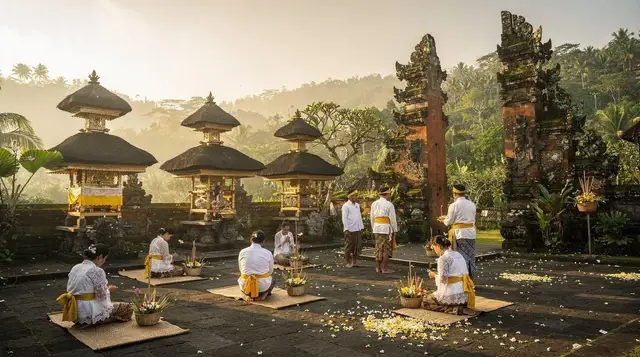
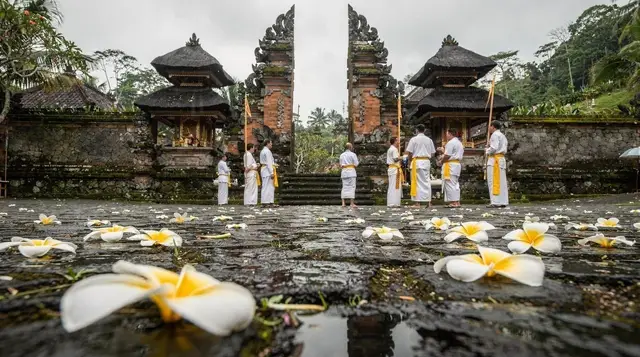
Tirta Empul is a holy spring temple near Tampaksiring, built around a natural water source considered sacred in Balinese Hindu tradition, and it is one of the few temple experiences on the island where visitors are actively invited to participate rather than simply observe from a respectful distance. The purification ritual, known locally as melukat, involves bathing under a row of spouts (pancuran) that channel water from the spring into two main bathing pools, each spout traditionally associated with a specific purpose or blessing.
This participatory element is exactly what makes Tirta Empul both one of the more meaningful temple experiences available to visitors and one of the more commonly misunderstood. Because the ritual is open to tourists in a way most Balinese temple practices are not, it draws a very different kind of crowd and energy than a temple like Besakih or Tanah Lot, where visitors mostly watch rather than participate. Approaching it thoughtfully, rather than as a novelty photo opportunity, matters more here than at almost any other stop on this trip.
The temple complex sits close to a former presidential palace, itself built on the site partly because of the spring’s significance, and the wider area retains a genuinely sacred character even amid the tourist infrastructure that has grown up around it in recent years.
Tirta Empul at a glance
| Where | Tampaksiring, near Ubud, central Bali |
| Cost | Modest entrance fee; sarong and sash usually provided; a change of clothes is your responsibility |
| Time needed | An hour to ninety minutes for a proper visit including the ritual itself |
| Access | Private driver, scooter, or organised tour from Ubud or South Bali |
| Best time | Early morning for the calmest atmosphere and cooler water; midday brings the largest crowds |
What the ritual actually involves
Participants queue at each spout in turn, submerging briefly under the flow of water while offering a short prayer or moment of reflection before moving to the next. The full sequence traditionally moves along the entire row of spouts in the main pool, though visitors are free to do as many or as few as feels appropriate, and skipping the ritual entirely to simply observe respectfully from the side is equally acceptable. A small offering, typically a canang sari, is customarily placed and a short prayer said before entering the water, and temple staff or a guide can walk first-time participants through the sequence if it is not already familiar.
Which spouts to use, and which to skip
Not every spout in the main pool is intended for general visitor use — a small number are traditionally reserved for specific purposes, including purification associated with mourning or particular ceremonies, and using these without understanding their significance is considered inappropriate. On-site staff and most guides will indicate clearly which spouts are open to general visitors, and when in doubt, following the lead of other participants or simply asking is the safest approach rather than guessing.
Doing it independently versus with a guide
It is entirely possible to visit Tirta Empul independently and take part in the ritual without a guide, since the process is reasonably intuitive once you understand the basic sequence and etiquette. That said, a guided visit, such as the Tirta Empul Temple purification ritual with a guide, adds real context about the spring’s history and the significance of individual spouts that is easy to miss visiting cold, and it removes any uncertainty about which parts of the pool are appropriate for tourist participation.
A guide’s local knowledge of the spring’s history and mythology, layered on top of the ritual sequence itself, is often what separates a memorable visit from a merely pleasant one, particularly for travellers who want to understand what they are taking part in rather than simply following a queue.
Combining Tirta Empul with Gunung Kawi
Given their relative proximity, Tirta Empul is frequently combined with a visit to the nearby rock-cut candi at Gunung Kawi, an archaeological site carved directly into a river gorge that offers a very different, quieter kind of temple experience on the same day. A half-day Ubud tour combining Tirta Empul purification and Gunung Kawi Temple is a standard way to pair the two, giving a fuller picture of central Bali’s temple landscape beyond the single spring. See the Goa Gajah Elephant Cave guide for another nearby archaeological site worth considering on the same day.
A slower version with coffee
For a more relaxed pace that extends beyond the temple itself, some tours pair the purification ritual with a stop at a local coffee plantation, a common combination given how close several of Ubud’s coffee-growing areas sit to Tampaksiring. The Tirta Empul purification and coffee tour is a straightforward way to combine the two without arranging separate transport, useful for travellers who want to extend a half-day temple visit into a fuller morning or afternoon out.
The history behind the spring
Tirta Empul’s spring is tied in Balinese Hindu mythology to a story involving the god Indra, credited with creating the spring to revive his poisoned troops, giving the water its enduring reputation for healing and purification properties within local tradition. This origin story is part of why the site carries such significance beyond its physical beauty, and it is worth knowing before you visit if you want the experience to register as more than an unusually scenic swimming pool. The temple complex itself dates back centuries, with the current structures reflecting periodic restoration typical of actively used Balinese temples rather than an untouched historical relic.
The nearby presidential palace
Adjacent to the temple complex sits a former presidential palace, built during Indonesia’s early independence period partly in recognition of the spring’s sacred status, and while it is not typically part of a standard tourist itinerary in the way the temple itself is, its presence adds an interesting layer to the site’s modern history. It reflects how Tirta Empul’s significance has carried through into Indonesia’s post-colonial political history, not just its deeper religious past, and knowing this context helps explain why the surrounding area feels more formally maintained than some of Bali’s more rustic temple sites.
Etiquette specific to the water ritual
Beyond the general temple dress code covered in the Bali temple etiquette guide, the water ritual itself carries a few specific points of etiquette worth knowing. Move through the spouts in the traditional sequence rather than jumping between them at random, keep conversation and phone use to a minimum while actually in the water, and be mindful of other participants queuing behind you rather than lingering indefinitely at a single spout during busy periods. None of this is strictly enforced by temple staff in a heavy-handed way, but following it is part of what separates a respectful participant from a visitor treating the ritual as a novelty attraction.
What isn’t worth the detour
Skip any operator offering a “guaranteed empty pool” experience at a significant premium during peak hours — the pool’s popularity means genuine solitude is unrealistic at any time other than very early morning, and paying extra for a promise that cannot really be delivered is not a good use of budget. It is also worth skipping the temptation to treat every spout as interchangeable purely for photo variety; a small number carry specific traditional purposes that deserve to be respected rather than tried out of curiosity.
Budget
The entrance fee is modest, and sarong rental is typically included or available cheaply on site. The main practical cost consideration is bringing your own towel and spare clothes, since the temple does not provide these, and factoring in a small amount for an offering if you plan to purchase one on site rather than bringing your own canang sari.
When to go
Early morning is genuinely the best time to visit, both for a calmer, less crowded pool and for the cooler water and air temperature before the midday heat sets in. By late morning and through midday, the pool area becomes considerably busier, particularly during peak tourist season, which changes the atmosphere from contemplative to considerably more crowded and rushed.
Getting there and getting around
Tirta Empul sits in Tampaksiring, a manageable drive from Ubud and a longer one from South Bali, making it a natural pairing with other central Bali stops on the same day rather than a standalone trip from the south coast. A private driver, scooter, or organised tour are all reasonable ways to arrive, with a driver or tour preferable if you plan to combine the visit with Gunung Kawi or a coffee stop on the same day.
How this fits into your wider Bali trip
Tirta Empul pairs naturally with a broader Ubud-based day, alongside nearby archaeological and cultural sites, and works well within a longer stay such as the Bali, 5 days itinerary. Read the Bali temple etiquette guide before your visit, since the same core dress code applies here alongside the specific ritual etiquette covered in this guide, and see the Balinese ceremonies guide for the wider context of purification practices in Balinese Hindu life.
Is it appropriate to take photos while someone else is doing the ritual?
Photographing the general scene is fine, but photographing an individual participant closely without their awareness or consent, especially mid-prayer, is worth avoiding. If you want a photo of yourself during the ritual, asking a travel companion or guide to take it is more appropriate than a stranger’s camera capturing the moment uninvited.
Can I visit Tirta Empul as part of a Bali honeymoon or couples itinerary?
Yes, it is a common and meaningful stop for couples given the ritual’s reflective, participatory nature, though it is a shared public space rather than a private experience, so manage expectations about privacy accordingly.
Frequently asked questions about Tirta Empul
Do I need to be Hindu to take part in the purification ritual?
No, tourists of any background are generally welcome to participate respectfully, provided they follow the appropriate etiquette and dress requirements.
What should I bring for the ritual?
A change of clothes, a towel, a bag for wet items afterward, and appropriate modest swimwear or clothing to wear during the submersion itself, since you will be fully in the water.
How cold is the water?
Noticeably cool, sourced directly from the natural spring, which is part of what makes an early morning visit more comfortable than a midday one when the contrast with the day’s heat is more pronounced.
Is it disrespectful for tourists to take part in the ritual?
Approached with genuine respect and appropriate etiquette, participation is generally welcomed rather than seen as disrespectful — the ritual is specifically structured to accommodate visitor participation, unlike many other Balinese temple practices.
How long does the full purification sequence take?
Moving through the full row of spouts typically takes a modest amount of time, though total visit length including changing, offerings, and any queueing can extend well beyond that.
Can I skip the ritual and just visit the temple?
Yes, observing respectfully from the temple grounds without entering the water is entirely acceptable, and many visitors do exactly that if participating does not appeal to them.
Temple & culture tours on GetYourGuide
Verified deep-linked GetYourGuide tours. Book through these links and we earn a small commission at no cost to you.
These are our own photographs of Bali, not the operator's pictures of this tour — open the tour page to see those.