Yoga in Ubud: An Honest Guide to Classes and Styles
Is Ubud actually a good place to do yoga, or is it overhyped?
It's genuinely well suited to it — a dense concentration of studios and teachers, a rice-terrace and jungle setting that makes an early class feel worthwhile beyond the practice itself, and enough variety in style and format that both serious practitioners and complete beginners find something that fits. The overhype is more about marketing language than the actual quality of what's on offer.
Ubud’s reputation as a yoga destination isn’t undeserved, even if the marketing around it can feel a little overdone — the concentration of studios, teachers, and wellness-focused accommodation here is genuinely unusual for a town this size, built up over years rather than manufactured overnight. What actually varies, and what’s worth understanding before booking anything, is the format: drop-in studio classes, one-off booked experiences combining yoga with something else like sound healing or a waterfall visit, and private in-villa sessions all serve different needs, and conflating them leads to mismatched expectations.
This guide covers how to think about choosing between these formats, what a typical class or session actually involves, and where the more elaborate combined experiences genuinely add something over a straightforward studio drop-in.
Yoga in Ubud at a glance
| Formats available | Drop-in studio classes, booked combined experiences, private in-villa sessions |
| Best for beginners | A gentle Hatha class or a beginner-labelled drop-in session |
| Best for a memorable one-off | A sunrise or nature-set session combined with an additional element like sound healing or a waterfall |
| Cost | Drop-in classes are inexpensive; combined and private experiences cost considerably more |
| Best time | Early morning for the classic Ubud rice-terrace or jungle setting |
Drop-in studio classes vs booked experiences
| Drop-in studio class | Booked combined experience | |
|---|---|---|
| Structure | Fixed schedule, standard class format | Often includes transport, a specific setting, and an additional element |
| Group size | Varies, often larger and more anonymous | Frequently smaller, sometimes private |
| Cost | Lower per session | Higher, reflecting the added elements and logistics |
| Best for | Regular practitioners wanting a consistent routine | Visitors wanting a memorable, one-off experience |
Neither format is objectively better — a serious yoga practitioner staying in Ubud for a week or more often prefers the routine and lower cost of drop-in studio classes, while someone visiting for a few days who wants one standout session tends to get more out of a booked combined experience built around a specific setting or additional element.
Styles you’ll actually encounter
Ubud’s studios and teachers cover a genuinely wide range of yoga styles, and it’s worth knowing roughly what each involves before booking, since they differ meaningfully in pace and intensity. Hatha classes tend to be slower-paced, holding poses longer, and suit beginners or anyone wanting a gentler introduction. Vinyasa or flow classes link movement to breath in a more continuous, faster sequence, better suited to those with some existing practice or general fitness.
More specialised offerings — yin yoga, restorative yoga, or classes blending yoga with breathwork or meditation — show up regularly too, particularly at studios and retreats leaning into Ubud’s broader wellness identity. If you’re not sure which suits you, most studios and teachers are happy to advise based on your experience level and what you’re hoping to get out of the session.
Sunrise sessions and why the timing matters
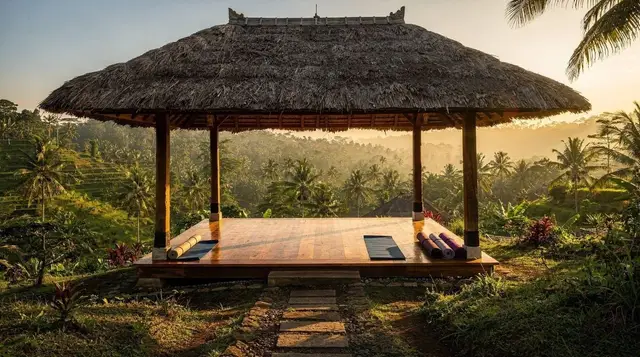
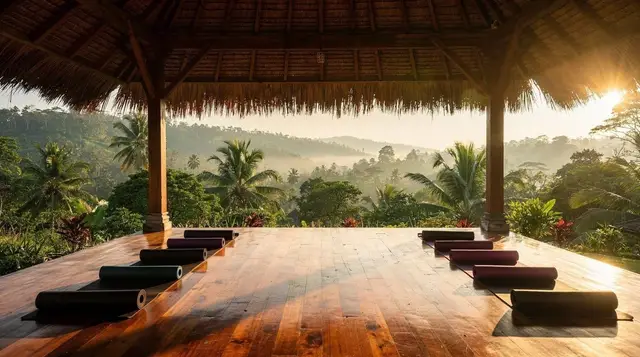
A sunrise class isn’t just an aesthetic choice — practising as the light changes over Ubud’s rice terraces or jungle canopy genuinely shifts the atmosphere of the session compared with a mid-morning studio class, and it usually means cooler, calmer conditions before the day’s heat and activity build up. A session such as the sunrise yoga experience paired with a nearby natural attraction is built specifically around this timing, combining the early start with a scenic or ritual element that a standard studio class doesn’t offer.
Sound healing and energy work: what it actually is
Sound healing sessions, increasingly common in Ubud alongside standard yoga classes, typically involve lying in a relaxed position while a practitioner uses instruments like singing bowls, gongs, or chimes to create resonant sound intended to promote deep relaxation, distinct from the physical movement of a standard yoga class.
A session such as the Ubud sound yoga and energy healing experience combines a shorter yoga component with this sound-based relaxation, which suits travellers wanting something gentler and more meditative than an active physical practice. Whether you find sound healing genuinely effective is a personal and somewhat subjective matter — approach it as a relaxing, meditative experience rather than expecting a specific measurable outcome, and you’re less likely to be disappointed either way.
Combining yoga with market and cooking culture
A smaller but genuinely interesting category of Ubud experience combines a yoga or meditation session with an entirely different activity, like a morning market visit or cooking class, on the theory that mindful movement and mindful eating fit naturally together. A session such as the Ubud morning market, Balinese cooking class, and yoga session is built around exactly this combination, giving you a fuller half-day rather than an isolated hour of practice. It’s a reasonable choice if you’d rather not treat yoga as a single-purpose booking within an already packed itinerary.
Nature-set sessions beyond the standard studio
Some of the more distinctive Ubud yoga offerings move the practice into a specific natural setting beyond the standard studio or rice-terrace backdrop — a jungle village, a riverside spot, or a location built around a particular local landscape feature. A session such as the nature-inspired yoga and breathwork session in Taro village takes this approach, combining yoga with breathwork in a quieter, more rural setting away from Ubud’s busier central studios. This style suits travellers who specifically want to get outside the town centre as part of their wellness time rather than staying within Ubud’s more concentrated studio district.
What a first class actually feels like
If you’re new to yoga entirely, a first Ubud class typically starts with the teacher checking in briefly on experience level and any injuries, followed by a guided warm-up before moving into the main sequence. Studios catering to a mixed range of experience levels are common, and most teachers offer modifications for poses in real time rather than expecting everyone in the room to move identically, which makes a beginner-labelled class considerably less intimidating than it might sound. Bringing your own mat is appreciated but rarely required, since most studios and booked experiences supply one as part of the session, along with water and sometimes a light herbal tea afterward.
Private and in-villa sessions
For travellers who’d rather not join a group at all, private in-villa sessions with a certified teacher are widely available and let you set the pace, style, and timing entirely around your own schedule. A service such as Ubud Hatha yoga home service with a certified teacher brings a qualified instructor directly to your accommodation, which is worth the additional cost if privacy, flexibility, or working with a specific style like Hatha at your own pace matters more to you than the atmosphere of a shared class.
What isn’t worth the detour
Skip any studio or booked session using vague, unverifiable wellness claims without being able to explain the actual technique or qualification behind them — a reasonable operator can tell you plainly what a session involves and what training the teacher has, and hesitation on either point is worth treating with scepticism. It’s also not worth over-scheduling multiple wellness activities back to back on the same day purely because they’re all available in one place; a rushed sequence of yoga, sound healing, and a spa treatment within a few hours tends to undercut the actual relaxation value of any single element.
What it costs
Drop-in studio classes in Ubud are inexpensive relative to many Western cities, reflecting both lower local costs and the sheer density of competing studios. Booked combined experiences — sunrise sessions with an added element, sound healing, private in-villa classes — cost considerably more, reflecting transport, a specific setting, and often a smaller or private group size. None of this pricing is inherently better or worse value; it depends on whether you’re looking for a regular practice routine or a memorable one-off experience.
When to go
Yoga in Ubud is available year-round without meaningful seasonal disruption, though outdoor and nature-set sessions are naturally more pleasant during the drier months from roughly April to October, when sudden rain is less likely to interrupt an outdoor class. Early morning remains the best timing recommendation regardless of season, both for the atmosphere and to avoid the midday heat that builds through the day.
Getting there and getting around
Ubud’s yoga studios and wellness venues are concentrated centrally enough that walking or a short scooter or Grab ride covers most options within the town itself. Sessions set further out, in villages like Taro or more rural riverside locations, typically include transport as part of the booking, which is worth confirming in advance given the winding, sometimes unclear roads outside Ubud’s main centre.
How this fits into a longer trip
Yoga pairs naturally with a broader wellness-focused stay in Ubud rather than needing to be an isolated activity. The balinese massage and spa guide and the Bali wellness retreats guide cover related activities worth combining with a yoga practice, and the melukat water purification guide and silent and meditation retreats in Bali guide go deeper into more spiritually focused practices if that’s what you’re specifically looking for.
For a longer, dedicated wellness trip, the 7-day Bali yoga and wellness itinerary sequences multiple wellness elements across a full week rather than a single Ubud stop. If you’re considering yoga teacher training rather than just a class or two, the Bali yoga teacher training reality post is worth reading before committing to anything longer-term, and the Ubud destination guide covers the wider town beyond its wellness scene specifically.
Frequently asked questions about Yoga in Ubud
Do I need yoga experience to join a class in Ubud?
No, most studios and booked sessions offer beginner-friendly options, and many can adapt a session to your level on request, particularly for private or small-group bookings.
What’s the difference between a studio drop-in and a booked experience?
A drop-in class follows a fixed studio schedule at a lower cost; a booked experience typically includes transport, a specific setting, and often an additional element like sound healing, at a higher price.
Is sound healing backed by scientific evidence?
Evidence is mixed and the field is more established as a relaxation practice than a clinically proven treatment. Approach it as a genuinely relaxing, meditative experience rather than expecting a specific measurable health outcome.
What should I wear to an outdoor sunrise class?
Light, breathable layers work well, since mornings can be cooler than the rest of the day even in a tropical climate, and you’ll likely warm up quickly once the session gets going.
Are private in-villa sessions worth the extra cost?
If flexibility, privacy, or a specific style matters more to you than the shared-class atmosphere, yes. It’s a genuine trade-off between cost and personalisation rather than one being objectively better.
Can I do yoga in Ubud without any advance booking?
Many studios accept walk-ins for standard drop-in classes, though popular sunrise or specialty sessions, particularly in high season, are worth booking ahead to guarantee a spot.
Is Ubud better for yoga than other parts of Bali?
Ubud has the deepest concentration of studios, teachers, and wellness infrastructure on the island, making it the most convenient single base if yoga is a priority, though other areas offer worthwhile sessions too.
How long should a typical class or session last?
Standard studio classes usually run around an hour, while booked combined experiences with additional elements like sound healing or a market visit typically run longer, sometimes a half-day depending on what’s included.
Yoga & wellness experiences on GetYourGuide
Verified deep-linked GetYourGuide tours. Book through these links and we earn a small commission at no cost to you.
These are our own photographs of Bali, not the operator's pictures of this tour — open the tour page to see those.