Bali Yoga Teacher Training: The Reality Behind the Instagram Version
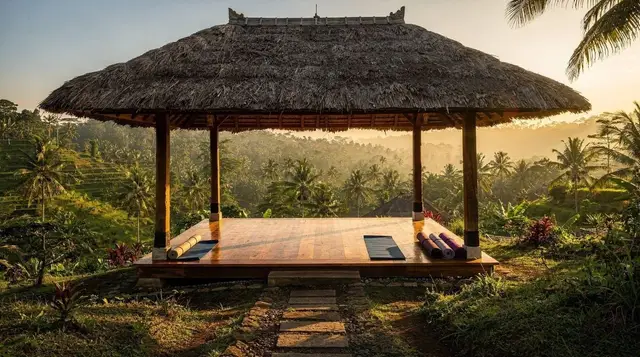
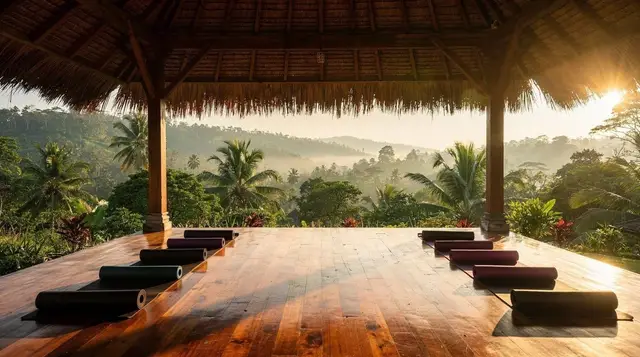
Ubud has built a genuine reputation as a global centre for yoga teacher training, and a lot of the marketing around that reputation leans hard into a specific aesthetic — open-air shalas overlooking rice paddies, golden-hour photos of a perfectly held pose, a general sense of transformative ease. What that marketing consistently underplays is how demanding an actual 200-hour training programme is on a daily basis, and how little of the Instagram-ready free time most participants actually get once the schedule is running.
A typical day on a rigorous training starts early, often before 6am, with a full physical practice, followed by anatomy or philosophy lectures, teaching methodology sessions where you practice instructing your peers, and written coursework in the evening. This runs most days of the week for the full three to four weeks of a standard 200-hour course, and participants consistently describe the middle stretch of the programme as physically and mentally exhausting rather than relaxing, regardless of how idyllic the setting is.
That’s not a criticism of the format — a rigorous training is supposed to be demanding, since it’s producing a certification meant to qualify you to teach — but it’s a genuine mismatch with how these programmes are frequently marketed to prospective students.
The other honest issue is variability in programme quality. Yoga Alliance registration sets a minimum standard for what a 200-hour training must cover, but within that minimum there’s enormous range in how seriously different schools actually deliver it — some genuinely rigorous, with experienced senior teachers and real anatomical and pedagogical depth, and others closer to an extended yoga holiday with a certificate handed out at the end regardless of demonstrated competence. Telling the two apart from a glossy website isn’t straightforward, and it’s worth doing real homework before committing several weeks and a meaningful amount of money to one.
At a glance
| Where | Ubud is the established centre, with programmes also in Canggu and elsewhere on the island |
| Typical length | 200-hour training over roughly three to four weeks; longer for 300- or 500-hour programmes |
| Daily structure | Early starts, full practice, lectures, teaching practice, coursework — most days of the week |
| Cost | A meaningful investment; varies significantly by school reputation and accommodation included |
| Certification | Yoga Alliance registration is the common standard, but quality varies within that minimum |
What a rigorous programme actually looks like day to day
A demanding but well-regarded programme structures each day around several distinct components: an early asana (physical practice) session, a lecture block covering anatomy, philosophy, or teaching methodology, supervised teaching practice where students take turns leading their peers through sequences, and evening study or written assignments. Weekends sometimes offer a lighter schedule or a single free day, but the overall pace across three to four weeks leaves considerably less downtime than most prospective students expect walking in.
Yoga Alliance registration: what it does and doesn’t guarantee
Yoga Alliance is the most widely recognised registration body for yoga teacher trainings internationally, and a “200-hour Yoga Alliance registered” programme has met a minimum curriculum standard covering technique, teaching methodology, anatomy, and philosophy. What it doesn’t guarantee is teaching quality, class size, or how rigorously that minimum curriculum is actually delivered — registration is closer to a baseline compliance check than a quality rating, and two Yoga Alliance registered programmes can differ enormously in how seriously they’re run.
| Rigorous programme | Lighter/retreat-style programme | |
|---|---|---|
| Daily schedule | Full days, early starts, limited free time | More free time, lighter academic component |
| Teaching practice | Extensive, supervised, with real feedback | Minimal, sometimes optional |
| Class sizes | Often smaller, more individual attention | Can be large, less individual feedback |
| Suited to | Those planning to actually teach afterwards | Those wanting a deep-practice retreat with a certificate |
How to actually vet a programme before committing
Beyond checking Yoga Alliance registration, look for specifics: named lead teachers with verifiable experience and training lineage, a detailed day-by-day curriculum rather than a vague overview, class size caps, and — importantly — recent graduate reviews that discuss the actual teaching quality and workload rather than just the setting and food. A programme that’s cagey about specifics or leans entirely on aesthetic marketing in its materials is worth treating with more scepticism than one that publishes a genuinely detailed curriculum upfront.
If you’re not ready for a full training
For travellers curious about Balinese-style yoga practice without committing to a multi-week certification programme, single sessions and short experiences are a reasonable lower-commitment starting point. A private session such as the Ubud Hatha yoga home service with a certified yoga teacher or a combined practice like the Ubud yoga and healing meditation session gives a genuine taste of Ubud’s yoga culture without the weeks-long commitment, and is a sensible way to gauge your own interest before considering a full training.
A sound-focused option like the Ubud sound yoga and energy healing experience is another accessible way to sample a different facet of the practice without any of the academic or certification commitment a full training involves.
The emotional side that marketing doesn’t mention
Beyond the physical demands, several weeks of intensive daily practice combined with philosophy study and close group living tends to bring up real emotional processing for a lot of participants, something reputable schools acknowledge openly rather than treat as an unexpected side effect. Living and training closely with the same small group for three to four weeks, often away from normal routines and support networks, is genuinely intense in ways that go beyond sore muscles from extra practice.
Good programmes build in some support for this — experienced lead teachers who can hold space for it, and sometimes a counsellor or senior mentor available for anyone who needs it — while less well-run programmes can leave participants to navigate it without much structure. This is worth asking about directly when researching a school, since it’s rarely covered in promotional material but genuinely affects the experience.
Group dynamics and how they shape the training
The composition of your specific cohort has more influence on how a training actually feels than most prospective students anticipate. A group of six to ten trainees develops a genuinely different dynamic than a much larger cohort of thirty or more, both in terms of individual teaching-practice attention and in the closeness that develops (or doesn’t) over the weeks.
Smaller programmes tend to offer more individualised feedback during teaching practice specifically, which matters considerably if actually becoming a confident, capable teacher is your real goal rather than simply completing a certificate. Larger programmes can still be excellent, but the individual attention during the practical teaching component is inherently more diluted across more participants.
What happens after certification
A 200-hour certification qualifies you to teach, but it doesn’t guarantee teaching work, and it’s worth thinking realistically about what comes next before enrolling. Some graduates go on to teach immediately, either back home or by picking up casual classes in Bali itself; many others use the training primarily for deepening personal practice rather than launching a teaching career, which is a legitimate outcome but worth being honest with yourself about from the outset, since it changes how much weight to put on a school’s specific teaching-practice rigour versus its overall depth of study and practice.
Comparing multiple schools before committing
Given the genuine variance in programme quality within the same minimum certification standard, comparing at least two or three schools directly — requesting detailed curricula, asking about lead teacher experience, and reading recent graduate reviews for each — is worth the extra time before committing several weeks and a meaningful sum of money.
Schools that are confident in what they offer are generally happy to answer detailed questions from a prospective student; reluctance to provide specifics on curriculum or teaching staff is itself useful information when comparing options. Reaching out directly to a couple of recent graduates, if a school is willing to connect you, is generally more informative than any amount of website research on its own.
What isn’t worth the detour
Skip any programme that markets itself primarily through soft-focus lifestyle photography with minimal detail about the actual curriculum, teaching staff qualifications, or daily schedule — this is a real signal about priorities, and a school confident in its academic rigour tends to lead with substance rather than atmosphere. Also skip enrolling in a full 200-hour training if your actual goal is a relaxing holiday rather than a teaching qualification; the mismatch between expectation and reality is one of the most common sources of genuine disappointment reported by past participants.
Budget
Programme costs vary considerably by school reputation, included accommodation standard, and length, and it’s a genuine financial commitment on top of the time investment. Cheaper programmes aren’t automatically lower quality, and expensive ones aren’t automatically rigorous — cost correlates more with accommodation standard and marketing spend than with teaching quality specifically, which is exactly why the vetting process matters more than price comparison alone. A mid-priced programme with a rigorous, well-documented curriculum is frequently a better investment than the most expensive option on the island, once the actual teaching-practice depth is compared side by side.
When to go
Yoga teacher trainings run on a fairly steady schedule across the year in Ubud, though the busiest enrolment periods tend to track the broader dry-season travel peak. Outside the busiest months, smaller class sizes are more likely, which some prospective students specifically seek out for the extra individual attention it affords during teaching practice sessions.
Access and getting there
Nearly all established training centres are based in or around Ubud, which is well set up for a multi-week stay given its density of accommodation, healthy-food restaurants, and general infrastructure supporting a longer, wellness-focused visit. Most programmes either include accommodation as part of the package or provide guidance on nearby options, so this is worth confirming directly rather than assuming, since separately arranging weeks of accommodation on top of the programme cost changes the overall budget meaningfully.
How this fits into a longer trip
For a broader look at Ubud’s yoga scene beyond formal teacher training, the yoga in Ubud guide covers studios, drop-in classes, and styles available without a multi-week commitment. If wellness more broadly is the focus of your trip, the Bali wellness retreats guide and silent and meditation retreats guide cover adjacent options that ask less of you academically than a teacher training does.
If you’d rather build a shorter, less intensive yoga-focused trip instead of a full training, the 7-day Bali yoga and wellness itinerary is structured around exactly that.
For rounding out a wellness-focused stay in Ubud, the Balinese massage and spa guide and Ubud destination guide cover the wider practical side of an extended Ubud stay, and a combined package like the Ubud body and soul package combining yoga, purification, and massage offers a lighter, single-day alternative for anyone who’s decided a full training isn’t the right fit for this trip.
Frequently asked questions about Bali Yoga Teacher Training
How long does a standard yoga teacher training in Bali take?
Most 200-hour programmes run roughly three to four weeks; 300- and 500-hour programmes take longer or are sometimes split across multiple modules.
Is a Bali yoga teacher training relaxing?
Generally no, particularly during a rigorous programme — expect long, demanding days combining physical practice, study, and teaching practice, with limited free time during the core weeks.
Does Yoga Alliance registration guarantee a good programme?
It guarantees a minimum curriculum standard was met, but not teaching quality or how rigorously that curriculum is delivered, so it’s a starting point for vetting rather than a full guarantee.
Do I need prior yoga experience to enrol in a 200-hour training?
Most programmes expect a reasonably established personal practice beforehand, since the training builds on existing skill rather than teaching yoga from complete scratch.
Is it worth doing a teacher training if I don’t plan to teach afterwards?
For some people, yes, purely for the depth of personal practice it develops, but a shorter, less intensive retreat is generally a better fit if teaching certification isn’t your actual goal.
How do I check if a specific programme is legitimate and well run?
Look for named, verifiable lead teachers, a detailed daily curriculum, class size information, and recent graduate reviews that discuss workload and teaching quality specifically rather than just the setting.
Is Ubud the only place in Bali to do a yoga teacher training?
It’s the most established centre, but programmes also run in Canggu and a few other areas; Ubud’s density of options and general wellness infrastructure make it the default choice for most students.
What should I budget for beyond the programme fee itself?
Confirm whether accommodation and meals are included, since some programmes bundle these and others don’t, which changes the real total cost of several weeks in Bali considerably.
Yoga & wellness experiences on GetYourGuide
Verified deep-linked GetYourGuide tours. Book through these links and we earn a small commission at no cost to you.
These are our own photographs of Bali, not the operator's pictures of this tour — open the tour page to see those.