Silent and Meditation Retreats in Bali: What to Expect
Is a silent retreat in Bali actually silent the whole time?
It depends entirely on the specific programme. Some retreats include genuine extended silent periods, sometimes multiple days, as a core structural element. Others use "silent" more loosely to describe a generally quiet, reflective atmosphere without strict enforced silence. Check the specific format before booking if true, sustained silence is what you're actually looking for.
“Silent retreat” is used loosely enough in Bali’s wellness marketing that it’s worth clarifying what you’re actually booking before committing time and money to one. At the more rigorous end, some programmes include genuinely enforced silent periods, sometimes spanning multiple days with no talking, limited eye contact, and no devices, structured around intensive meditation practice. At the more accessible end, a “silent” or “meditation” session might simply mean a single guided hour in a quiet, reflective setting, with normal conversation before and after.
Neither approach is wrong, but they serve very different purposes, and it’s worth being clear with yourself about which you actually want before booking. This guide covers the range of what’s available in and around Ubud specifically, from single sessions to more structured programmes, and how to think about which fits your trip.
Meditation and silent retreats at a glance
| Single-session experiences | A guided hour or so of meditation, often paired with yoga or breathwork |
| Structured multi-day programmes | Extended, sometimes enforced silent periods with a fixed daily schedule |
| Best for single sessions | Travellers wanting a taste of the practice within a broader trip |
| Best for multi-day programmes | Travellers specifically prioritising deep meditation practice as their main trip focus |
| Cost | Single sessions are moderate; multi-day structured programmes cost considerably more |
Why Bali specifically appeals for meditation
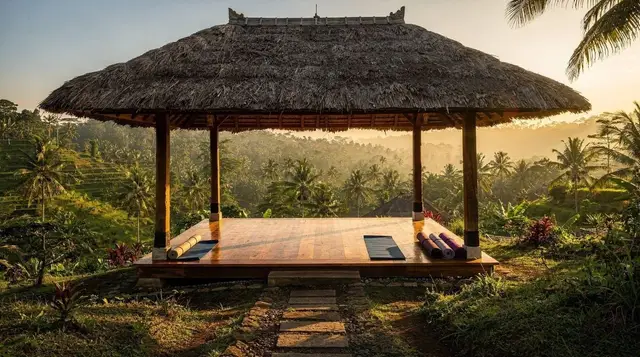
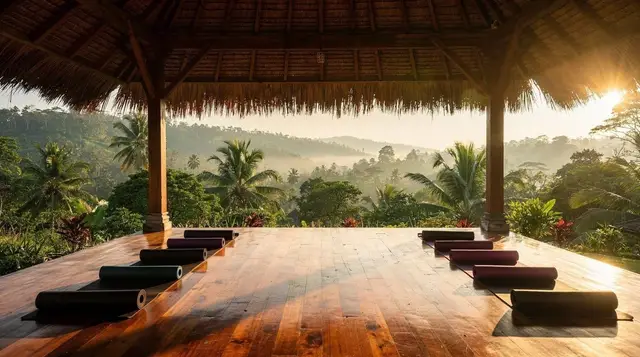
Ubud’s inland, jungle-and-rice-terrace setting, cooler than the coast and away from South Bali’s beach-club energy, has drawn meditation and wellness practitioners for decades, and that history has built a genuine depth of teaching and facilitation experience rather than a purely recent tourism trend. This matters practically: an established meditation scene means more experienced facilitators, more varied programme structures to choose between, and a community of practitioners, both local and long-term visiting, that supports a genuinely serious practice environment for those who want it, alongside the more casual single-session options aimed at short-term visitors.
Single guided sessions: the accessible starting point
For most visitors, a single guided meditation session is the more realistic and accessible entry point, whether or not you eventually want something more intensive. A session such as the Shambala guided meditation with Balinese breakfast pairs a structured meditation practice with a relaxed shared meal afterward, easing you into the practice without demanding an extended commitment.
Another option, the Ubud yoga and healing meditation, combines meditation with a physical yoga component, which some beginners find an easier way into stillness practice than jumping straight into extended seated meditation.
What genuine silent practice actually involves
At the more rigorous end, structured silent meditation practice typically means extended periods, sometimes full days, without speaking, minimal or no eye contact with other participants, and no phone or device use, built around the idea that removing everyday verbal and social stimulation allows for deeper, more sustained meditative focus.
This is a real discipline, not simply “a quiet day,” and it can be genuinely challenging for first-timers unused to extended silence — mental restlessness, discomfort with the lack of usual social interaction, and simply not knowing what to do with unstructured silent time are all common early experiences that settle with practice. A cleansing and meditation-focused tour such as the Ubud spiritual cleansing and meditation healing tour introduces elements of this deeper practice within a shorter, guided format rather than requiring a full multi-day commitment upfront.
Techniques you’ll actually encounter
Meditation offerings in and around Ubud draw on a mix of traditions rather than a single fixed method, and it’s worth knowing roughly what you might encounter. Breath-focused practices, common across many traditions, anchor attention on the breath as a way to settle the mind. Guided visualisation uses a facilitator’s spoken instruction to lead participants through a mental journey or scenario.
Body-scan techniques direct attention systematically through different parts of the body to build present-moment awareness. Some sessions blend several of these within a single hour, while more structured retreats often build progressively from simpler techniques toward longer, less guided silent sitting as the programme advances. None of this requires prior knowledge to participate — a competent facilitator introduces whatever technique is being used clearly at the start of a session.
Combining meditation with a broader active day
Not every meditation-adjacent booking needs to be purely still and reflective — some operators build a day that combines a physical, active element with meditation or a healing session as a counterbalance. A package such as the Ubud quad bike, Ayung River rafting, and massage tour pairs adrenaline-driven activity with a calming close to the day, which suits travellers who want variety rather than a purely contemplative day throughout.
Similarly, a healing-focused session like healing experience with meditation and yoga blends gentle movement with stillness practice rather than asking for extended silence from the outset.
Private, customisable meditation-inclusive days
If you’d rather shape your own day around specific interests rather than a fixed package, a customisable private tour is a reasonable option. A tour such as the private Ubud tour with optional activities and Bali spa lets you build a day incorporating meditation, spa time, or other wellness elements around your own pace and preferences, which suits travellers who find fixed package structures too rigid for what they specifically want.
Group vs one-on-one sessions
Most meditation offerings run as group sessions, which suit the majority of visitors well and typically cost less than individual instruction. A one-on-one session with a dedicated teacher costs more but allows the pace, technique, and focus to be shaped entirely around your own needs, which can matter if you’re working through something specific or simply prefer not practising alongside strangers. Neither is the “correct” choice; group sessions offer a shared, communal energy that some practitioners find genuinely supportive, while private sessions offer depth and personalisation that a group format can’t replicate.
What isn’t worth the detour
Skip booking a multi-day structured silent programme as your very first experience with formal meditation — the intensity of extended enforced silence is a genuinely different challenge from a guided single session, and jumping straight in without any prior practice risks a frustrating, uncomfortable experience rather than the intended benefit. It’s also not worth assuming every operator using the word “silent” or “meditation” in their marketing means the same rigorous, enforced practice; read the actual itinerary and daily schedule closely before booking.
What it costs
Single guided meditation sessions sit at a moderate price point, often bundled with a related element like breakfast or yoga as part of the same booking. Structured multi-day silent programmes cost considerably more, reflecting accommodation, meals, and extended facilitation across the full length of the retreat. As with broader wellness retreats, cost scales with duration and structure rather than reflecting any inherent hierarchy of value — a single well-chosen session can be genuinely worthwhile without the larger investment of a full programme.
When to go
Meditation and silent-retreat offerings run year-round without strong seasonal variation, since most take place indoors or in sheltered outdoor settings regardless of weather. If your session or retreat includes an outdoor component, the drier months from roughly April to October offer more reliably pleasant conditions, though this matters less for indoor-based silent practice than for other outdoor wellness activities.
Getting there and getting around
Most meditation and silent-retreat offerings are based in and around Ubud, in keeping with the town’s broader wellness identity. Single sessions typically include transport or are located centrally enough for an easy Grab, Gojek, or short walk; multi-day structured programmes almost always include accommodation and transport as part of the full booking, given the extended commitment involved.
How this fits into a longer trip
A single meditation session fits easily into a broader Bali itinerary without requiring significant restructuring, while a multi-day structured retreat generally needs to be the anchor of your trip planning given the time and focus it demands. The yoga in Ubud guide and the Bali wellness retreats guide cover related and complementary activities, and the melukat water purification guide is worth reading if a more specifically Balinese spiritual practice interests you alongside meditation.
For a longer, dedicated wellness trip, the 7-day Bali yoga and wellness itinerary sequences a full week that can incorporate meditation practice alongside yoga and spa time. If you’re curious about Bali’s own culturally rooted “day of silence,” Nyepi, the Nyepi day of silence guide covers that entirely separate, island-wide observance, distinct from the wellness retreats covered here. The Bali yoga teacher training reality post and the Ubud destination guide round out the wider context for a longer wellness-focused stay.
Frequently asked questions about Silent and Meditation Retreats in Bali
Is a silent retreat suitable for a complete beginner to meditation?
A single guided session is a reasonable starting point for beginners. A multi-day, strictly enforced silent programme is a bigger challenge and generally better suited to those with at least some prior meditation experience.
What actually happens if I struggle during a silent period?
Facilitators at reputable programmes are experienced in supporting participants through initial discomfort or restlessness, which is a common and expected part of the process rather than a sign you’re doing it wrong.
Can I bring my phone to a silent retreat?
This varies by programme — some enforce no-device policies during silent periods, others are more relaxed. Confirm this specifically before booking if it matters to your plans or work obligations during the trip.
How is Nyepi different from a wellness silent retreat?
Nyepi is a specific, island-wide Balinese Hindu observance involving an enforced day of complete stillness across all of Bali, unrelated to the wellness industry’s meditation retreats. It’s a distinct cultural and religious event covered in its own guide.
Do meditation sessions in Bali follow a specific tradition?
Approaches vary by teacher and venue, drawing on Balinese Hindu practice, broader Buddhist-influenced mindfulness techniques, or more secular modern meditation methods. Ask the specific operator if a particular tradition or lineage matters to you.
Is it normal to feel emotional during an intensive meditation retreat?
Yes, extended silence and introspection can surface emotions more readily than everyday life allows for, and this is a recognised, normal part of deeper practice at reputable retreats with trained facilitators available to support participants.
How long should a first silent retreat be?
There’s no fixed rule, but starting with a shorter programme, even a single day, before committing to a week or more is a reasonable way to gauge your own response to the practice.
Can couples or friends attend a meditation retreat together?
Yes, though be aware that structured silent programmes may limit interaction between participants, including companions, during silent periods specifically, which is worth discussing together before booking if you’re expecting to share the full experience side by side.
What should I eat before a meditation session?
A light meal is generally advisable, since a heavy, rich meal beforehand can make sitting still for an extended period more physically uncomfortable. Many retreat programmes also incorporate specific dietary guidance as part of the overall structure, worth asking about if you’re booking something longer than a single session.
Yoga & wellness experiences on GetYourGuide
Verified deep-linked GetYourGuide tours. Book through these links and we earn a small commission at no cost to you.
These are our own photographs of Bali, not the operator's pictures of this tour — open the tour page to see those.