Komodo Liveaboard and Diving Guide: What to Actually Book
Should I book a Komodo day trip or a multi-day liveaboard?
It depends on how much time you have and whether diving or general sightseeing is the priority. A single-day speedboat tour from Labuan Bajo covers the main highlights — dragons, a couple of islands, some snorkelling — in one long day. A multi-day liveaboard trades that convenience for access to more remote sites, more diving, and the sunrise-over-the-park moments a day boat simply can't reach in time.
Komodo National Park sits well outside Bali proper, off the coast of Flores, and reaching it means a flight to Labuan Bajo rather than a boat crossing or drive. That distance is exactly why it needs its own dedicated section within a Bali trip rather than being treated as a casual add-on: getting there takes real planning, and once you’ve arrived, the park itself is large enough that how you choose to explore it — single day trip, multi-day speedboat tour, or proper liveaboard — genuinely changes what you’ll see.
The park is famous first for Komodo dragons, the world’s largest living lizard species, found in the wild only here and on a handful of neighbouring islands. But for a meaningful share of visitors, the diving and boat-based scenery are just as much the draw: strong currents that support dense, healthy reef life, dramatic island silhouettes rising from turquoise water, and snorkelling and diving conditions that rank among the more demanding but rewarding in Indonesia. This guide covers how to actually choose between a day trip and a liveaboard, and what each genuinely involves.
Komodo at a glance
| Where | Komodo National Park, reached via flights into Labuan Bajo on Flores, not directly from Bali by boat |
| Cost | Scales sharply with trip length — a single day trip costs far less than a multi-day liveaboard |
| Time needed | A single day covers the highlights; two to four days allows for proper diving and more remote islands |
| Access | Fly to Labuan Bajo, then boat for everything within the park itself |
| Best time | Dry season, roughly April to October, for calmer seas and better visibility |
Day trip vs multi-day liveaboard
| Single-day speedboat tour | Multi-day liveaboard | |
|---|---|---|
| What you cover | Dragon trekking on Komodo or Rinca island, a couple of snorkelling stops, sometimes Padar’s viewpoint | Multiple remote dive and snorkel sites, sunrise at Padar, more time in the water overall |
| Who it suits | Time-limited travellers, non-divers, anyone wanting a taste of the park | Divers, photographers, and travellers with a few extra days who want to see beyond the main tourist circuit |
| Realistic pace | Long, full day with early departure and late return | Relaxed multi-day pace, sleeping aboard between dive and snorkel stops |
Most first-time visitors start with a single-day trip, and it genuinely does cover the park’s most photographed elements. A tour like the Labuan Bajo six-island Komodo speedboat day trip packs dragon trekking, snorkelling, and several island stops into one long day, which suits travellers without the extra days for a liveaboard.
What a Komodo dragon encounter actually involves
Dragons are viewed on guided treks led by park rangers on either Komodo or Rinca island, walking marked trails through dry savanna landscape where dragons are known to rest, particularly near ranger stations and watering points. Sightings are common rather than guaranteed, and rangers carry forked sticks as a safety precaution rather than for show — these are genuinely large, wild predators, and the guided-trek structure exists for real safety reasons, not just atmosphere. A trip such as the Komodo dragon trek and snorkelling private tour combines the trek with a snorkelling stop, which is the standard pairing for most day-trip itineraries.
Diving Komodo: strong currents, strong rewards
Komodo’s dive sites are known specifically for current-driven drift diving that supports unusually dense and healthy coral and fish life, a direct result of nutrient-rich water moving through the narrow channels between islands. This isn’t beginner-friendly diving in the way Tulamben’s shore-entry wreck is; currents here can be genuinely strong, and reputable operators brief divers carefully and match site selection to certification level and experience.
A trip like the full-day open trip diving in Komodo for certified divers covers multiple sites in a single day for divers who already hold certification, while less experienced snorkellers can still access some of the same reef areas from the surface on a combined dragon-and-snorkelling day, without needing a tank at all.
The reward for dealing with stronger current is marine life density that’s genuinely hard to match elsewhere in Indonesia — large schools of reef fish, a real chance of manta rays and reef sharks at several well-known sites, and coral condition that benefits from the same nutrient flow that makes the diving demanding in the first place. Divers who’ve done calmer, more sheltered sites elsewhere in the region often describe Komodo as a step up in both difficulty and reward, which is worth knowing before you book if this is your first current-heavy destination.
For divers wanting their very first taste of Komodo’s underwater conditions specifically, an introductory outing like the first dive in the Komodo Sea is built with that in mind, pairing a guide closely with newer divers rather than assuming full independence in current.
Multi-day trips and the sailing liveaboard option
For travellers with more time, multi-day boat trips open up the park considerably, reaching more remote dive and snorkel sites, adding a sunrise trek up Padar Island’s famous viewpoint before the day-trip crowds arrive, and generally slowing the pace down from a single rushed day into something closer to a proper small-ship cruise. A trip such as the 3D2N sailing Komodo liveaboard from Labuan Bajo is the clearest example of this style, with guests sleeping aboard between stops rather than returning to a hotel each night.
For travellers wanting a middle ground — more than a single day but not committing to a full liveaboard — a structured multi-day land-and-boat combination like the 3-day Komodo trip with snorkelling covers more ground than a single day without the full liveaboard commitment.
What isn’t worth the detour
Skip trying to fit Komodo into a single day if you’re also hoping to dive seriously — the currents and remoteness of the best dive sites genuinely reward a multi-day trip, and a single day trip’s diving component, if included at all, tends to be limited to the calmer, more accessible sites near Labuan Bajo rather than the park’s more dramatic channels. It’s also not worth booking the cheapest possible dragon trek without checking group size and ranger ratio — overcrowded treks on narrow trails reduce both safety margin and the quality of the encounter itself.
What it costs
Costs scale sharply with trip length and style. A single-day speedboat tour costs considerably less than a multi-day liveaboard, which includes accommodation aboard, multiple meals, and a much larger number of stops and dives across several days. Within liveaboards specifically, cabin quality, boat size, and crew-to-guest ratio all affect price meaningfully, so compare what’s actually included — meals, park fees, equipment — rather than headline price alone. Park entry fees within Komodo National Park are typically separate from your boat or tour booking; confirm whether they’re bundled in before comparing quotes.
When to go
The dry season, roughly April to October, brings calmer seas, better visibility for diving and snorkelling, and generally more predictable boat schedules. The wetter months from November to March can bring rougher crossings between islands and reduced visibility, though the park remains open and operating year-round. If diving quality is a priority, aim for the dry season specifically; if you’re mainly there for dragon trekking and general sightseeing, the seasonal difference matters less.
Getting there and getting around
Komodo National Park is reached by flying into Labuan Bajo, on the western tip of Flores — there is no direct boat route from Bali that makes sense for tourists, and treating this as a simple extension of a Bali beach holiday underestimates the actual travel time involved. Once in Labuan Bajo, everything within the park itself is boat-based, whether that’s a single-day speedboat charter or a multi-day liveaboard departing from the town’s harbour. Budget an extra travel day on both ends of your Komodo trip to account for flights and the shift in pace from a Bali itinerary.
Padar Island and the sunrise everyone photographs
The single most-photographed view in the entire park is the panorama from Padar Island’s central ridge — a viewpoint overlooking several crescent-shaped bays with distinctly coloured beaches, reached by a steep but short climb from the boat landing. Day trips typically arrive mid-morning, after the sunrise crowd has already come and gone, since only overnight liveaboards or very early charter departures can realistically catch the light at its best. If that specific sunrise shot matters enough to you to shape your whole itinerary, it’s a genuine argument in favour of a multi-day trip over a single-day one, since a day boat from Labuan Bajo simply cannot reach the summit before first light.
How this fits into a longer trip
Komodo works best as a distinct leg of a longer Indonesia trip rather than a rushed single day squeezed into a Bali-focused itinerary. The 5-day Bali and Komodo itinerary is built specifically around that structure, giving Komodo the dedicated time it needs rather than treating it as an afterthought. For more on the specific islands within the park, read the Labuan Bajo, Komodo National Park, and Padar Island destination guides, and the Komodo from Bali guide for a broader look at getting there and back.
Divers extending their trip with Bali-based diving as well should also read the best diving in Bali guide for how Komodo’s current-driven sites compare with Tulamben, Amed, and Nusa Penida. For a grounded sense of what the dragon encounter is actually like before you book, the Komodo dragons: what you actually see post is worth reading ahead of time.
Frequently asked questions about Komodo Liveaboard and Diving Guide
Can I visit Komodo directly from Bali by boat?
No, realistically you need to fly into Labuan Bajo first. There is no boat route from Bali suitable for tourists, and treating Komodo as a simple day-trip extension of a Bali stay underestimates the actual travel involved.
Is a liveaboard worth it if I’m not a diver?
Yes, if you have the time and budget. Liveaboards also reach more remote snorkelling spots and famous viewpoints like Padar Island at sunrise, which single-day trips typically can’t manage given the time constraints.
Are Komodo dragon sightings guaranteed?
Not strictly guaranteed, but common on guided treks, particularly near ranger stations and watering points where dragons are known to rest. A ranger accompanies every trek for safety.
How strong are the currents when diving in Komodo?
Genuinely strong at many of the park’s best-known sites, which is part of what supports the dense marine life divers come for. Be honest with your operator about your experience level so sites are matched appropriately.
Is Rinca or Komodo island better for seeing dragons?
Both islands have resident dragon populations and offer similar guided trekking experiences; the choice often comes down to which fits better into your specific day-trip or liveaboard itinerary rather than one being clearly superior.
How many days should I spend in Komodo?
A single day covers the highlights reasonably well if time is limited. Two to four days, whether via a liveaboard or a combination of day trips, allows for proper diving and a less rushed pace overall.
Do I need to be an experienced diver to dive in Komodo?
Not necessarily, but many of the park’s best-known sites involve real current, so newer divers should choose operators and sites specifically suited to their experience level rather than assuming every Komodo dive is beginner-friendly.
What should I pack for a multi-day liveaboard?
Reef-safe sunscreen, a light jacket for cooler evenings on deck, seasickness precautions if you’re prone to it, and dry bags for electronics, since cabins on smaller liveaboards can be compact and damp-prone.
Is Labuan Bajo itself worth spending time in, or just a transit point?
It functions mostly as a transit and departure point for boats into the park, with a small but growing harbour-front strip of restaurants and hotels. Most visitors treat it as a base for a night or two either side of their park trip rather than a destination in its own right.
How far in advance should I book a liveaboard?
Given the range of boats and standards on offer, and that popular departures fill up, booking a liveaboard well ahead of your trip rather than on arrival in Labuan Bajo gives you far more choice over boat quality and itinerary.
Best day trips from Bali on GetYourGuide
Verified deep-linked GetYourGuide tours. Book through these links and we earn a small commission at no cost to you.
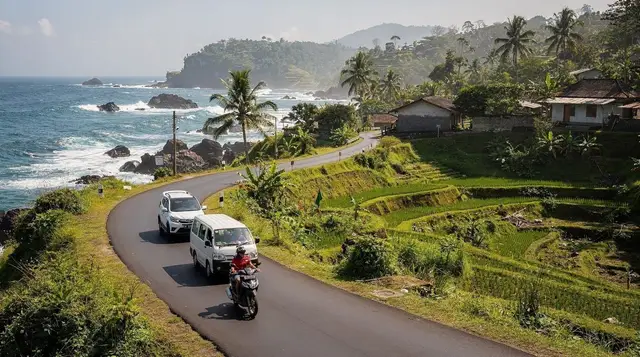
These are our own photographs of Bali, not the operator's pictures of this tour — open the tour page to see those.