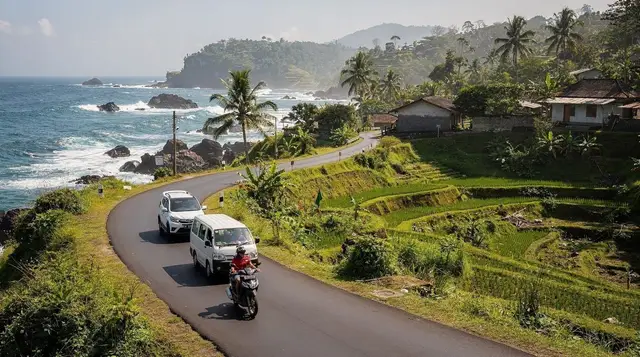
Labuan Bajo sits at the western tip of Flores, a genuinely different island from Bali or Lombok both culturally and geographically, and its entire modern identity is built around one thing: it is the gate to Komodo National Park. The harbour is lined with liveaboard boats, dive operators, and day-trip vessels rather than beach clubs, and the town itself has grown fast and somewhat unevenly to keep pace with demand, which means an odd mix of new hotels and half-finished infrastructure depending on which street you are on.
This is worth saying plainly before you arrive with the wrong expectations: Labuan Bajo is not a beach resort town in the way Bali’s south coast is. Its own beaches are modest, and the reason to be here is almost entirely what leaves from its harbour — day boats and multi-day liveaboards heading out to Komodo and Rinca islands for dragon treks, Padar’s viewpoint hike, Pink Beach, and some of the more consistently rated snorkelling and diving in Indonesia. Treat the town as a functional base with a genuinely good sunset, not a destination competing with Bali’s beach towns on their own terms.
What Labuan Bajo does have, and what keeps a growing number of travellers extending their stay beyond the bare minimum, is a frontier energy that some find more interesting than Bali’s more polished tourism infrastructure. It is a place still visibly figuring itself out, which cuts both ways depending on your tolerance for rougher edges.
Labuan Bajo at a glance
| Where | West Flores, East Nusa Tenggara province, gateway harbour to Komodo National Park |
| Cost | Moderate; liveaboards and multi-day boat trips are the main expense, town accommodation and food are reasonably priced |
| Time needed | 2 to 4 days for day-trip access to the park; longer for a multi-day liveaboard or a Wae Rebo village trek |
| Access | Flights from Bali (Denpasar) to Komodo Airport; no practical overland or ferry route from Bali given the distance |
| Best time | Dry season, April to October, for calmer seas; avoid the roughest of the wet-season swells if boat comfort matters to you |
The harbour and what actually leaves from it
Labuan Bajo’s harbour is the functional heart of the town, and understanding what kind of boat you need is the first real decision to make. Day boats run out-and-back trips to the nearer parts of Komodo National Park, while liveaboards spend one or more nights at sea, covering more ground and reaching sites a day trip cannot. A standard two-day, one-night liveaboard on a standard boat from Labuan Bajo is a reasonable entry point into the liveaboard experience without committing to a longer, pricier multi-day charter.
Day trips versus liveaboards
For travellers with limited time, a well-organised day trip such as the tour exploring six favourite destinations around Labuan Bajo covers a solid cross-section of the national park’s highlights in a single day, typically combining a dragon-viewing stop with Padar’s viewpoint and a snorkelling site.
Liveaboards, by contrast, trade a higher cost and a longer commitment for considerably more relaxed pacing, sunrise and sunset at sea, and access to remoter dive and snorkel sites that day boats cannot reach and return from within daylight hours. Which suits you depends on how much time and budget you have, and how much you value the slower, at-sea experience versus covering the highlights efficiently.
Sunset from the hillside bars
Labuan Bajo’s sunset views, looking out over the harbour and the scattering of islands beyond, have become one of the town’s genuine attractions in their own right, with a cluster of hillside bars and restaurants positioned specifically to take advantage of the view.
It is a popular, sometimes crowded ritual by early evening, but it earns the popularity — the combination of boats silhouetted against the water and a sky that tends toward dramatic colour most evenings in the dry season is a good way to close out a day spent on the water. For something more active, a flying fox and sunset cruise on a private boat charter is an alternative way to catch the same light from the water rather than a hillside seat.
Wae Rebo: the highland detour most visitors skip
Inland from Labuan Bajo, the traditional village of Wae Rebo sits deep in Flores’ central highlands, reachable only by a multi-hour trek, and represents a completely different side of the island from the marine-focused Komodo circuit. The village’s distinctive cone-shaped traditional houses and its relative isolation from mainstream tourism make it a genuinely rewarding, if physically demanding, add-on for travellers with a couple of extra days.
A guided two-day, one-night Wae Rebo village tour from Labuan Bajo covers the trek in, an overnight homestay with the village community, and the trek back out. It is not an easy add-on logistically, but it is one of the more distinctive cultural experiences reachable from this base.
Choosing accommodation in town
Labuan Bajo’s accommodation ranges from simple guesthouses to increasingly polished mid-range hotels, most clustered around the harbour or up the hillside toward the sunset viewpoints. Given that most of your time here will be spent either on a boat or preparing for one, proximity to the harbour and to a decent breakfast before an early departure matters more than resort-style amenities for most itineraries. Travellers doing a multi-night liveaboard should also factor in a buffer night in town either side of the boat trip, since flight schedules to and from Komodo Airport do not always align neatly with boat departure and return times.
Diving and snorkelling around Labuan Bajo
Beyond the dragons, the waters around Komodo National Park are a genuine draw in their own right, sitting within a marine environment shaped by strong currents where the warmer Flores Sea meets cooler water pushing up from the Indian Ocean. This mixing creates some of the more consistently rated diving conditions in Indonesia, with a range of sites suited to different experience levels, from gentle drift snorkels to current-driven dives that demand real experience. Labuan Bajo’s dive operators are used to a wide range of visiting skill levels, and a proper briefing on current conditions before any dive or snorkel outing is standard practice given how much local variation there can be from one site to the next.
An alternative land tour for a break from boats
Not every day in Labuan Bajo needs to involve a boat. For travellers wanting a change of pace, or simply a day to recover between a liveaboard and a flight home, a land-based option such as the Labuan Bajo and Flores land tour covers viewpoints, local villages, and cultural sites around the town without setting foot on a boat. It is a reasonable way to see a different side of West Flores, particularly if seasickness or simple boat fatigue has become a factor after several days at sea.
What isn’t worth the detour
Do not expect Labuan Bajo’s own beaches to compete with the national park’s — they are a convenient stretch of sand for a quick dip, not a destination in themselves. It is also not worth booking the absolute cheapest day-trip boat without confirming its itinerary and safety standards; the quality and coverage of budget operators varies considerably, and Komodo’s currents and weather deserve a properly equipped vessel rather than the lowest bidder.
Choosing a liveaboard operator carefully
The liveaboard market out of Labuan Bajo ranges widely, from simple wooden boats with basic cabins to considerably more comfortable phinisi-style vessels with private bathrooms and proper dining areas, and price scales accordingly. Beyond comfort, the more important variable to check is safety standard and crew experience, given that these boats spend multiple days navigating a national park known for strong currents between islands. Reading recent reviews with an eye specifically toward safety practices and crew communication, rather than only cabin photos, is worth the extra research time before committing to a multi-day, non-refundable booking.
A second Wae Rebo option
Alongside the standard overnight village tour, some operators run a slightly different version of the Wae Rebo trip that also takes in the nearby Nuca Molas viewpoint, adding a second highland stop to the same overland route. The two-day, one-night Wae Rebo village tour from Labuan Bajo is worth comparing against the standard version if you want the extra viewpoint stop, though both cover the core trek and homestay experience that makes Wae Rebo worth the effort in the first place.
Budget
Costs in Labuan Bajo town itself, for accommodation and food, are moderate and generally lower than equivalent options in South Bali. The larger cost variable is the boat trip: day trips are the more affordable entry point, while multi-day liveaboards run considerably more given the extended charter, crew, meals, and equipment involved. National park entrance and conservation fees are a separate cost layered onto whichever boat option you choose, and it is worth confirming with your operator whether these are included in the quoted price or added on arrival.
When to go
Dry season, roughly April to October, is the more comfortable and reliable window for boat travel around Komodo, with calmer seas and better underwater visibility for snorkelling and diving. Outside this window, rougher seas can make day trips less pleasant and occasionally affect liveaboard itineraries, so if boat comfort or diving visibility matters to your trip, the dry season is worth planning around rather than treating as a minor preference.
Getting there and getting around
Labuan Bajo is reached almost exclusively by air, with regular flights connecting Denpasar in Bali to Komodo Airport; there is no practical overland or ferry route given the distance and the number of islands between Bali and Flores. Within the town, walking covers the compact centre, while boats are the only way to reach the national park itself — there is no road access to Komodo or Rinca islands from the mainland. Book flights with a reasonable buffer around any multi-day liveaboard, since delays on either end can otherwise cascade into a missed boat departure or connecting flight.
How Labuan Bajo fits into a longer trip
Labuan Bajo is the practical base for exploring Komodo National Park and Padar Island, and it is generally treated as a dedicated leg of a Bali trip rather than a casual add-on, given the flight required to reach it. The Bali and Komodo, five days itinerary is built around exactly this kind of extension.
Read the Komodo liveaboard guide before deciding between a day trip and a multi-day boat charter, and the blog piece on what you actually see with Komodo dragons for realistic expectations about the wildlife encounter itself.
Is Labuan Bajo expensive compared to the rest of Indonesia?
It runs somewhat higher than typical Indonesian small-town prices, reflecting its status as a fast-growing tourism gateway, but it remains considerably cheaper than equivalent boat-based destinations in many other parts of the world. Liveaboards and dive packages are where costs add up fastest, more than accommodation or food in town.
Should I base myself only in Labuan Bajo, or split time with somewhere else in Flores?
For most first-time visitors, Labuan Bajo alone is enough given how much time the national park itself demands. Travellers with more time sometimes extend further into Flores, similar in spirit to how the Padar Island hike is treated as an extension of the core Komodo circuit rather than a separate trip.
Frequently asked questions about Labuan Bajo
How do I get from Bali to Labuan Bajo?
By air only — regular flights connect Denpasar to Komodo Airport, and there is no practical overland or ferry alternative given the distance and number of islands in between.
Is Labuan Bajo safe for solo travellers?
Yes, it is a well-established tourism gateway with a growing infrastructure geared toward independent travellers, though as with any boat-based destination, choosing a reputable operator matters more here than in most land-based parts of this trip.
How many days should I budget for Labuan Bajo and Komodo?
A minimum of two to three days covers a solid day trip or two into the national park; a week or more allows for a proper liveaboard, diving, and the Wae Rebo trek without feeling rushed.
Do I need to book boat trips in advance?
During peak season, yes, particularly for liveaboards and popular day-trip itineraries, since boat capacity is genuinely limited. Shoulder season allows more flexibility to book once you arrive.
Is Labuan Bajo suitable for a short stopover on the way somewhere else?
Not really — given the flight required to reach it and the fact that its main draws are multi-hour or multi-day boat trips, Labuan Bajo works best as a dedicated stop of several days rather than a brief stopover.
What should I pack specifically for Labuan Bajo?
Reef-safe sunscreen, a light rain layer even in dry season for the occasional squall at sea, motion sickness medication if you are prone to it, and proper trekking shoes if Wae Rebo or Padar’s viewpoint hike are on your itinerary.