Bali's Monkey Forests: What to Actually Know Before You Go
Ubud’s best-known Monkey Forest, and the handful of similar sites around the island, sit at an odd intersection of nature reserve, temple complex and tourist attraction, and the mix of purposes is exactly why first-time visitors sometimes arrive with mismatched expectations. These are working sanctuaries with real ecological and religious significance, home to wild long-tailed macaques that have grown comfortable around humans without becoming tame in any meaningful sense. Understanding that distinction — comfortable, not tame — is the single most useful thing to know before you go.
The macaques are the main draw for most visitors, and they’re genuinely fascinating to watch: complex social hierarchies, mothers carrying infants, and a level of dexterity that makes short work of an unzipped bag or a pair of sunglasses left within reach. None of this makes a visit dangerous in any serious sense for a sensible, prepared visitor, but it does mean going in with a clear idea of what these animals will and won’t do, rather than treating them like a petting zoo.
What the macaques actually do around visitors
Long-tailed macaques at these sites have learned, over years of visitor contact, that humans reliably carry food and interesting objects. This translates into confident, sometimes bold behaviour: approaching closely, reaching toward bags or pockets, and occasionally grabbing at anything that looks food-related or simply catches their attention, including sunglasses, hats, water bottles and phones. They are not generally aggressive toward visitors who aren’t holding food or acting provocatively, but they are opportunistic, and an object left within easy reach is fair game from a macaque’s perspective.
The rules that actually matter
Most sites post a clear set of rules at the entrance, and they’re worth taking seriously rather than treating as boilerplate signage. Not bringing exposed food into the reserve is the single biggest one — a visible snack or an open bag with food inside is an open invitation. Avoiding direct, prolonged eye contact with a macaque, which can read as a challenge or threat in primate body language, is a second important one. Holding onto bags, cameras and sunglasses securely, rather than letting them dangle loosely, removes most of the remaining risk of an item being snatched.
What to do if a macaque takes something of yours
It happens often enough that it’s worth having a plan rather than panicking. Chasing a macaque that’s taken an item rarely works and can escalate the interaction unnecessarily; most sites have staff nearby experienced at recovering items, sometimes using a trade — offering a piece of fruit in exchange for the taken object — which macaques at these well-established sites have learned to recognise. Staying calm, alerting a staff member, and not attempting to grab the item back directly is consistently the better approach than any DIY intervention.
Is it safe for children specifically?
Generally yes, with the same sensible precautions that apply to adults, though it’s worth keeping younger children within arm’s reach throughout the visit rather than letting them wander independently near the macaques. Children are sometimes more likely than adults to unconsciously make prolonged eye contact or hold food visibly without realising the implications, so a bit of pre-visit coaching about the rules goes a long way. Bites and scratches, while uncommon at well-managed sites, are more consequential for children given their smaller size and more delicate skin, which is worth factoring into how closely you supervise.
Beyond the monkeys: what else these sites actually offer
It’s easy to focus entirely on the macaques and miss that these are also genuine temple complexes and forest reserves with their own architectural and ecological interest. Ubud’s Monkey Forest specifically contains several temples within its grounds, along with dense, mature forest and a network of walking paths that make for a pleasant, shaded walk independent of the monkeys themselves. Treating the visit purely as a wildlife photo opportunity, rather than also taking in the temple architecture and forest setting, means missing a genuine part of what makes these sites worth visiting.
Combining a monkey forest visit with the rest of Ubud
Most visitors pair a monkey forest stop with other nearby Ubud activities rather than treating it as a standalone destination. An ATV, monkey forest and jungle swing combination tour covers several of the area’s highlights in a single well-organised outing, useful if you’re short on time. For a more culturally focused pairing, a water ritual and monkey forest combination adds a genuine Balinese cultural practice alongside the wildlife visit, giving a fuller picture of the area than the monkeys alone.
Understanding macaque social behaviour
Macaques at these sites live in structured troops with a clear hierarchy, and understanding a little of how that works makes the visit considerably more interesting than simply photographing whatever animal happens to be closest. Dominant males typically hold central, prominent positions; mothers with infants are given wide berth by other troop members; and younger, more playful individuals tend to be the ones most likely to approach and investigate visitors out of curiosity rather than any expectation of food. Watching for these patterns — who defers to whom, how infants are protected, which individuals seem more confident around people — turns a quick photo stop into a genuinely engaging half hour for visitors of any age.
Aggression within the troop, when it happens, is almost always directed at other macaques establishing or contesting status rather than at visitors, and it’s worth giving any such interaction a wide berth if you happen to witness one rather than getting closer for a better view.
A closer look at the temple architecture within Ubud’s Monkey Forest
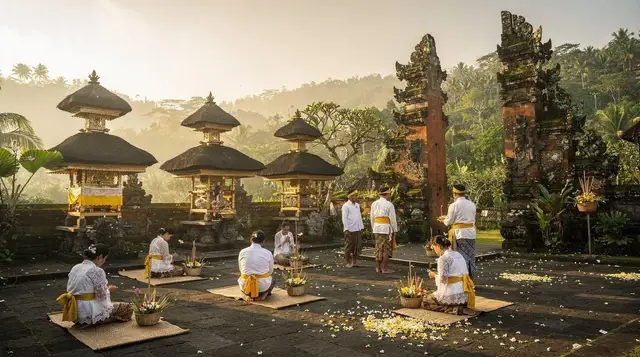
The temples inside Ubud’s Monkey Forest are active places of worship, not simply backdrop scenery for the wildlife, and treating them with the same respect expected at any other Balinese temple — appropriate dress, no climbing on structures, quiet consideration around anyone praying — matters just as much here as at a standalone temple site. Pura Dalem Agung Padangtegal, the main temple within the forest, is dedicated to Hindu death rites and features carvings and statuary distinct from what you’ll see at Bali’s more commonly visited temples like Uluwatu or Tanah Lot, which is worth slowing down for rather than walking past on the way to the next monkey sighting.
What responsible sanctuaries actually do differently
Well-managed sites like Ubud’s Monkey Forest fund ongoing conservation and forest management work through entrance fees, distinct from smaller, purely commercial “monkey encounter” setups that exist mainly to generate paid photo opportunities with minimal regard for animal welfare. Signs of a genuinely well-run site include visible staff monitoring visitor behaviour and animal welfare, clear rules prominently posted and enforced rather than merely suggested, and an absence of forced interactions like dressing animals in costumes or encouraging visitors to hold them for photos. These distinctions matter both ethically and practically — a well-run site is also, generally, the safer one to visit.
What isn’t worth the detour
Skip any smaller, less-established “monkey encounter” venue that isn’t a recognised sanctuary or reserve, particularly if it involves direct handling or feeding encouraged by staff for a photo — these setups prioritise a marketable interaction over the animals’ welfare and don’t reflect responsible wildlife tourism practice. Also skip trying to feed the macaques yourself even if fruit is sold near the entrance for this purpose; feeding by hand increases the risk of a grab or scratch considerably compared with observing from a sensible distance.
Budget and timing
Entrance fees at established sites like Ubud’s Monkey Forest are modest relative to the rest of a typical day’s activities, and the site is generally open during standard daytime hours without requiring advance booking for individual entry. Morning visits tend to be calmer, with the macaques often more active and visible before the midday heat, and before the largest crowds of the day arrive. A guided combination tour is worth the modest extra cost if you’re also hoping to cover other Ubud sights in the same outing, since it removes the need to arrange transport and timing between multiple separate stops yourself.
How this fits into a longer Ubud stay
If you’re building a wider Ubud itinerary, a bird park, coffee, tea and monkey forest combination pairs the reserve with a couple of other popular Ubud stops in a single day, useful for travellers wanting to cover more ground without excessive planning.
Read yoga in Ubud guide and Ubud day trip from South Bali for the wider context of what else the area offers, and bali with kids and family-friendly beaches in Bali if you’re planning this as part of a family-focused trip more broadly. Bali with toddlers is worth reading specifically if your children are very young, given the closer supervision a monkey forest visit requires at that age.
Frequently asked questions about Bali’s Monkey Forests
Do the macaques bite visitors often?
Bites are uncommon at well-managed sites when visitors follow the posted rules, but they do happen, usually when a visitor is holding food, makes prolonged eye contact, or attempts to touch an animal directly.
Should I get a rabies vaccination before visiting?
It’s worth discussing with a travel health professional before your trip, particularly if you’re planning multiple wildlife encounters across your trip, though routine, rule-following visits carry a genuinely low risk.
Can I bring my phone or camera into the reserve?
Yes, but hold it securely rather than letting it hang loosely from a strap, since dangling items are the most common targets for a macaque grab.
Is Ubud’s Monkey Forest the only one worth visiting in Bali?
It’s the best known and most established, though similar smaller sites exist elsewhere on the island. Established, well-reviewed sanctuaries are generally a safer and more ethically sound choice than smaller, less regulated venues.
What happens if I accidentally make eye contact with a macaque?
A single brief glance isn’t an issue — the concern is prolonged, direct staring, which can be read as a challenge. If a macaque approaches after eye contact, look away and remain calm rather than staring it down further.
Is it ethical to visit these sites at all?
Established, well-managed reserves like Ubud’s Monkey Forest generally operate with genuine conservation and welfare standards, distinct from venues built purely around forced interactions or performances, which are worth avoiding on ethical grounds.
How long should I plan for a visit?
A shorter visit of an hour or so covers the main paths and temple areas comfortably for most visitors, though photography enthusiasts or those wanting a slower walk through the forest may want longer.
Are there other animals in the reserve besides the macaques?
Yes, the forest habitat supports other wildlife too, though the long-tailed macaques are by far the most visible and the reason most visitors come specifically.
Can I visit if I’m genuinely nervous around animals?
Yes, though it’s worth going in prepared — staying on the main paths, keeping some distance rather than approaching closely, and going with a guide or group if that helps manage the nerves, all make for a more comfortable visit.
Is there a risk of catching an illness from the macaques?
The main practical concern is bite or scratch-related, rather than airborne illness, and following the posted rules around food and direct contact substantially reduces this risk for the vast majority of visitors.
Do the macaques behave differently at different times of day?
Yes — mornings tend to see more active, visible behaviour, particularly around feeding times managed by site staff, while the animals are often less active during the hottest part of the midday period.
Family-friendly tours
Verified deep-linked GetYourGuide tours. Book through these links and we earn a small commission at no cost to you.
These are our own photographs of Bali, not the operator's pictures of this tour — open the tour page to see those.